Tag Archives: self-publishing

Personal Post: The Year That Was 2017

Is it a sign I’m getting older that my first thought is about how quickly the year has gone? Probably. But here we are on the cusp on 2018 and I find myself at that point in the year when I look back and see what I can learn before moving forward.

Lesson 1 – The best laid plans…

I spent the early part of 2017 setting up my life so I could become entirely location independent. Armed with a laptop, all I needed was a decent wifi connection and I was good to go. I got to spend months in the sun, living the dream and writing. Then, happily but ironically, circumstances have changed so that for the next two years I have virtually no choice but to be tied to that place called home.

Lesson 2 – Marketing makes no sense…

Never trust anyone who promises you a fool-proof system to fame or money. Whether it’s sales, platform building, advertising models or social media, no one has all the answers. In a world that is rapidly transitioning towards entrepreneurs and gig economies, there are more scammers out there than there are genuine business minds.

Lesson 3 – It’s all about helping others…

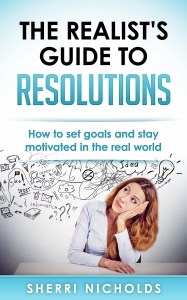
I’ve done some amazing things this year. But the thing that has given me the most satisfaction is hearing from people who have found The Realist’s Guide To Sugar Free useful. Some of the Amazon reviews have been amazing and I am so very grateful. It was because of this I wrote The Realist’s Guide To Resolutions. There are so many self-help achievement books out there that are really boring for the vast majority of readers. I happen to love them. So, once again, I studied, distilled and made a light and fun read for other people to get the benefits without having to wade through books that are, ultimately, trying to get business people to buy consulting services.

Looking forward…

I’ve come to realise that the main thing is about being happy with what matters to you. It’s not about being what other people expect you to be. If I can continue to stay true to myself in 2018, help others along the way and take it some spectacular sunsets, then I’ll be fine.

Whatever you want from 2018, I wish you every success.

The Realist’s Guide To Resolutions – How To Set Goals and Stay Motivated In The Real World

If you want to stop smoking, lose weight, get fitter, improve your career prospects or simply finish a project that’s been hanging around on your to do list for the past ten years, this book will give you the kick up the backside you’ve been looking for.

Top 5 podcasts for writers of 2017

Over 2017, podcasts remained one of my favourite forms of entertainment and education. Thinking about this post, I couldn’t help but wonder if there would be any changes from my Top 5 of 2016. Or – even more impressively – if any from my Top 5 of 2014 would make it back onto the list.

To kick us off, returning for the second year: Cortexbroadcast_artwork_cortex_artwork

“CGP Grey and Myke Hurley are both independent content creators. Each episode, they discuss the methods and tools they employ to be productive and creative.”

Despite the not-a-schedule schedule being even more erratic this year, I’ve still looked forward to getting the alert that a new episode has arrived. For independent creatives in any field, Cortex is a conversation between friends about productivity, efficiency and a new way of working. Plus, someone gave me a knowing look and a ‘nice Cortex T-shirt’ comment at a hotel breakfast buffet this year and it made my day. Honestly, it’s not as creepy as it sounds. Monkey brain wins every time.

*

The only podcast to have featured on all previous lists is the amazing Writing Excuses.

wx-wordpressbanner-wdtrophy2016

“Fifteen minutes long, because you’re in a hurry, and we’re not that smart.”

Although the number of writing podcasts on my app of choice (Overcast, if you’re interested) has increased this year, this is still the best one out there dedicated to craft. This year there have been a number of co-hosts who bring new perspectives. Although I miss hearing from the main hosts sometimes, I would much rather that than have no weekly podcast at all. Whether you’re still working on your first draft or if you’re a seasoned professional, there really is something in here for everyone.

*

Sticking with a writing theme, Creative Penn podcast has been a great resource and a show I’ve consistently listened to over the course of the year.

“Interviews, inspiration and information on writing and creativity, publishing options, book marketing and creative entrepreneurship”

It is much less craft-focused than Writing Excuses, but still manages to stand out in a tough field of shows that want to teach you how you can make a living with your writing. I’ve discovered that most of them are seriously geared towards getting you to buy the premium course that shows you how. This is less pushy (maybe because it’s more British?), which I prefer, especially as there’s still lots of useful information and some very interesting guests.

*

Writing related, but in a different way, I have a brand new stationery podcast making it onto the list this year in the form of the RSVP podcast.

“A podcast about stationery and so much more!”

What started off as an April Fool’s one-off episode on the Erasable podcast (also worth checking out if you’re a fan of writing by hand, specifically with graphite – yes that is still a thing), became a podcast of its own. In a world full of default male voices, it has been fantastic to hear these three women bring a fresh spin on things. Plus, they don’t have a problem with calling out BS, drinking fine beverages and smashing the patriarchy, so what’s not to love?

*

Finally, in a very different  style, The Tim Ferriss Show is another overall favourite of 2017.

“Each episode, I deconstruct world-class performers from eclectic areas to extract the tactics, tools, and routines you can use.”

The thing I love about Tim and his products, be they books, videos or podcasts, is that nothing is off limits. As someone who loves to try new and inventive ways of life hacking, the wide range of topics always keeps me interested. Almost everything out on the internet is as niched down and specific as possible, but Tim constantly surprises me with some of the people he interviews and the experiments he’s prepared to try. I come away with something worth pondering every single episode and that’s pretty unusual.

So those are my top five podcasts of 2017. Some new ones and two old ones, but all of them worth checking out, especially if you’re a writer, creative, entrepreneur, life-hacker or simply enjoy damn fine audio.

2018: How to do more and worry less

As we hurtle towards the end of 2017, it’s inevitable that we start to look back over the year and ahead towards the new one. It’s a time of hope and dreams. It’s a shame then, that such determination and promise for the future only rolls around once a year.

I love personal improvement books. I’ve read hundreds of them by this point. But most people don’t. I can’t blame anyone for that. They’re notoriously dry and you have to dig through hundreds of pages to find the four really useful paragraphs they contain. You already know what I decided to do about it, right? Ta-dah!

The working title for this book was ‘goal setting for normal people’. It was never going to be the final name, but during the writing process I wanted to keep in mind the heart of what it should be about. Quite simply, to take the wisdom of those hundreds of books I’ve read, along with research papers, personal experiences and the behavioural lessons learned from writing The Realist’s Guide To Sugar Free. Then put it in an easy to read, useful and actionable book.

So what’s in it?

Plenty of information, without all the waffle and buzzwords. Things such as:

  • How to set the right goals for you (and not feel guilty about the ones you don’t)
  • How to plan for success (beyond the first week)
  • How to hack your brain to do this smarter not harder (great if you struggle with motivation and willpower)
  • How to track progress and level up (so you can continually dream bigger)

The Realist’s Guide To Resolutions will be published on December 28th. I wanted to make it available for those people who like to take advantage of the downtime between Christmas and New Year, or prefer to start the year with the thinking already done.

I’ve got my own yearly review day booked in for December 29th. I’ll consume several cups of very nice coffee, read the letter I wrote to myself at this time last year and write the one to open next year. I’ll look back at all the things I’ve done (fond memories of my four month sabbatical by the sea) and work out what I need to do to make next year even better. No doubt I’ll be slightly daunted by the sheer number of notebooks I’ve filled over the course of the year. My guess is upwards of twenty. Gulp.

If you’d rather wait until the festivities are out of the way and 2018 has arrived, then the pre-order will be delivered to your device for when you’re ready to start.

Like Sugar-Free, it’s a quick and easy read, with a dash of humour thrown in. It’s also reasonably priced (only 0.99 in most regions!) so you can get the most bang for your (literal) buck.

Here’s to a fantastic 2018, whatever that means for you.

The Realist’s Guide To Resolutions is available for Pre-order at Amazon.co.uk (or go to Amazon.com to jump to other regions)

Upcoming Offer

For those in the US, the kindle version of The Realist’s Guide To Sugar Free  will be discounted to 99c for New Year (December 29-January 4).

Top 5 blogs of 2017 for creatives

I’ve got a few ‘top 5’ posts coming up to round off what has been an unusual and exciting year. One of the first subjects that came to mind was this one, the 5 blogs I have found most useful during 2017.

It was only as I started really thinking about what they were that I realised that actually, I’ve moved away from blogs as a resource. I’m not sure if this is a trend, or whether I’ve just had a change in circumstances. Instead of having favourite sites I return to time and time again, I’ve instead been more likely to search by subject and consume a variety of blogs I find. The chances of me returning to any specific site are slim.

Perhaps, unfortunately, it has something to do with how fake news (actual fake news, which is generally the polar opposite of what is being branded fake news) has got me second guessing everything. Instead of taking any one person or comapany’s view as truth anymore, I find myself always verifying sources. I suspect that 2018 will contain more of the same.

However, I did manage to find 5 blogs that I have returned to more than others. Unsurprisingly, these cover my main interests of writing, travel and how to stay productive and healthy.


The Creative Penn

Joanna Penn has quite the enterprise going now. There’s a lot of really useful information on the Creative Penn website and I find myself returning to it frequently. Bridging art and commerce, Joanna’s site is future thinking and always optimistic, no matter what craziness and uncertainty exists in the world. She’s making money from people wanting to be authors, but she’s up front about expecting money in exchange for valuable insights, rather than being a ‘get rich quick on kindle’ scammer.

Goins, Writer

Jeff Goins has made a career from writing about writing. When you look at his work about work it all sort of gets a bit meta, but there’s a lot of important takeaways included. The concept that actually, in today’s world we are moving away from a single-track career progression and into a varied career of diverse options, is something that has really resonated with me this year. As I look towards 2018 this site has been great at reminding me to keep my options open, embrace opportunities and ignore the imposter syndrome.

Chris The Freelancer

Admittedly I tend to watch Chris’s videos on YouTube more frequently than I visit his blog. He’s built quite the channel about working from a laptop while he travels the world. He was one of the first resources I came across while looking at the way the world is gradually turning towards a laptop, gig based economy. Unlike many digital nomad sources, he has a professional approach, steering away from the backpacker with a side-hustle content that forms much of the information out there.

Pick The Brain

The banners at the top of this site cover off all the things near and dear to my heart: motivation, productivity, health, self-improvement. It focuses on doing the things required to move you forward to a dream life, but isn’t all about the hustle. Productivity is great, but not as a way of doing even more so you can burn yourself out. Instead, a healthy momentum is the name of the game. Even when the information isn’t new to me, it always acts as a good reminder to stop and think.

Brain Pickings

Although it has a very similar title to the one above, it’s very different. With much longer pieces, it’s not full of snappy soundbites. There are no quick wins to take away here. Instead, the posts are more critical and philosophical. More academic, if you don’t mind me using that word. The insights are numerous, but you have to work for them. Honestly, in today’s world of short attention spans and instant gratification, I don’t think that’s a bad thing.

Books for writers: Shadows Beneath (Writing Excuses Anthology) review

With NaNoWriMo only a week away, instead of my usual ‘book for entrepreneurs’ review, I thought I would focus specifically on a book for writers.

Most writers (aspiring and published) have read Stephen King’s On Writing. I love that book, but most of the engaging content is the autobiographical stuff, rather than the writing parts. So I thought I would take a look at a much more hands on, practical book: Shadows Beneath: The Writing Excuses Anthology.

The book was released in 2014 and often gets overlooked as being a short story anthology, rather than a practical guide to writing. It follows the writing process of the four main Writing Excuses hosts from story concept to finished work. Side note, if you’re a writer and haven’t checked out the Writing Excuses Podcast then go there now. It’s one of the best ‘craft’ podcasts out there in a realm of marketing ones.

The first part of the book contains the completed short stories. This means that those who aren’t interested in the writing process can just enjoy reading some quality fiction. For writers, it is the second part that is interesting: the ‘making of’ section.

For each of the stories, we can read a transcript of the Writing Excuses episode where they brainstormed ideas. For people who wonder where ideas come from, this is gold in itself. Then there is the first draft of the story, transcripts of workshopping discussions and intermittent drafts and commentaries from the authors. Finally, there is a version showing all the edits from the first draft to the published edition, full of cuts and additions.

So why read this book?

During NaNoWriMo, the idea is to take an idea and write. Write each day and get 50,000 words down by the end of the month. Editing has no place here. Often at the end, we are left with 50,000 words that need some pretty serious work. Shadows Beneath is a great way to see that even without these crazy time pressures, the first draft is never perfect. It can be hard to imagine that our favourite, successful authors struggle to write a first draft and that it often doesn’t work. It can be hard to believe they reach out to others and say ‘hey, I’m struggling with this and could use some help’. This book will teach lessons in craft and development, but it also shows the spirit of community and encouragement.

Which, when you think about it, has always been at the heart of NaNoWriMo.

You can buy Shadows Beneath: The Writing Excuses Anthology here. If you can, I’d recommend getting the print edition, as it allows you to flip back and forth much easier when following the revision process.

The first week of my location independent experiment

I first heard the term digital nomad just over six months ago. It resonated straight away, as it fit with the lifestyle I’d been working towards for a long time. However, it definitely seemed populated by a younger demographic. Many of the articles and YouTube videos made me think of my time backpacking over a decade ago (and I was already in my late twenties then), rather than where I currently am in my life. The movement was also concentrated in South East Asia (Thailand, Cambodia and Indonesia), with a smaller grouping in South America (Chile, Mexico and Brazil).

So I sat down and worked out my list of requirements for an ideal work/life. I’d already made the decision to become location independent. It turned out that my requirements made a surprisingly small list:

  • Somewhere warm, near the sea
  • Preferably a balcony overlooking aforementioned sea
  • Good wifi
  • Affordable

    Writing with a view

Digital Nomad: Asia or Europe?

All of this was possible without travelling halfway around the world from England. I did that when I spent six months in New Zealand three years ago and it always felt just a little too distant for a long term base. Over time various Canary Island locations started to be mentioned by seasoned nomads who wanted to try somewhere different. Given that it was a location I’d visited a dozen times, it felt comfortable and right to make the move.

Virtually a private pool – awesome!

Know Thyself

The list I’d made certainly didn’t include city living. As most of my work is writing, I didn’t need to be in a coworking space either. So I could rule out any of the big (relatively speaking) cities such as Las Palmas. I want to be able to cook for myself, so I didn’t need a plethora of tasty but unhealthy restaurants to tempt me. I also wanted a view that would compel me to exercise…

The reward at the end of the running track

What I am saying is this: when asking yourself which location is right for you, don’t feel like you have to choose from the ones everyone else is talking about. Make your list of requirements and find what feels right for you. Chang Mai may be a digital nomad mecca, but if that’s not what you need, then it’s really not a problem to be somewhere else.

Freedom comes from constraint

I have spent my first week out here testing the lifestyle. I started with a mini-break because I was exhausted. In the two weeks leading up to the flight, I saw lots and lots of people. As an introvert, it left me with nothing in the tank. A few days of reading at the beach was just what I needed.

Next week the work gets serious. I set up a separate calendar in iCal just for work scheduling. I got the idea from Michael Hyatt about planning an ideal week to help constrain and focus your work life. It’ll be exciting to try that out in a full implementation now I am a master of my own schedule.

I’ve also had time to test what food is available and what works with the limited cooking facilities. Constraint is great here because it means I have to think about my food. Many studies have shown that planning meals removes the weakness that leads to junk being the quick and easy option if you’re making a decision when already hungry.

Time to explore (it’s not all work!)

For me, being location and lifestyle independent isn’t actually about ultimate flexibility. After a few years of business travel, I’m looking for structure more than anything else. But I get to determine that structure to allow for maximum effectiveness and happiness.

Hopefully I’ll be just as content after my first full work week as an independent author and freelancer!

Death of a salesman: The (not so) sweet truth about hotel breakfasts

Hopefully today was my last hotel breakfast for a long time. For nearly three years, I have spent at least one night each week in a hotel. I’ve stayed in some good places and some bad places. I have tried a lot of hotel breakfasts and at some point I might look forward to one again, but right now that seems impossible.

This kind of temptation each week? Exhausting!

So how do you stay healthy while traveling? It’s not easy at all. In unfamiliar surroundings, the default setting is to take the easiest option. Sticking to a healthy lifestyle – food or exercise – is a challenge of monumental proportions.

Most UK hotels offer a simple choice: cooked or continental. Cooked is usually more expensive as you have to pay for the privilege of someone heating your bacon until it is at least tepid (or the other option, so black and crispy you’re waiting for a CSI unit to come in and identify it). However, if you’re keeping your unhealthy fats low during the rest of the week, it is a low sugar option if you forgo the beans and ketchup. The same cannot be said for the continental option, with it’s all-you-can-eat high sugar cereal options, pastries and jams in every variety.

So, if you are trying to be healthy and wholesome, why not forgo the temptation and get a healthy breakfast to go instead? It’s quick, it’s easy, it has limited portions and it is marketed as a great start to your busy work day.

Quick, easy and healthy marketing? Alarm bells are ringing…

So, what do these packs typically contain and how much sugar does that translate into? I’ve researched a couple and below is a pretty accurate representation:

Cereal and milk (19g) OR fruit yoghurt (15g)
Muffin (25g)
Breakfast bar (12g)
Juice (20g)

This equals between 70-75g of sugar before you even start your day (that’s more than double the NHS recommended daily intake of 30g!). When you’ve got an early meeting, this can seem like a sensible choice, but it isn’t. Not to mention that it virtually guarantees a mid-morning slump that will have you reaching for another quick pick me up.

This persistent set of poor options is one of the reasons why I’ve decided to transition into a lifestyle where I can have more control not only of my work, but also my health. Research shows that health is one of the consistently de-prioritised areas of modern life, despite us understanding more than ever about exercise and nutrition benefits.

The healthy ‘to go’ breakfast, whether at a hotel or your favourite coffee chain, is just another marketing trap, so heed the warning and don’t be fooled!

therealistsguidetosugarfree-2

The Realist’s Guide To Sugar Free is available at Amazon (UK) and Amazon (US) in both ebook and paperback.

Love the book? Then please leave a review on Amazon. Reviews help keep the book visible, which means I can help more people make the change to a happier and healthier life.

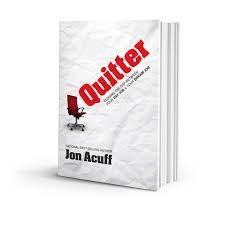
It’s quitting time: How Jon Acuff’s Quitter changed my life

I first read Jon Acuff’s Quitter 3 years ago on vacation. I even wrote a review on it.

I loved the book. It had many useful insights. So, did I come home from that sunny beachside view, walk into the office and hand in my notice?

pexels-photo-104750

No, I did not.

Why? Not because I didn’t want to. At the end of the book, when you feel the glimmering possibility of quitting your day job for your dream job, there is a pop quiz. One that gives you an idea of whether or not you’d make it in the real world.

I answered the questions and, despite knowing doing so wouldn’t give me the answer I wanted, I answered them honestly. The result? I was putting in some work, but not in enough areas to enable me to quit. I was annoyed with the outcome, but only because it was telling me what I already knew. It wasn’t giving me a quick out. It wasn’t giving me any kind of false hope.

The false hope is a common flaw of many business / self-help books. Their purpose is to sell you a concept. The promise that the book will change your life forever if you just follow their new approach or idea. Life isn’t that simple. Especially when it comes to quitting a stable, good job in a tough economy.

So I went back to work, but I also looked seriously at my side projects. My passion projects. Instead of keeping them as hobbies, I made them into real, practical things. Hobbies are great, but they don’t come with obligations and deadlines. You don’t hustle on a hobby. Writing for fun is the best thing ever, but I had to understand the difference between that and writing things that would allow me to follow my dreams.

pexels-photo-62471

Every year since that first experience, during my two weeks looking out over the ocean, I read the book and took the quiz again. Each year, my score got a little higher. It was slow, but it was progress.

Then one day, without that sunny view, I could feel the change in the air. It was a normal Tuesday morning, but something tickled the back of my mind. I grabbed the book and before work, I took the survey. I got a score of 65. That seemed pretty good. Higher than ever before. I flicked to the scorecard to double check.

The answer: it’s quitting time.

Still, felt like I had some work commitments and loose ends to tie up. It seemed like the decent thing to do. I also see there was a little bit of fear involved with quitting. A reason to put it off for a little while longer.

Now, after so many years of wishing it was time to quit, I finally have.

In four weeks, it will be my last day with my present company before going it alone for a while. It will be tough, but it is the most exciting thing I have ever done. Persistence has paid off and Quitter gave me the framework to create my best chance of success, rather than an impulsive leap into the unknown.

Thanks Jon!

You can find my original Jon Acuff’s Quitter review here.

4 reasons why it’s not too late to start a profitable side project

Some people love having side projects. Other people love the idea of having side projects. The dream that one day, you’ll find the magic bullet that will let you escape the 9-5 grind.

With the internet’s ability to peer into the carefully curated lives of others, we get a false sense of what success is and how young you need to be to achieve it. There is a sense that if you haven’t changed the world by the time you are twenty-five, you probably never will.

Which is, for the record, bullshit.

Billion dollar tech startups created in some fourteen year old whizz kid’s bedroom are always going to make you feel inferior. Yet most people don’t really make something of themselves until their late thirties or forties. You don’t really know who you are when you are a teenager. You may have some technical skills, advanced ones at that, but you haven’t lived yet.

You don’t have a multitude of people and experiences to shape you. These come later in life. Much of the dissatisfaction we experience is because we’re expected to set a course in our mid-teens and then stay on that hard earned (and often still paying for with student loans) trajectory.

man-coffee-cup-pen

So let’s bust some myths about why it’s not too late. These are all from my personal experience too, so I’m not just spinning someone else’s yarn here.

1. It won’t take as long as you think

It will probably feel like it, but it won’t. For most entrepreneurs, the skills that make them successful and competitive are not ones they learned through formal education. Yet for most people who think about changing income sources, the education route is the only way they know. It takes a lot of cash and time to retrain when you have existing responsibilities, like a job, a family and a mortgage. For most people, that scenario feels impossible.

But the three years of expensive qualifications and then on the job training won’t be the route for many successful side projects.

2. You can use the Pareto Principle to speed things up

The Pareto Principle is broadly that 80% of the results come from 20% of the tasks/effort. Once you can establish this as a defining life principle, you can really make things move. In life, work and all the grey areas in between, we see it in action all of the time.

Let’s apply the Pareto Principle to the time/cost retraining fear above. 80% is a high enough level of competency to succeed at most things. If our three year degree course teaches us 80% of the skills during just 20% of the time, then by working out what those key skills are and ignoring the rest, then three years quickly becomes less than one.

If we can find out what those things are, we probably won’t even need to pay for the course anyway.

There are obviously exceptions of course, but I’m assuming your side project isn’t to become an astronaut or a brain surgeon.

3. If you’re reading this, you probably already have the skills you need

Again, see the caveats about brain surgeons and astronauts. If you’re poking around in my skull then I expect you to have more than an ability to use google effectively. For anyone else, then if you’ve found me, you’re already on the right track. Even if your side projects have nothing to do with the internet, in our current world, you’ll still need to master it in order to sell your products and services. Side projects can become businesses very quickly. They might not become ‘jobs’ in the traditional sense, but they can if you want them to.

Everything you need to know these days is buried on the internet somewhere. You just have to find it, learn it, be brave enough to do it. Which brings us to…

4. Consistency is more important over the next year than where you are now

This is actually the hardest step. When you’re starting out, the rewards are non-existent at worst, infrequent at best. There is nothing so dispiriting as a first iteration flop, whether it’s a book, product or YouTube video. Casey Neistat makes it look so easy, right?

You burn bright with enthusiasm at first, but then it all fizzles out. The excuses come thick and fast. Before you know it, a month has rolled by before you remember your side project and dust it off.

The lesson here is that you don’t just pick up where you left off. The clock resets to zero, or close enough. You’re rusty. Those three strangers who actually found your new YouTube channel have moved on, forgotten about you. Frustration and overwhelm sets in.

The good news? If you can be consistent and you have something of value, in a year you can experience exponential change. It can take as little as six months to grow your idea into a sustainable, life changing source of income. Not a billion dollar startup, but enough to quit the 9-5 and focus on it full time.

pexels-photo-297755

Your side project can work for you at home or secretly inside your laptop, even if you are on a sun-drenched beach in Bali or walking around the streets of New York. It can do it if you are turning 30, or 40, or 50.

Location independence matters to me. So does having the time to prioritise my health. So does having time to spend with my friends and family. If you’re reading this, then I suspect they might matter to you too.

So stop reading. Start doing.

Now.

2017: New Year, New Goals, New Dreams

I’m not going to lie. During November and December I fell off so many wagons I couldn’t work out which one I wanted to get back on first. So I drank another glass of wine, enough cheese and crackers to sink a small boat and opened a box of chocolates instead.

But now that has all changed! By the mystical power of the calendar year flicking over, my willpower has returned and I am wholesome and virtuous again!

I wish.

I’m not sure I’ve ever been wholesome and virtuous. But I have begun to steadily correct course this week to get back on track. But where did it all go wrong in the first place?

I suspect much of it came down to illness and exhaustion. I failed to achieve a lot of things in 2016 because I felt worn out or ill most of the time. Listening to the Creative Penn podcast, it was great to hear another writer making health a priority in 2017. It is very easy to set ‘business’ type goals only. We’re taught how to focus on finance and career, but not necessarily spiritual or health goals. Last year was a harsh reminder of how if I don’t sleep and maintain a healthy lifestyle, eventually I’ll fail in other areas as well. I had two (because I’m a slow learner) fairly serious burnouts last year. I’m determined not to make the same mistakes again.

I’m tracking my sleep on my Fitbit and have once again begun the process of detoxing from sugar. I got a huge morale boost from seeing my book, The Realist’s Guide To Sugar Free at #2 in the kindle personal health charts in the first days of January. Hopefully I’ve been able to help a few people on their journey towards making the change too. Throw in a daily journaling and gratitudes practice and I can keep moving towards a physically and emotionally better me.

I’ve also challenged myself to read a book a week in 2017. With an English degree, I find it easy to read quickly, so the only excuse I have for not doing it is that I simply haven’t made it a priority. I have to hold myself accountable for that.

Mainly, I want to work on more exciting and challenging writing projects in 2017. I won’t give the numbers, but I have set myself a pretty hardcore stretch goal for increasing my writing income compared to 2016. Like health and reading, it will come down to prioritising and commitment. I’m good with that. When the 6am alarm sounded each day this week, I got up, got coffee and did the work. That’s how you achieve anything, right?

So those are some of my goals and plans for 2017. I want to get into a more consistent blogging schedule as well, to hold myself accountable to these things as much as anything. It also means I’ll get to share some tips and tricks I find along the way.

2016 was a terrible year generally, but with some major personal highs. I want 2017 to be the year to give back. To use my voice to make a change in the world when I can. That sounds lofty and ambitious. But if you haven’t been happy with the way things went politically in 2016 then you have to raise your voice. You have to do something. As Shonda Rhimes said, a hashtag is not a movement. Do something.