Tag Archives: personal development

A necessary hiatus

So, I have broken the cardinal sin of blogging: I have been inconsistent. It has been three weeks since my last post. I’m not sure what the blogging gods require in order to provide absolution, but let’s pretend it’s done.

Sadly, blogging would have been at the expense of something else, and everything I needed to do – all my other commitments – ranked higher compared to losing a couple of hours each week to maintain a consistent schedule. Of course, there was the alternative; churn something out on time at all costs, no matter how dreadful or false, knowing that only a handful of people read these anyway. Hi mom! Who am I kidding? There’s nothing in here interesting enough for my mom.

So, taking a break from blogging was part of a more sustained step back from social media in general. Why? Because it hasn’t been serving me. With the general election on this side of the pond and Hillary running for president on the other, I didn’t need the daily grind of news articles highlighting the general fear of women in politics. Yup, even though we’ve had the vote for ages, it’s still painfully obvious in the blatant sexism, objectification and willingness to throw in a nasty smear campaign. To be fair, that seems to be the tone of this election anyway regardless. It’s exhausting. And viewing it through social media such as Twitter (because I still believe Facebook to be the work of the devil so I don’t have to look at anything there), actually makes me less engaged, rather than more.

Because it actually encourages people to feel good about armchair politics.

To tweet their opinions, often brimming with 140 characters of righteous indignation, about a political candidate or a party when they can’t be bothered to actually join or donate to the party they claim to support. They don’t actually get off the couch and knock on doors, or get involved in any kind of political activism to actually change the world for the good of mankind. Yet somehow hitting send gives the brain the satisfying sensation that something has been done. In reality, nothing has changed. Even if you feel that you have shown some support, or awareness, the people who need that are unlikely to see it. Not like they would if you volunteered at your local food bank or soup kitchen, or actively put your ass on the line to improve race or religious relations in your community.

I am as guilty of this as anyone, of feeling this sense that hitting send means something real. I’ve faced up to the hard and painful fact it doesn’t. That I haven’t done anything other than opine. I’m doing here. The irony is not lost on me.

But that is the reality – harsh as it may sound – and in the current political climate, seeing more of it meant hitting the critical mass point to hammer the truth home to me. Some days, Twitter has been a downright angry place, and scrolling through my timeline feels like I’m being shouted at for ten minutes. What can I say about suffering in Nepal? Nothing, I live in one of the most tectonically stable countries in the world. I spent six months in New Zealand and a couple of hard quakes sent me running like a baby back home. What can I say about race relations in America? Nothing. I can have a vague sense of right or wrong, but I can’t feel like an opinion of mine would embrace the nuances of a situation when I’ve grown up without the weight of cultural history on my shoulders.

So, taking a break, assessing myself and my values honestly rather than in a way that simply makes me feel good and validated, was something I needed to do. Ultimately, I felt the need to write about it before normal posting resumes. If you’ve made it this far, then thank you for letting me share it with you.

Book Review: The War of Art

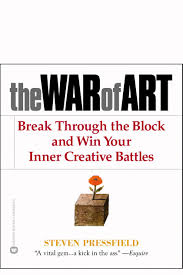
I had heard much talk of Pressfield’s The War of Art, but it always remained tucked on the back of my to read list. Then, as serrendipitous conversation with a colleague led to her lending me the book. Suddenly, all those reviews about it being a game changer made complete sense.

 Most of use have two lives. The life we live and the unlived life within us. Between the two stands Resistance.

The concept is simple: resistance. We all feel it, we all succumb to it. This book is for anyone who has dreams – hopefully big dreams – that never seem to get closer to being tangible. I’m not talking pie in the sky, wishy washy vague aspirations. I’m talking about those people who know there is something more important they should be doing, perhaps something they were put on this earth to do, yet never actually moving forwards. Because resistance gets to us all.

The Book is itself divided into three ‘books’ and the first one ‘Resistance – defining the enemy’ is perhaps one of the easiest things I’ve ever read. I positively devoured each page, recognising myself staring back in among the words. Pressfield has mastered the art of the bite size chunk. It is both brutal and inspiring at the same time.

Book Two ‘Combating Resistance’ was a bit slower, less immediate, with more to digest in each section. I found myself naturally pausing more and thinking about what was being said, rather than having an instantaneous response.

Book Three ‘Beyond Resistance’ is more spiritual in some ways, but also more empowering. Whilst it explores the concept that we might have a reason for being, a talent for want of a better word, breaking past our own fear and being that true self is not automatic. It is still up to us to do the work. To take those first steps, to follow through and finally to complete. It doesn’t sugar-coat anything; just completing once is unlikely to be enough, it is in persistence and continued moving past resistance that the the higher ground can be found.

This book is an easy read in the grand scheme of things. More importantly, for those teetering on the edge, it has a knack for providing a mind shift towards getting off your backside and achieving the best you can be.

war of art

I can’t wait to read Turning Pro.

The importance of a quarterly review

We’re at the end of March. Which means one thing: quarterly review time!

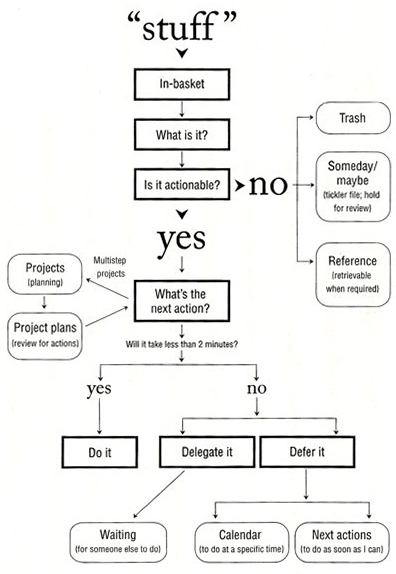
For years I have been a follower of David Allen’s Getting Things Done system. It works. In my opinion, it is the first step in allowing you to start being more productive in all areas of your life, not just your career. I think one of the common misconceptions about the whole GTD methodology is that it is just for work. For go-getting executive types. The ones with the sharp suits. Spoiler alert: that’s not me.

What I am is a busy person with a tendency to over-commit. I also keep a level head in a crisis and in the face of overwhelm, which helps people believe that they can dump more sh!t on me because I am keeping my head above water. It’s great, really. I love it.

But being productive is only one part of the picture. I don’t want to be super-efficient at all the wrong things. That is about as fulfilling in the long term as doing nothing at all. So while a lot of people focus on the lists and gadgets to implement GTD, for me the most important – and oft overlooked – part is the weekly review.

In order to really stay on track though, I think it is vital to implement a quarterly review. Why? I hear no-one ask, because that sounds like just another thing to add to the list. I’m going to tell you anyway. You can say thank you later.

It gives you a chance to course correct

If you want to make God laugh, tell him about your plans – Woody Allen. We set out at the beginning of the year with the best information available at the time. Then external circumstances change. Even if you’ve been making good progress, if things have changed too much, you’ll just keep getting further and further away from the new best end result. Every three months is a good time to assess those changes and course correct as necessary.

It motivates you when you see how much you’ve achieved

I’ve already hit the my first big writing goal of the year. I’ve got a huge house project that’s been hanging around for ages done at last. Sure, I’ve not been perfect, but it’s not been terrible.

It gives you a framework to address consistent areas of weakness

I haven’t hit any of my health goals for this year. In fact, it’s the one area of my life that when I look back over the past three months, I see consistently poor and even backwards progress in some cases. We’ve all got these areas on our life. The hardest part is facing up to them. This is your chance to do so.

*puts down doughnut*

It means you don’t look at your New Years Resolutions in December and realise you’ve wasted another year

Because we’ve all done that, right?

A few quick step-by-step approaches

1. Review the goals you set at the beginning of the year and assess the progress you’ve made. Honestly.

2. Get rid of those goals you added on because you thought you should, not because you wanted to. You’ve got no reason to do them, not emotionally, so they’ll just clog up your list. You need goals that you’ve connected to, the ones that have a why? attached.

3. Have you been capturing all those things you need to do into somewhere reliable? If not, do a mindsweep and do it now. Put it on paper, on your laptop, your smartphone, whatever you choose. Just make it somewhere you’ll look that you trust.

4. Look over your life – all areas, all levels. Is what you’re doing consistent with your roles and responsibilities? Your dreams? Your 2-5 year vision? There’s no great mystery behind this. If you start doing it, honestly, you’ll find some part of your psyche tugging you towards something if you’re off track.

5. What next action steps do you need to take to get moving again on your goals?

6. Pick one of them and do it immediately once the review ends.

That’s it. It really is that simple. All it takes is the commitment and will to move forwards.

Good luck!

GTD-Workflow

Why I achieve more by taking a proper break

I need a holiday. 

I know that is a phrase people use a lot. If you’re American, or some other nationality where vacations are your preferred terminology, then I apologise. I’ll be holidaying all the way through this post and beyond.

IMG_1032

I genuinely don’t understand people who don’t use all their annual leave. Especially in places where you get two weeks a year. I’d emigrate. Seriously. I was all set to move to a job in Canada until I realised I’d only get that much time off a year. A regular break allows you to rest. Recharge. Come back stronger and more creative than ever, in both your personal and business pursuits.

Anyway, I always want a holiday. Most people do. In a world where global travel is easier than ever, it’s a dream that is always tantalisingly in reach. But I’ve also reached that point where I know when I need one. The two things are very distinct. Needing one comes when the alternative is curling up into a ball each morning unable to face the prospect of another day of ‘stuff’.

When I need a holiday, anything that takes effort becomes ‘stuff’. Working out. Reading. Getting up. Brushing my teeth… Luckily, my requirements for a break are very simple:

No real connection with the outside world, other than emergency communication. Any tweets / blogposts to fill the gap are prescheduled. Wifi is a curse on holiday, not a blessing.

Some sun and sea is always nice.

I always gravitate to the ocean

I always gravitate to the ocean

Having someone cook for me. I love to cook, and I do all the cooking in this house, so having someone prepare meals for me always feels like a treat.

Time to read. Oh how I wish I had more time to read. I love being able to binge read on holiday.

Time to write. Specifically, time to come up with ideas. To brainstorm. To invent interesting characters and devious plots. To reconnect with the enjoyment of writing, rather than the business strategy that comes with it. Writing longhand in a cool notebook under a palm tree. Occasionally while channeling Hemingway with the alcohol to go with it…

Did I mention the sun?

Sleep, with no alarm. I tend to still wake before 7am on holiday, but I love being able to come round to a natural gentle alertness, rather than the bloody marimba ringtone on my iPhone.

European coffee. Let’s face it, it’s better than anything in any English-pretending-to-be-American-pretending-to-be-Italian coffee chain. You know who you are. Actual Italian coffee. Venice was particularly nice.

Venice

I think they are all perfectly good reasons. I also think we’re living in a world where stopping and taking time for yourself is increasingly put on the back burner, something you can get round to doing later. It’s one of the reasons why, in the western world, we’re raising a generation that is unlikely to outlive its parents, no matter what the miracles are in modern medicine. Don’t count on being able to get a bionic version by the time you need it. It might not be there. Don’t believe me? Where are those hover boards we were promised, huh?

If you value yourself, think about it. Give yourself a chance to do so much more, by occasionally doing so much less.

90 minute sleep cycles and writing routine

Anyone who knows me or who has been following this blog for a while knows that I am a huge fan of morning routine. This is the most important time of my day. It is my writing time. This time is GOLD.

Over the past few months, I’ve been trying to adjust to the fact I lose two mornings a week now to travel. My usual routine is to begin writing at six, but on those days I start travelling at six. I’m not going to tell you which I prefer. I think you already know the answer. If you’re my boss reading this, then you can choose to pretend it’s the travelling.

The thing that confused me most was that I seemed to struggle to recover so much on those days when I could do my routine as normal.

That was when I started to seriously look into the concept of the 90 minute sleep cycle. I haven’t mastered things just yet, but I’m starting to see some minor improvements.

You see, on the weeks I don’t have to travel, I have a regular bed time as well as wake up time. I’ve been doing my 6am morning routine for over four years now (maybe even longer) and my body found its evening bedtime naturally as a result.

The problem with adding the new travel to my schedule was that I was then so tired when I got back, I was going to bed an hour earlier to try and compensate, but somehow still felt terrible the next day. Having looked a bit more into the idea of 90 minute sleep cycles, I could start to see that I was probably actually making it worse without realising it.

This is still, of course, all theory for me. I’m tempted by the prospect of buying some kind of sleep tracker to see if what I believe and what is reality actually tie up. Perhaps the apple watch will ultimately track this. I don’t know, but I’m already looking for a reason to buy one. Not this year, obviously. I’ll let all those early adopters iron out all the bugs for me first. But anyway, I digress.

I’m going to continue to try to work my life around getting the most out of my sleep, so I can make the most out of my mornings. For anyone who wants to do more with their lives, then I strongly believe that making time for yourself before the rest of the world wakes up is the best way to do it. It takes commitment, and it takes using all the tips and tricks you can to make it work. Bed is, after all, a wonderful place to be. But I’ll be trying to make sure I stay in it for only n x 90 minutes at a time to make sure I wake up feeling ready to go, rather than just ready for coffee.*


*who am I kidding, I always wake up ready for coffee. That’s the real reason for waking up even if you’ve slept like a baby all night long… 

On never being 37

This is a bit of a personal post, so if that’s not your thing, then feel free to head back off to somewhere else. Of course, it’s actually a post about avoidance and how the big events of our lives sometimes impact us in strange ways unless we realise it.

I am actually 37. Despite the title of the post, I didn’t get to skip the year. Aliens did not kidnap me nor did I get frozen in time. I have been 37 for many months, but from the day I turned 37, I started saying I was nearly 38. Not nearly 40, or some other universal milestone event. 38.

Why?

When I realised I’ve been doing it, it was immediately obvious. My mother was 38 when my dad died. His death was, hands down, the most monumental and life-altering moment of my existence. The effects of it have reverberated across my family and through the years. At the heart of it, I couldn’t imagine being so young and losing the love of your life. Losing, in the process, your own, in a very real way.

Being 38 has become symbolic to me of something deeper. Something terrifying. Something I am drawn towards and yet don’t really want to arrive. Something that is now, after months of saying that I’m nearly at it, I actually am beginning to approach.

We inherit the things that go before us, whether we want them or not. We can let them define us, or we can acknowledge them and accept them, before walking our own path. I am trying to cling tight to the idea of the latter, even as the clock ticks down towards a time that has become something of a monster in the back of my mind.

Can you get worse at meditation?

At the beginning of the year, one of my main goals for 2015 was to get to the point where I could meditate for 30 minutes. I knew that it wouldn’t be easy, so I used the calm app for my phone so I could work my way through, starting with small chunks and building up.

Despite setting my expectations low, it’s been harder than I thought. I assumed that it would start off difficult but then I would have longer and longer periods of a calm and quiet mind. Instead, the voices are getting louder.

I’m not sure if this is a normal thing. There is a chance that I’m at that point which occurs with most things; the bit where it gets so bad you want to give up before the breakthrough. It could be that I’m actually getting worse at it. I might be the first person to ever end a year’s worth of meditation more stressed out than when I started.

I don’t want to give up on this though. Not just yet. I have a few more strategies I’m going to try:

1) changing the time of day. I’ve been doing it just before bed, but maybe that’s not right for me. Instead, I’m going to try to move it to part of my 6am morning routine, before I have the chaos of the day built up inside of me.

2) change the frequency. I set myself a goal of doing it three times a week, because that seems doable. It means it doesn’t form a habit though, so the inertia sets in between each session. While it might seem crazy to say I’m going to do it more when I’m already struggling to do it less, I can see the benefit of making it part of my daily routine.

3) reduce the time back down again. I’ve been trying to do ten minute blocks, because that seemed reasonable. It could be that sitting for ten minutes right now is more than my brain can handle, so it allows itself to turn into a free-for-all. Going down to five minutes (or perhaps even three), until I can see some progress might be enough for now. I can build up again when I’m ready.

So that’s the plan. If anyone has any helpful hints, or has been through this and come out the other side, then please let me know!

Helloooo March!

According to most people and popular media (so it must be true, right?) the most depressing day of the year is Blue Monday – the third Monday in January. Not for me. January isn’t a depressing month at all as far as I’m concerned – it’s February that’s the kicker. And today means it’s behind me for another year.

I’m a compulsive goal setter and personal development freak. Given the holiday downtime and resolution nature of the New Year, I’m generally fired up for January. I have plans. Ambitions. A reason to keep going even though my body is sluggish from too much Christmas food. And because I don’t make resolutions on the fly on 1st January, I have the power to keep going through Blue Monday.

Now, February is unique. It is the only month with 28 days and for me, each of those days feels like 2 regular month days. February drags. It’s a combination of factors.

Give me my sun

Living in England most of the time means that by February the dark nights are getting tiresome. The days are grey and dull. I’m starting to dream of sunshine but aware that lying out in the heat is still a long, long time away.

Goals and habits hit the tough spot

Even if you’re lucky enough to have stayed on track all the way through January, you’re probably about to hit the hard bit. It used to be that people believed it took 21 days to create a habit, but more recent research indicates it is closer to 66. That’s an average. For some habits it will be much, much longer. This is divided into three sections. The first third, when it is painful and horrible but you still have the motivational x-factor. The second third, where it’s still painful but you’re not seeing the benefits yet. The final third, where it stops being painful and some benefits also start to trickle through. February tends to embrace that middle third with open arms and strokes you with misery.

Collaborative projects start to wobble

These can be passion-driven projects or work related projects. When everyone comes back after the holidays in January, they’re refreshed. Projects seem doable. The plan is put in place. Of course, no project ever goes one hundred per cent according to plan, so February is when people start to become out of sync. They work at difference focus levels, and emotional commitment to the project starts to waver. By the time these have been worked through, there is no avoiding the negative impact on the other areas of life.

So, now I get to welcome March with open arms. In four weeks the clocks change and the extra sunlight will make it easier to escape the soft warm clutches of the duvet. Today, I have set a few hours aside to review my goals and plans as set out at the beginning of the year and allow myself to course correct.

I sit down with my fieldnotes book and journal for a little while, trying to get to the root of what I’m feeling and any obstacles I’m putting in the way of myself subconsciously. By using the bullet journal approach, it becomes clear which tasks I’ve been deferring just a little too frequently.

Just doing that can be scary, but it will allow me to draw a line under the past four weeks and move on once more with a new sense of purpose. The new habits are either engrained or are about to hit the payoff stage. If I’ve not really kept up with them, I can ask myself why and see if they are still aligned with the bigger picture I have for the year.

Remember: March = momentum, if you let it.

Fortune Cookie

Writing and labels

Yesterday, I was reading this article by Aminatta Forna entitled ‘don’t judge a book by its author’ and I found it absolutely captivating. It got me thinking about something which has been brewing at the back of my mind for a long time. It’s all caught up in that messy understanding of what I write.

When I get the opportunity to meet and mingle with other writers, the question often pops up. What do you write? I always hesitate and the word seems to get stuck at the back of my throat because it’s so obvious, surely: stories. The confusion and uncertainty comes from knowing the question that is really being asked is ‘which genre do you write?’

Which section of which bookshelf would you like to sit on?

But my honest answer is always in that one word. I generally waffle a bit about writing anything and everything, passing myself off as a Jack of all trades. Yet very few authors actually make it down that route. We all know that Neil Gaiman is the notable exception, even forgiven for that mild transgression regarding Duran Duran. All others must not pass without first declaring their pigeonhole.

I’ve never written science fiction. I don’t care enough about getting the science part right to make it an enjoyable experience for me or anyone else who might then get to read it. Fantasy, with much more leeway to veer around, I’ve tried. Horror. Romance. Short stories. YA. So called general fiction. I find a story rattling around in my brain and I write it down. It never crosses my mind to think in terms of genre first. A character whispers in my ear that they have something interesting to tell me and if they happen to be a teenager, a seventeenth century serving wench or a werehamster* then so be it.

I’m not a single characteristic. I’m a messy, complex human being. Likewise, I can’t see myself ever getting joy from being trapped in a single genre. But there is one thing I’m starting to realise:

I really don’t mind.

You can keep your labels to yourself.


*Never actually written a thing with a werehamster

A lot can happen in a year…

Apologies for the lack of posting, but I’m having part of downstairs remodelled into a kitchen/diner, and attempting to live and work on only one floor has so far proved to be more challenging than I had anticipated.

Today is the first time I’ve had to just sit, take a breath and look around. I realised then that this time last year I was equally as surrounded by boxes, about to pack a few final things and head off to New Zealand for six months. It was a good way to remind myself that no matter how manic things feel right now, they are nothing compared to how things were back then.

A lot has changed. I’ve had the chance to travel a lot more and it’s been a year since I’ve worked for my old company. I still find myself in old work mode, especially now I’m driving up and down motorways so much and stopping at services. I look at the posters and the screens and can see touches of things I was once involved in that have carried on without me. I’m a sucker for nostalgia.

But anyway, before I drift off down memory lane, I thought I’d share the one insight I’ve had whilst trying to continue my writing and 2015 health resolutions and all that other good stuff that seemed so shiny on January 1st: Be Kind To Yourself.

You can have a plan, you can have a plan B for that matter, but sometimes it will still be an absolute nightmare to keep going when life throws you a curveball. Or in this instance, the lack of a kettle. No kettle equals no coffee at 6am and quite frankly, that is never a good way for me to start my day. It’s not that great for anyone around me either. Having intermittent access to water means I’m not drinking my 8 pints a day. And eating meals that come from either restaurants or the microwave is already starting to show in all the wrong places. I look at my weekly tasks and there is a significant lack of ticks in the boxes.

All of which means I can either try to continue with some things and do them badly, give up completely, or option number 3: acknowledge the difficulties, do the things I can and then make a solid plan to move more on them later. For most things, this is the option I’ve accepted.

Because I’m not ready to quit, but I’m not going to get down on myself for the things I can’t control either. At the end of January, I’ll get up, dust myself off (quite literally, as there is plaster dust in every ***ing room) and start again.