Tag Archives: personal development

5 Tips to survive sugar free February

Dry January (or Veganuary) is behind us. For some people, they fell by the wayside after day three. For others, they will have begun to instil the habits that could lead to a complete change of life. Sugar Free February is not just the health kick fad of calendar month 2, it’s also a great way to raise money for Cancer Research.

Copyright Cancer Research

Ready to take the plunge? Most people are surprised by how difficult it is to go sugar free. The reality that you have to do  more than simply cut out chocolate sets in pretty quickly. So how do you make sure you survive for a whole 28 days?

Before we get to specific tips, you have to define what you mean by ‘no sugar’. Are you eliminating any kind of sugar? Are you focused on fructose specifically? Or do you just want to avoid any food products with added sugars? The chances are that whatever you decide, it will still be a big improvement from where you are now. If you’re a complete newbie and only intend to do it for a month then I’d recommend simply avoiding food with added sugar (there’s lots of label reading in your future, sorry).

So what are the 5 keys to success and staying (relatively) sane throughout February?

1. Remove temptation

Your willpower is not as strong as you think it is. Having to consciously choose not to eat those delicious tasty treats every time you open the cupboard is both exhausting and likely to trip you up the very first time you come home late after a bad day. If you don’t want to throw perfectly good food away, then donate it to a friend or family member. If you’re planning to devour it in March, then lock it away in the garage or attic (or any other place you don’t habitually scour for snacks) until then.

2. Find Support

If you can’t convince anyone in your real life to come on the journey with you, then join an online group, browse forums, read blogs. Feeling you are not alone in those moments when you question your sanity about this whole thing can stop you from ramming a whole packet of cookies into your face in one sitting. A lot of people are shocked to discover how hard this is to begin with, even for a month. See the next point.

3. Be aware of the physical response to addiction

Urgh. My least favourite part.

Sugar is addictive. Combine it with fat in a treat and you’ve got an instant brain high that leaves you wanting more. That chemical reaction is something your body misses within a few days. The physical effects of sugar withdrawal are the same as any other addictive substance and people don’t talk about it enough. So go into this being prepared. Irritability, headaches, lack of concentration and sometimes feeling like you have the flu are all possible short term side effects of quitting sugar. My advice: be prepared.

Oh, and apologise in advance.

4. Plan your social life

Just because you’re quitting sugar for the month doesn’t mean you need to quit life. It does mean you need to plan in advance. If you have any say in the location, then choose somewhere that has tasty but low sugar foods on the menu (a sauce can ambiguously contain a multitude of sins). If you don’t have any control, then check out the menu in advance. There is usually something that’s allowed. Find it, make the decision in advance and then do not look at the menu again when you get there. Trust me, we’re always weaker in the moment, especially in those places that have actual pictures of the desserts to tempt you.

5. Remember why you’re doing it at all times

If you’re committing to this month to raise funds, then I salute you. Remember to salute yourself too. When you’re in the middle of a terrible day and your colleague brings in birthday cakes, remind yourself that you can say no because you are doing something awesome.

If you’re doing it because you hope it’s the start of a new way of eating, then avoid thinking about being deprived and think instead of the long-term outcome. Sure you’re missing that slice of cake now, but soon your clothes will fit better, your energy levels will be higher and your body will have had chance to clear out the processed gunk you’ve been filling it with for years. Keep your eyes on the prize.

And remember, if you don’t want to commit to a whole month without sugar, then you can still make a one-off donation to a great cause. Imagine if we could eradicate cancer mortality in our lifetime.

The Realist’s Guide To Sugar Free

How to quit sugar and stay sane in the real world.
MD Diary Notebook pros and cons

2018 was a busy, complex year. In 2019 I’m going simple.  As simple as possible whilst still being effective. So when searching for a paper planner, that was my main focus. After a wide range of searches, I settled on the MD Diary Notebook and now we’re a few weeks in, it’s serving me well.

Why simple?

In 2018, my morning routine was too much to handle. Becoming a new mom meant I needed less if I wanted to get any real work done, but instead I somehow started to hold onto the morning routine as being work in itself. In short, I used it for procrastination, whilst still checking boxes and feeling good about myself. When doing my yearly review it was abundantly clear how little work actually got done. This year, my goal is to simplify everything in order to focus on what matters.

To give you an idea of how much I need to simplify things, here is a list of all the paper based products I used last year as part of my ‘routine’.

  • A one line a day memory book
  • A Leuchturrm weekly planner
  • Trigg Life Mapper
  • Midori Travelers Notebook and inserts (x3)
  • Pocket notebooks, e.g. Field Notes (x5)
  • A5 notebooks for journaling (x8)
  • A5 notebooks for creative projects (x1)

It’s no great surprise that traveling this year was nothing short of impossible unless I only wanted paper in my hand luggage. For this year, my goal is to stick with the following:

  • A one line a day memory book
  • MD Diary Notebook
  • Pocket notebooks for ideas on the go
  • A5 notebooks for creative ideas

That’s a serious cut and I still want to keep the elements that work. Journaling has kept me sane after countless sleepless nights and full time work days, so I don’t want to let it go completely.

So why choose the MD Diary Notebook?

Firstly, the majority of the book is lined pages, with slightly darker lines splitting the page into quarters. It allows me the free form elements to control the pieces of my practice, but the structure allows me to limit it to a single page per day. That in itself reduces the procrastination time. I’m not artistic enough for a fancy BuJo, but as Ryder Carroll himself pointed out in his recent post, it’s not about prettiness and social media likes, it’s about serving a purpose.

This gives me the pages I need without requiring me to brush up on my calligraphy, or having to draw out calendar pages. If you do like artistic and pretty, then the lined format is much less likely to work for you.
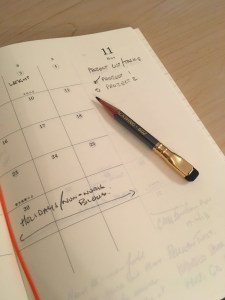
I use the first quarter to write down three things I’m grateful for, a positive affirmation and my main goal for the day. That then leaves me the remainder of a page to do a brain dump and get any nagging thoughts or events I want to remember in the future off my mind.

Monthly Calendar View

The MD diary allows me to combine my planning and routine together so that when I travel, everything is in one place. Each month has a square for each day, with a wide right-hand margin and further space at the bottom of the page.

Admittedly I have to keep my writing small and neat to make this work. Many would argue that it doesn’t leave much space for a whole month’s worth of planning, but again this forces constraint. Is it really going to get done this month or is it more of a wish-list item? I use a digital app as my actual task management system because I’m very granular (a typical GTD-er) so don’t need that space for long lists.
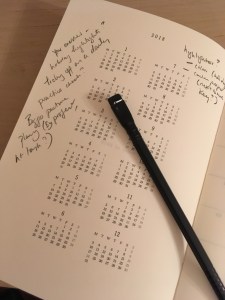


The Year View

The year view is also compact. Perhaps a little too compact for most people.

Again there is space down the side for important notes, but I’m guessing this section will work with different coloured highlighters and a key to what they actually mean in the margin.

Of course, form factor isn’t everything. There still needs to be sufficient quality and that is something I’ve always found to be the case with any Midori product. The paper works well with every fountain pen I’ve thrown at it, including a 1.5 stub nib with reasonably wet ink. Due to the space restrictions, the majority of users are likely to be writing with a medium nib at most, so I don’t see this being a problem.

General planner-procrastination observations

Last year I spent far less time on creative ideas. There were probably fewer A5 notebooks in comparison to previous years, but the ones I did fill were packed with naval gazing more than actual work. Similarly I used a LOT less pocket notebooks. Looking back, that was because I was firefighting for much of the time and my old GTD habit of capturing thoughts and ideas to put into my system began to slide.

So far I can completely recommend my new setup as a way to control the start of your day, but as is the case with these things, the true test is if it is still working for me by the time that second quarter of 2019 rolls around.

Sugar cubes, pudding tax, ‘New Year New You’ marketing and simplification

The first full week of each new year is when I actually begin any planned improvements. I’m such an introvert that I need time after the holidays to process and set my focus. For those starting their resolutions on New Year’s Day, this is the tough week. This is where it gets real. I’m just starting out and there is something nice about that, even if it means tough is still lying ahead, waiting for me.

It’s no surprise that the first week of the new year has been filled with health related stories designed to tap into people feeling guilty for their holiday gluttony and determined (again) that this is the year they’re going to turn everything around. 

It’s interesting to see that sugar has largely replaced fat as the demon in the headlines. When I first began looking into the benefits of a sugar-free lifestyle in 2015, saturated fat – indeed any fat – was still public enemy number one. The change has been swift and is getting less subtle. 

That Public Health England are now focused on reducing sugar intake as one of the key ways of reducing the obesity epidemic is the main driver behind this. I’m under no illusions that this is an altruistic gesture. Obesity simply correlates to more occurrences of diabetes and heart disease (amongst many things), all of which cost the NHS money to treat. Regardless of the motivation, it’s good to see that finally people are starting to be told the truth about how much sugar is added to our foods by manufacturers.

Of course, depending on the media outlet involved, the presentation is different. Nanny state and tax threats drive some clickbait headlines, others provide a more balanced view. But the truth behind the message is the same across the board – we need to reduce the amount of sugar in our diets.

What none of it seems to want to focus on is how hard it is to actually make that happen. A few foods get targeted here and there as extreme examples,  but that doesn’t really help people with the everyday foods that have sugars added to them. The unexpected ones – those often labelled as ‘diet’ and ‘low fat’ – that catch people out.

More importantly, none of them seem to offer any insight on the simple fact that there is something addictive about sugar. Something that makes it hard to cut out sweets and chocolate, no matter how much information we have or how good our intentions are. This is the element that trips people up time and time again, myself included. Just one little taste, one bad day, can get us reaching for a sugar-based snack before we’ve even had chance to think about what we’re doing. Time and time again I’ve done this since the baby was born, eating in some sleep-deprived haze and having very little memory of when or how. This lack of intentionality is something I absolutely must address this year, hopefully with the addition of an extra hour or two asleep each night.

I’ll be experimenting with general simplification of my life to do this and if it works well, that will be something I share throughout the year. There is a certain attraction to achieving more by doing less, but it will be interesting to see if the promise lives up to the theory.

So below are some of my favourite headlines of 2019 blitzing those with resolutions to think about. Where there isn’t a link it’s because I simply refuse to give clicks to certain sources. That’s another 2019 resolution for all of us. Let’s not feed the trolls.

Children are getting targeted in the blitz, with the story that children have already exceeded their entire childhood quota of sugar by the age of 10. That’s 8 whole sugar free years they then need to do just to break even. A scary thought. But I loved Matthew’s sugar experiment with his family – this is the kind of visualisation that you don’t get from simply reading the labels and doing the calculations in your head.

Are we going to get a pudding tax? Some progress has been made with other foods but I think a pudding tax is silly. Target the misleading foods and the everyday foods first.

And of course, the thought that our government would be together enough to order anyone to do anything is implied by the Sun’s headline ‘KIDS will be ordered not to eat Frosties and Coco Pops under tough new government guidelines’. The actual story is about a set of simple recommendations, but why not get people in a defiant and self-destructive mood instead? See earlier comment re: trolls.

If you’re more interested in the information behind the headlines, including some practical and actionable tips on how to eliminate sugar from your life, then my book is a steal at only 99p on kindle. It won’t break the bank and may change your approach to diet and healthy living forever. I’m re-reading it now to remember my own lessons!


Not interested in changing your diet but itching to make other improvements this year? Then take a look at my book on Resolutions instead. Goal setting doesn’t need to begin January 1st. Why wait for tomorrow to become a better version of yourself? Not just for the next week, but with a strategy that lasts.
Sugar bans and freakshakes – consciously cutting down on sugar

Last week it hit the news that Action On Sugar was calling for a ban on milkshakes that had an obscenely high amount of sugar. The Unicorn Freakshake on sale at Toby outlets was highlighted in particular due to it’s 39 – yes 39! – teaspoons of sugar per shake.

Image from Toby Carvery

Whilst banning a treat that contains over six times the amount of sugar recommended for seven to 10-year-olds seems like a good idea, it of course prompted reactions along the lines of ‘nanny state telling us what to do’ amongst many. There will always be people who will deliberately do something rather than have someone else tell them they can’t. But is an outright ban a good idea anyway?

To ban or not to ban?

I believe there is a fundamental difference here in the approach required to many other foods. Firstly, I don’t agree with an outright ban (which may surprise you), but I do believe that menus with this type of item should be very clearly labelled. The news presentation is different to a standard menu presentation, for example. 163g of sugar on a menu is hard for someone to visualise (other than ‘a lot’), whereas 39 teaspoons is much easier. That’s why newspaper outlets use the latter to sell their story.

More importantly, whether or not you label a freakshake with all the information available, people know they’re having something unhealthy when they choose it. Admittedly, they might not realise just how unhealthy, but they’re not confusing it with a side salad. It’s a conscious decision to ‘have a treat’.

Unconscious vs conscious eating

In my opinion, it would be better to focus on those foods that are significantly more ambiguous. The foods that people eat because they’re labelled as diet foods, simply because they’re lower in fat. The foods that catch people out.

I know countless people who have gone on a diet so have stopped adding a spoon of sugar to their tea or coffee, oblivious that the low fat yoghurt they’ve started to include with their lunch (must be healthy!) contains 3 teaspoons of the stuff – a net gain of 2 teaspoons for the swap. And you all know where I stand on children’s cereals – if you want to get anything banned there’s plenty out there that should be. Over the course of a week’s breakfast, people give their kids a freakshake plus in terms of sugar, often without even realising it.

So yes, we need to label better and maybe even ban or tax certain foods, but we need to choose our targets carefully. Bigger isn’t always better. The road to obesity and all its associated health risks isn’t a single freakshake every now and again, it’s all the other meals in between, eaten without awareness until it’s too late.


You can find out more about how to make more informed sugar choices in  The Realist’s Guide To Sugar Free

Field Notes Still Hanging Around: Black Ice

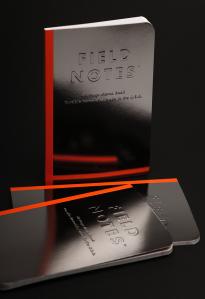
Just to be clear, this edition has now sold out on the Field Notes website. Where it’s hanging around is on my desk, never getting used as part of my creative writing or planning routine. So I thought it was time to do a Field Notes Black Ice review and work out why.

I was really excited when I first saw the Field Notes Black Ice edition. One of my favourite things about Field Notes is their constant push towards innovation. Not only was this a beautiful looking edition with its shiny cover, it was also a brand-new way of binding the Field Notes.

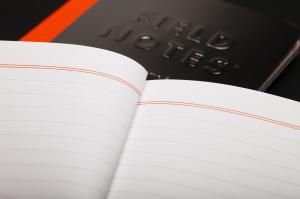
This edition was found more like the Write notepads. Having tried Write notepads before this edition I was slightly dubious from the start about how this functionality would fit within my life. One of my favourite things about a Field Notes notebook is its ability to lie relatively flat on the desk. This is only a small thing for some people, but I find it very easy when the book is close to ignore the tasks inside. Having the book open on my desk means I am more likely to achieve what I need to do during that day as part of my creative/productive workflows. This, in the end, was one of the biggest downsides for me, along with the line drooling inside. However I did love the orange colour of the lines and thought them a beautiful compliment to the binding.

I know for many people these two features combined won’t really be a problem. But for me this turns a beautiful looking edition into something I really struggle to use in daily life. Normally I can get through a fieldnotes notebook in approximately three weeks. Sometimes, if it is particularly busy I can complete one in two weeks. if things are less busy it can take four to five weeks. However on my first run I used the Black Ice edition for over six weeks now and it was only half full. I simply did not find myself reaching for this edition like I normally do with the Field Notes in my pocket. Instead I began to scribble my notes on pieces of paper and dream about the next release. I also started using other notebooks to record my ideas and small tasks began to get recorded in my paper planner. Eventually it got put into my Dudek Modern Goods pen and paper stand and it has been there ever since.

So why would anyone like this edition? The one thing I can’t deny is that Black Ice looks beautiful. The cover somehow remains shiny metallic looking even after the six weeks of use. The cover also crinkles nicely in the pockets. One of the many reasons people enjoy using Field Notes is how they look once used and have a slightly distressed finish. The use of new binding as opposed to the traditional three staples means that this edition is slightly thicker than usual. This makes it harder to bend and tear when in the bag or in the pocket so along with fewer signs of wear and tear, the pages stay very much intact. Some of the editions of Field Notes immediately prior to this (I’m looking at you Two Rivers) had definite issues when it came to keeping the paper inside the cover. Given how much I enjoyed holding the book open and cracking the spine, I expected this to also be in edition where the pages fell out easily, so was pleasantly surprised when they didn’t.

I often see Black Ice for resale, so it seems I wasn’t the only one that couldn’t make it work for them. Given that I’m in the process of re-shaking up my routine and productivity system again, it was time to clear the desk. Sadly, the half-finished Black Ice will be consigned to the drawer with the completed notebooks.

Maybe one day I’ll want to pull it out again.

Five ways to create a flexible planning system

As you may have noticed, there haven’t been many new posts here lately. It would be so easy to say that life got ‘busy’. In reality, life changed and the systems I had in place weren’t flexible enough to handle it.

Is your productivity system flexible enough to handle change?

Many people from a GTD background spend years getting their system to work just the way they want it to. One of the major strengths of the Getting Things Done system is that it is inherently flexible. There is no preferred tool and you can customise the set up to suit your needs and circumstances.

But once we find a way of doing things that feels right to us, humans develop an overwhelming resistance to change. The system might be flexible, but we become inflexible. Without realising it, I had found myself in this trap. Setting aside the time for creative thinking and writing of posts fell through the cracks as a result.

So how do we make sure that our systems are flexible enough that changes don’t bring everything to a grinding halt?

Don’t be wholly reliant on a system that isn’t transferable.

Whilst we all have our favourite tools (both digital and analogue), there is an inherent danger in being completely tied into one. It may have the best features in the world right now, but when it stops being supported and you can’t export your tasks and projects, you’re in big trouble. Frictionless access to your next actions is vital.

Separate life and work

For many years, people argued that when it came to life and work, it was all one and therefore only one system was needed. Whilst in some ways this is true, ‘work’ changes at a much faster rate now than when GTD was originally published back in 2001. Not only do we change employers much more frequently, many of us now have developed side hustles to cope with a crazy economy in a crazy world. If your system is all nicely integrated to your day job but that changes every few years or even months, then it can be a painful process to routinely unpick it all. With constant data breaches, companies are getting more and more antsy about accessing different tools on their systems.

Letting go is not the same as giving up

We can become deeply wedded to an idea of something we want – or think we should want – to do. When circumstances change, it may no longer be relevant. Sometimes it can hurt to let something go, or feel a sense of failure for not completing it. The end result is a system full of junk that you once wanted to accomplish, but now have no real intention of taking action on. Over time, this clutter can slow everything down until you stop noticing the things that remain important even once life settles down again.

Attractive tools that are easy to use

It’s a simple fact that the more you want to play with your toys, the more time you’ll spend with them. A task management system you don’t like will be a task management system you ignore. The same applies when things change. It might be that your app worked fantastically with email input at a time when most of your tasks appeared that way. But if it is cumbersome when you have to add a task manually and that becomes your new normal, you’re going to stop looking at and updating the tool pretty quickly.

Don’t be a chronic-optimist

When your circumstances change, the new tasks you need to complete take their toll on other items, even if they are seemingly unrelated. Learning new things and using your day in different ways tires you out in the beginning. This means a task you have been completing in 30 minutes at 6pm for years can suddenly take double that amount of time when you’re forced to push it back to 8pm and your brain is extra tired. Before you know it, you’re in backlog with tasks that you haven’t got round to. Like writing this post, for example…

So, after nearly six weeks of tweaking my system after my third major change in two years, I think I’ve made it slightly more adaptable.

Only time will tell.

The legacy of Roger Bannister

Although it seems a particularly inappropriate time to say it, over the past few years I grew sick of hearing about Roger Bannister. Working in personal and corporate development, it seemed like every book or PowerPoint presentation wasn’t complete without a reference to the four minute mile.

As if getting someone in a suit to reach inbox zero was on par with breaking a time /distance record that had held since man developed accurate timepieces.

That record lasted less than 50 days before it was broken by someone else. The commonly held perspective is that once someone had proven it was possible, others could finally believe it and do it themselves. This is, of course, somewhat simplistic, as a group of runners were all hitting around that mark, but the story does have a nice ring to it.

For me, the real lesson to take away from Roger Bannister’s four minute mile was that he was an amateur. It’s hard to imagine in today’s world of professional athletes, where running or kicking a ball is a career in itself. That famous four minute mile run almost never happened because of bad weather. Harder to imagine is that Bannister came to do it after going to work that day and the success built on a training regime of sneaking in a mere forty-five minutes daily.

It’s not so much about proving something so others can do it. Instead, it’s having the grit and determination to do something yourself, even if it’s not your main priority in life.


The 5 best bullet journal health tracker spreads

With all the apps out there focused on health and habits, analogue still remains a fantastic way to set goals and easily monitor your progress. I’ve been using a modified bullet journal for years now and its best feature is that the system does whatever you want. When it comes to tracking your health, a simple one or two page spread is all you need.

I have limited artistic skills to say the least. My bullet journal set up needs to be simple or I spend more time doodling than doing. So the following examples don’t all focus on exquisite calligraphy or time-intensive set up. Of course, they could all be made simpler or more elaborate depending on your personal preferences.

Remember, your healthy habits will be personal to you, so don’t worry about tracking things you don’t care about because someone has included them here. Alternatively, you might see something you’d never considered before.

1 – Minimal

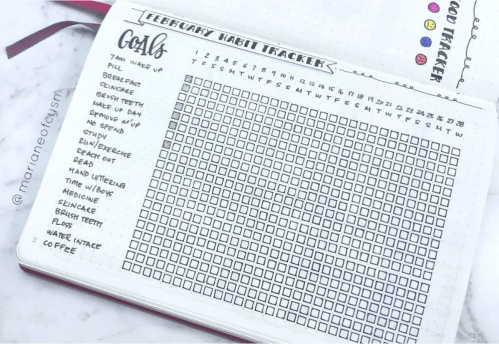
Image: marianeofcysn

This is the kind of tracker I use. I can just about manage to draw small squares without going too far wrong. With the habits listed down the left hand side and the dates across the top, it gives a quick and easy visual of missed days and progress.

2 – Data driven

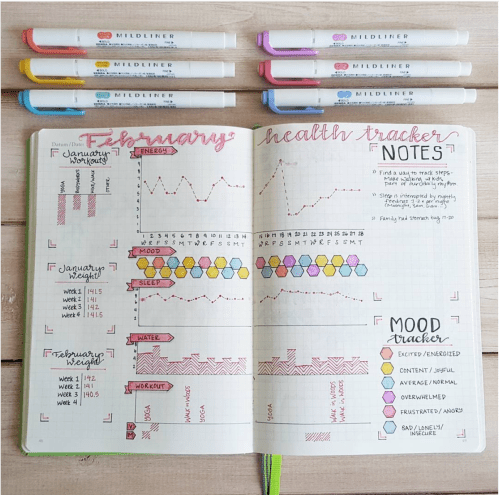
Image: oak.tree.journaling

These simplified graphs allow you to see much more than a yes / no response to your habits. This is particularly useful if you are setting yourself sleep, calorie or water consumption targets, for example. The space for notes is helpful for noting any external factors that impacted progress to add more context to the images.

3 – Funky

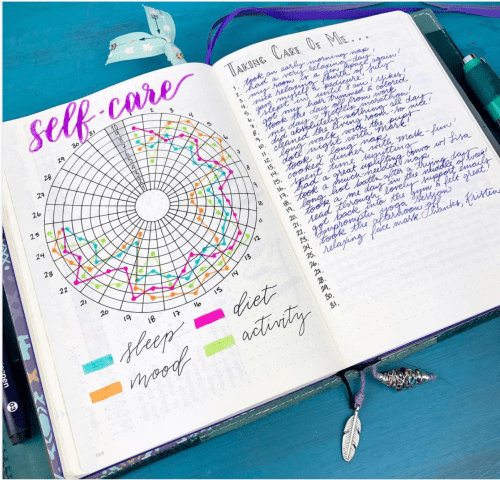
Image: Boho Berry

There is literally no one who bullet journals who hasn’t heard of Boho Berry. With good reason too – she’s always tweaking and experimenting so you don’t have to. With this tracker, I love the sense of full circle you get for the month. It is also a fantastic way of quickly assessing if there is any correlation between your habits. If you eat badly after a poor night’s sleep, then chances are you’ll be able to spot the pattern quickly with this one.

4 – Wordy

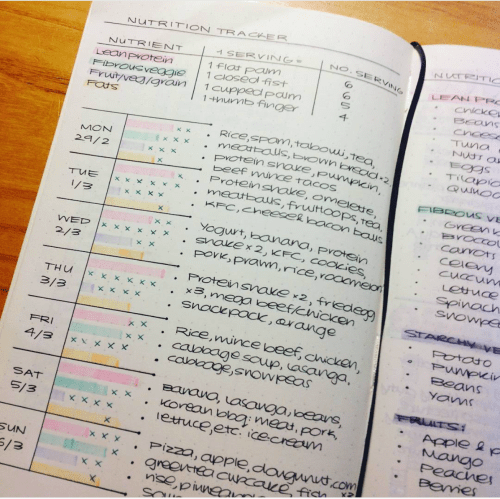
Image: b.izzi

Like the minimalist tracker above, this is the kind of spread I can get behind because it uses more words than images! This is great if you want to track at a greater depth on a weekly, rather than monthly, level. Instead of simply recording whether you hit (or missed) your goal that day, you get space to think about and record the reason why. This is especially useful for those who like to review for strengths and weaknesses so they can course correct as necessary.

5 – Visual

Image: mybulletjournal18

Although this one is also simple in terms of its components, visually it packs quite a punch. The bright colours and easy to read progress bars are great for those who like to take in their information in a visual way. Colour co-ordination really comes into its own with a spread like this and allows you to see where you need to focus your attention as the month progresses. It’s less useful if you’re trying to establish a successful streaking process.

Don’t forget to check out the creators of these spreads (click on the images) to get other ideas that might work for you and see their work in more depth. It’s easy to get overwhelmed by the sheer number of options when you scroll through instagram, so if you’re new to it, start out simple and focus on what you need. There’s plenty of time to tweak it later.

For more information on building habits and healthy eating, check out The Realist’s Guide to Sugar Free and The Realist’s Guide To Resolutions.


January Monthly Review: Fear Setting

January is a strange month. Everyone starts out with a higher level of enthusiasm which then fizzles out faster the the New Year’s Eve fireworks.

Now we stand on the cusp of February and it’s easy to wonder where the past month went. For most of us, the lofty goals we had in mind when the calendar ticked over have already fallen by the wayside. That doesn’t mean we should abandon them completely.

Technique One – Monthly Review

Regardless of whether you abandoned your goals back in week one or if you’ve been grinding away on them the whole way through, a monthly review is an essential technique for staying on track.

Before you begin – no judgement. Don’t beat yourself up for not doing as well as you’d hoped, you’re only human. The fact you are taking the time to do a review at all puts you ahead of the rest of the pack.

Look back over January with an honest pair of eyes. Were you realistic about what you wanted to achieve to begin with, or were you just flush with optimism for the future? Do you even still care about those goals you set? If you don’t, then there is nothing wrong with abandoning them and moving onto something else. The real value is progress on what matters, not for progress’ sake itself.

The final question to ask is what you did right / wrong when it came to working on your goals and plans for the month. Learn the lessons so you don’t make the same mistake again. Improve on your strengths to get even more value from them.

Now set yourself up for a great February. It doesn’t matter about January anymore. Let it go. Instead, focus on how you can gain the momentum that will carry you forward for the rest of the year.

Technique Two – Fear Setting

Tim Ferriss did a great Ted Talk explaining fear setting better than I can. It’s a great technique you can use if you’re not making progress because something is holding you back. If you’ve struggled to really commit to your goals, then this is a reversal of the process. Instead, you define your fears.

For most people, thinking about their fears is counter-intuitive. Why would you spend so much time and energy thinking about the things that induce anxiety and discomfort? Isn’t that the exact opposite of what we are told to do for a happy life? Mindfulness is a hot topic for a reason.

Fear setting is hard, but by going the extra mile and breaking down those fears, you take away their power. Fear is often a series of unanswered ‘but what if?’ questions. They spiral and debilitate. The power comes in getting to those answers.

Like a monthly review, the process is quite simple. You just follow a series of questions and steps to get to a place where you are able to action the right things.

Firstly, you have to define those fears in the extreme. What is the very worst thing that could happen. Be as detailed as you dare.

This is the point where most people stop in life. This is the anxious point. But what could you do to prevent those things from happening? This is the second question Tim asks as part of the technique and it’s amazing how easy it is to come up with answers. Pre-empting the worst case scenario often prevents it.

But what if that bad thing holding you back actually happened anyway? Before it does, take the final step of working out all the things you could do to get out of the hole. It’s amazing how resourceful you can be. That’s because by doing it up front, the pressure is off. When you’re in that place, the fear is the stronger emotion and it stifles ingenuity and creativity. By fear setting up front, you’ll already have the answers should the worst happen.

So by combining the two, you can guarantee yourself a better February, no matter how the year has gone so far.

Need more help? The Realist’s Guide To Resolutions is a practical approach to goal achievement, no matter what time of year.

Ultimate Mindfulness Planner: The Trigg Life Mapper Review

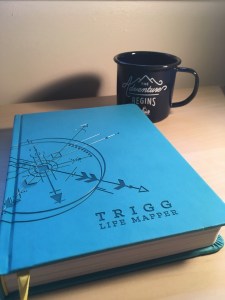
I was gifted The Trigg Life Mapper at Christmas, by someone who had no idea that it was on my purchase list, which was a lovely surprise. Of course, it is exactly my sort of thing.

My morning review. It’s so dark here in England right now.

According to the guys over at Think Trigg it:

“fuses the principles of planning, productivity, habit, mindfulness and gratitude to provide a daily, weekly and annual framework that will ensure you work less, get more done and constantly strive towards meaningful targets”

I’m always trying to fuse the principles of productivity and purpose, so I couldn’t wait to try this out. There have been a few stand out features so far.

Think about what you should do, not everything you could do

It is the first planner that has forced me to use the Covey-style matrix on a daily basis. Anyone who has read anything about time management or productivity will know what this is, but it is another thing entirely to do it as the core planning task of your day. So far it has forced me to be more focused (and therefore more productive) than anything I’ve used before.

Best feature – the focus on what matters most


Because I do more granular planning in my Leuchturrm Weekly Planner (see here for my overview post), the appointment section doesn’t work for me. Instead, because it is fairly inobtrusive, I simply use it to list 3 things I am grateful for as I start my day. I found that to work quite well, although I appreciate I’m probably a bit of an edge case here.

Appointments section – easily modified if required


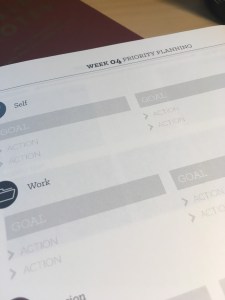
Although the planner has a daily focus, it is also designed to force a weekly review – something I believe is critical to any kind of success. The review section is quite small, but it is followed by a ‘Priority Planning’ page to allow you to set up your ideal next week.

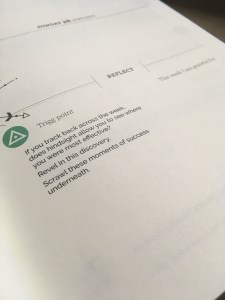
Review section with quotes to ponder

Revisit your goals and projects each week

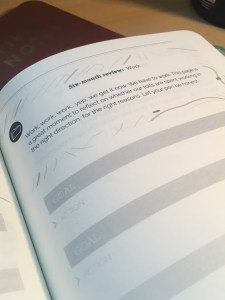
Other reviews are at the six month and end of year points. This is probably sufficient for most people, although I’d like there to be monthly/quarterly review points as well to allow for course correction earlier in the process.

6 month review section for each life area

For those of you who plan out your weekends as heavily as your weekdays, Trigg – like so many other planners out there – gives a reduced space for Saturday and Sunday. There is also no specific structure for these days, just a standard blank space.

Weekend mindfulness and focus optional

The one thing I don’t really use is the Month by Month Theme section. I appreciate the idea of having a theme for each month, but I can’t quite factor out how to use this in my own process as the date spaces are too small for any meaningful annotations.

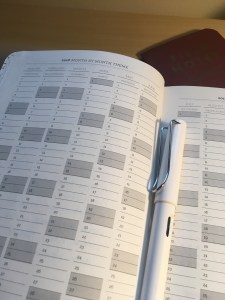
Lamy safari for scale

Begin with the end in mind

The key to getting the most out of the planner is to take the time in the beginning to set it up right. I can see how this is daunting for most people. After all, it starts with a declaration of who and what you intend to be.

Daily reminder of what I’m aiming for

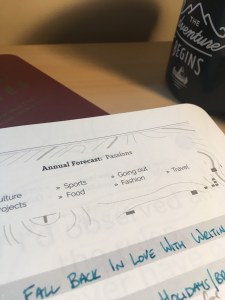
You then set out your yearly intentions in the key life areas of Self, Relationships, Passions and work. As with everything, this will only work if you review it daily, but it can certainly help you set your big picture planning for the year.

Knowing what you really want is always the first step

If this seems a bit daunting, then there is a help section on how to think about the annual forecast. Honestly, if you’re ready for the Trigg planner, you probably already have some sense about what you want. So although it seems intimidating, it took me only an hour or two to set up fully.

Quick reference guide

Begging for a simple design tweak

There’s so much good stuff in here that I really feel like a single bookmark is not enough. Just putting that out there so it can be considered for next year’s edition!

Trigg, Leuchtturm and coffee, my 2018 morning setup

So, in summary, there is no such thing as a perfect planner, but it is possible to modify and mix to create something that works well for you. Trigg has added a whole new level to my morning mindfulness. I now organise the granular detail over in my Leuchtturm planner with much more intention, rather than creating a crazy-making ‘To Do’ list. The result? I had my first guilt-free weekend in about a year. That’s priceless.

I’d recommend this for anyone who is ready to take their focus to the next level.

You can buy the Trigg Life Mapper from Amazon or over at Pocket Notebooks