Tag Archives: personal development

5 Reasons why I’ll be using Scrivener for NanoWrimo

Earlier this week, I read the bravely titled Why I Will Never Use Microsoft Word Again by the mighty Jeff Goins. People I know say that phrase all the time out loud, but few people in positions of influence in the writing world would commit it so defiantly to screen. Yet, as soon as I read the title I was nodding, partially because I already suspected what the solution would be.

The world at large has not yet moved on from Microsoft Word and I suspect it won’t for a while yet. Submissions, anything for the day job – Microsoft Word is the only accepted choice. Even with the huge increase in popularity of Apple products there has been very little give, with an emphasis instead on better conversion technology.

But when it comes to my writing, Scrivener is my tool of choice. For those of you doing NanoWrimo this year who have never tried it, there is a free trial on their website, available for both windows and mac.

But Scrivener is not just for fiction. I think that is a common misconception. Any piece of writing that requires more than a couple of sides of A4 plain text will benefit from it’s functionality. With that in mind, here’s why I’ll be using it for NanoWrimo.

Planning Tools

You can’t write a word of your novel itself before midnight, but there are no rules about pre-writing for Nano. In fact, I would positively encourage anyone trying it for the first time to do as much pre-writing as possible. Scrivener has the best outlining tool I’ve ever come across, and the cork board allows you to visually play with concepts, themes and characters in a way that is impossible on a  piece of simple word processing software.
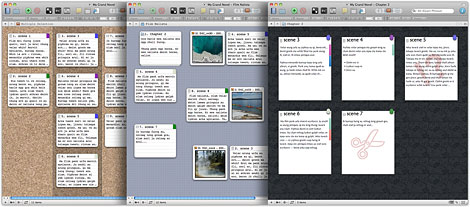
feature-corkboard

Name Generator

This is almost an afterthought for some people, but it has saved my bacon at 6am more than once. It’s amazing for those times when an incidental character turns up. You know the sort, the ones where you need them for a plot point but they don’t come with a back story or enough of a personality in your brain to instinctively know they are called Bob. The name generator tool can do either first names or both, with cultural, gender and language options if you need to narrow it down to something more specific. Don’t let trying to work it out derail your writing flow any longer.

Templates

Again, another key pre-writing feature that it just awesome. Scrivener comes with pre-developed templates for characters and settings, so you can keep track of the key details (nothing like your protagonist changing eye colour halfway through the book is there?). You can attach images and web content in Scrivener too, so keeping it all in one place is easy. What’s more, you can customise it so you can create your own templates. I’m trying my hand at an epic fantasy for Nano this year, so I have a template for my magic systems to make sure they balance each other out and the complicated details don’t get lost. One click and I can easily reference back, rather than having to search through an entire document to find a tiny but suddenly important detail.

Formatting and Fonts

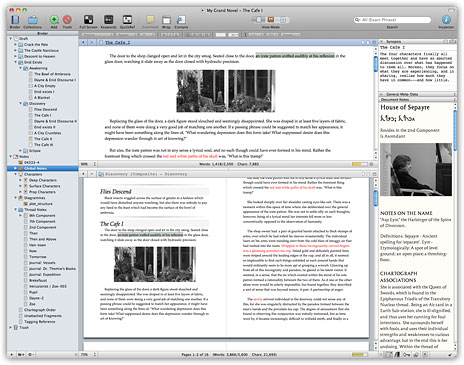
Let’s face it, Word has become more and more complex. Whilst powerful functionality is good, it gets lost in amongst the everyday, and for most people, they never use any of it anyway. When writing a long document (again, regardless of fact or fiction), the key is to get quality content in place, not to be able to provide fourteen different types of shadowing to your title. I like the fact that Scrivener places the basic, everyday options up front and centre, with much of the formatting and additional functionality happening in the background. Instead the screen is taken up with the elements you need to keep your eye on, such as the binder on the left so you can see where you are in the grand scheme of things, and the synopsis notes on the right so you can drill down into the specifics of your current chapter. I love that my screen isn’t mainly wasted space.
write_structure_revise

Project Targets

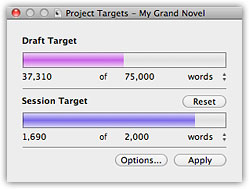
Again, a relatively small tool, but the one thing I love the most. The project target box sits happily in the corner of the screen, allowing me to see my daily word target, as well as the overall progress based on my estimates of the total length, and the countdown to deadline. The target can even dynamically change if the deadline is the key element, so if you have a day off, Scrivener reminds you that you have to put in the extra words over the life of the project. Simple, but oh so effective at 6am when you’re trying to do 1000 words before the rest of the world wakes up.

feature-statistics

Having started this whole thing by saying that everyone still uses Microsoft Word, it would be foolish of me to push something that then had no application in the real world. I’ve written 6 full length novels in Scrivener now and exported them all successfully to either Word, ePub or Kindle formats. Likewise, if you’ve already done some of your project in a different format, you can import into Scrivener if you want to give it a go.

So that’s why I always use – and will continue to use – Scrivener for all my writing projects, not just for NanoWrimo. Check it out and let me know what you think.

All images courtesy of literatureandlatte

Book Review: How To Be Happier by Paul Jenner

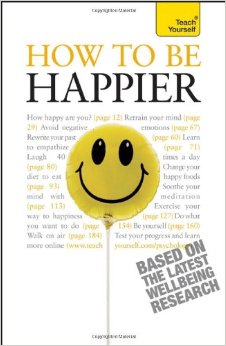
Another great library find, How To Be Happier by Paul Jenner was one of those rare self-help books that made me laugh out loud.

Disclaimer: I am not currently suffering from depression. I am not ungrateful for my lot in life. I have many things that so many other people do not. Nevertheless, I think there is a pervading sense of dissatisfaction that is sweeping its way through our culture.

It is strange, in the Western world where we have ridiculously large amounts of everything, that people seem consistently less happy. I listen to a podcast call The Productivity Book Group (you should check it out if you’re into that kind of thing) which introduced me to Shawn Acher’s amazing TED talk on happiness. So my mind got to thinking and this was the book it found.

How To Be Happier

It could, in theory have a subtitle in keeping with the current trend, of get naked more often and touch each other. The author is keen to stress that this is probably best done with a consenting partner, but that is the one thing I seem to remember most about it.

On a serious note, this book was useful whilst being lighthearted, informative without being preachy. Each chapter had practical sections and exercises to implement and review. I naturally lean towards cynical and pessimistic, so for me it was a pleasant surprise to at least come out in the middle. Normally, whenever there is a personality-based multiple choice quiz, I come out looking like a sociopath or suicidal. Moderately happy was therefore something of an academic success, and shows how far I’ve come in the past few years.

The hardest part of the book is the bit that always sounds the most simple. In order to be happy, we must, at some level, choose to be happy. For anyone familiar with Tony Robbins and NLP, this will ring a bell. Of course, when you are chronically depressed or very, very unhappy, the concept of choosing to be happy doesn’t seem like one you can necessarily bring yourself to do. How To Be Happier gives you some small baby steps to work through to help you build up to the choice. This is something I have seen reflected countless times in my friends and family (and myself). The logic of knowing what to do is nothing like the ability to actually do it.

The book works through other key topics, such as the impact of food and exercise on our mental state (without any extreme diets or workout routines being forced on the reader), meditation and mindfulness. There was also a chapter which seemed fairly innocuous but I suspect is actually a key foundation: be yourself and learn to accept this. Today’s world, with blogs and twitter and the book of face, seems to funnel us into only showing the best of ourselves. The parts we think other people will want, or envy. In the worst case scenario, when we don’t feel we have these things, we over-embellish or outright make them up. We post pictures of ourselves from angles that make us look good but our best friends wouldn’t recognise. We talk about amazing nights out when really we’ve been sitting in front of the TV chomping through a family size bag of M&M’s to make ourselves feel better, washing it down with a bottle of wine. No wonder being ourselves is becoming harder and harder. And with that disconnect comes continued unhappiness.

So, eat well, exercise, think positive thoughts and learn to accept yourself for the unique individual you are, so-called flaws and all.

Then get naked and touch someone some more…

How to survive NanoWrimo

Have you signed yourself up for NanoWrimo? If you have, then well done. Pat yourself on the back and prepare for some hard work. But hopefully you’ll find it a lot of fun too.

I am something of a Nano veteran. I did my first one a very long time ago (2001 I think) and have only missed two years since, both of which were due to being out of the country for the entirety of the month. For me, I love the challenge. My daily writing habit already has me at a minimum of 1000 words before breakfast, so Nano doesn’t step it up that much of a notch for me.

Which is why I do NanoWrimo hardcore.

The first attempt, due to my super competitive nature, I completed in two weeks, rather than the whole month. Every year since then, I’ve tried to shave a day off. Sometimes I fail, sometimes I succeed. But my goal now is to do it in a week. I’ve achieved that twice; both times whilst holding down a full time (and fairly hour intensive) job.

This year I will have no choice. Due to other commitments, I only have the first seven days when I can write, so it is make or break. Two of those days will include commutes to other parts of the country. Fun times and the fast track to a mental breakdown. So how do you survive NanoWrimo?

nanowrimo-logo

Be honest with yourself

If you’re planning to do NanoWrimo over 30 days like a normal, sane person, then you need to be honest with yourself about your other commitments for the month. Know that you have a friend’s birthday one of the Fridays and that’s your best writing time? Take that day out and recalculate your overall word count. It might mean that on the days you are writing you have to do 3000 words instead, but at least you’ll know. Otherwise, you get to the last week and see that you have an almighty push to try to make it.

Don’t start on the back foot

NanoWrimo doesn’t always start on the most convenient day. Depending on what is going on in your life, then it may clash with a multitude of other commitments. Know this, and still set aside the time to write on day one. There is nothing more disheartening than going in on day three and seeing everyone’s word counts roaring off into the distance in a cloud of dust. Start. Like anything in life, that is the most important step.

Don’t edit

I know this is the whole point of NanoWrimo, but it is worth repeating. Don’t know if your clear blue sea is turquoise or aqua marine? Who cares? Don’t waste a few minutes googling colour palettes to see which one is the closest to the image in your mind’s eye. Add all those little distractions and your writing will slow way down. These things do not matter in a first draft.

Have a plan

Plotting prior to 1st November is completely within the rules. If this is your first time doing NanoWrimo, or sustained writing in general, it might seem enough to have a great character or idea. Trust me, when it’s after midnight and you still have 500 words before you hit your word count, then it won’t be. If you enjoy writing on the fly, then I’m not suggesting you pin down every chapter in excruciating detail. I would simply suggest having at least 5 key plot points written down and know where they fit in your overall story arc. That way, you’ll always have something to be working towards when the words start to dry up.

Be kind to your body

For many people, NanoWrimo is their first attempt at consistent writing. It is awesome for that. It also means sitting for a long time. Be sensible. Make sure your back and wrists are getting the support they need. It’s meant to be fun, not a quick route to a lifetime of pins and needles in your extremities.

Have fun

Yes, that’s my final point. Enjoy it. Even though I go crazy and it can be a special type of self-inflicted stress, I love every minute of it.

Good luck! More importantly, just keep going!

nanowrimo-logo

Book Review: Brilliant Freelancer

On a recent trip to my local library, I picked up Brilliant Freelancer by Leif Kendall. I wasn’t looking for anything in particular, but being British, things such as marketing myself have never sat that comfortably with me.

Nevertheless, it seemed like an interesting book to give me a bit of an overview and I have to say I was pleasantly surprised. Whilst there were the standard ‘of course you can do it’ messages – no one wants to push failure and inadequacy after all – it was refreshingly realistic. It posed the simple message that if you tried it and it didn’t work out then it wouldn’t be the end of the world. Even if you tried it, were hugely successful at it but didn’t enjoy it, then that was okay too.

Brilliant Freelancer

The book itself is divided up into sensible chapters and sub-grouped into key areas. It is all pretty high level stuff, but I think that is actually a strength. When you are first dipping your toes into the water with this kind of thing, having everything laid out before you in excruciating detail is more likely to simply induce fear and lead to trying absolutely nothing. Instead, chapters on how to find the most profitable and manageable work sat comfortably alongside how to motivate yourself and get stuff done. Being a self-employed writer is a road I am only just beginning to walk down, so I am happy with the baby steps for now.

Whilst this book wouldn’t serve as your only guide to freelancing ever, it was certainly a handy reference point to begin. If you are thinking about a strategy or just whether or not it is feasible to even do any self-employed work, this book will give you just enough information to hold the fear at bay so you can begin.


Fixed Schedule Writing In An Unscheduled Life

I’m spending a lot of time on the road lately. Not in a glamorous, jet-setting kind of way. Mainly on roads that start with M, in fact.

Normally I love travel. It’s a way to recharge, to be inspired, to discover something new. Hopefully there will be a little bit more of that before the year ends. For now though, it’s more business hotels than spa resorts and swimming pools under blue skies.

Even though I love the unpredictable adventure of travel, I need routine in my writing. Combining the two is not that easy.

Writing from my home desk isn’t so bad, but writing from hotel rooms is a bit uninspiring. I’m starting to find coffee shops a bit more freeing, although I generally need to have headphones in to avoid being nosy distracted by the conversation. They also force me to write longhand, which makes me focus more on my words.

The net effect of all this is a serious downturn in production. Which sounds a bit businesslike, but writing keeps me sane. Actually completing stories and getting them out of my head is the most rewarding thing I do. I’d like to think that if I ever have kids then they would be more rewarding but quite frankly, I wouldn’t put money on it.

IMG_5578

Solutions

So, in an attempt to not be loopy by Christmas, I’ve started exploring some strategies to help me get back on track.

Acknowledging Energy Levels: Currently I’m covering hundreds of miles each week, so if I have a four hour drive home one evening and crawl into the house at nine, then I should take it easy on myself if I get up an hour later the next morning. I can’t seem to shake the guilt though – not to mention the fact my body insists I wake up anyway – so I have started to allow this to be non writing time. Instead, by focussing on more routine tasks, like website maintenance and reading articles, I get those tasks off my list that I would usually do at the end of the day or weekends.

Taking Better Notes: Ideas come to me at odd times when I’m busy.  I’m trying to make sure that random flashes of inspiration and ideas get captured in a notebook so I can dig them back out when the right time comes. Bullet Journaling is a great way of helping with this.

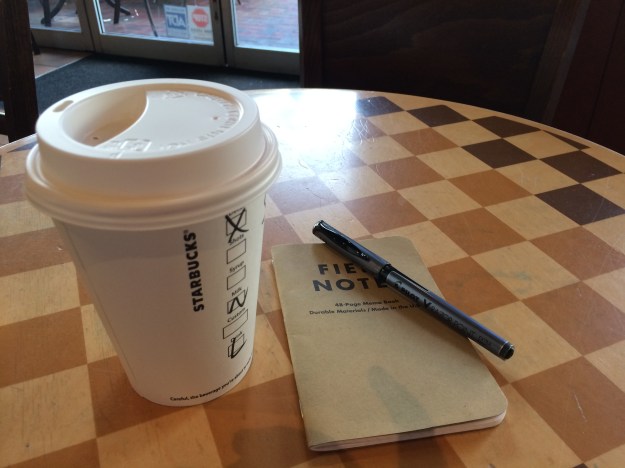
I Don’t Feel Like Writing (But I’m Doing It Anyway): If I focus on only writing in the morning because that’s when it comes easiest to me then words just won’t get written. Instead, I’m trying to make myself do it later in the day. Creativity doesn’t come as naturally to me in the evenings, so I’ve been spending more time in places that do add a spark of inspiration. This was how I rediscovered the enjoyment of writing with a pen and glorious notebook in coffee shops (decaf, naturally).

It’s not working 100%, so I’m totally open to new ideas and suggestions if there is something working for you?

Fortune Cookie

An Abundance Mindset

I really struggle with having an abundance mindset, but I’m trying. An abundance mindset is not believing that just because someone gets something it means you don’t. Even though my rational brain states that it’s not true, my emotional brain always tries to scream ‘mine’ and get me to run to the corner and hide.

I think I can firmly place how this all began. As a child, I played nicely and looked after my things. I’ve always been very careful with my ‘stuff’. I don’t consider myself to be materialistic in the sense that most people think; I don’t want fine art, the best things, or even things that are better than what everyone else. I’ve no desire at all to keep up with the Joneses. I just like my stuff to be my stuff. I’ve had been that way since I can remember. Then, when I was six, my baby sister was born and came into my life like a tornado (which, in fairness, she has pretty much remained ever since) and as a baby / toddler had no qualms about breaking my stuff or smearing it in melted chocolate that she had refused to relinquish from her grubby little fist for six hours.

Thus began the concept of ‘mine’. If I share, it will be taken from me and destroyed.

Of course, as an adult, take that attitude too far and you simply become cynical and bitter. So whilst I’ll probably never be great at sharing with the other kids, that doesn’t mean I can’t be happy for them when they have achievements and blessings in life. It might mean overcoming the worst parts of my nature, but I’m determined to give it a try.

Now give me my blog back. It’s mine…

New Job and Writing

Next week I will begin the tricky balancing act of starting a new job with that of being a writer.

Essentially, it is starting a new full time role in addition to becoming self-employed and starting a business. Many people would not think of being an author as also being an entrepreneur, but in a lot of respects it definitely is.

There is the act of content creation and development, marketing, accounts and finance, as well as any legal elements that might be included. Depending on how much available time there is after a full day at work, this might eat into virtually all of what would traditionally be considered ‘free’ time.

clock

Of course, actual number of available hours is only a part of it. Time is only valuable if you have the mental energy to use it effectively. That is why some times you can get more done in a single hour than you can get done in an entire day. It becomes about leveraging that mental energy to make the best use of your time to get things done effectively. It may also be having the courage to admit that you are doing a job poorly and it is worth stopping now before you make a bad thing even worse.

This is what I will try to remind myself of over the next few weeks, when I feel as though my writing is not progressing as fast as I would like. I always commit myself 100% to an employer, something I believe to be vital if you want to be credible and trustworthy as a human being. Obvious caveats apply if your employer is treating you unfairly, of course. But my free time is the the time where the hardest fought battles will take place, because honestly, watching TV is just easier than locking myself away and editing.

I guess the hardest fought battles are the ones most worth winning.

Moleskine vs Field Notes – Pocket Notebook Review

It seems that pocket notebooks are definitely back in fashion at the moment. The world, thanks to the internet and kickstarter, has become awash with them. As a writer, I’ve carried a notebook around with me for most of my life, so I decided that this is one area I definitely have an opinion on.

Despite the countless brands, the current two front runners are Moleskine and Field Notes. I’ve only recently succumbed to buying Field Notes as they are quite tricky to get hold of outside America without making a bit of an effort. However, I’d heard so much about them that I thought I would have to give them a try.

Both notebooks discussed below have gone through a complete lifecycle in my handbag (purse to any US readers, obviously). Despite all those hardy, manly, everyday carry instagram shots, I don’t think anything competes with the assortment of crap I carry around with me on a daily basis that these notepads have had to survive next to.

Don’t Judge A Book By Its Cover

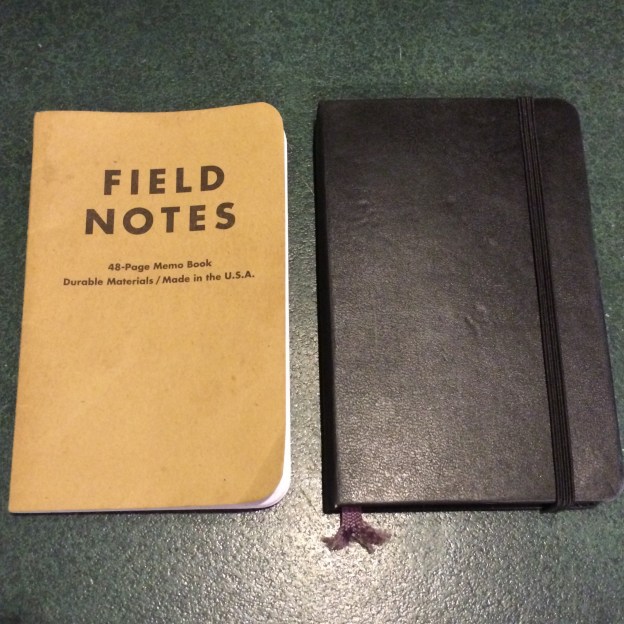
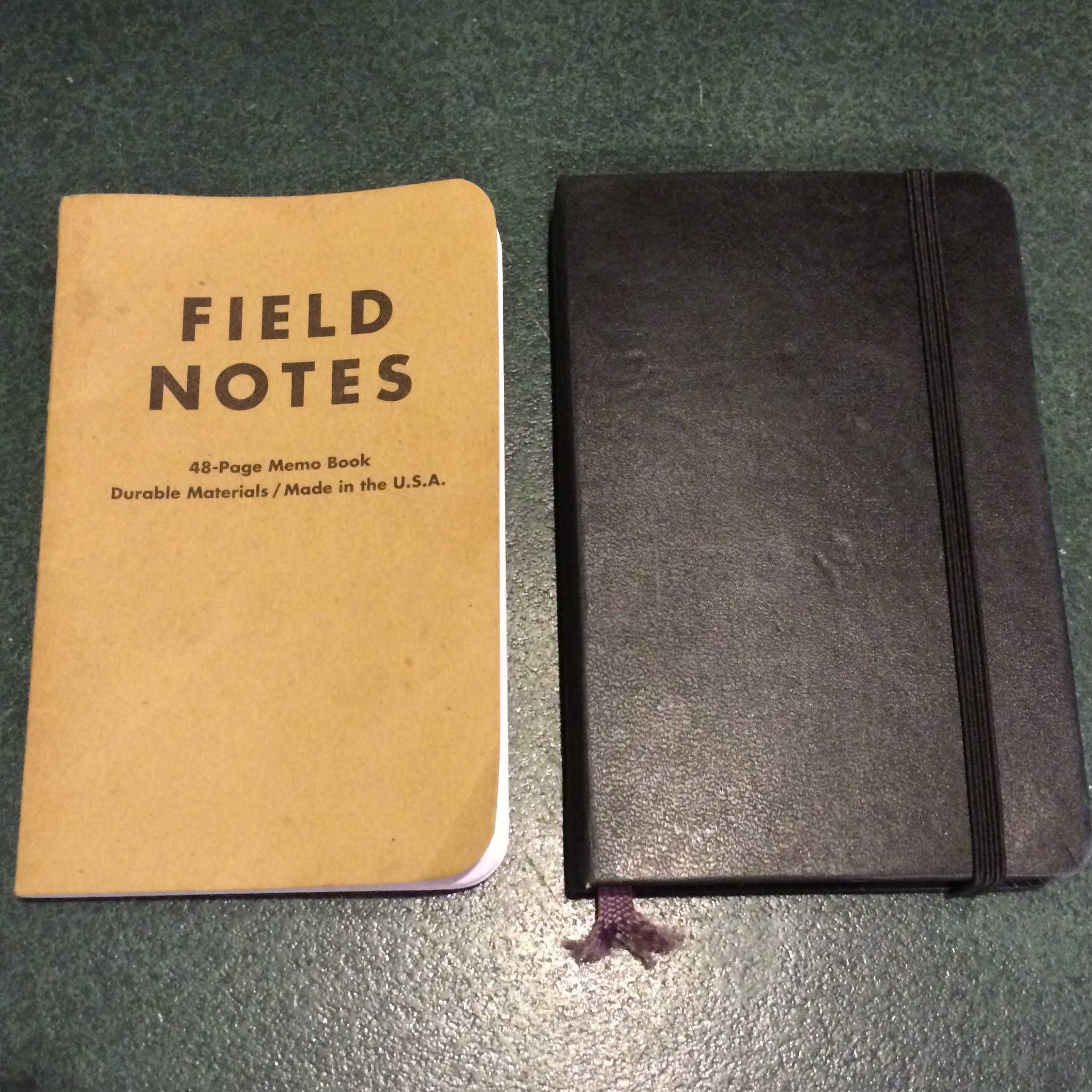
Except in this instance. The hardcover pocket size Moleskine stands up well to most environments. It’s still got a lot of trend factor, as well as standing up to approval in the boardroom meetings. Because I use a hardcover one, it makes it easier to grab and write if there isn’t a surface available. Oddly, out in the field, using Field Notes is actually more difficult in this sense. Field Notes as a brand has a definite cover cool factor right now, especially some of the limited addition colours ones. But by its very nature, it is more casual; while it might provoke a bit of interest in meetings, it’s not going to be taken as seriously in a corporate environment. Especially after a bit of use. Which leads me to…

Field Notes Moleskine Cover


Durability and Longevity

Field Notes have considerably fewer pages than Moleskine books, meaning that this one was only on rotation for about a month. The Moleskine, on the other hand, was in my bag for around six. One looks hardly touched, the other looks well loved. I don’t have to tell you which way round that is. Again, that beat up look has a bit of cool factor to it, but as I keep all my notebooks and constantly refer back to the content in them, it does make me question if they will stand the test of time like the original concept they were based upon.

Paper

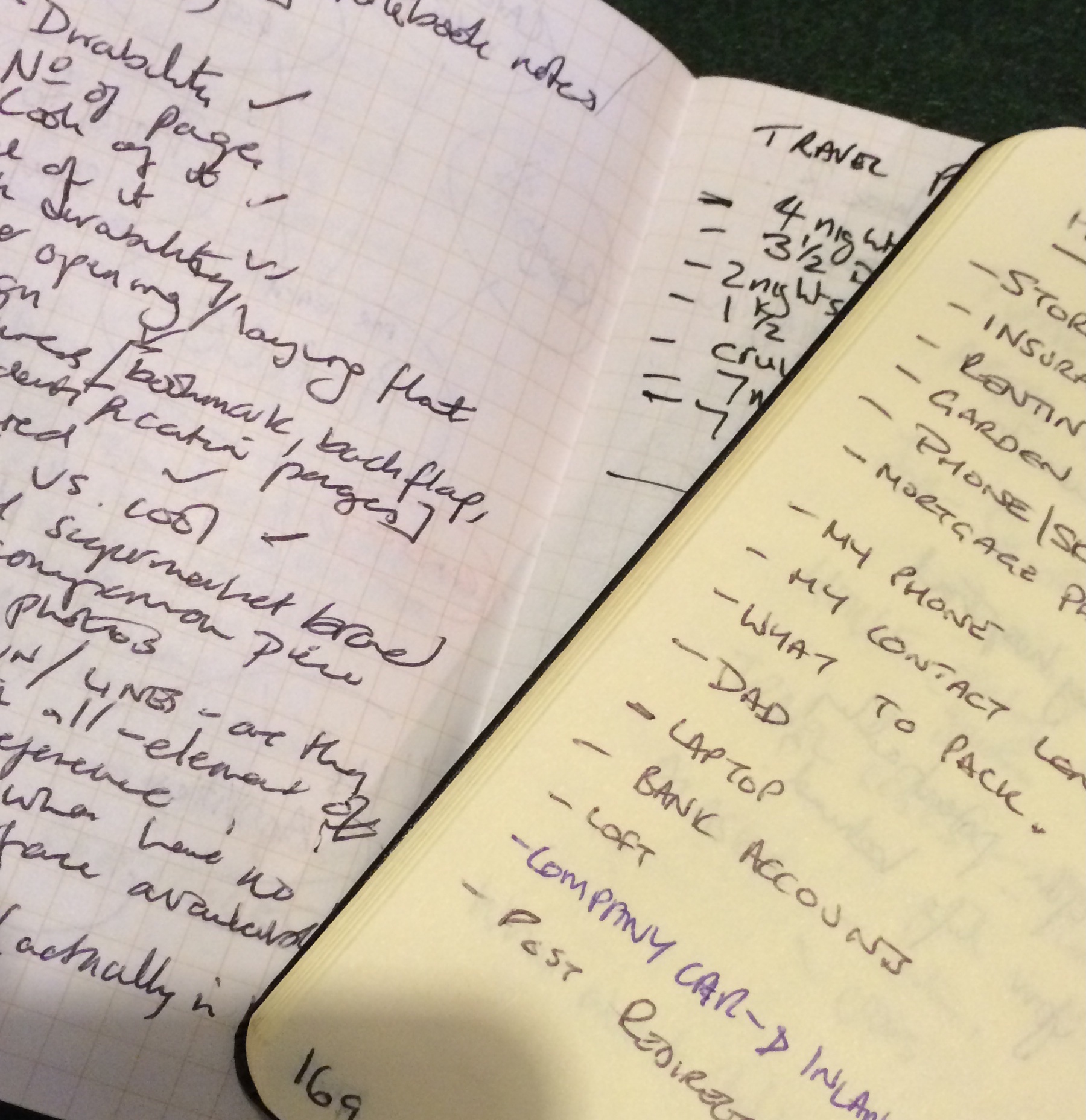
In the bid for market share, the quality of paper actually often seemed to take second place to design factor. A lot of brands have started to realise that as more and more people turn away from an entire dependence on smartphones and yearn for the analogue capture of yesteryear – often with a fountain pen to go alongside it – paper matters. On the whole I don’t use fountain pens, largely because I have a mythological perfect one I am still searching for, but I do use a variety of ballpoints and rollerballs. Despite a lot of people complaining about Moleskine paper quality, I would say that the two of them match up pretty well. If anything, the Field Notes have a little bit of show through (but not bleed through) on the back. I’ve yet to try out the Shelterwood edition, which has considerably thicker paper, but in the interests of fair comparison, I’m reporting here only on the standard book. Both brands have options of lined, plained and grid, so pick whatever works for you and knock yourself out.

Field Notes Moleskine Pages

Features

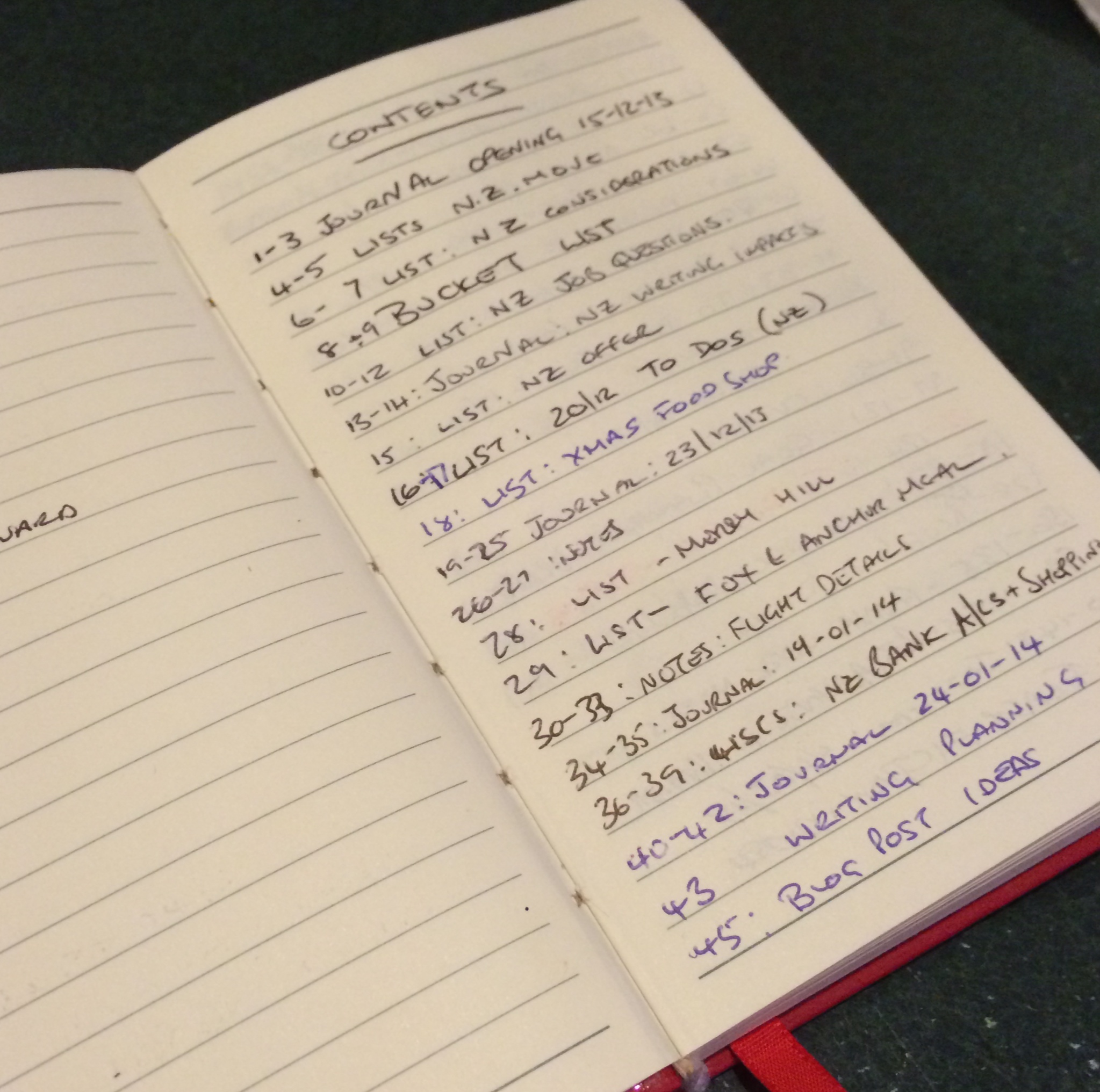
I love the Moleskine back flap for storing bits of paper and the bookmark is definitely a great feature. These are both missing from the Field Notes, but with considerably fewer pages, the bookmark becomes less of a necessity. I’d recommend using a modified to suit your needs Bullet Journal system with both. I recently went back and actually did this to all my notebooks that had a couple of blank pages at the beginning or the end and it makes a huge difference to usability. Field Notes has a built in ruler along the back sleeve and some  fun uses. Both have a user information page at the front, although both brands clearly approach it in different ways.

To Sum Up

Which side of the fence you come down on will always depend on how you use your notebook. For me, the pocket notebook isn’t for work – but when I am working I will use it to capture things so I don’t want it to look too out of place. I love the look of Field Notes especially when I am travelling; there is definitely something of the open road about them. The first real test will be on a road trip around the US and Canada next month, where I’m much more likely to be shoving them in my pocket for practical reasons, rather than just creative ones. After this first run through though, I am still slightly on the side of Moleskine for the way I can actually use them in any environment. If I had an idea last month, I don’t need to go and find the other book because I’ve already run out of pages and moved on.

Finally, I’ve used a cheap supermarket brand (£3/$4.50 US) and found that once you take the ‘street cred’ element away (the ‘look at me, I’m a writer/hipster/adventurer’ element) it works just as well on all fronts as the others, at a fraction of the cost:

Notebook

Going Un-Paperless – 5 Steps For When You Find You Can’t Go Paperless

We live in the future, where all our files and folders live on our smartphones and laptops, right? Even our books are digital. So why is it that so many people fear going paperless, and what can you do when you find yourself in an environment that is either unwilling or unable to change?

Like most aspiring authors, I tend to enjoy food and shelter, so supplement my income with a day job. My previous role was inherently paperless. The only time I really made paper lists was when I was in a situation of overload and the act of writing it down gave me focus. This was easy to implement because I worked in a small but geographically varied team that communicated largely by email.

I didn’t realise how lucky I was, until I started my new short term role and my desk started slowly drowning in paper. I wouldn’t call myself an environmental activist by any means, but some days I positively weep for lost trees. Now, it would be wonderful to ‘be the change I wanted to see in the world’, but that requires buy in from all parties. This company is one of the largest employers in the Southern Hemisphere. That is a lot of people to convince. My particular division also arose out of an emergency situation, where the comfort and reliability of paper in an ever changing team/building/environment was paramount. For a lot of people, disaster management is best done on paper.

I’ve been using GTD for many years and my system has been through several modifications. For a long time I used an excel spreadsheet, then moved to Outlook Tasks to accommodate the system my boss was using (I was so happy to be working with someone who actually had a system that I was prepared to give a little). My separate personal system was in Toodledo. Notebooks were a joy because they were primarily for creating or capturing ideas, not tracking the mundane (although even that has become a bit more productive / geeky due to Ryder Carroll’s bullet journal system).

For going paperless in a Mac environment, check out MacSparky.

paperwork

So, 5 Simple Steps:

1. Change what you can. Where there is no process, or the existing process has room for improvements, make them. Most people are actually willing to hear what you have to say when presenting a change to their system in a thoughtful, respectful manner. As part of that change, convert anything you can to a paperless approach.

2. Manage paper efficiently. If you have no choice but to deal with paper, then at least use it wisely. Don’t make unnecessary copies. Don’t just shove everything in one inbox and lose hours of your day looking for files. Essentially, have a system. If you do everything by email, then follow up flags and categories make tracking ‘waiting for’ items a piece of cake. Make sure that still applies if you’re stuck with paper.

3. Upload capture documents frequently. If you have an option to upload the paper documents that are floating around in ubiquitous amounts, then do so. More importantly, do it as often as possible. People are much less likely to make additional copies of a hard copy file for their own use if they can just view it on the screen in front of them. Most people are inherently lazy; use that to save the environment and your sanity.

4. Reduce the number of electronic systems. Another fatal error that is actually the case in most companies is the use of twenty four gajillion electronic systems. When one is not quite perfect, they find another one. Most of the time, it is not the tool, but the user is at fault. But that is far too difficult to address when you can just splurge a couple of hundred thousand pounds on a new shiny! Then half the users upgrade while half show reluctance. Great. Now the documents are in one of two places and the easy search is gone. Lather, rinse, repeat over the years and no-one trusts a damn thing. People go back to trusting the paper they can see and feel. Cull the tools and use common sense.

5. Spread the word. When people see that you are being more productive with a clean desk, then they will want some of what you’re having. Only, they won’t ever want to confess to it. We all know people like this; the ones who drown in chaos and claim it is because they are far too busy. Most of the time, they are simply inefficient and confuse busy with job security. Sometimes, it’s best just to give a little. Again, in a polite and respectful manner, point out small gains they can make at first. Even when looking at a productive person’s desk, a fresh pair of eyes can usually spot a few quick wins. Give generously to those who will accept help and enjoy watching them becoming less stressed over time. You’ll feel better and the trees will thank you for it.

Can you go backwards and still stay sane? I’d like to think so.

The Rejection Threshold

I’m not sure if submissions are my least favourite part of writing, but they have to be close. I don’t actually know anyone who loved the submission process and those that say they do are probably lying. Why? Because of this, obviously:

Rejection-Stamp

No-one actually wants to be rejected. Sure, you can put a positive spin on it, say it all leads to growth etc etc, but you can’t actually want to be rejected unless there is something psychologically wrong with you. Of course, if you have the inclination to be a writer, then there probably is something psychologically wrong with you, but that is a matter for another post.

I’ve been putting myself through the submission process for years. I’ve told myself that this year will be different though. Simply because I am not going to succumb to the rejection threshold.

By the time I hit rejection number six, I usually give up. Call me weak-willed, but those form emails (or the brown SAE dropping through the letter box in the old days), never really did much for my self-esteem. It was always much easier to just move onto writing the next story whilst consoling myself with a large tub of Ben & Jerry’s.

Everyone knows that J K Rowling was rejected a dozen times before finally having Harry Potter published. One of my all time favourite authors, Jasper Fforde, was rejected 76 times before getting The Eyre Affair published (although, in fairness, I can see why. You try to describe the book and see if you can come up with anything that sounds vaguely credible). Even William Golding had a taste of rejection, with  Lord Of The Flies being rejected by over 20 times.

I would never even consider myself in that league, but safe to say, if they had stopped at the rejection threshold of half a dozen, the world would be a much poorer place. For me, I need to aim for an even higher number before giving up and reaching for the ice cream. I have decided that 2014 will be the year for it.

Although, 76 seems like an awfully long way to still have left to go….

…but I suppose there is always self-publishing…