Tag Archives: no sugar

Death of a salesman: The (not so) sweet truth about hotel breakfasts

Hopefully today was my last hotel breakfast for a long time. For nearly three years, I have spent at least one night each week in a hotel. I’ve stayed in some good places and some bad places. I have tried a lot of hotel breakfasts and at some point I might look forward to one again, but right now that seems impossible.
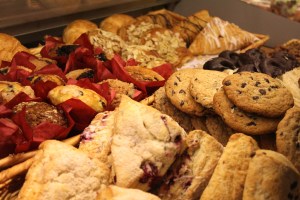
This kind of temptation each week? Exhausting!

So how do you stay healthy while traveling? It’s not easy at all. In unfamiliar surroundings, the default setting is to take the easiest option. Sticking to a healthy lifestyle – food or exercise – is a challenge of monumental proportions.

Most UK hotels offer a simple choice: cooked or continental. Cooked is usually more expensive as you have to pay for the privilege of someone heating your bacon until it is at least tepid (or the other option, so black and crispy you’re waiting for a CSI unit to come in and identify it). However, if you’re keeping your unhealthy fats low during the rest of the week, it is a low sugar option if you forgo the beans and ketchup. The same cannot be said for the continental option, with it’s all-you-can-eat high sugar cereal options, pastries and jams in every variety.

So, if you are trying to be healthy and wholesome, why not forgo the temptation and get a healthy breakfast to go instead? It’s quick, it’s easy, it has limited portions and it is marketed as a great start to your busy work day.

Quick, easy and healthy marketing? Alarm bells are ringing…

So, what do these packs typically contain and how much sugar does that translate into? I’ve researched a couple and below is a pretty accurate representation:

Cereal and milk (19g) OR fruit yoghurt (15g)
Muffin (25g)
Breakfast bar (12g)
Juice (20g)

This equals between 70-75g of sugar before you even start your day (that’s more than double the NHS recommended daily intake of 30g!). When you’ve got an early meeting, this can seem like a sensible choice, but it isn’t. Not to mention that it virtually guarantees a mid-morning slump that will have you reaching for another quick pick me up.

This persistent set of poor options is one of the reasons why I’ve decided to transition into a lifestyle where I can have more control not only of my work, but also my health. Research shows that health is one of the consistently de-prioritised areas of modern life, despite us understanding more than ever about exercise and nutrition benefits.

The healthy ‘to go’ breakfast, whether at a hotel or your favourite coffee chain, is just another marketing trap, so heed the warning and don’t be fooled!
therealistsguidetosugarfree-2

The Realist’s Guide To Sugar Free is available at Amazon (UK) and Amazon (US) in both ebook and paperback.

Love the book? Then please leave a review on Amazon. Reviews help keep the book visible, which means I can help more people make the change to a happier and healthier life.

Still struggling to lose excess holiday weight? A workbook to help cut dangerous sugars from your diet

When I first published The Realist’s Guide To Sugar Free, lots of people asked for a paperback version of the book. I resisted for a while, as only offering the the book in electronic form meant I could keep the price low and get the message out there.

Over time, the requests for a paperback version have continued to grow. So I decided to take the plunge and create one.

food-dinner-grilled-shashlik

The physical copy of the book not only contains the important tips, tricks and psychology of the ebook version, but also contains a greater degree of interactivity. The Realist’s Guide To Sugar Free is not a cookbook. It is not a diet book. It is about serious lifestyle change and kicking a powerful addiction. I’ve built the paperback version to contain space for you to make notes and answer the questions I ask you in real time.

sugar free workbook

Countless studies have shown that the act of writing down your goals vastly improves your chances of reaching them. The same goes for your habits and routines. It empowers people to take conscious, positive decisions rather than make unhelpful unconscious choices.

This has turned the guide into a workbook of sorts. It can be your personal journal on the road to eliminating processed sugars from your life for good. The 9 step action plan includes the space you need to analyse your behaviour, face up to your bad habits and document your journey to a sugar-free lifestyle.

I know how difficult it can be to rely on willpower alone, so there is real value to be found in writing down your motivations and weaknesses. When the craving for a sugary snack strikes, having a tangible reminder of why you’re changing your life helps you to resist. I know I struggled to stay sugar free over the holidays and then had to kick the addiction again, so I’ve returned to this basic guide to get myself back on track. If it works for me, then it can work for you.

therealistsguidetosugarfree-2

The Realist’s Guide To Sugar Free is available at Amazon (UK) and Amazon (US) in both formats.

Love the book? Then please leave a review on Amazon. Reviews help keep the book visible, which means I can help more people make the change to a happier and healthier life.


Sugar Free Farm: A noble but flawed attempt at mixing entertainment with a serious message

I’m not usually a fan of reality TV. As a genre it is filled with vacuous, fame hungry idiots and adds no real meaning or value to my life, or to that of many others.

sugar_free_farm

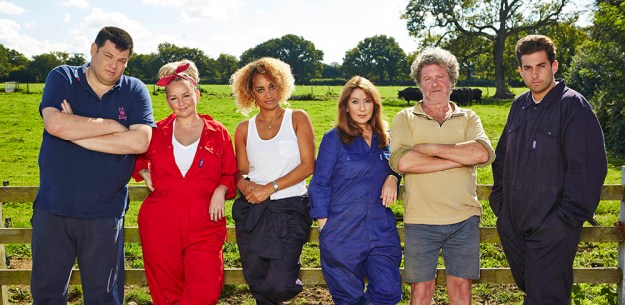
The cast from season one. At least they look clean.

However, I watched the first series of Sugar Free Farm (Tuesday, ITV) with interest.  I have developed an interest in living a sugar-free lifestyle over the past year and half. One of the problems with this is that the media is only now coming to terms with questioning historically inaccurate scientific research. As a result the information about sugar is entering the ‘mixed messages’ phase.

As with any change and any new way of thinking, education is key.  Unfortunately, statistics show that highest incidences of obesity tend to occur in areas where income and education are the lowest.

So how do we reach this particular demographic? Quite simply, it is through the medium with which they are often most comfortable: entertainment. People like Tony Robbins have used this  effectively over the years by creating an almost rock concert-like atmosphere in which he is able to get his message across.

Reviews of the show have not been overwhelmingly positive. Despite its good intentions, when trying to put an educational message across, it needs to be either shocking or completely hidden behind something more engaging. Failure to do that results in something that isn’t very entertaining and, dare I say it, just a little bit preachy.

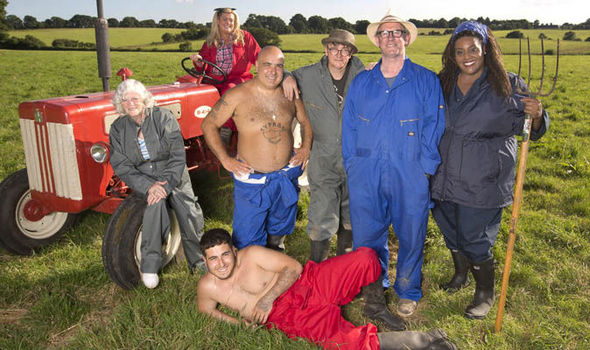
The quality of the celebs is a huge factor as well. The fact I only know the one who used to be a politician says more about me than it does about the intended audience, but even I can realise a Z-list when I see one. Sorry, old Dr. Who, but it’s the truth.

sugar-free-farm-cast

But most importantly, the message gets lost because it is simply not relatable. I realise the show needs a central concept (getting back to the land and living unprocessed lives) but who has time to grind their own flour? Or shake up their own butter?

No one, that’s who.

I live a sugar-free life already and I rolled my eyes and switched off. It would be far better to provide the contestants with a store cupboard that was limited but contained readily available items. That way people could begin to imagine how it would look in their own homes. Instead, the message becomes that to quit sugar you need to quit life and never have fun again.

Watching a few random other people lose a bit of weight and play with pigs isn’t going to motivate you to those extremes.

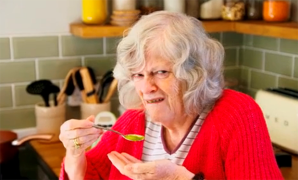
I mean, does this make you want to change your life?

sugar_free_farm


Want to quit sugar anyway? Buy the book that’s more about making it work in real life than baking fake cake. 

therealistsguidetosugarfree-2

2017: New Year, New Goals, New Dreams

I’m not going to lie. During November and December I fell off so many wagons I couldn’t work out which one I wanted to get back on first. So I drank another glass of wine, enough cheese and crackers to sink a small boat and opened a box of chocolates instead.

But now that has all changed! By the mystical power of the calendar year flicking over, my willpower has returned and I am wholesome and virtuous again!

I wish.

I’m not sure I’ve ever been wholesome and virtuous. But I have begun to steadily correct course this week to get back on track. But where did it all go wrong in the first place?

I suspect much of it came down to illness and exhaustion. I failed to achieve a lot of things in 2016 because I felt worn out or ill most of the time. Listening to the Creative Penn podcast, it was great to hear another writer making health a priority in 2017. It is very easy to set ‘business’ type goals only. We’re taught how to focus on finance and career, but not necessarily spiritual or health goals. Last year was a harsh reminder of how if I don’t sleep and maintain a healthy lifestyle, eventually I’ll fail in other areas as well. I had two (because I’m a slow learner) fairly serious burnouts last year. I’m determined not to make the same mistakes again.

I’m tracking my sleep on my Fitbit and have once again begun the process of detoxing from sugar. I got a huge morale boost from seeing my book, The Realist’s Guide To Sugar Free at #2 in the kindle personal health charts in the first days of January. Hopefully I’ve been able to help a few people on their journey towards making the change too. Throw in a daily journaling and gratitudes practice and I can keep moving towards a physically and emotionally better me.

I’ve also challenged myself to read a book a week in 2017. With an English degree, I find it easy to read quickly, so the only excuse I have for not doing it is that I simply haven’t made it a priority. I have to hold myself accountable for that.

Mainly, I want to work on more exciting and challenging writing projects in 2017. I won’t give the numbers, but I have set myself a pretty hardcore stretch goal for increasing my writing income compared to 2016. Like health and reading, it will come down to prioritising and commitment. I’m good with that. When the 6am alarm sounded each day this week, I got up, got coffee and did the work. That’s how you achieve anything, right?

So those are some of my goals and plans for 2017. I want to get into a more consistent blogging schedule as well, to hold myself accountable to these things as much as anything. It also means I’ll get to share some tips and tricks I find along the way.

2016 was a terrible year generally, but with some major personal highs. I want 2017 to be the year to give back. To use my voice to make a change in the world when I can. That sounds lofty and ambitious. But if you haven’t been happy with the way things went politically in 2016 then you have to raise your voice. You have to do something. As Shonda Rhimes said, a hashtag is not a movement. Do something.

Subtle discomforts

I haven’t posted here for a while. As well as being very busy, there was a strange discomfort that I couldn’t quite put my finger on.

This morning, I realised what it was. I’d probably known all along, but I finally acknowledged it.

When I published my Sugar Free book, I decided to give Facebook a go, despite disliking it as a concept for years. Obviously, if you’re going to use it for marketing purposes, then it made sense to link my blogposts to it.

I still hated it. More importantly, its open door policy and spooky algorithm meant that everyone I may have ever known was being suggested to me in other places, such as my Instagram. Even people who I don’t want to be part of my life. It was like a sledgehammer of suggestions that kept poking sore spots.

So this morning I deleted my Facebook account. I’m under no illusions that it will make all the problems instantly go away. But I realised I don’t want the downsides it brings, no matter what the upsides might be.

It feels good. If something bothers you, then get rid of it, even if other people tell you it’s a ‘must have’ item. Trust your own instincts. They’re probably right about things more times than you realise.

How I Did It: The Realist’s Guide to Sugar Free

After almost a year of being sugar-free, I’ve finally written a book about it. You see, despite being stubborn and competitive (mostly with myself), living a life without sugar was hard. Really hard. Despite understanding all the associated health risks, I still struggled to give it up and then remain virtuous in the face of temptation.

Let me tell you something about myself: I don’t like failing.

Every self help book will tell you failure is necessary. Trying and failing is how you learn what works and what does’t. That doesn’t mean I have to like it. So despite several epic failures that resulted in a large tub of ice and a spoon, I have been determined to find a way to remove sugar from my diet, yet still live in the real world. Along the way I’ve been keeping track and it is the results of my journey that I’ve put into this book.

therealistsguidetosugarfree-2

This is not a cook book. It is not a detox plan. It is a step by step programme of strategies to help you eliminate sugar in the face of the temptations life will throw at you. Knowing how to cook a delicious four course sugar-free meal won’t help you at all if you don’t actually find the motivation to do it on a daily basis. Most people I know are too busy working or chasing after small children to be able to put that kind of time into planning and prepping a meal. It’s a nice idea, but it just doesn’t work for most of us.

So if you want a humorous and honest guide to eliminating sugar from your life, then this is the book for you. Even if you’re not sure you want to quit sugar completely, the easy to understand information will still help you make better choices when faced with the temptation and sweet food marketing you’ll encounter every day.

Blurb:

A humorous and honest guide to eliminating sugar from your diet. For good.

Quitting sugar in the real world is hard. Sugar is everywhere and your friends think you’re mad for not eating cake. You’ve done the 8 week detox plan and part of you still craves chocolate so much that you develop a mild twitch when you see a brightly coloured wrapper on the shelves in front of you.

Deeply addictive, sugar is everywhere. Even added to the most unlikely foods, the majority of us exceed the recommended daily intake without even realising it. Instead of teaching you how to cook fake cake, or pretending that quinoa really is an exciting grain that will revolutionise your view on salads, this book guides you through the myths about sugar in our food and through the realities of addiction. The 9 step action plan then helps you make the change and really stick to it.
Even if you’re not quite ready to eliminate all sugar from your life, this book contains practical tips to help you shop wisely, create good habits and sustain better lifestyle choices.

Available at amazon.com and amazon.co.uk

Cookies and Creme and… allowed?

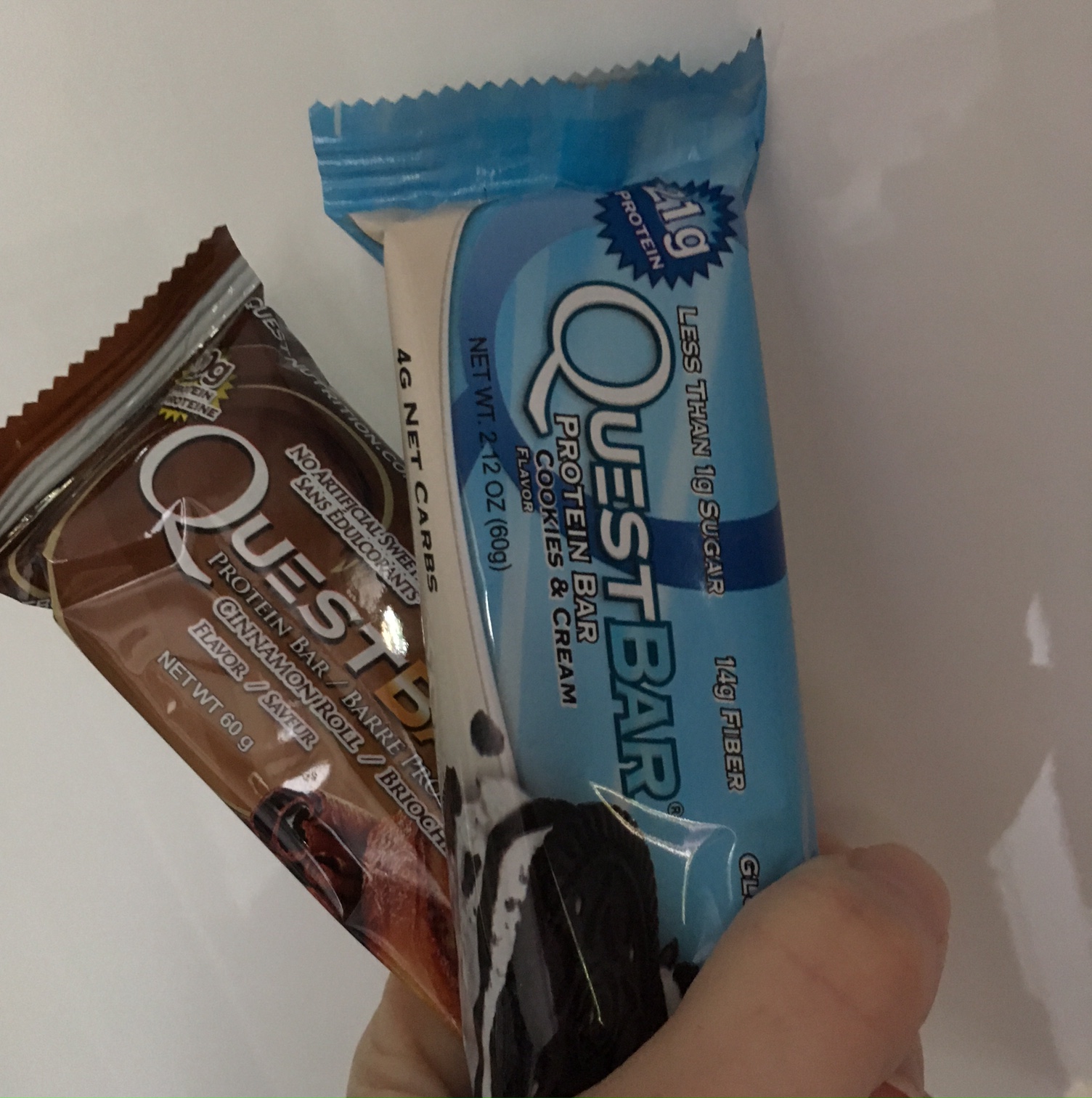
I’ve got a week of driving from site to site ahead of me, so I thought I’d share this snack hack I’ve been using to stay on the sugar-free wagon:

Fist of power!

Fist of power!

I first heard about Quest bars on the Cortex podcast. Generally speaking, if something gets the CGP Grey seal of approval then that’s good enough for me.

They’re pricey (as are all protein bars) but worth it when you consider them as a meal replacement. I’ve been using Quest bars fairly consistently all summer as they don’t include a lot of carbs and sugars like many protein bars. So I can eat them without ruining the sugar-free lifestyle I’ve been maintaining for a year now. They have a whole range of flavours, but so far, cookies & creme is the clear winner. I’ve still to get my hands on the peanut butter version though, so that could quickly change…

I know a chocolate bar or a dodgy fast food lunch would give me the instant pick-up feeling, but that’s really not in keeping with what I want to get out of my life. Instead, the protein keeps me feeling full and my brain actually working through the afternoon, when the slump traditionally kicks in. So a massive thumbs up from me.

I’m not in any way affiliated with Quest, but I’m always keen to share anything that I think is helpful. So that’s my Monday snack hack to start a busy week off right!


Climbing back on the wagon

I can’t believe it’s been four months since I last sat and wrote a post. The time just slips away when you’re not looking.

I’ve also been keeping a paper journal more rigorously, which reduces the need to blurt out my thoughts and feelings online. Which is a good thing for everyone really. Plus I’ve been away. Plus I’ve been ill. Stack it all up and I’ve had many excuses for being away from the blog space for awhile. Today, however, marks the return to climbing back on the wagon in almost every area of my life.

I’m lucky enough to have recently spent nearly two weeks in Mexico, with nothing to do but lie on the beach, read, eat nice food and have cocktails brought to me on whim. Not a bad way to live. But in all seriousness, it was a much needed break. As I wrote in my last post, I’d become overwhelmed and lost in my side projects, whilst maintaining a full time job and doing a gruelling weekly commute.

Then there’s Brexit. Don’t even get me started on this act of self-sabotage and insanity that Britain seems to thing is a good idea. It’s utter madness, but it has had the curious effect of solidifying a few things for me as I attempt to get back into a more productive routine:

  • Post holiday, it’s definitely time to get back on the sugar-free lifestyle. I feel rubbish off it, and there won’t be any money for the NHS to look after me and my sugar-related illnesses twenty years down the line the way things are going
  • Writing should be something I love, not a chore. If I don’t enjoy it, then I shouldn’t do it
  • I should possibly become less dependent on European travel. Which is fine, because Cornwall is lovely, assuming someone does something about the weather. (Also, it’s not fine really. Less freedom of movement and a spiralling pound suck)
  • Side projects can spiral out of control and suddenly become the cause of burnout. It’s not too late to think about doing less for 2016, whilst still being productive and having fun. This was an aha! moment I had whilst listening to one of my new favourite podcasts, Cortex.
  • Comfortable is easy. But at a time when the risks are at their highest, the rewards are also at their greatest. Somebody out there has to get them and it won’t be me if I flop at the end of the workday into three hours of mindless TV. Something I’ve never done until this year, I might add.

Independent of me, the remainder of 2016 will be a year of change. That genie is not going back in his bottle. So I might as well do what I can to influence the outcome I want, rather than just sit back and let stuff happen to me.

I think that’s all quite spirited and positive for the end of a Monday, even if I do say so myself.

Sugar sugar everywhere and not a drop to, um, eat…

Since I came back from holidays (food and alcohol fest) I have been living the sugar free diet. Now that I’m in week three and can write about it calmly and objectively, rather than from a cravings hole of despair, I thought I’d give it a go.

Firstly, the motivations. A dear friend is on her second go round with cancer, and diet has become a significant thing she can positively influence, in amongst the traditional treatments. Cutting out sugar is the key thing. Which sent me down a huge rabbit hole of how it all works.

For those of you who know me, the fact that it is the latest diet espoused by a TV personality is more likely to make me disbelieve than anything else. But I’ve been looking at a ketogenic diet in relation to other serious diseases, so I knew there was some significant merit in reducing carbs. Cue me reading books and scientific papers about human biochemistry and the way our body uses and responds to sugar. Fascinating stuff, even if I have become a conversational bore.

So, after two weeks, here is my experience:

  • For those not on the diet for medical, disease fighting reasons, you don’t have to eliminate all sugars, just fructose
  • Good luck doing that, because everything is packaged by the title ‘sugars’
  • Fructose makes up half of sugar as we know it (the good ole white stuff) so the easiest way is to avoid anything with added sugar
  • Good luck with that too, because sugar has been added as a cheap filler to just about every product that gets made, even the savoury ones and especially the ‘low fat’ versions of things
  • Unlike other energies, fructose isn’t recognised by our self-regulating mechanisms, so it goes straight into the liver where any excess (which happens after a surprisingly small amount) gets pumped straight into your blood supply as fatty acids (nice)
  • The headache was worse for me than the cravings – three days of constant dull thumping until I came through to the other side
  • The promised bright side: resetting my body so I eat when I’m hungry and stop when I’m full (no more calorie counting) and no need to go to the gym to attempt to burn off fat – yay!
  • The downsides – restaurants are a pain, but I’m a good old fashioned meat eater, so a plain steak and jacket potato are easily allowed for a nice night out

Christmas is coming, so there will be a few treats in the coming weeks. I’m not foolish enough to think there won’t be. But the reality of reading the latest research (and the horrendous flaws that made up the current guidelines) has made me want to give it a shot long term, rather than doing it just because of Davina grinning from the front of her latest cookbook.