Tag Archives: motivation

Fortune Cookie

Let there be stories

Yesterday was devoted to getting back to the mortgage-paying kind of paid work, as I’m coming up to the end of my little writing sabbatical. Today will be back to the writing. I don’t need to tell you which one of these activities I prefer.

Of course, even writing has elements I don’t like and these are the ones I try to focus on when I get free time that isn’t first thing in the morning. 6am is my writing time. Not my ‘creating’ time (I’m an outliner) and certainly not my editing time. I actively make my stories worse if I try and edit them before coffee.

Generally I have 3 books on the go at the same time. One in the planning phase – this can be as little as an idea knocking around in my head or completed outline and character development.

The second will be in the writing phase. This is the most enjoyable phase for me. Just sitting back, making the story appear from the outline.

The third will be in the editing phase. Definitely the least favourite. Not to mention the one that gets progressively worse. There’s the first read through that can have some pleasant surprises (hey, that’s not actually awful after all!), to the line edits where your brain has read the damn thing so many times and is looking at it in such detail that you get your its confused with your it’s and you want to tell passive voice that it can go and be shoved.

The writing dream is definitely a hard slog. People don’t see the years of hard crafting and sacrifices that go into whipping something into a state where there is a glimmer of hope that a publisher might snap it up. But aren’t all dreams that way?

You can’t guarantee publishing success, but if you can put your hand on your heart and say you tried your best, then that is something to be proud of.

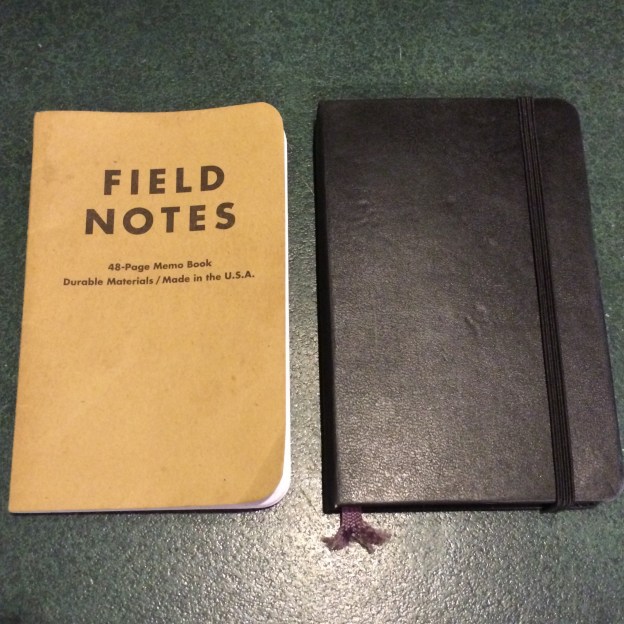
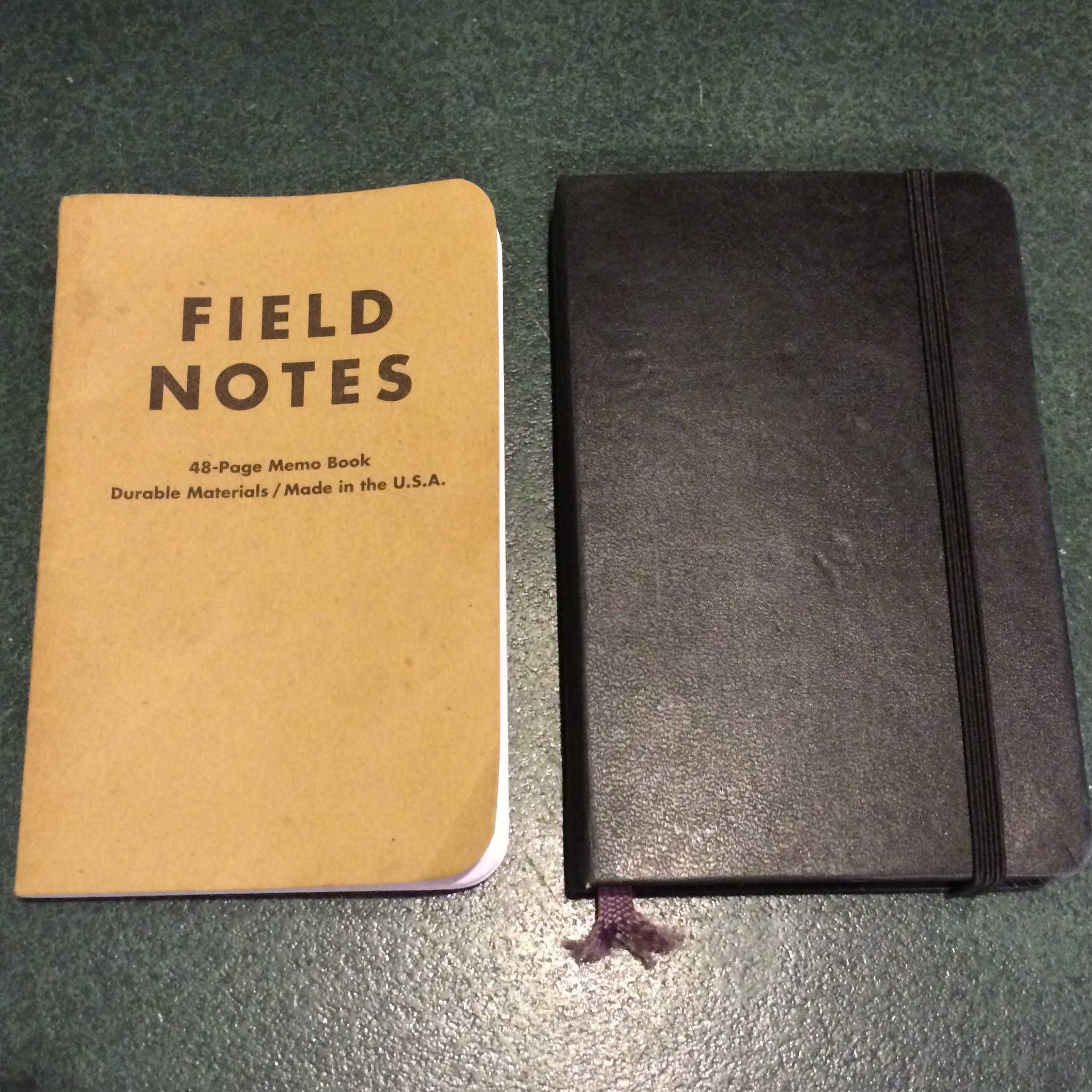
Moleskine vs Field Notes – Pocket Notebook Review

It seems that pocket notebooks are definitely back in fashion at the moment. The world, thanks to the internet and kickstarter, has become awash with them. As a writer, I’ve carried a notebook around with me for most of my life, so I decided that this is one area I definitely have an opinion on.

Despite the countless brands, the current two front runners are Moleskine and Field Notes. I’ve only recently succumbed to buying Field Notes as they are quite tricky to get hold of outside America without making a bit of an effort. However, I’d heard so much about them that I thought I would have to give them a try.

Both notebooks discussed below have gone through a complete lifecycle in my handbag (purse to any US readers, obviously). Despite all those hardy, manly, everyday carry instagram shots, I don’t think anything competes with the assortment of crap I carry around with me on a daily basis that these notepads have had to survive next to.

Don’t Judge A Book By Its Cover

Except in this instance. The hardcover pocket size Moleskine stands up well to most environments. It’s still got a lot of trend factor, as well as standing up to approval in the boardroom meetings. Because I use a hardcover one, it makes it easier to grab and write if there isn’t a surface available. Oddly, out in the field, using Field Notes is actually more difficult in this sense. Field Notes as a brand has a definite cover cool factor right now, especially some of the limited addition colours ones. But by its very nature, it is more casual; while it might provoke a bit of interest in meetings, it’s not going to be taken as seriously in a corporate environment. Especially after a bit of use. Which leads me to…
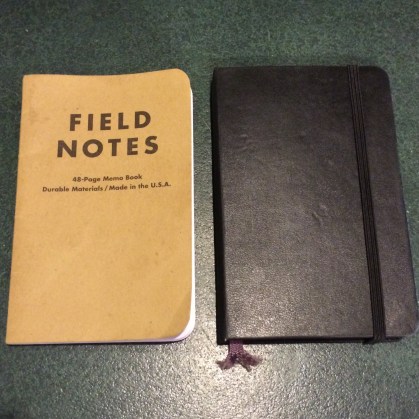
Field Notes Moleskine Cover


Durability and Longevity

Field Notes have considerably fewer pages than Moleskine books, meaning that this one was only on rotation for about a month. The Moleskine, on the other hand, was in my bag for around six. One looks hardly touched, the other looks well loved. I don’t have to tell you which way round that is. Again, that beat up look has a bit of cool factor to it, but as I keep all my notebooks and constantly refer back to the content in them, it does make me question if they will stand the test of time like the original concept they were based upon.

Paper

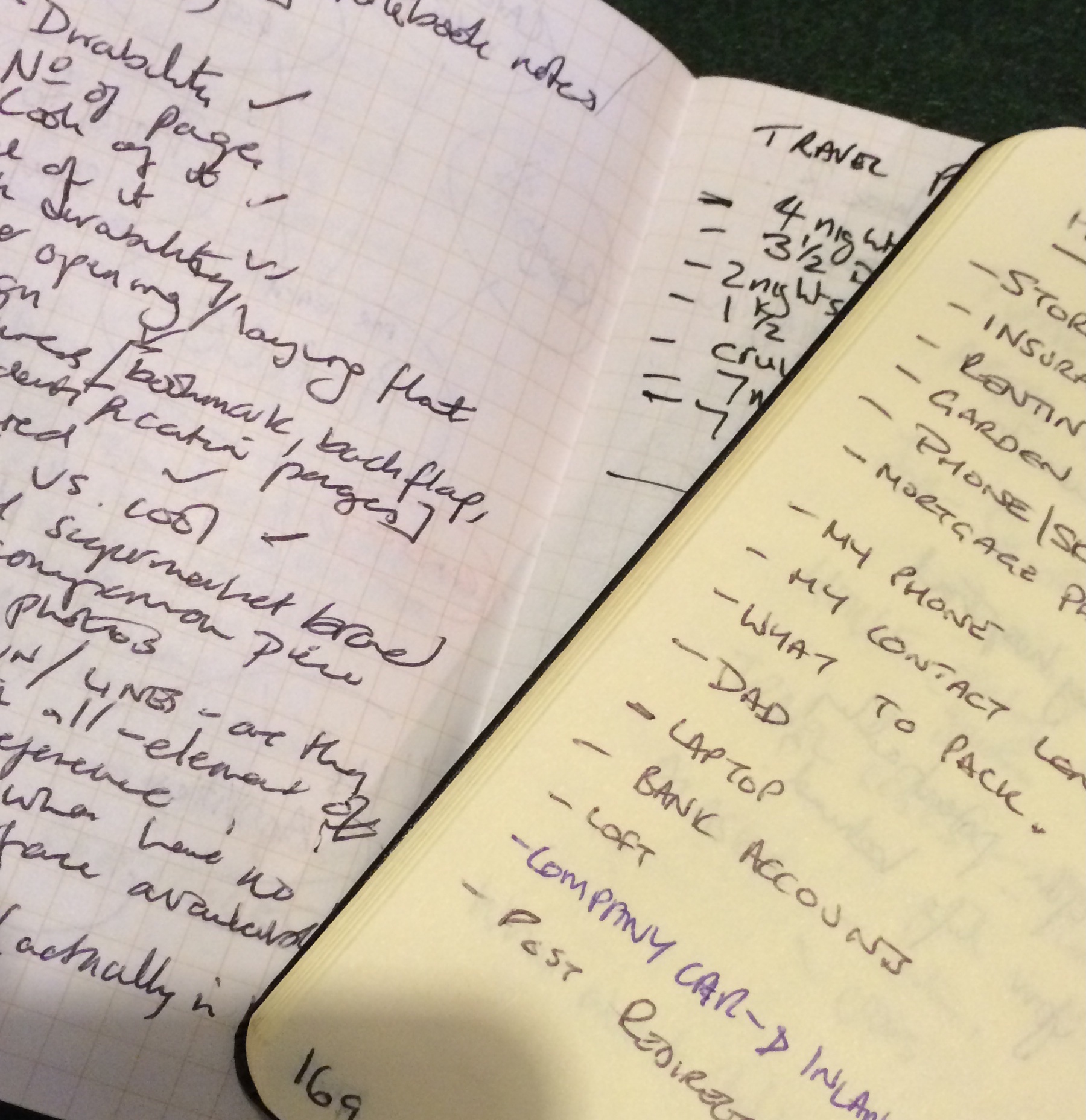
In the bid for market share, the quality of paper actually often seemed to take second place to design factor. A lot of brands have started to realise that as more and more people turn away from an entire dependence on smartphones and yearn for the analogue capture of yesteryear – often with a fountain pen to go alongside it – paper matters. On the whole I don’t use fountain pens, largely because I have a mythological perfect one I am still searching for, but I do use a variety of ballpoints and rollerballs. Despite a lot of people complaining about Moleskine paper quality, I would say that the two of them match up pretty well. If anything, the Field Notes have a little bit of show through (but not bleed through) on the back. I’ve yet to try out the Shelterwood edition, which has considerably thicker paper, but in the interests of fair comparison, I’m reporting here only on the standard book. Both brands have options of lined, plained and grid, so pick whatever works for you and knock yourself out.
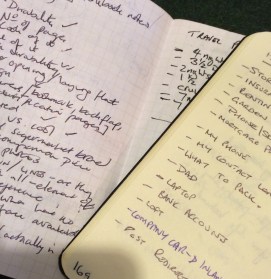
Field Notes Moleskine Pages

Features

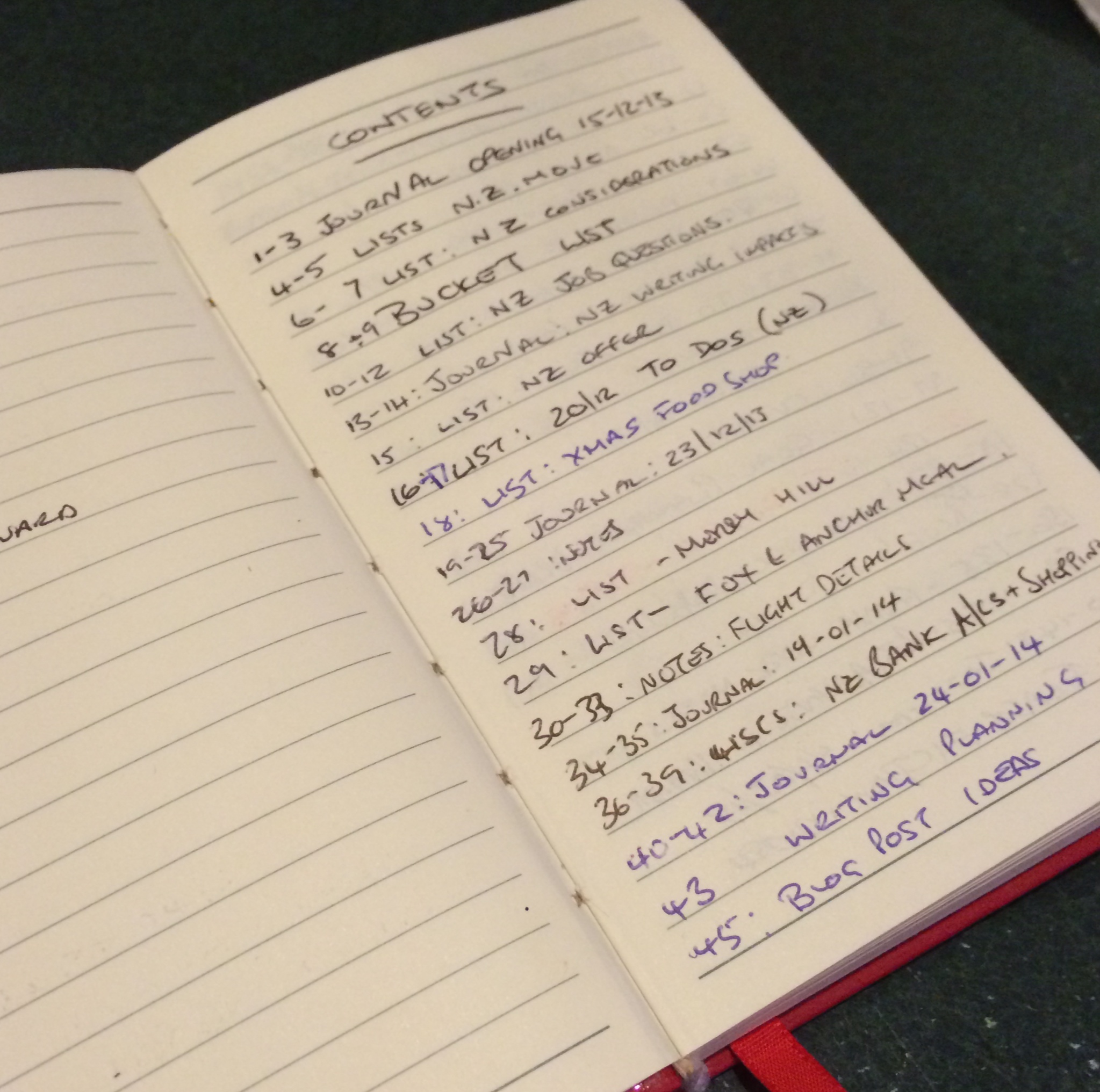
I love the Moleskine back flap for storing bits of paper and the bookmark is definitely a great feature. These are both missing from the Field Notes, but with considerably fewer pages, the bookmark becomes less of a necessity. I’d recommend using a modified to suit your needs Bullet Journal system with both. I recently went back and actually did this to all my notebooks that had a couple of blank pages at the beginning or the end and it makes a huge difference to usability. Field Notes has a built in ruler along the back sleeve and some  fun uses. Both have a user information page at the front, although both brands clearly approach it in different ways.

To Sum Up

Which side of the fence you come down on will always depend on how you use your notebook. For me, the pocket notebook isn’t for work – but when I am working I will use it to capture things so I don’t want it to look too out of place. I love the look of Field Notes especially when I am travelling; there is definitely something of the open road about them. The first real test will be on a road trip around the US and Canada next month, where I’m much more likely to be shoving them in my pocket for practical reasons, rather than just creative ones. After this first run through though, I am still slightly on the side of Moleskine for the way I can actually use them in any environment. If I had an idea last month, I don’t need to go and find the other book because I’ve already run out of pages and moved on.

Finally, I’ve used a cheap supermarket brand (£3/$4.50 US) and found that once you take the ‘street cred’ element away (the ‘look at me, I’m a writer/hipster/adventurer’ element) it works just as well on all fronts as the others, at a fraction of the cost:

Notebook

I Hate Titles

As I’ll be moving on from New Zealand shortly, I have a few weeks where I can be completely devoted to writing.  This has led me to the realisation of how much I hate coming up with book titles.

Sometimes, I know from the beginning, which is great. When I don’t, I come up with a placeholder, because every file needs a name, right? Then I get to the point where I need a title and nothing seems to work. Nothing seems to fit. Worse, the more I think about it, the more ridiculous my brain gets until I just feel frustrated. In the end, everything sounds like a bad porn movie.

This past week, I have had to come up with two new titles for books in very different genres. The first is one I am submitting to agents to try to take down the traditional publishing route. I know that if I am lucky enough for it to go somewhere, then the title will no doubt get changed anyway. But I still need something a little catchy to begin with if I want to grab attention.

The second is for the first book in a series I am intending to self-publish under a pseudonym. That means there will be no team of professional title-makers to come up with one for me. Annoyingly, the second and third books have had their titles from the start, but this has been stuck with it’s placeholder for nearly a decade. That’s made it hard to shake in my own mind. I finally had the breakthrough last night, which means I can finally think about getting the cover art done. Yay.

Titles. I hate ’em (apart from when I love them).

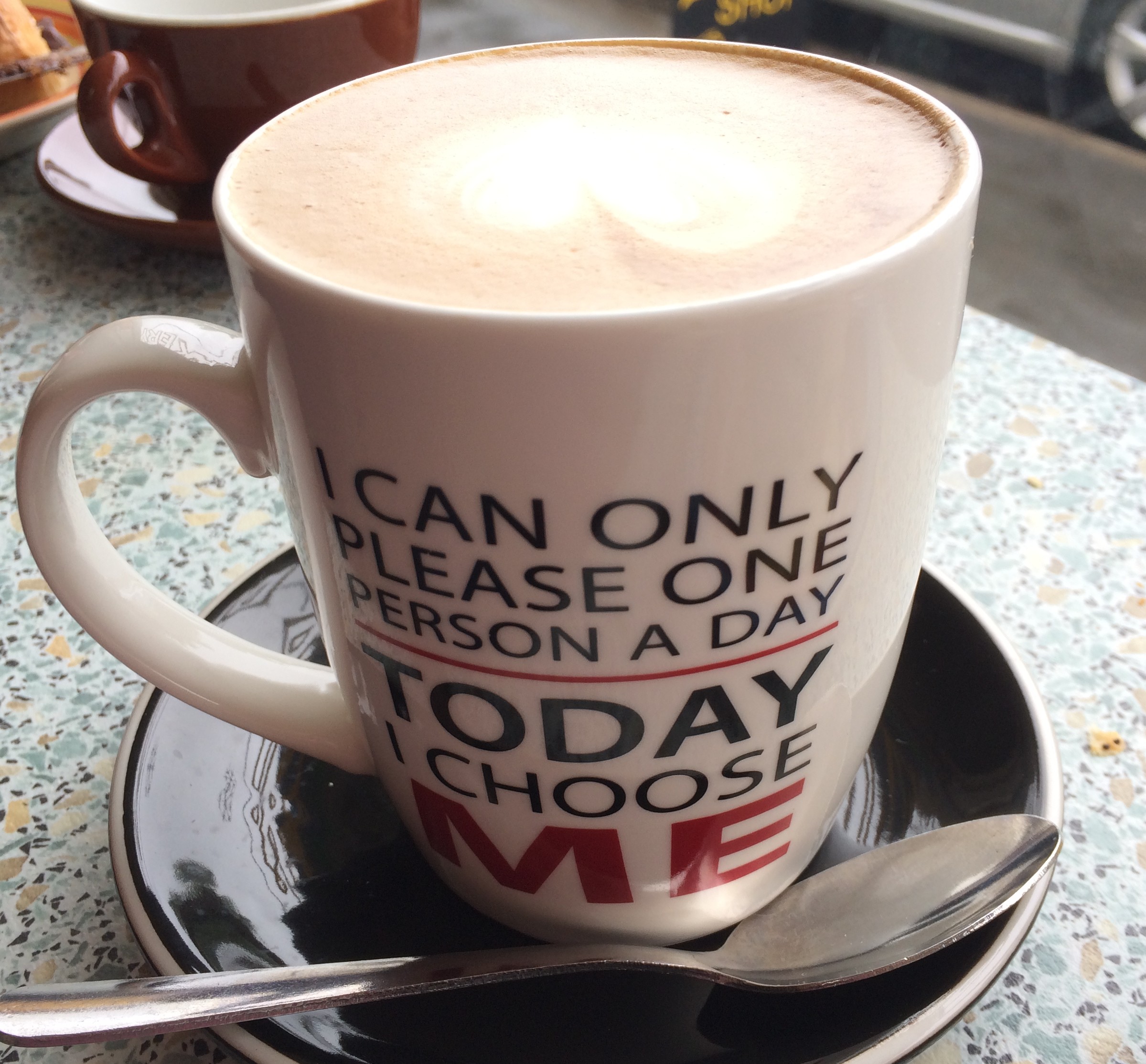
So, in the spirit of the writing focus and the coffee I have ploughed through to keep going:

IMG_5474


Going Un-Paperless – 5 Steps For When You Find You Can’t Go Paperless

We live in the future, where all our files and folders live on our smartphones and laptops, right? Even our books are digital. So why is it that so many people fear going paperless, and what can you do when you find yourself in an environment that is either unwilling or unable to change?

Like most aspiring authors, I tend to enjoy food and shelter, so supplement my income with a day job. My previous role was inherently paperless. The only time I really made paper lists was when I was in a situation of overload and the act of writing it down gave me focus. This was easy to implement because I worked in a small but geographically varied team that communicated largely by email.

I didn’t realise how lucky I was, until I started my new short term role and my desk started slowly drowning in paper. I wouldn’t call myself an environmental activist by any means, but some days I positively weep for lost trees. Now, it would be wonderful to ‘be the change I wanted to see in the world’, but that requires buy in from all parties. This company is one of the largest employers in the Southern Hemisphere. That is a lot of people to convince. My particular division also arose out of an emergency situation, where the comfort and reliability of paper in an ever changing team/building/environment was paramount. For a lot of people, disaster management is best done on paper.

I’ve been using GTD for many years and my system has been through several modifications. For a long time I used an excel spreadsheet, then moved to Outlook Tasks to accommodate the system my boss was using (I was so happy to be working with someone who actually had a system that I was prepared to give a little). My separate personal system was in Toodledo. Notebooks were a joy because they were primarily for creating or capturing ideas, not tracking the mundane (although even that has become a bit more productive / geeky due to Ryder Carroll’s bullet journal system).

For going paperless in a Mac environment, check out MacSparky.

paperwork

So, 5 Simple Steps:

1. Change what you can. Where there is no process, or the existing process has room for improvements, make them. Most people are actually willing to hear what you have to say when presenting a change to their system in a thoughtful, respectful manner. As part of that change, convert anything you can to a paperless approach.

2. Manage paper efficiently. If you have no choice but to deal with paper, then at least use it wisely. Don’t make unnecessary copies. Don’t just shove everything in one inbox and lose hours of your day looking for files. Essentially, have a system. If you do everything by email, then follow up flags and categories make tracking ‘waiting for’ items a piece of cake. Make sure that still applies if you’re stuck with paper.

3. Upload capture documents frequently. If you have an option to upload the paper documents that are floating around in ubiquitous amounts, then do so. More importantly, do it as often as possible. People are much less likely to make additional copies of a hard copy file for their own use if they can just view it on the screen in front of them. Most people are inherently lazy; use that to save the environment and your sanity.

4. Reduce the number of electronic systems. Another fatal error that is actually the case in most companies is the use of twenty four gajillion electronic systems. When one is not quite perfect, they find another one. Most of the time, it is not the tool, but the user is at fault. But that is far too difficult to address when you can just splurge a couple of hundred thousand pounds on a new shiny! Then half the users upgrade while half show reluctance. Great. Now the documents are in one of two places and the easy search is gone. Lather, rinse, repeat over the years and no-one trusts a damn thing. People go back to trusting the paper they can see and feel. Cull the tools and use common sense.

5. Spread the word. When people see that you are being more productive with a clean desk, then they will want some of what you’re having. Only, they won’t ever want to confess to it. We all know people like this; the ones who drown in chaos and claim it is because they are far too busy. Most of the time, they are simply inefficient and confuse busy with job security. Sometimes, it’s best just to give a little. Again, in a polite and respectful manner, point out small gains they can make at first. Even when looking at a productive person’s desk, a fresh pair of eyes can usually spot a few quick wins. Give generously to those who will accept help and enjoy watching them becoming less stressed over time. You’ll feel better and the trees will thank you for it.

Can you go backwards and still stay sane? I’d like to think so.

Canada Totem

Road trips: San Francisco, Vancouver, Alaska

So, I have been on the road now for the best part of a month. The purpose of this was twofold: for writing research and for pleasure.

It has been, without a doubt, a very interesting and busy few weeks. Having flown from New Zealand back in time, we covered San Francisco, Vancouver and surrounds, as well as Alaska. One thing has certainly be cemented this year, and that is the fact I am clearly more of an outdoor person than a city person. Which is not something I think I ever really realised before. Whilst I’ve never felt compelled to move towards the big lights, I could never really say I was much for tramping in the woods either. Perhaps it is something that is becoming more defined as I get older, or perhaps people are becoming less appealing? Who knows.

Canada Totem


I’ve certainly got a notebook full of ideas and places, characters that are calling out to me to be written. Turns out the Fieldnotes books are the perfect size for that length of stay. So the trip itself was definitely a success.

The next month will definitely be a busy one as I try to do something with it all…

Plus, I finally purchased a fountain pen in my bid to get back to handwriting some of my work. I’m loving it so far and can really notice the difference, compared to banging out the words on a computer. Review to come shortly.


The Rejection Threshold

I’m not sure if submissions are my least favourite part of writing, but they have to be close. I don’t actually know anyone who loved the submission process and those that say they do are probably lying. Why? Because of this, obviously:

Rejection-Stamp

No-one actually wants to be rejected. Sure, you can put a positive spin on it, say it all leads to growth etc etc, but you can’t actually want to be rejected unless there is something psychologically wrong with you. Of course, if you have the inclination to be a writer, then there probably is something psychologically wrong with you, but that is a matter for another post.

I’ve been putting myself through the submission process for years. I’ve told myself that this year will be different though. Simply because I am not going to succumb to the rejection threshold.

By the time I hit rejection number six, I usually give up. Call me weak-willed, but those form emails (or the brown SAE dropping through the letter box in the old days), never really did much for my self-esteem. It was always much easier to just move onto writing the next story whilst consoling myself with a large tub of Ben & Jerry’s.

Everyone knows that J K Rowling was rejected a dozen times before finally having Harry Potter published. One of my all time favourite authors, Jasper Fforde, was rejected 76 times before getting The Eyre Affair published (although, in fairness, I can see why. You try to describe the book and see if you can come up with anything that sounds vaguely credible). Even William Golding had a taste of rejection, with  Lord Of The Flies being rejected by over 20 times.

I would never even consider myself in that league, but safe to say, if they had stopped at the rejection threshold of half a dozen, the world would be a much poorer place. For me, I need to aim for an even higher number before giving up and reaching for the ice cream. I have decided that 2014 will be the year for it.

Although, 76 seems like an awfully long way to still have left to go….

…but I suppose there is always self-publishing…


Tracking Goals: Going Analogue

Along with Lift (edit: now coach.me), I’ve also found something analogue to help with my habit formation and personal development. This is the cool Goals Journal from kikki K.

IMG_5378

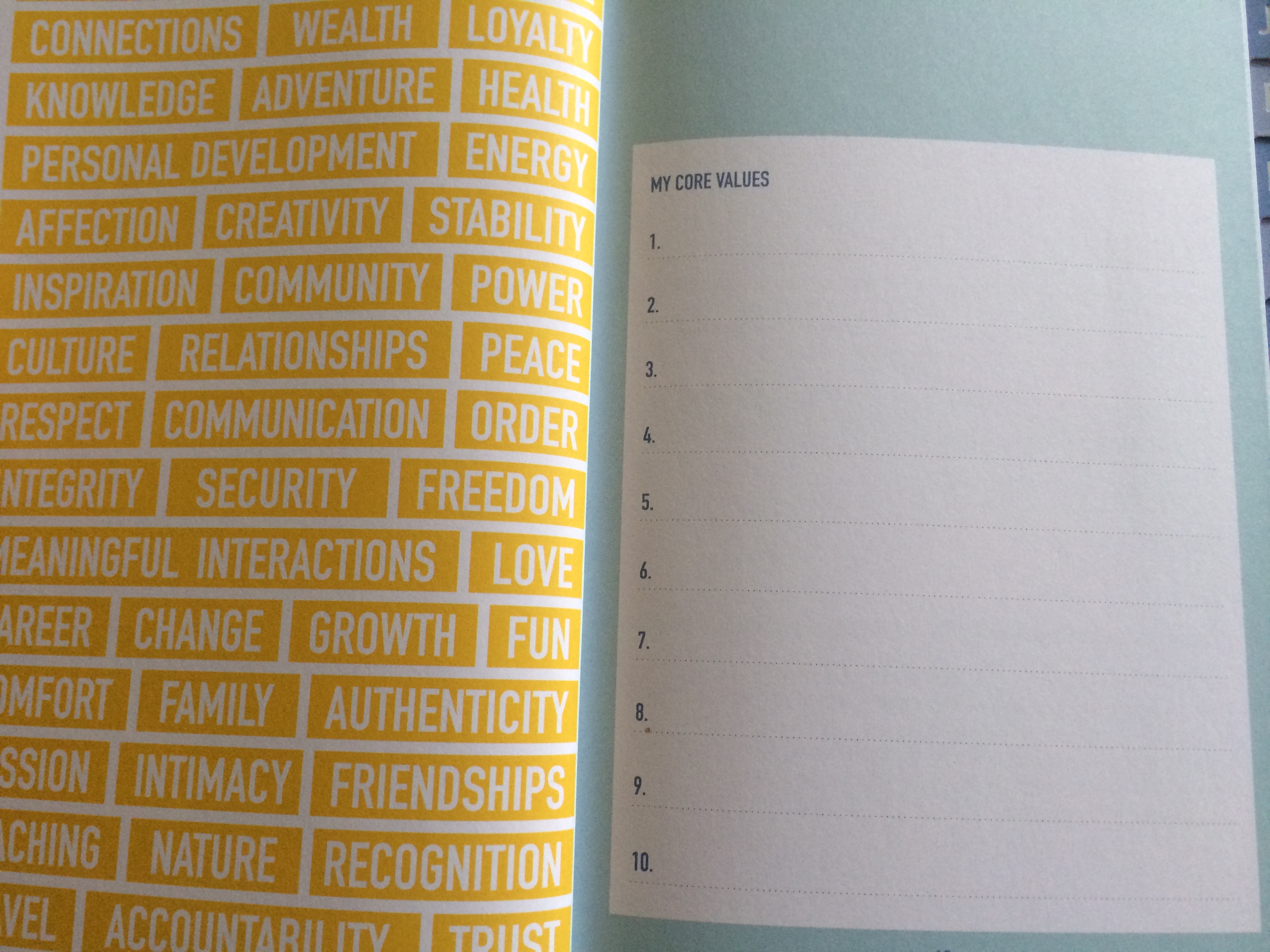
It takes some time to set up, but the process of doing so is really worthwhile. Instead of just coming up with random goals, it starts with the premise of trying to define your dream life. There are several helpful examples that talk you through the process, for example, stating your core values:

IMG_5379


The dream life itself has a few key factors, one of which is explicitly stating when you want to be living this. That took me a bit of thought. I obviously wanted to pretend I could get my dream life as soon as possible. Next week! But reality kicks in. So setting the balance between plausibility and so far in the future you’re not actually motivated to start straight away is a thought-provoking act in itself.


IMG_5380


Once you’ve worked out where you’re going to be, there is a section for each month where you define 4 goals. Only four for the month, so as long as you do it sensibly, it always feels achievable. The key part here is stating why you want to do this – how does it propel you further towards your vision?


IMG_5381

Of course, we all know that setting out goals is not enough. If only it were. But no, you actually have to take action to achieve them. To combat some of the most common excuses (I don’t have time etc etc), for each month there is a timetable. This urges you to set time aside for your goal work in the same way you would schedule an appointment for all the other areas of your life. This highlights how much time you really do have in your life if you want it badly enough.

IMG_5382


So, tomorrow being the 1st of March, I have completed everything and now it is all set up. At the end of the month, it’ll be interesting to see the progress I’ve made on my four defined goals (and if I gave myself the reward regardless…).

Lift App: Building Habits For Success (Review)

So, I have started using the Lift app to try to get into the habit of doing the little things that count.

Research has shown that having small goals, such as to drink more water daily, can have a big impact on your overall success. The thinking is that by making small changes and succeeding, you gain a sense of momentum that spreads to other areas of your life. Plus drinking more water is really good for you.

I know from personal experience that having a routine and using habit to achieve a goal can work. So, from a personal development perspective, I like the idea of having a tool that reminds me and rewards me when it comes to habits.

The ’21 days’ thing has been pretty much debunked as a myth, so there is no definite habit formation period that is universal to human experience. With my morning writing, it started to move from pain to pleasure after about two weeks, but I had a strong emotional attachment to the goal to start with. Other things, like going to the gym, I’m going to do because I know the benefits, but there is still an underlying sense of doing because I have to, not because I want to. Logic tells me that this habit will take way longer to cross over from the pain threshold.

The rewards feature (don’t break the streak! High Five!) are nice little touches to keep you engaged. Many of the preset goals have plans attached to them, so you don’t even have to figure out what you need to do from the get-go. This gives you a nice motivational sense of support that you can do the first few steps.

I’ve been using it for around two weeks so far and like the results. I have been to the gym more, read more and have done things to take myself out of my comfort zone. So, even if I haven’t achieved daily perfection I have still made progress, and that is what this kind of thing is really about.

You can read more on the blog here, or follow the guys on twitter.

Productivity and Personal Development: Why 6AM Matters

There is a current debate at the moment in productivity which seems to be pitting the ‘night owls’ against the ‘early risers’. Whilst I’m of the view that as long as you are getting important stuff done it doesn’t matter, I have to say I fall on the early riser side of things.

Don’t get me wrong, I never used to be. As a writer, I always felt my most creative hours were between 10pm and 2am. Which was great – if I didn’t have a day job. Once I did, then the reality was that creative never actually happened.

Then a couple of years ago, I was listening to a GTD Virtual Study Group podcast which brought to my attention the prospect of getting up early to make sure that if nothing else went right that day, you would always have an hour you could look back on, knowing that you had taken another step towards your goal. Towards doing what mattered most to you, not what mattered most to the boss man.

So I made the transition from getting out of bed at the last possible moment (after hitting that snooze button several times), to getting up at 6am, making myself a coffee and refusing to get up and go to work until I got 1000 words down. From now over a thousand mornings, I must have failed to hit that mark less than a dozen times. Getting to work late and then playing catchup all day was a powerful motivator to get typing.

Now I find myself on the other side of the world, having a writing sabbatical. Which some people would say is a fancy way of saying I’m unemployed. Transitioning careers. That kind of stuff. It doesn’t matter what you call it, it means I get to plan 100% of my time now without the 9-5 (or 8-7 as it realistically was most of the time).

All those hours back. All that free time. So what am I doing? I am getting up every morning at 6am to write, just like I have done every weekday for the past few years. Why? Because it works. Because setting up your day to start right is a key to making it a good day, no matter what else life throws at you.

It doesn’t matter what you do, or what you want to achieve. Starting your day intentionally by making it count is the best way to get there. To live a more productive life. Or, to put it in a way I’ve started to feel a lot lately, a more meaningful life.