We’re in the fourth week of January and if you started a weight loss resolution with nothing but good intentions, then chances are you’ve already crumbled. If you have, then remember that making a change for the better is not controlled by the Gregorian calendar. If it’s something you want, then dust yourself off and start again.
Although I believe the best way to live the sugar-free lifestyle is to avoid processed foods, I’m also realistic enough to know that life doesn’t play fair. Travel, long hours, unpredictable schedules – they can all hit your best intentions where it hurts.
Not all protein bars are created equal
One of the easiest ways to ‘cheat clean’ in these scenarios is by carrying a protein bar or two with you for emergency situations. The more prepared you can be, the less likely you are to be forced to have the only options available to you in the heat of the moment.
Although most protein bars clock in between 18-25g of protein per bar, the one thing that can vary wildly is the sugar content. Those that are promoted as ‘natural’ are the worst offenders in the sense of sugar content alone, often with 30g or above. As always, the trade off between sugar and artificial sweeteners is always a personal choice, but if you are aiming for a sugar-free, low carb or full on ketogenic diet, then a protein bar could do more harm than good.
What is a Quest bar?
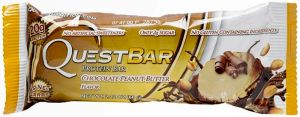
Quest bars are high protein, low sugar bars that come in a wide range of flavours. Most of those are ‘sweet’ flavours, so if you’re not comfortable with artificial sweeteners then they won’t be for you. Because I avoid sweeteners everywhere else, I can compromise on that fact in a protein bar emergency.
What do Quest bars taste like?
The thing I like most about Quest bars is the range of flavours. Given that they don’t use any sugars to sweeten the deal, they manage to make bars that don’t feel like a virtuous chore to eat. If you’re in the kind of situation where it’s all gone wrong and your only choices are to buy junk food, eat a protein bar or starve, then you don’t want the protein bar to be unappealing. Cookies and Cream is my favourite for this.

Can you lose weight on Quest bars?
Probably, but that’s not the point as far as I’m concerned. They are not an ongoing meal replacement I can promote. But, if you have your diet right the rest of the time, they can certainly help you to maintain when the chips are down. Oh, and Quest bars are not allowed on Paleo, unless you are really playing fast and loose with the rules.
Are Quest bars really good for you?
No, in the sense they contain artificial ingredients. Many people (although I’ve never experienced it myself) have an intolerance to the types of sweeteners that are included in the bars. You’re better off having a wholesome, nutritious diet. Quest bars are great for when that option is removed and, if we’re honest, we’re often more out of control than we like.
So, if you’re on a low sugar, low carb or keto diet, then Quest bars can be a great substitute on the go when low sugar options are hard to find. The protein keeps you full with a blood sugar spike and corresponding crash. By keeping a couple in my backpack, they’ve helped me stay on track – throughout January and beyond.
Interested in a sugar free lifestyle? Check out The Realist’s Guide To Sugar Free



 Sherri Nicholds