Tag Archives: Health

January Monthly Review: Fear Setting

January is a strange month. Everyone starts out with a higher level of enthusiasm which then fizzles out faster the the New Year’s Eve fireworks.

Now we stand on the cusp of February and it’s easy to wonder where the past month went. For most of us, the lofty goals we had in mind when the calendar ticked over have already fallen by the wayside. That doesn’t mean we should abandon them completely.

Technique One – Monthly Review

Regardless of whether you abandoned your goals back in week one or if you’ve been grinding away on them the whole way through, a monthly review is an essential technique for staying on track.

Before you begin – no judgement. Don’t beat yourself up for not doing as well as you’d hoped, you’re only human. The fact you are taking the time to do a review at all puts you ahead of the rest of the pack.

Look back over January with an honest pair of eyes. Were you realistic about what you wanted to achieve to begin with, or were you just flush with optimism for the future? Do you even still care about those goals you set? If you don’t, then there is nothing wrong with abandoning them and moving onto something else. The real value is progress on what matters, not for progress’ sake itself.

The final question to ask is what you did right / wrong when it came to working on your goals and plans for the month. Learn the lessons so you don’t make the same mistake again. Improve on your strengths to get even more value from them.

Now set yourself up for a great February. It doesn’t matter about January anymore. Let it go. Instead, focus on how you can gain the momentum that will carry you forward for the rest of the year.

Technique Two – Fear Setting

Tim Ferriss did a great Ted Talk explaining fear setting better than I can. It’s a great technique you can use if you’re not making progress because something is holding you back. If you’ve struggled to really commit to your goals, then this is a reversal of the process. Instead, you define your fears.

For most people, thinking about their fears is counter-intuitive. Why would you spend so much time and energy thinking about the things that induce anxiety and discomfort? Isn’t that the exact opposite of what we are told to do for a happy life? Mindfulness is a hot topic for a reason.

Fear setting is hard, but by going the extra mile and breaking down those fears, you take away their power. Fear is often a series of unanswered ‘but what if?’ questions. They spiral and debilitate. The power comes in getting to those answers.

Like a monthly review, the process is quite simple. You just follow a series of questions and steps to get to a place where you are able to action the right things.

Firstly, you have to define those fears in the extreme. What is the very worst thing that could happen. Be as detailed as you dare.

This is the point where most people stop in life. This is the anxious point. But what could you do to prevent those things from happening? This is the second question Tim asks as part of the technique and it’s amazing how easy it is to come up with answers. Pre-empting the worst case scenario often prevents it.

But what if that bad thing holding you back actually happened anyway? Before it does, take the final step of working out all the things you could do to get out of the hole. It’s amazing how resourceful you can be. That’s because by doing it up front, the pressure is off. When you’re in that place, the fear is the stronger emotion and it stifles ingenuity and creativity. By fear setting up front, you’ll already have the answers should the worst happen.

So by combining the two, you can guarantee yourself a better February, no matter how the year has gone so far.

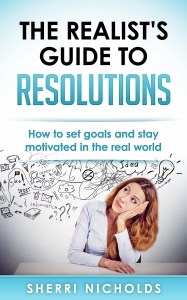
Need more help? The Realist’s Guide To Resolutions is a practical approach to goal achievement, no matter what time of year.
Ultimate Mindfulness Planner: The Trigg Life Mapper Review

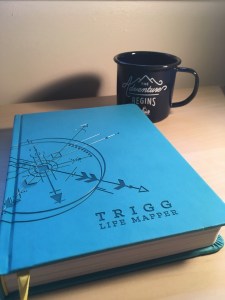
I was gifted The Trigg Life Mapper at Christmas, by someone who had no idea that it was on my purchase list, which was a lovely surprise. Of course, it is exactly my sort of thing.

My morning review. It’s so dark here in England right now.

According to the guys over at Think Trigg it:

“fuses the principles of planning, productivity, habit, mindfulness and gratitude to provide a daily, weekly and annual framework that will ensure you work less, get more done and constantly strive towards meaningful targets”

I’m always trying to fuse the principles of productivity and purpose, so I couldn’t wait to try this out. There have been a few stand out features so far.

Think about what you should do, not everything you could do

It is the first planner that has forced me to use the Covey-style matrix on a daily basis. Anyone who has read anything about time management or productivity will know what this is, but it is another thing entirely to do it as the core planning task of your day. So far it has forced me to be more focused (and therefore more productive) than anything I’ve used before.

Best feature – the focus on what matters most


Because I do more granular planning in my Leuchturrm Weekly Planner (see here for my overview post), the appointment section doesn’t work for me. Instead, because it is fairly inobtrusive, I simply use it to list 3 things I am grateful for as I start my day. I found that to work quite well, although I appreciate I’m probably a bit of an edge case here.

Appointments section – easily modified if required


Although the planner has a daily focus, it is also designed to force a weekly review – something I believe is critical to any kind of success. The review section is quite small, but it is followed by a ‘Priority Planning’ page to allow you to set up your ideal next week.

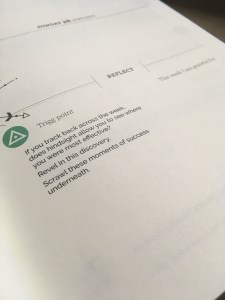
Review section with quotes to ponder

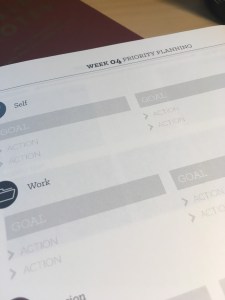
Revisit your goals and projects each week

Other reviews are at the six month and end of year points. This is probably sufficient for most people, although I’d like there to be monthly/quarterly review points as well to allow for course correction earlier in the process.

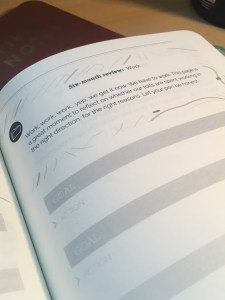
6 month review section for each life area

For those of you who plan out your weekends as heavily as your weekdays, Trigg – like so many other planners out there – gives a reduced space for Saturday and Sunday. There is also no specific structure for these days, just a standard blank space.

Weekend mindfulness and focus optional

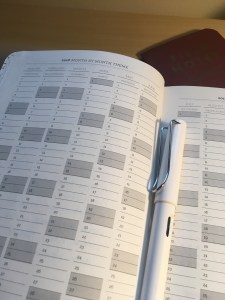
The one thing I don’t really use is the Month by Month Theme section. I appreciate the idea of having a theme for each month, but I can’t quite factor out how to use this in my own process as the date spaces are too small for any meaningful annotations.

Lamy safari for scale

Begin with the end in mind

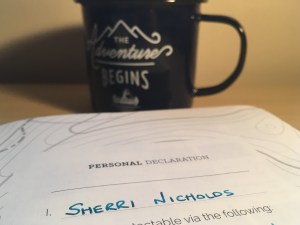
The key to getting the most out of the planner is to take the time in the beginning to set it up right. I can see how this is daunting for most people. After all, it starts with a declaration of who and what you intend to be.

Daily reminder of what I’m aiming for

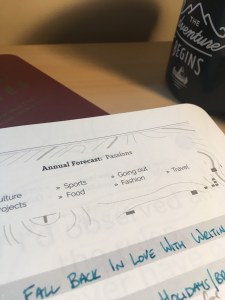
You then set out your yearly intentions in the key life areas of Self, Relationships, Passions and work. As with everything, this will only work if you review it daily, but it can certainly help you set your big picture planning for the year.

Knowing what you really want is always the first step

If this seems a bit daunting, then there is a help section on how to think about the annual forecast. Honestly, if you’re ready for the Trigg planner, you probably already have some sense about what you want. So although it seems intimidating, it took me only an hour or two to set up fully.

Quick reference guide

Begging for a simple design tweak

There’s so much good stuff in here that I really feel like a single bookmark is not enough. Just putting that out there so it can be considered for next year’s edition!

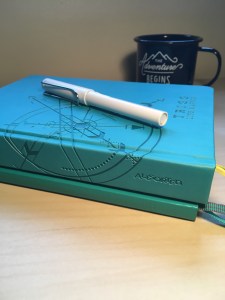
Trigg, Leuchtturm and coffee, my 2018 morning setup

So, in summary, there is no such thing as a perfect planner, but it is possible to modify and mix to create something that works well for you. Trigg has added a whole new level to my morning mindfulness. I now organise the granular detail over in my Leuchtturm planner with much more intention, rather than creating a crazy-making ‘To Do’ list. The result? I had my first guilt-free weekend in about a year. That’s priceless.

I’d recommend this for anyone who is ready to take their focus to the next level.

You can buy the Trigg Life Mapper from Amazon or over at Pocket Notebooks

Personal Post: The Year That Was 2017

Is it a sign I’m getting older that my first thought is about how quickly the year has gone? Probably. But here we are on the cusp on 2018 and I find myself at that point in the year when I look back and see what I can learn before moving forward.

Lesson 1 – The best laid plans…

I spent the early part of 2017 setting up my life so I could become entirely location independent. Armed with a laptop, all I needed was a decent wifi connection and I was good to go. I got to spend months in the sun, living the dream and writing. Then, happily but ironically, circumstances have changed so that for the next two years I have virtually no choice but to be tied to that place called home.

Lesson 2 – Marketing makes no sense…

Never trust anyone who promises you a fool-proof system to fame or money. Whether it’s sales, platform building, advertising models or social media, no one has all the answers. In a world that is rapidly transitioning towards entrepreneurs and gig economies, there are more scammers out there than there are genuine business minds.

Lesson 3 – It’s all about helping others…

I’ve done some amazing things this year. But the thing that has given me the most satisfaction is hearing from people who have found The Realist’s Guide To Sugar Free useful. Some of the Amazon reviews have been amazing and I am so very grateful. It was because of this I wrote The Realist’s Guide To Resolutions. There are so many self-help achievement books out there that are really boring for the vast majority of readers. I happen to love them. So, once again, I studied, distilled and made a light and fun read for other people to get the benefits without having to wade through books that are, ultimately, trying to get business people to buy consulting services.

Looking forward…

I’ve come to realise that the main thing is about being happy with what matters to you. It’s not about being what other people expect you to be. If I can continue to stay true to myself in 2018, help others along the way and take it some spectacular sunsets, then I’ll be fine.

Whatever you want from 2018, I wish you every success.

The Realist’s Guide To Resolutions – How To Set Goals and Stay Motivated In The Real World

If you want to stop smoking, lose weight, get fitter, improve your career prospects or simply finish a project that’s been hanging around on your to do list for the past ten years, this book will give you the kick up the backside you’ve been looking for.

2018: How to do more and worry less

As we hurtle towards the end of 2017, it’s inevitable that we start to look back over the year and ahead towards the new one. It’s a time of hope and dreams. It’s a shame then, that such determination and promise for the future only rolls around once a year.

I love personal improvement books. I’ve read hundreds of them by this point. But most people don’t. I can’t blame anyone for that. They’re notoriously dry and you have to dig through hundreds of pages to find the four really useful paragraphs they contain. You already know what I decided to do about it, right? Ta-dah!

The working title for this book was ‘goal setting for normal people’. It was never going to be the final name, but during the writing process I wanted to keep in mind the heart of what it should be about. Quite simply, to take the wisdom of those hundreds of books I’ve read, along with research papers, personal experiences and the behavioural lessons learned from writing The Realist’s Guide To Sugar Free. Then put it in an easy to read, useful and actionable book.

So what’s in it?

Plenty of information, without all the waffle and buzzwords. Things such as:

  • How to set the right goals for you (and not feel guilty about the ones you don’t)
  • How to plan for success (beyond the first week)
  • How to hack your brain to do this smarter not harder (great if you struggle with motivation and willpower)
  • How to track progress and level up (so you can continually dream bigger)

The Realist’s Guide To Resolutions will be published on December 28th. I wanted to make it available for those people who like to take advantage of the downtime between Christmas and New Year, or prefer to start the year with the thinking already done.

I’ve got my own yearly review day booked in for December 29th. I’ll consume several cups of very nice coffee, read the letter I wrote to myself at this time last year and write the one to open next year. I’ll look back at all the things I’ve done (fond memories of my four month sabbatical by the sea) and work out what I need to do to make next year even better. No doubt I’ll be slightly daunted by the sheer number of notebooks I’ve filled over the course of the year. My guess is upwards of twenty. Gulp.

If you’d rather wait until the festivities are out of the way and 2018 has arrived, then the pre-order will be delivered to your device for when you’re ready to start.

Like Sugar-Free, it’s a quick and easy read, with a dash of humour thrown in. It’s also reasonably priced (only 0.99 in most regions!) so you can get the most bang for your (literal) buck.

Here’s to a fantastic 2018, whatever that means for you.

The Realist’s Guide To Resolutions is available for Pre-order at Amazon.co.uk (or go to Amazon.com to jump to other regions)

Upcoming Offer

For those in the US, the kindle version of The Realist’s Guide To Sugar Free  will be discounted to 99c for New Year (December 29-January 4).
NaNoWriMo Prep: 30 days of staying healthy

As a significant number of people are about to launch into the writing insanity of National Novel Writing Month, I thought I would do a post not on writing, but on health.

As someone who has been doing NaNoWriMo for a long time (over fifteen years!), I’ve learnt some hard lessons along the way. So I thought I’d wrap them up into a single post so you can learn from my mistakes rather than making them yourselves.

Preparation


The best way to have a comfortable and healthy month is to prepare for it. Take the time to plan your novel (if you’re a planner rather than a pantser) but also take the time to prepare your writing environment. Your wrists and neck are going to be under some strain during November, so make your set up as ergonomic as possible. If you’ve only ever written 300 words a day before, then don’t expect to write 3000 and not feel a twinge or two the following day.

Clear your calendar of other events if you can, so you don’t end up with too many competing priorities.

Diet

Writing can be an absorbing pastime. You get lost in the world you’re creating. It can be fun to get to know your characters. So much fun that you look up and it’s a lot later than you realised. Time to grab a coffee and a quick snack and keep going, right?

Wrong.

Eating a proper diet and avoiding quick and easy junk food will give you enough energy to keep going long term. Don’t make November the month of sugar highs and carb crashes. Simple, healthy meals can be planned for in advance so they don’t cut into you writing time.

Hydration

No, I don’t mean drinking endless pots of coffee. Much as I love the stuff, don’t chug it to get you through that all night writing session. Drink plenty of water and other uncaffeinated, sugar-free beverages to stay sufficiently hydrated. I’ve found this is especially important if you’re doing an early morning session as it clears the fog of sleepiness very effectively.

Sleep

Talking of sleep, make sure you get some. Finding the time to write 50,000 words means finding a lot more hours during your day. Sacrifice TV and Facebook time, not sleep. Tiredness will make the whole process of writing slower and begin a vicious cycle of struggling to hit your daily word count. Try not to deviate too much from your existing pattern and if you know that’s currently a terrible one, then don’t allow NaNo to make it worse.

Exercise and rest breaks

As well as sleep, make sure to build in some exercise time and rest breaks. Not only will your wrists appreciate it, but your eyes will too. There have also been several studies highlighting the dangers of prolonged sitting, so make sure you get up and walk around. Set a timer or alarm if you have to. It might not seem easy to stop mid-flow, but it’s better than sitting for an extended period and risking blood clots and heart attacks in later life (a bit dramatic, I know).

Mental health

Doing NaNo can be hard on your physical health, but it’s not a walk in the park for your mental health either. The pressure to finish (often self-inflicted) can lead to some serious burn out. This is often exacerbated if you haven’t done the things above to work on your physical well-being. Remember, at the end of the day, NaNoWriMo is meant to be a fun and inspiring writing experience. It’s not meant to be soul destroying. Don’t win the month, only to never want to write again.

If you start to feel upset, frustrated or unhappy, then step away from the computer. Take a break. You can come back tomorrow, the next day or not at all. It doesn’t matter. Life is too short to be made miserable by an internet competition where the only prize is to be able to say you’ve done it…

You’ve got 12 weeks to complete your 2017 goals

12 weeks? Is that all?

I know, 2017 has sped by in a bit of a blur. However, there are still 12 weeks left to make progress on those goals you’ve spent the majority of the year procrastinating on. The good news is, with a bit of planning and forethought, that’s plenty of time.

Learn to think in 12 week years

If you’ve not read The 12 Week Year by Brian P. Moran then go and read it now. You can also check out my 12 Week Year Book Review post if you want to know more.

Prioritise

Okay, so 12 weeks is plenty of time to get things done, but it’s not enough time to get everything done. Work out which goals will give you the biggest impact and leverage then discard the rest. If you’ve not done anything about them so far, they can probably wait another few months anyway.

Engage

Don’t do anything you don’t care about deep down. If you want to make 2017 your best year ever, then do the things that will give you satisfaction and a sense of pride. Obligation and guilt are not the motivators here.

Plan, plan, plan

I don’t care if you do it in an app or on paper, but you need to write down a plan. Between now and the end of the year, social and family obligations shoot through the roof, there are holidays and for many of us, lots of shopping. Don’t pretend this won’t zap your time and energy. Open the calendar and plan the work.

Get specific. Plan the tasks that get you to the goal, not just vague references that make you feel like you’ve written without really having to think about it.

Execute

The hardest part of all. Now you have to act on those tasks you’ve defined. Each day, make sure that you’re working towards the goal, rather than getting distracted by lesser tasks that feel like work, but don’t actually get you anywhere.

Finish strong

Although the end of the year is approaching at break neck speed, it really isn’t too late to make it a great year for your productivity. There may be the temptation to put everything off until the New Year, but if you do, then you’ll find reasons not to start then either. Take the first few, small steps and the rest will follow. Plan the work, work the plan.

Seasons – Planning Life Alongside Nature

For us in the northern hemisphere, there is no denying the change in the air. Summer is giving way to autumn (or fall, if you want to be all American about it). The kids are back at school. All the upcoming holidays now have an ‘end of year’ feel to them. For those in the southern hemisphere, the reverse is true. Spring is coming and summer will be here before you know it. Time to hit the beach and get outdoors.

It was whilst living in New Zealand that I realised for the first time how productivity and personal development have seasons of their own, often very much inline with nature. Perhaps it was because all my online inputs were largely presenting an experience that was the reverse of the one I was living through. What I did realise was that as the rains came (I was living in Christchurch, there was lots of rain), it became harder to stay motivated and geared up for new projects all the time.

Any productivity guru worth their salt will tell you that you don’t need to wait for the New Year to make a change. Or that every day is a fresh start. It’s all very true. I just think it becomes harder if you try to do it out of sync with the world around you.

Many people live online so much that it makes it easier, in a strange sort of way. When you never leave the house, it’s easy to forget what is going on outside. I know the temptation of the laptop as much as anyone else. Nevertheless, it can contribute to a feeling of burnout when there is no variation, just the non-stop hustle and grind of daily life.

Right now, I am taking a mini-break to plan the remainder of the year. I wanted to be somewhere different, somewhere much closer to nature, to remind myself of this idea. As the days get shorter, it will become harder to get out of bed each morning. The evenings will seem made for curling up under blankets with a good book, not hitting the gym or high intensity projects. I need to remember this so that I don’t fill my days with things I won’t achieve. I don’t like breaking promises to anyone, least of all myself.

So, over the next few weeks when you begin to see articles and blogs reminding you that ‘It’s not too late to win the year!’ and ‘make that final quarter count!’, remember that life is meant to have periods of recovery and renewal. If you’ve left it until nature begins to shut down, then it might be time to consider a different approach next year.

Of course, for those of you in the southern hemisphere, it’s time to get up and at ‘em.

Why the 45,000 pound sugar mountain wasn’t what it seemed

In today’s post-fact society, always read the label

Last week, a huge mound of sugar appeared in Times Square. This piece of educational art was installed to drive home the point that in America, every five minutes children consume 45,485 pounds of added sugar.

That’s a lot of sugar.

I’m all for promoting the dangers of sugars added to and hidden in food. But it did raise the question: who exactly were they trying to educate? What was really the message here?

I’ve been to Times Square. I love it. It’s hustle and bustle and, dare I say it, prime marketing real estate. This installation highlighting the dangers of added sugar comes not from any educational or government body. Nope, it comes from a food manufacturer.

KIND have a message that’s hard not to get behind. From their website:

“We believe if you can’t pronounce an ingredient, it shouldn’t go into your body. Actually, it shouldn’t even go into your pantry. KIND® products are made from nutritionally-dense ingredients like whole nuts, fruits and whole grains – no secret ingredients and no artificial flavors, preservatives or sweeteners.”

However, this is where I get really frustrated with food companies being disingenuous when it comes to promoting healthy food. It’s true that the added sugar consumed by children is way above where it should be and where most parents probably believe it to be. But for many people, it is precisely the types of snacks made by KIND that cause the confusion. They’ve just launched a new range of snacking products, Fruit Bites. Let’s look at the description for the Mango Pineapple Apple version:

Our Mango Pineapple Apple Fruit Bites are made from only 3 simple ingredients and give you a delicious tropical fruit snack in every bite. We don’t use fruit juices, purees, concentrates or preservatives – so you can enjoy a fruit snack that’s actually made from real fruit. And with no sugar added and 1 full serving of fruit per pouch, it’s the perfect lunchbox snack.

Real fruit! That elusive serving! Perfect for the lunchbox! What parent trying to do the right thing wouldn’t go for that? However, let’s look at the nutrition label. Again, from their website:

Whilst it contains no added sugars, it still contains 11g per pouch of natural sugars. Which are, make no mistake about it, still sugar. At an 18g serving, that’s around 60% sugar.

Always be suspicious of marketing, especially when the message is wholesome and healthy. Even more so when that message is aimed at your kids.

How to create a successful morning routine

Why set up a morning routine?

These are a few benefits I’ve found from my own routine over the years.

For many years, a corporate job took most of my time and energy. I would come home from work and have nothing left to give for things that were important to me. I wanted to be a writer, but I never actually wrote anything. This all changed when I dedicated just an hour every morning to my writing. Having a morning routine allows you to dedicate time to the things that matter to you most.

Precious alone time. In today’s world, we are constantly bombarded with interruptions, whether in real life, social media or any other online input. A successful morning routine, one that was clearly defined, gave me a definite course of action, so I always knew what to do next. That removed ‘check twitter’ from my list of options. That space gave me time to think about what was important and also sheltered me from negative bombardment from the moment I woke up.

There are many other benefits, but those two give the biggest returns for a happier and more fulfilling life.

So how do you set up a morning routine?

It’s easier than you think.

Firstly, ask yourself what you hope to achieve from doing this. Everyone will have different objectives. Is it to make time for your creative projects? Is it to make sure you get in a good workout each day? Or perhaps it is to read or work on personal development. What matters most to you will make up the core of the routine.

Secondly, decide how much time you want to devote to this activity. Be realistic. If you want to do a thirty minute workout but have to go to the gym, then include the travel time and showering afterwards. No one will thank you if you run out of time for that. The amount of time required will impact on how early you need to get up in order to complete the routine before beginning your existing obligations.

Thirdly, don’t start too big. Habits take time to become routines and the more you add in, the more likely you are to become overwhelmed and give up. My morning routine started out with a simple, single task: write 1000 words before breakfast. Over time, that has developed into a multi-step routine, but I needed to get used to doing that single but significant task first.

Be in it for the long haul

So what does my routine look like now? It combines several elements that I have seen successful authors, businesspeople and entrepreneurs confirm as being instrumental for them.

1) Begin with a pint of water. I used to go straight to coffee, but never underestimate the power of rehydrating after 7 hours of sleeping.

2) Write 1000 words. That’s still my big goal after 6 years of doing this.

3) Morning Pages – adapted from Julia Cameron’s The Artist’s Way. You’re really supposed to do them before anything else, but for me they have actually always been more effective after my half-asleep writing session. The last page always contains three things I am grateful for that morning.

4) 20 Pushups. Really not many, but it makes me feel like I’ve at least done something physical and makes me more likely to do other activity throughout the day.

5) Affirmations and visualisations. Yes, I still feel like an idiot sometimes saying these things out loud, but they do work. I’m shy and introverted by nature, so this gives me the confidence to step outside my comfort zone when I need to.

6) Goals review. Don’t work hard to climb that ladder just to discover it’s up against the wrong tree. Work out what you want and remind yourself every day to stay focused on what matters, rather than what simply feels urgent.

7) Calendar review. It doesn’t matter what grand goals you have for that day if your calendar says you have back-to-back meetings. Again, be realistic.

8) Task list review. By the time I’ve reviewed what matters (goals) and what’s immovable (calendar), it makes it much easier to delete, delegate or defer tasks on my list. What remains still needs to get done, but this way I don’t waste my energy on unnecessary tasks before I get to them.

The power of a morning routine means that these tasks take less time as you repeat them. The whole process above now takes somewhere between 90 minutes and 2 hours. That’s from 6-8am at the latest. That gives me a whole hour to have breakfast, get showered and be at my desk by 9am.

I’ve already achieved things that matter to me and mentally prepared for my day by the point most people are just thinking about booting up the laptop.

None of this will work unless…

A meticulously planned morning routine with all the best intentions and activities will still fail unless you actively set yourself up for success the night before. Unless you have the luxury of being beholden to no-one, you’re going to have to sacrifice some morning sleep to get this done.

A successful morning routine means ensuring you go to bed early enough to get the quality sleep you need. If there are any objects/spaces that are essential to your routine, then these should be found or made clear the night before to remove as much friction as possible and ensure you can make every minute of your morning routine count.

Hopefully this has given you some ideas about how to set up a morning routine and how to grow it into something that makes a huge difference in the level of success and satisfaction you get from your day. If you have any questions or thoughts then drop them in the comments section below, or you can get in touch with me by email at realist@sherrinicholds.com.

Gran Canaria for Digital Nomads

After spending 3 months with Gran Canaria as my home base, I can say for certain it has been a perfect place. Although the location independent lifestyle is still in its infancy in real terms, I can see great potential for the Canary Islands as a whole to become the nomad capital of Europe. I group them together as a single entity because there is so much variety in such a small space, all of it easy to access. Tenerife and Lanzarote also have a growing digital nomad community that can be reached within an hour or two.

However, I’m also aware that I have some very specific requirements when picking out my ideal travel locations, so in the review that follows, I’ll try to be balanced towards the areas that matter to a majority of people. So how do the Canary Islands fare on the key metrics?

Costs are in US dollars, unless otherwise specified.

Cost

Compared to much of Europe, the Canary Islands aren’t that expensive. They’re not dirt cheap either, as they’re developed and off the mainland. But flights from all over Europe can be purchased for around $50 if you shop around. At this price, I was able to get a return flight to the UK for a long weekend in May for around $75 – an absolute bargain.

The cost of accommodation varies depending on season (as the islands have a strong tourist influence). A one bed apartment can cost as little as $800 per month with utilities included. For less than $900 you can have sea views and balconies, which are my personal preferences. The good news is that low season, when the prices are at their most competitive, the conditions are ideal for working.

Not a bad office view

As someone who tries to eat healthily, fresh meat and produce can be slightly more expensive than in mainland Europe. Supermarkets tend to be smaller and buying in bulk to save money is not always an option. Even so, it is still more cost efficient than eating out, especially in the tourist areas, when a main meal can set you back $15-20 per person.

You have to enjoy meat and cheese around here

The constant requirement of bottled water doesn’t sit well with my conscience either if I’m honest and adds about $2 per person, per day. That adds up over three months!

Weather

Located off the coast of Africa, approximately 28 degrees north of the equator, the Canary Islands have the best weather in the world. Hot days, balmy nights, with very little rainfall. Unlike a lot of other hot, palm tree laden places in the world, this is not subject to intense rainfall. The humidity doesn’t sap away all your energy and force you inside as a sweaty sticky mess.

There can still be variations in temperature, even on the same island, given the exposed position they have to the west. Gran Canaria is a good example of this. Las Palmas in the north has much cooler temperatures than the tourists hotspots of the south, only an hour’s drive away. Regardless, if daily temperatures of 25-35 degrees Celsius (75-95 degrees Fahrenheit) sound good to you, then this might be the place to visit.

Every day is a beach day


Internet

If you rely on the internet (and if you’re reading this post then I assume you do), the Canary Islands can be a bit patchy. Coffee shops and coworking spaces in cities have good enough internet to use in most cases. However, once you venture into tourist areas, then coffee shop wifi is more or less an afterthought.

There is a wide variety of accommodation that come with good, free internet access included, but if you want to work in public spaces more, then stick to the cities. I made the trade-off to keep the wifi in the apartment and the beach coffee shop for pleasure or analogue work. I’m still happy with that decision after 3 months, as it actually helped with a work/life separation that can be tough when you’re independent.

Community

A strong digital nomad community isn’t high on my list of needs. Much of the work I do isn’t collaborative and I’m naturally an introvert. Coffee shops with good wifi are enough for me.

Cafe Regina – with coffee like this, I don’t need people!

But I know that for many people, especially those travelling alone, a strong digital nomad community is a must. So, although I can’t speak from personal experience here, it’s clear that Nomad City are pushing things in the right direction. In April Digital Nomad Girls Las Palmas Retreat took place, again highlighting the potential for community over here.

They are all fairly positive, but in comparison to somewhere such as Chiang Mai, it will probably seem a little slow.

Transport

Travel throughout the Canary Islands is affordable and efficient. This applies not only to the bus services that connect the various parts of an island, but also to the inter-air flights that make island hopping easy. It is also fairly simple to hire a car if you prefer to drive yourself, but it is worth noting that these are volcanic islands, so confidence on steep, winding roads with a sheer drop is a must!

Culture

Puerto de Mogan is an idyllic getaway

Although the islands don’t have the same depth of history as much of Europe, there is still over five hundred years worth of culture to be absorbed here. There are some great old buildings, festivals and the food and drink is varied and tasty. You can also explore the volcanic landscapes. I recommend going over to Mount Teide on Tenerife (the highest volcano in the world base-to-peak outside of the Hawaiian Islands) and doing a Teide star-gazing trip.


Courtesy of volcanoteide.com

Safety

As a woman, safety is of high importance to me. The Canary Islands contain some of the most comfortable places I’ve found. Of course, in any location, I take a lot of sensible precautions. Outside a city such as Las Palmas, you can find sleazy tourist hotspots where it is assumed that you’re there to have a good time or a summer fling. If that’s also on your travel agenda, then great. For me, it was as simple as avoiding bars at kicking out time in these areas, just as I would anywhere in the world.

In summary, the Canary Islands have something for every digital nomad or location independent worker. The key is knowing what you need and how you want to live. For those who are starting out, bootstrapping and traveling for the first time, it might not be the best place to start if you’ve watched a lot of digital nomad YouTube videos. But for those who are more settled into the lifestyle, or want something in Europe rather than Asia, then I would recommend here so much that I already look forward to when I can return.

Interested in finding out more? Check out the resources below:

CANARY ISLANDS SEIZING THE GLOBAL GROWTH OPPORTUNITY – It’s great to see the government and locals embracing the opportunities of a global market and the digital nomads that come with it.

Places To Work – Las Palmas Co-Working spaces.

Wolfhouse Tenerife – Co-Living – I’ve not visited the Wolfhouse, but I have been to Los Gigantes several times and can say it is a great place to visit.