Tag Archives: growth

Writing race

You know me, I’m all for a bit of equality and diversity.

But when I write my characters, they come to me to tell a story, not to put a tick in a box. In the story I’m currently writing, the main character’s husband is black and their daughter is therefore mixed race. The story itself has no theme of race, it is simply that they are what they are.

Which got me thinking a couple of things. Firstly, as a white woman in England, is it easy for me to say things like ‘it’s not about race’ because race never factors into my daily decisions and life? Secondly, am I in a position to understand that element of a person’s life within my characters in an authentic fashion?

It’s certainly easy to overthink things. It’s a thorny topic and in some ways I’m reticent to even write a blogpost about it. I want to be true to the story I want to tell, but I also want to be true to the characters as they would perceive the world. I don’t want to offend anyone by a series of assumptions and presumptions based on my own limited view of the world.

In that sense, as a writer coming from a place of my own experience, it would be easier simply to make them all white. Write what you know, isn’t that what they say? But there are people of all races, religions, abilities and sexualities in my life and although I may never walk a day in their shoes, it doesn’t mean I should exclude them my stories just because that would be easier for me. That’s how no one grows and inequality prospers.

So, I may get it wrong. I may overthink or underthink things. I may accidentally offend, but I promise never to intentionally offend. Above all, I’ll try to tell an authentic story, no matter how difficult or challenging that may be.

Everyday carry for a writer

Over the past year, I’ve become endlessly fascinated by people photographing and describing their everyday carry. Of course, because I don’t live in America, I still find it odd to see so many knives and guns as part of that. The knives I can understand from a practical sense, but the prospect of having a gun as an integral part of your everyday life still baffles me.

Anywho, I am a person who has a few items with them 99% of the time. I might not have them with me when I go out for a special occasion requiring a little black handbag, but that’s about it. So below is my everyday carry:

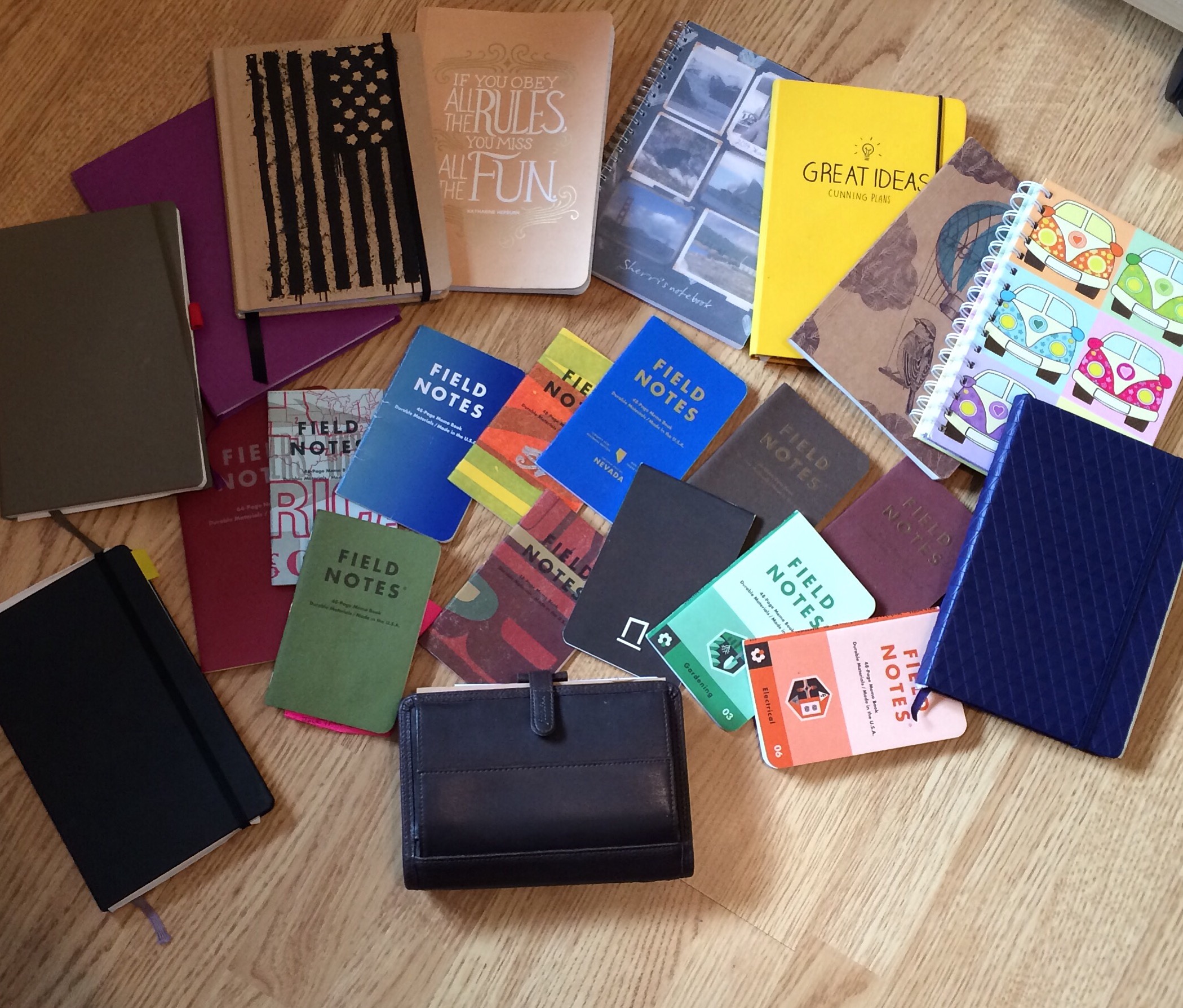
IMG_0054

I adore my nockco holder. Whenever I have an idea I just pull the whole thing out, rather than having to ferret around in the bottom of my bag to find a fluffy pen and an old receipt to scribble on. I have three notebooks with me most of the time: my current notebook, the Shelterwood Field Notes which contain details of a series I’ve been working on for a decade and the black nockco dot dash contains all the notes for the manuscript I’m currently submitting. For the writing utensils, a mechanical pencil, a retro 51, my sheaffer, pilot metropolitan and a lamy safari. I love to have a reliable selection of varying nib sizes and colours.

I also carry a set of worry dolls down around that were made for me by my sister a looooooooong time ago. They’ve travelled quite literally around the world with me and have huge sentimental value. No matter where I am or what is going on, I always have my family with me that way, all tied up in a little bag. Wait, that sounds sinister. Never mind…

The other things are purely practical: Swiss army card (has got me out of a few scrapes over the years for sure), a wallet ninja, lip balm, ear plugs (a sign I travel so much) and a USB stick, because you never know when you might have to grab documents on the go.

So, no guns or knives, but still the tools of my trade!

Life hacking my year

I set myself some pretty big goals in 2015 and intend to make 2016 my most successful year ever. Of course, we’re still in January, so making bold statements like that before the grudging reality of the daily grind kicks in is still possible. Even so, I picked up a few life hacks last year that I’m going to carry over into this year. They apply to daily life, so they cover off all my goal types: writing, financial, spiritual, physical etc.

Top tip number 1 – the standing desk.

Several personal development pros I follow have recommended this, but the biggest influencers for me were Jeff Sanders and Michael Hyatt’s blogpost and podcasts on the topic:

7 Amazing Benefits of a Standing Desk

4 Reasons you should buy a standup desk – right now

Previously I would spend 6-8am sitting writing, 9-6 sitting for my job, then often 7-9 sitting doing more writing. That is a lot of sitting. Now I still do the writing stints sitting down, but the day is spent standing, unless I physically need to be at head office. That persistent twinge in my left shoulder has gone, along with general back pain. I’ve recently added a balance plate to keep myself moving too, rather than just standing still.

Top tip number 2 – a really good morning routine.

I’ve had a morning writing routine for at least 5 years now. Time flies, so I can’t really be sure. Over 2015 I really upped my game on this. My morning routine now includes more than just knocking out 1000 words on my latest writing project each day. It includes affirmations and journalling (my form of meditative practice). It all felt very American at first, but once I got over being all British and reserved, it’s had huge benefits. It’s a real mental health compliment to the physical health tip above. For an idea of how to start setting it up, Hal Elrod’s Miracle Morning is a great place to start (he has a pretty full on personal story to check out too).

Top tip number 3 – carry a notebook and pen EVERYWHERE

The more I did the above top tips, the more my brain seemed to become able to throw out ideas and see potential everywhere. As I wrote in my last post, I made a habit of capturing them straight away, rather than lose them or have to waste a ton of mental energy trying to remember them for later. It could be that sudden strategic insight that you needed to get a result on that big project, or it could be that you need to add cheese to the weekly shopping list – it doesn’t matter. Getting it down on paper means that your brain can then carry on being the awesome beast that it was designed to be. Field Notes have become my pocket notebook of choice, but it’s all personal preference.

Top tip number 4 – track it

Digital or analogue, tracking what you’re doing is the easiest way of making sure you’re doing what you need to do. I use coach.me and have a few habits that I’ve done so many days in a row that I will now go out of my way to complete them so that I don’t break my streak. I’ve done 10 pushups (upgraded to 20 nearly a year ago) each morning now for over 500 consecutive days. There is no way I’d do that without the app.

These all work for me, but if anyone else has any suggestions then feel free to comment. I’m always looking for ways to up my game…

Capturing ideas wherever, whenever

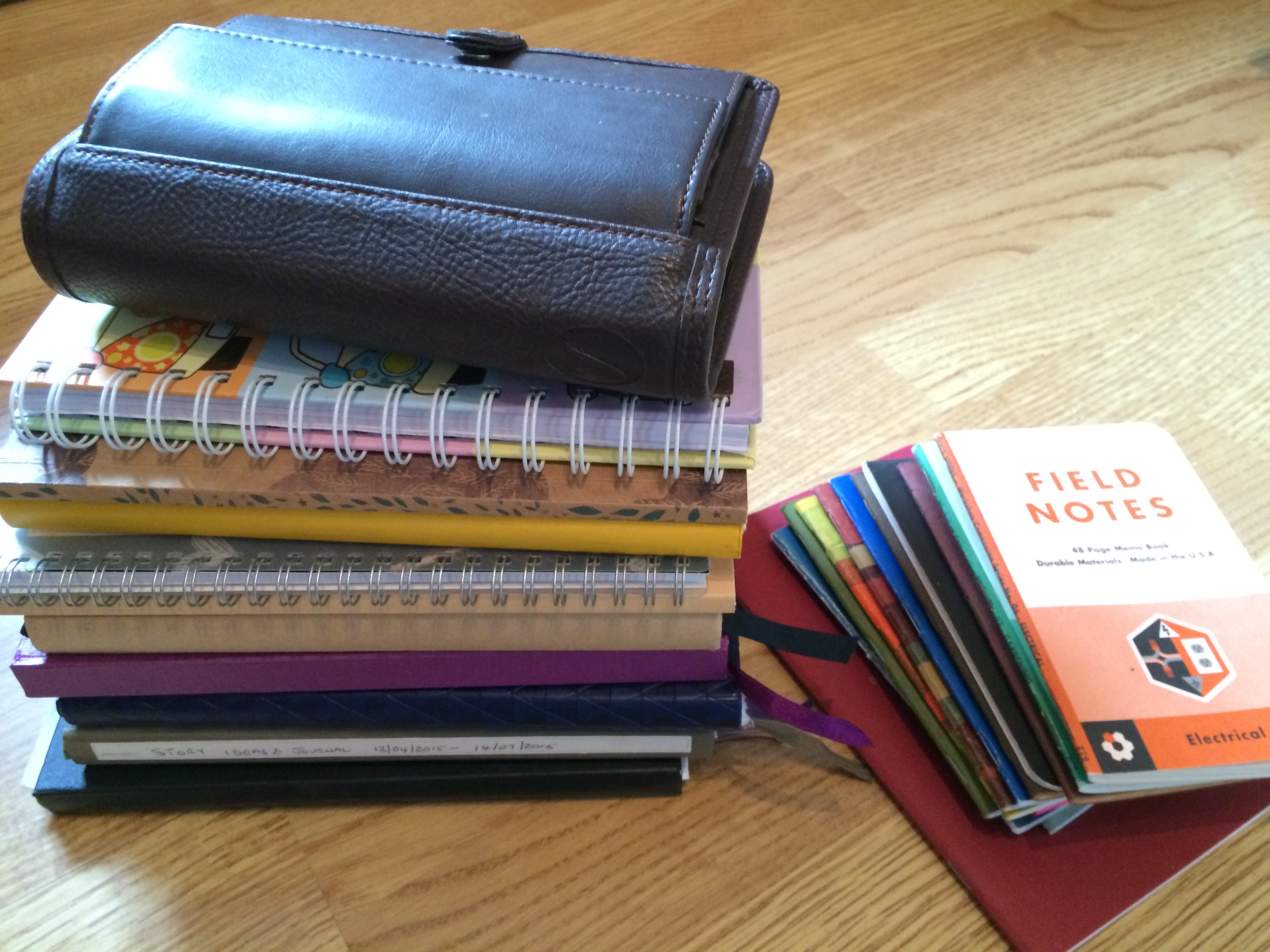
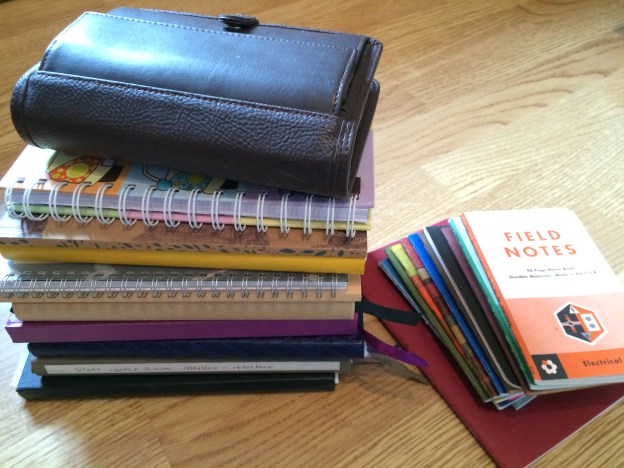
Intuitively I felt like I was capturing so many more thoughts and ideas as I moved through 2015. So at the end of the year I collected together all the notebooks I had completed into one place to confirm the theory. Yep, I had indeed had a lot of thoughts:

2015 notebook stack

Because I’m a bit of a GTD fan, I was in the habit of capturing things to do the moment I thought of them, but story ideas and general everyday thoughts and feelings, not so much. I made much more of an effort to do that and it shows. I have a whole treasure chest of ideas for stories I can now return to, as well as all the highs and lows of the year that I’ve recorded for posterity.

Broken down into three notebook types:

  1. The filofax was my daily log book for 2015. For 2016 I’ll be moving over to a Hobonichi which is already proving to be an amazing experience.
  2. The large, hardback notebooks were for novel plotting and extended meditative journalling, including daily gratitudes to set my days up right.
  3. Pocket notebooks (especially Field Notes) were always in my jeans or handbag for keeping track of what I had to do each day, but also for those random confluences of inspiration that happen when I’m out and about. Now I can capture them immediately (I’m guaranteed to forget them if I put it off until I get home).

2015 Notebook collection

I made leaps forward in my writing processes and achievements in 2015 and I fully intend to keep building on the momentum in 2016. More than ever I believe the best way to succeed at anything is to just write it down!

The importance of finding peace

Saying things have been crazy lately is an understatement. I know everyone in today’s world feels overwhelmingly busy most of the time. I’ve spent years putting systems in place to allow me to manage multiple products and still be uber-productive, but even I have had several moments of complete overload. I already know my yearly review of 2015 will be quite something.

Even my morning journalling, a time solely dedicated for quiet reflection, has been interrupted by a compulsion to check my phone, having random ideas that need capturing elsewhere and, quite frankly, the fidgetiness of a five year old.

It kind of defeats the point.

But the absence of peace and stillness has made me realise how important it has become to me. Not to sound like some hippy white person trying to be an eastern self-styled guru, but there is so much to be said for the practices of mindfulness and gratitude. Of just being in the moment and being part of the world around you. Of being able to appreciate an autumn sunset, rather than just whizzing past it on your way to somewhere else.

Lake Windermere

It has been manic, and there is more to come. Nanowrimo is coming up and I have six days to complete it in. This is not one of my crazy, self-imposed deadlines and I’m certainly not going to try and beat last year’s three day completion, but I won’t actually have access to my computer from day seven. So it’s either type or fail and I’m not the kind of person who relishes failure.

But it seems to me that in order to keep moving forwards, one needs to be intentional about standing still. About appreciating where you are and where you are going rather than just charging forward blindly. Life is about progress, but not necessarily about speed.

It will be over before you want it to be anyway, so don’t rush to a final location that may not really be where you ever dreamed you would go.

The white sandy beaches of Fraser Island

Last night I had a dreams with three apparently memorable components. One was about bunking off work to go to a sixth form reunion, another was something very messy involving mashed potatoes and gravy and the last one was being back on Fraser Island.

I suspect it is in part a hankering for the sunshine as the autumn begins to encroach. I don’t feel like we had a particularly amazing summer weather-wise and as much as I find the changing of the leaves a beautiful sight, I don’t like that damp chill in the air when I get up to write at 6am. I want blue skies and warm sunshine and white sand. And peace. So it’s no wonder really that in my dreams I would go back to a place like this:

Lake Mackenzie Fraser Island

Now forgive the picture quality, because this was taken with my first ever digital camera, given to me as a parting gift from a dear friend before I set off to adventure around the world. This was back when 2megapixels didn’t mean anything to anyone but it was about the best you could get for under five hundred quid. Now you can get a burner phone with better. How quickly the world has changed in a decade.

I’m so lucky to have travelled to so many places and god willing I hope to travel to many, many more. For these are the places that are the source of my inspiration and the memories that I can keep returning to on the mundane, cold days to remind me of just how privileged I really am.

So this is a Throwback Thursday to sunshine, but a present day moment of gratitude.

Putting the wheels back on the wagon

This isn’t my first blog about Getting Things Done (GTD for short) and it probably won’t be the last. Also, I always want to spell waggon with those two gs, but apparently that’s been classed as archaic now for a century. Clearly I really might be as old as I feel some days.

Anyway, I’ve had my GTD system set up for so long now that I’ve forgotten how to live without it. Or, at least, I thought I had. Then it became abundantly clear that I’ve been slowly sliding towards chaos in both work and personal areas. Luckily for me, my version of chaos is most people’s version of normal, so nothing slipped or became a problem. The only problem as such was in the way I felt. Like I was always on the edge of forgetting something important. It was horrible.

So on Friday I completely got things sorted on the work front: projects identified, next actions defined, emails and tasks list all up to date. It gave me a wonderful sense of freedom. One which was also, unfortunately, a false sense of security in how easy it was.

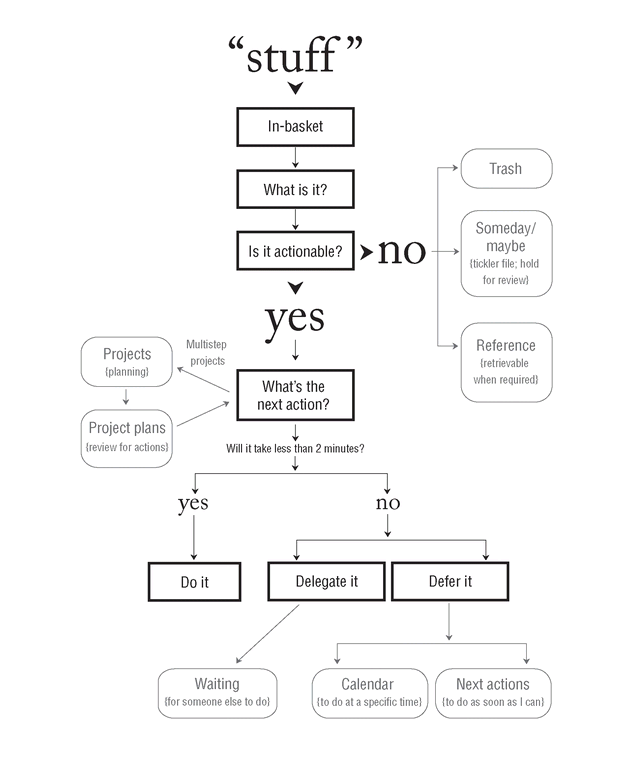
On Sunday, I then spent my day working through this:

GTD+workflow+diagram

By the end of the day, you know where I was at?

Step 1: Stuff to in (or collect, for those of you who prefer the term).

All of those things that had been lying around, pieces of paperwork, random receipts, half held thoughts in my head, were actually at least captured all in one place. For most people who pick up Getting Things Done, I think they fall at this hurdle. Don’t get me wrong, it is massively overwhelming. I burst into tears at one point and I am not a person prone to random crying. Well, not at this stuff anyway.

So why keep going? Because I do know what it feels like at the other end. To be able to be mysteriously more productive and still have time for creative thinking. Having this system will essentially allow me to have two jobs: employee and writer. The bills still need paying and without a system, the one I love the most would be the one I have to sacrifice.

That’s how you put the wheels back on. You remember that the two days of 100% overwhelm will be followed by many more days when you know exactly what has to be done and how you are going to do it. I’d rather do that than run through every day at 25% stress and go to bed each night kicking myself for making progress on everything other than the things that matter to me most.

Making Notes: Emerald of Chivor

It’s no secret that I find any creative project starts out best when I put good old fashioned pen to paper. The majority of my first drafts are then created in Scrivener, but I’ve never found that plotting and discovering characters really comes alive if they’re not discovered on paper first.

Most people have creative slumps. I know authors, actual real life get paid to write books for a living people, who have found themselves with writer’s block. There are so many ways of getting out of it, but one of the things that works best for me is to find a really engaging tool that makes me want to write something – anything – down. That can be pen, paper or ink. As long as it’s decidedly analogue, I’ll give in to the temptation to try it.

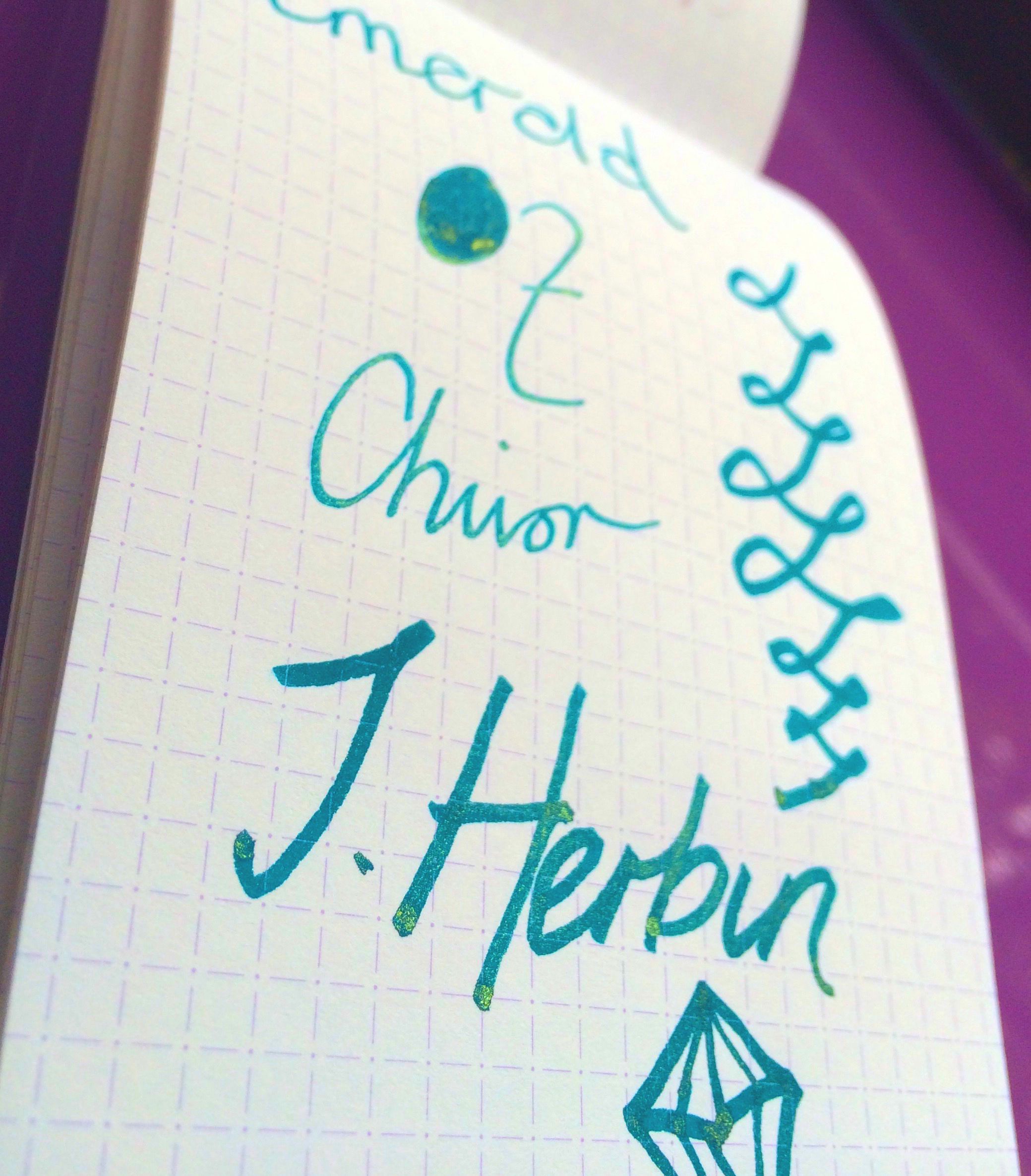
So without further ado, my latest inspirational find: J Herbin Emerald of Chivor:

IMG_9368


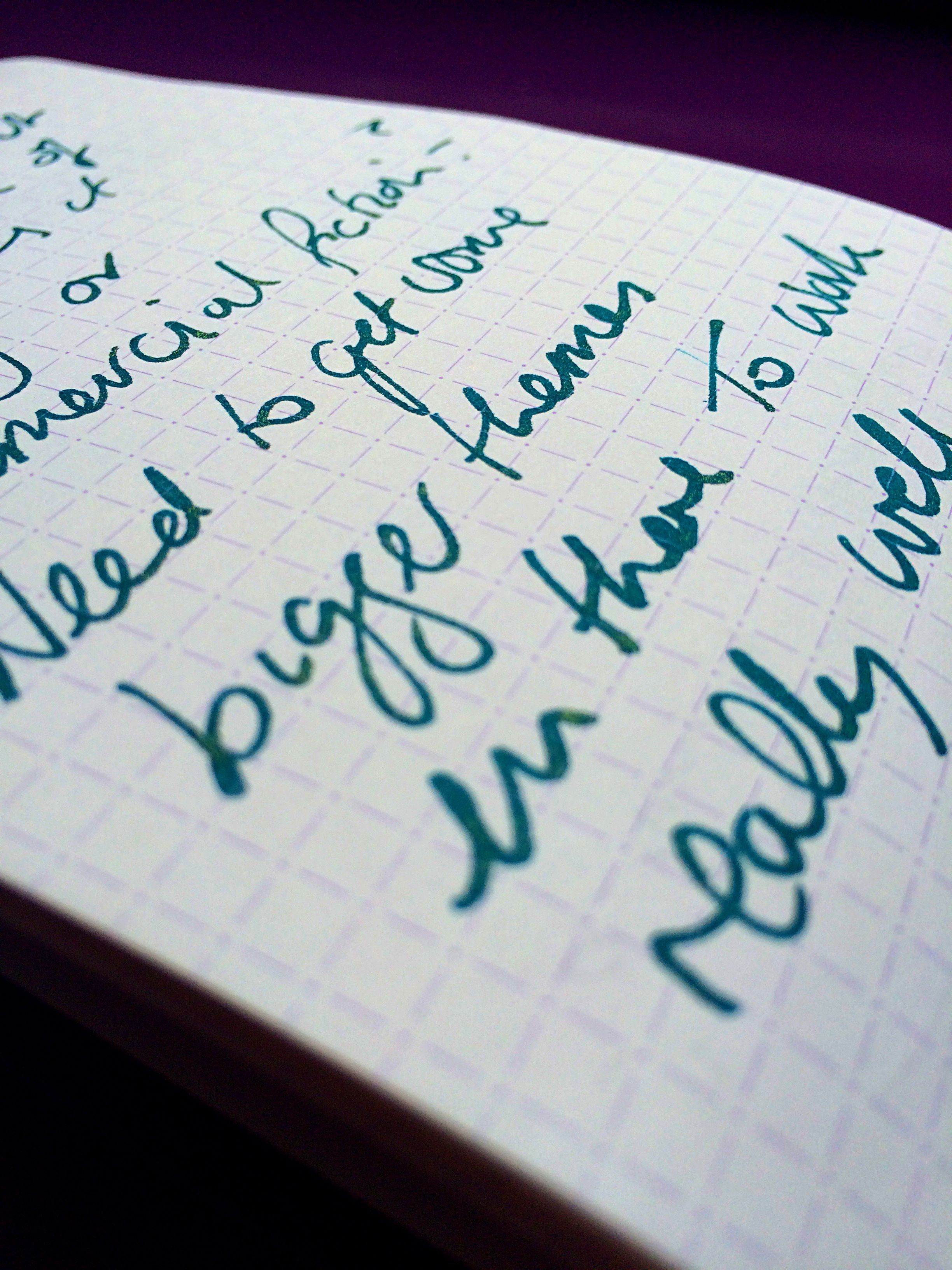
This ink has taken the pen world by storm and from the moment I saw the samples coming out, I could see why. That sheen! That colour! The hints of red were more intriguing than the flecks of gold. All better than I can capture on an iPhone, but I refuse to buy a better camera for the sake of doing blogposts. Anywho, I needed to go back to an old project and work out some knots that were bogging the whole thing down. So, with a trusty NockCo DotDash black pocket book (I’ll definitely be telling you more about those at some point in the future) and a TWSBI Eco 1.1 Stub (again, a pen worth knowing about), I started to tease apart the strands of my story to work out where it was going so spectacularly wrong:

IMG_9372

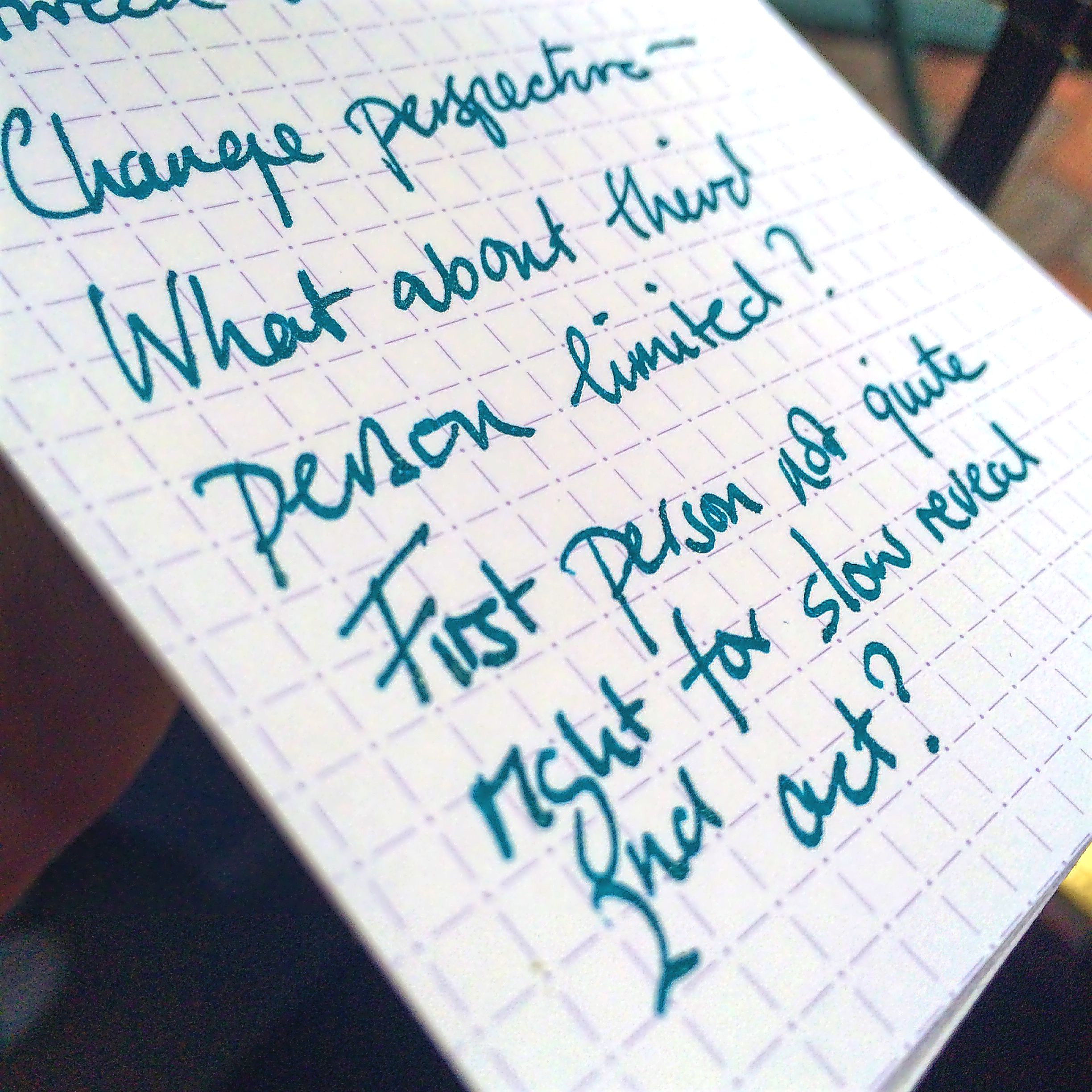
This is where having such a fascinating tool to play with comes into play. I was so distracted by wanting to put words down, to try and create the different flow using the stub nib, that I worked out what was annoying me the most without even thinking about it. I was too busy thinking about how there were differences when you shook the pen up a little first, how the red wasn’t as strong in my sample as I’d seen in some others and not about the fact that it was a point of view issue I was having.

IMG_9376


So, for me, it’s a big thumbs up for Emerald of Chivor. I want to use this so much, I’ve already decided that tomorrow it will be part of my morning pages routine. I think that J Herbin have got this one right (being the fourth in the series of inks using this gold flecking), and so far I haven’t had any issues with it clogging my pens. That being said, I think it definitely needs to be used with at least a broad nib if you want to get full enjoyment out of it.

Feel like kicking your creativity old school? Then this might not be the cheapest place to start, but it gets a huge thumbs up from me.

Emeraldofchivor

Holiday Guilt (don’t worry, I don’t have any)

Anyone who knows me, or has read this blog fairly often will know holidays are pretty much my favourite thing. Coffee probably just about pips them to the post, but it’s a close run contest.

So why do many people feel holiday guilt? I’m not setting that up as a question I’m going to answer by delving into the depths of the human psyche. It is a genuine question on my part. Why do people look forward to, plan for, then go on holiday and take with them all the things they’ve been talking about escaping from?

I guarantee there are people here who’ve made a work call today, despite saying they weren’t going to. Or checked their emails, despite promising their significant others that this time they really wouldn’t.

I’m not talking people who own their own businesses and are the last say when it comes to making an emergency decision that could make or break the company. I’m not talking about people who are doing their dream job (such as writers or artists or crazy code writers) for whom a holiday is just a different way of experiencing the thing they love. I’m talking about middle management and mainly routine emails and calls.

My rule has always been that I will not take my work phone with me. From the moment my out of office goes on, all communication with my day job ceases. For the past 7 years, since the concept of being available 24 hours a day became something of a thing, it has been the one compromise I refuse to make. When I say that my employers can’t pay me enough, I mean it. The value of that time away is beyond monetary value for me.

So, no guilt. The world will go on without you. The job will actually be better if you return refreshed and capable, rather than only marginally less worn out, but with a tan. Research shows that taking a break will be of benefit in just about every way.

Ask yourself, if you can’t let go of the phone, what is really making you check your emails. Micro-management? Lack of faith in other people? Lack of faith that you’ve done what you were supposed to before you left and a ball has dropped? Or are you just addicted to the rush of getting email notifications, which is some bizarre chemical response the human brain has for some reason. Evolution needs to fix that one pretty damn quickly.

Whatever it is, give it up. Look around you. Take into account the things that matter most. Your family. Your friends. Your health, both physical and mental.

And for those of you getting all judgemental on me for taking the time out of my break to write this post, of course I scheduled it. Fingers crossed I’m actually lying in the sun now having a cocktail, watching the world go by.

Finding my inner calm

One of my goals for this year was being able to meditate for 30 minutes. I am nothing if not ambitious. I think the most I achieved was 4 before getting completely frustrated and distracted. Oh, and really, really uptight and anxious.

I’m pretty sure that’s not what’s meant to happen. It was certainly not what I was hoping to get out of it.

Then I had an interesting conversation with someone at work who pointed out that feeling the state people (other than me) achieve while meditating is more to do with being in the state of flow, rather than specifically being able to put your ankles on your hips and say ohhhmmmmmm.

A lot of people get this state from running. That’s never worked for me either. The only thing I get from running is aching hips and a weird heart rhythm for the next three hours. Again, not relaxing.

That’s when I heard that people were using Julia Cameron’s Morning Pages principles to not only become creatively unstuck, but also to get that sense of peaceful personal insight that comes from meditation. I took one look and realised I had the four things needed to make this engaging for me:

  1. Plenty of attractive notebooks
  2. Even more pens
  3. Even more inks
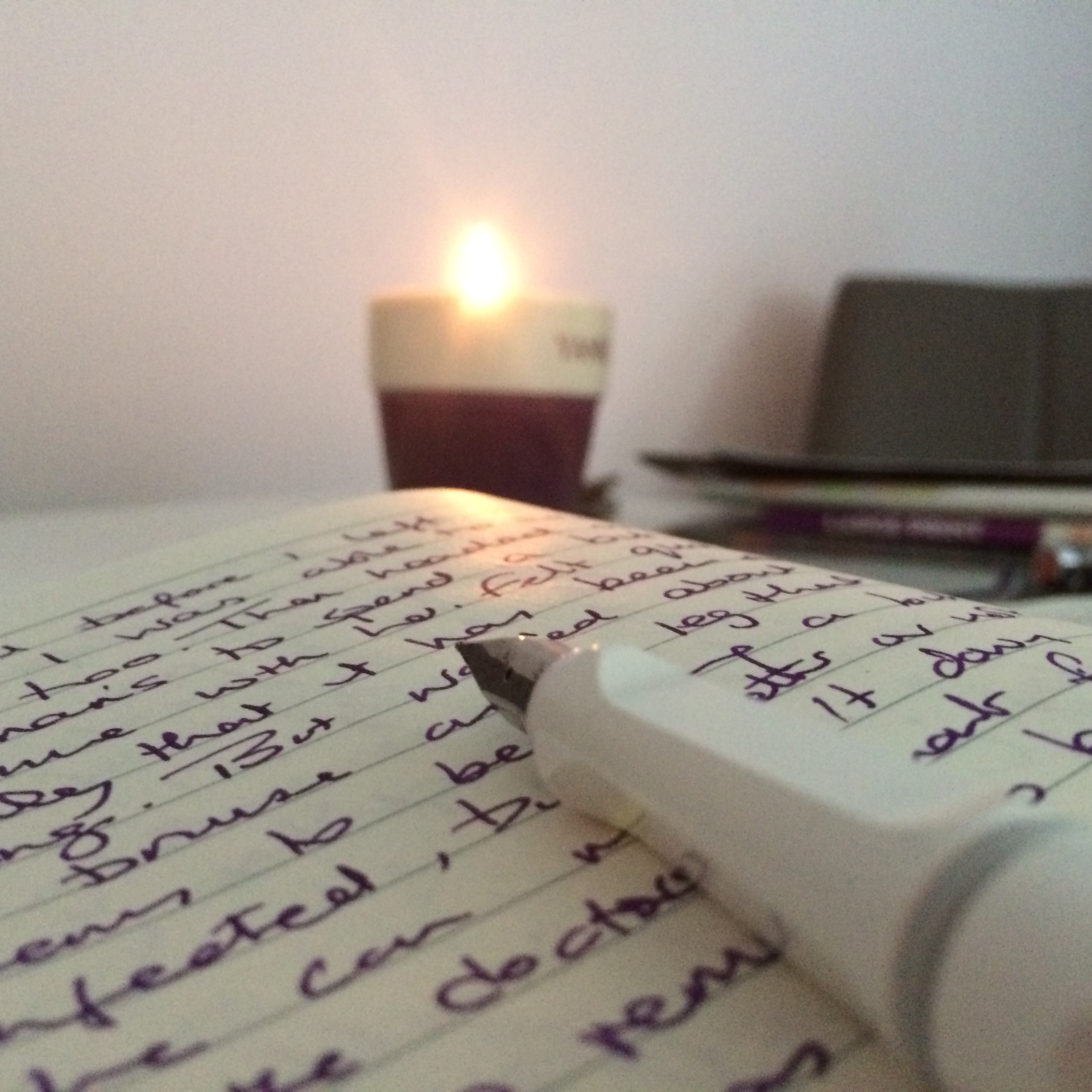
  4. Also some coffee and candles to create a bit of ambience and a sense of ritual.

IMG_9141

So I decided to give it a go.

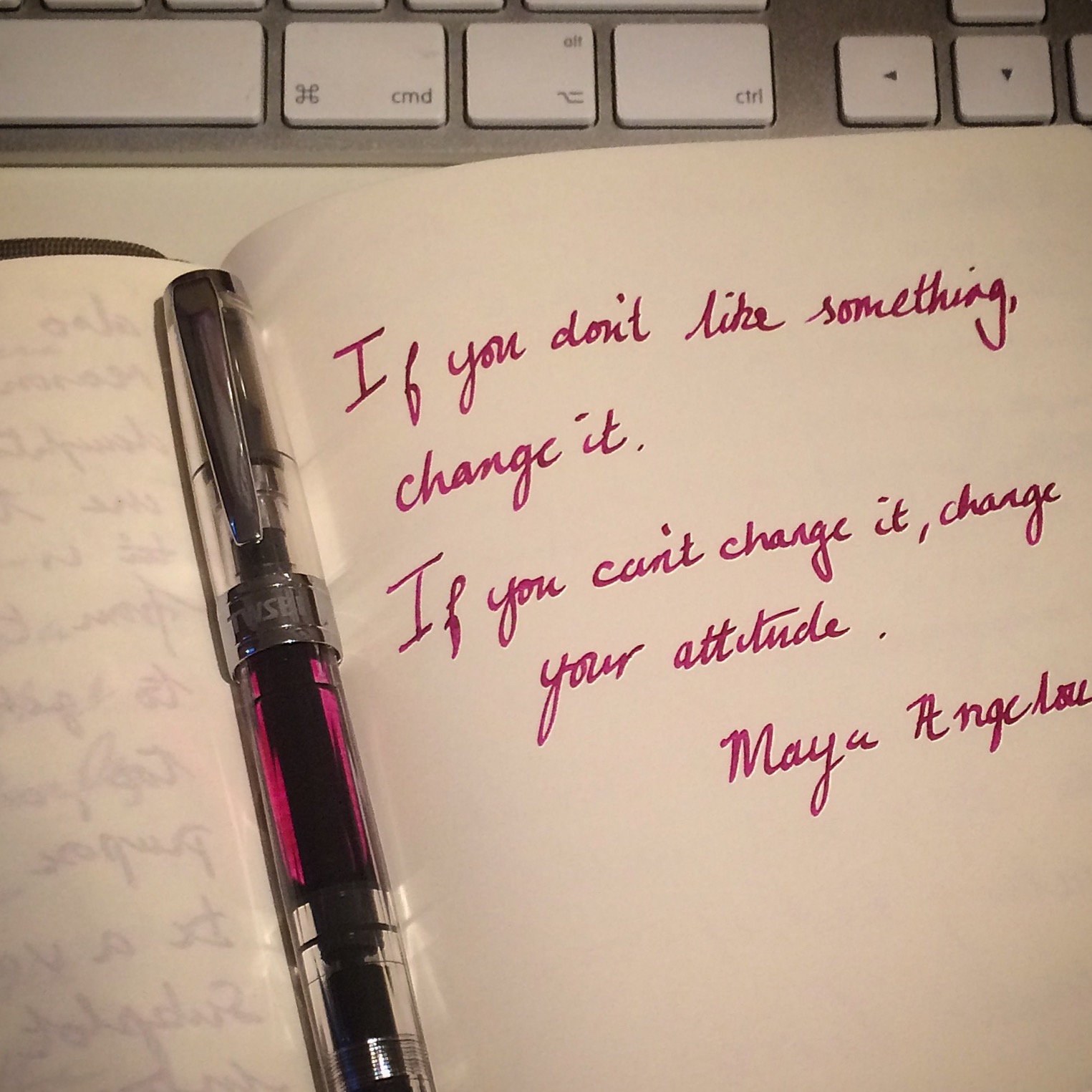
I started on the 6th July. Since then I’ve got through nearly three A5 lined notebooks (think moleskine, although I’ve discovered that a Leuchtturm 1917 is much better in terms of paper quality and features. Especially when using my current favourite fountain pen and ink combo, the TWSBI 580 1.1 Stub nib with Iroshizuku yama-budo). Turns out I’ve got a lot of thoughts going on.

FullSizeRender-14

The benefits have been pretty significant. I make sure that I start each set with three gratitudes. Not just in a list form, but really describing what I’m grateful for and why. After that, it’s whatever springs to mind. It can be positive, negative or just really, really boring.

Even though I’ve only been doing it for just over a month, I’ve already found I’m calmer and less responsive to external stress when it happens. I’ve become better at creative problem solving, both at work and play. I’ve become more willing to trust the universe, or whatever it is out there. Slowly, I’m becoming more accepting of myself. With that, comes a growing confidence too. Those last two points are a much gentler curve, but there is progress now where there used to be none.

So I’ve redefined my goal. It is no longer meditate for 30 minutes, but instead 30 minutes of daily meditative practices.

Sometimes, it’s about walking the road that’s right for you, not the one most travelled.