Tag Archives: growth

Seasons – Planning Life Alongside Nature

For us in the northern hemisphere, there is no denying the change in the air. Summer is giving way to autumn (or fall, if you want to be all American about it). The kids are back at school. All the upcoming holidays now have an ‘end of year’ feel to them. For those in the southern hemisphere, the reverse is true. Spring is coming and summer will be here before you know it. Time to hit the beach and get outdoors.

It was whilst living in New Zealand that I realised for the first time how productivity and personal development have seasons of their own, often very much inline with nature. Perhaps it was because all my online inputs were largely presenting an experience that was the reverse of the one I was living through. What I did realise was that as the rains came (I was living in Christchurch, there was lots of rain), it became harder to stay motivated and geared up for new projects all the time.

Any productivity guru worth their salt will tell you that you don’t need to wait for the New Year to make a change. Or that every day is a fresh start. It’s all very true. I just think it becomes harder if you try to do it out of sync with the world around you.

Many people live online so much that it makes it easier, in a strange sort of way. When you never leave the house, it’s easy to forget what is going on outside. I know the temptation of the laptop as much as anyone else. Nevertheless, it can contribute to a feeling of burnout when there is no variation, just the non-stop hustle and grind of daily life.

Right now, I am taking a mini-break to plan the remainder of the year. I wanted to be somewhere different, somewhere much closer to nature, to remind myself of this idea. As the days get shorter, it will become harder to get out of bed each morning. The evenings will seem made for curling up under blankets with a good book, not hitting the gym or high intensity projects. I need to remember this so that I don’t fill my days with things I won’t achieve. I don’t like breaking promises to anyone, least of all myself.

So, over the next few weeks when you begin to see articles and blogs reminding you that ‘It’s not too late to win the year!’ and ‘make that final quarter count!’, remember that life is meant to have periods of recovery and renewal. If you’ve left it until nature begins to shut down, then it might be time to consider a different approach next year.

Of course, for those of you in the southern hemisphere, it’s time to get up and at ‘em.

How to create a successful morning routine

Why set up a morning routine?

These are a few benefits I’ve found from my own routine over the years.

For many years, a corporate job took most of my time and energy. I would come home from work and have nothing left to give for things that were important to me. I wanted to be a writer, but I never actually wrote anything. This all changed when I dedicated just an hour every morning to my writing. Having a morning routine allows you to dedicate time to the things that matter to you most.

Precious alone time. In today’s world, we are constantly bombarded with interruptions, whether in real life, social media or any other online input. A successful morning routine, one that was clearly defined, gave me a definite course of action, so I always knew what to do next. That removed ‘check twitter’ from my list of options. That space gave me time to think about what was important and also sheltered me from negative bombardment from the moment I woke up.

There are many other benefits, but those two give the biggest returns for a happier and more fulfilling life.

So how do you set up a morning routine?

It’s easier than you think.

Firstly, ask yourself what you hope to achieve from doing this. Everyone will have different objectives. Is it to make time for your creative projects? Is it to make sure you get in a good workout each day? Or perhaps it is to read or work on personal development. What matters most to you will make up the core of the routine.

Secondly, decide how much time you want to devote to this activity. Be realistic. If you want to do a thirty minute workout but have to go to the gym, then include the travel time and showering afterwards. No one will thank you if you run out of time for that. The amount of time required will impact on how early you need to get up in order to complete the routine before beginning your existing obligations.

Thirdly, don’t start too big. Habits take time to become routines and the more you add in, the more likely you are to become overwhelmed and give up. My morning routine started out with a simple, single task: write 1000 words before breakfast. Over time, that has developed into a multi-step routine, but I needed to get used to doing that single but significant task first.

Be in it for the long haul

So what does my routine look like now? It combines several elements that I have seen successful authors, businesspeople and entrepreneurs confirm as being instrumental for them.

1) Begin with a pint of water. I used to go straight to coffee, but never underestimate the power of rehydrating after 7 hours of sleeping.

2) Write 1000 words. That’s still my big goal after 6 years of doing this.

3) Morning Pages – adapted from Julia Cameron’s The Artist’s Way. You’re really supposed to do them before anything else, but for me they have actually always been more effective after my half-asleep writing session. The last page always contains three things I am grateful for that morning.

4) 20 Pushups. Really not many, but it makes me feel like I’ve at least done something physical and makes me more likely to do other activity throughout the day.

5) Affirmations and visualisations. Yes, I still feel like an idiot sometimes saying these things out loud, but they do work. I’m shy and introverted by nature, so this gives me the confidence to step outside my comfort zone when I need to.

6) Goals review. Don’t work hard to climb that ladder just to discover it’s up against the wrong tree. Work out what you want and remind yourself every day to stay focused on what matters, rather than what simply feels urgent.

7) Calendar review. It doesn’t matter what grand goals you have for that day if your calendar says you have back-to-back meetings. Again, be realistic.

8) Task list review. By the time I’ve reviewed what matters (goals) and what’s immovable (calendar), it makes it much easier to delete, delegate or defer tasks on my list. What remains still needs to get done, but this way I don’t waste my energy on unnecessary tasks before I get to them.

The power of a morning routine means that these tasks take less time as you repeat them. The whole process above now takes somewhere between 90 minutes and 2 hours. That’s from 6-8am at the latest. That gives me a whole hour to have breakfast, get showered and be at my desk by 9am.

I’ve already achieved things that matter to me and mentally prepared for my day by the point most people are just thinking about booting up the laptop.

None of this will work unless…

A meticulously planned morning routine with all the best intentions and activities will still fail unless you actively set yourself up for success the night before. Unless you have the luxury of being beholden to no-one, you’re going to have to sacrifice some morning sleep to get this done.

A successful morning routine means ensuring you go to bed early enough to get the quality sleep you need. If there are any objects/spaces that are essential to your routine, then these should be found or made clear the night before to remove as much friction as possible and ensure you can make every minute of your morning routine count.

Hopefully this has given you some ideas about how to set up a morning routine and how to grow it into something that makes a huge difference in the level of success and satisfaction you get from your day. If you have any questions or thoughts then drop them in the comments section below, or you can get in touch with me by email at realist@sherrinicholds.com.

Books for Entrepreneurs: Essentialism

Greg McKeown’s infamous book, Essentialism, has been on my reading list for a long time. I can’t even remember when or where I first heard about it, but those who mentioned it always spoke of its life changing effect.

When you read a lot of business and personal improvement books like I do, you get used to people waxing lyrical about how things will never be the same after adopting strategy x. This may turn out to be one of those rare occurrences where it happens to be true. The constant doing more, but achieving less. Never feeling satisfied or that the day was meaningful.

As I began reading, I was relieved to discover I already had quite a few essentialist habits. I discovered the underlying cause of friction I felt on many projects: my broadly essentialist approach versus the non-essentialist approach being taken.

This meant that in addition to completing the task itself, I had to work out the true intent and purpose of the project. Where some people are happy to just complete any task (usually just taking the easiest route to something approximating done), I have never accepted mediocre as the target to aim for. Instead, I would rather take longer to work out how to provide a valuable outcome.

But although I was embracing essentialism in many areas, in others I was getting woefully distracted. My personal life, especially, was in free-fall at the time of reading this book. In no small part this was due to the mental exhaustion that came with battling work tasks handed to me that were governed by non-essentialist principles.

So how has this book helped me? Largely by giving me the confidence not to accept a task without getting those in charge of the project to clarify their thinking about it first. Sometimes, the person handing out that task is me. As a freelancer or entrepreneur, understanding essentialism is vital for avoiding burnout.

It’s hard to ask difficult questions sometimes, but it gives me the boundaries to not only do good work, but also valuable work.

The best part of this is that I ultimately freed up valuable creative energy to expend into my personal life and projects. I developed a new infrastructure for 2017 that allowed me to be location independent and travel.It also gives me the framework to consider carefully my side projects and see which ones are ready to move from hobby to business and which ones simply need to be cut from my life, no matter how enjoyable they seem on the surface.

For the first time since reading David Allen’s Getting Things Done, I have experienced a fundamental shift in what I believe is achievable and what my life needs to look like to get there. The confidence comes through in the decision making process. Whilst success is never guaranteed, I am giving myself the best possible shot at living a meaningful life, rather than a purely busy and productive one.

With challenging economic and political times ahead, Essentialism is one of the books I would recommend for anyone who wants to make the most of future opportunities in the changing workforce.

No juice for babies – the significance behind the shift

The American Academy of Pediatrics made the news recently when it updated its guidelines to advise that babies under 12 months should not be given juice. Previously, it had made this suggestion only for babies under 6 months.

Unfortunately, it is easy to assume that this means fruit juice is absolutely fine and should be encouraged for babies over 12 months old. In fact, the underlying reasoning for the change contains some findings that can apply to us all.

Fruit juice is promoted as a healthy and diet-conscious option. Yet research continues to show that it can actually be detrimental to controlling weight. From the article behind the headlines comes this snippet:

“High sugar content in juice contributes to increased calorie consumption and the risk of dental caries. In addition, the lack of protein and fiber in juice can predispose to inappropriate weight gain (too much or too little)”

One of the reasons I have become so vocal about the benefits of a sugar-free lifestyle is that it runs counter to food marketing, with its billions of dollars of advertising to blind and confuse the masses. For parents trying to do the right thing, when juice is promoted as an equivalent of whole fruit (which it really isn’t), it seems an easy way to get some nutrients into your kid. Yet, once they start loving and drinking it, the reverse becomes true:

“Malnutrition and short stature in children have been associated with excessive consumption of juice”

And of course, we’re encouraged to keep our children hydrated. Getting them to drink enough can be a problem, so we make it easy for them. But unless the fluid in that sippy cup is water or milk, you’d better hope that your kid enjoys going to the dentist:

“The practice of allowing children to carry a bottle, easily transportable covered cup, open cup, or box of juice around throughout the day leads to excessive exposure of the teeth to carbohydrate, which promotes the development of dental caries”

Although these issues are accentuated in children, it is easy to see that they can translate to adults as well. Fruit is amazing. It has fibre, nutrients and energy. Juice is sugar and water. I wonder how many parents would be horrified at their babies drinking a can of cola, but wouldn’t think twice about a nice healthy juice? This article is a great first step in educating ourselves away from ways of eating that simply aren’t beneficial, just easy.

For the actual article rather than the headline grabbing summaries, you can find it on the American Academy of Pediatrics Publications page. If you don’t want to read all of it, skip to the conclusions section to see the specific dangers and concerns.


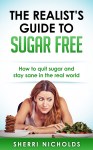
If you’re interested in cutting down or completely removing sugar from your life, then check out The Realist’s Guide To Sugar Free. It’s full of tips, tricks and information to help you live a healthier lifestyle.

Essential books for entrepreneurs: The 12 Week Year

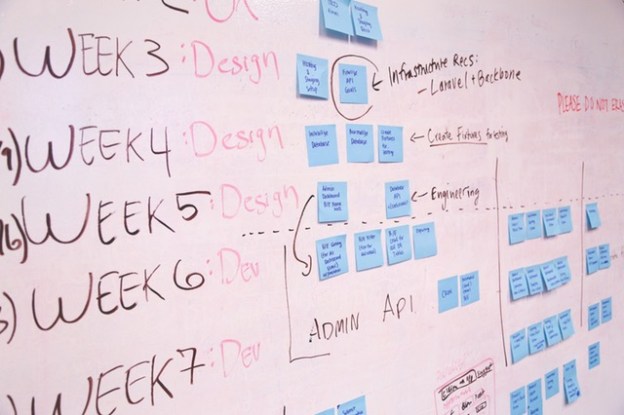
As someone who implemented David Allen’s Getting Things Done methodology back in 2009, I’m no stranger to the review process. The weekly review is the element that keeps the system running. Over the years, I moved from just a weekly review to also implementing monthly and quarterly reviews. To top it off, an end of year review and goal setting day seemed to be a significant amount of personal time given to strategic thinking and planning.

Yet somehow, I still didn’t always achieve my most important goals.

The 12 Week Year by Brian P. Moran is an interesting take on how to achieve greater success and results, rather than being purely a productivity system.

Near the beginning of the book, Moran offers up this truth: there are always more ideas than you can effectively implement. Any entrepreneur or freelancer trying to build a business will have experienced this. It is more often than not the source of that subtle source of procrastination – with so much you could do, where do you start?

“The number one problem is a lack of execution”

Moran’s answer is to begin by getting rid of the annual goal setting process. His underlying reasons for this actually make a lot of sense. With a whole year ahead, it is easy to overestimate what you will do and fill your plan with projects that will never come to fruition. Twelve months feels like a long time, whereas twelve weeks is in the foreseeable future. You can complete a major project in twelve weeks, but you are less likely to attempt three or four that then linger with the faint whiff of failure associated to them.

Instead, the twelve week year is designed to give you a tactical framework to shift your mindset. It is a system that creates accountability, deadlines and focus on key opportunities.

By working only on activities that focus you on the main goals for that twelve week sprint, rather than a longer term vision, he argues that you will achieve as much – if not more – than you would with a set of yearly goals that continually get deferred until the final quarter.

The 12 Week Year does not dismiss vision and longer term strategy entirely. It is essential to have some higher level overview to determine which projects are the vital ones for the next twelve weeks.  The subtle shift is changing the emphasis so that a failure in the current twelve week cycle can’t be ‘made up’ later on in the end of the year. Instead, daily habits and actions build momentum to achieve the ‘end of year’ success in a quarter of the time. To make sure the days are planned with tasks that are actionable and measurable, rather than drifting through towards some vague goal, is essential to staying on track. It becomes about clarity and adding value, rather than simply completing a task list.

My one major criticism of the book is that it doesn’t give enough emphasis to the potential dangers of burnout. Renewal is hugely important, especially when you are working for yourself and there is no forced cut off time at 5pm where you forget about the day. As an entrepreneur it is more likely that your projects feel more like passions, which in turn means you are more likely to push on to the point of exhaustion.

This book encourages the reader towards working frequent cycles of high intensity activity, but doesn’t address the dangers of this in a balanced way. Working consistently on a project at a high level requires more than giving yourself  ‘a weekend off’ at the end of the twelve weeks to recover.

However, I’ve used The 12 Week Year to complete a significant number of projects that have been hanging around on my yearly goals list for a while now. The techniques have been proven to produce results. For anyone starting out who needs to take charge of their own career, or for those who want to finally achieve things they’ve been dreaming of for years, I would thoroughly recommend this book.

Beyond the bikini body – be healthy for life, not just for summer

It’s been coming for a month or so. The magazines aimed at women (and a handful aimed at men, too) have been screaming that we need to slim down for summer. The bikini body. The ‘lose ten pounds in two weeks’ diet. The juice cleanse. And goodness knows what else.

Many countries have a long weekend right about now. It holds the promise of summer. The evenings are longer. The temperatures are warm enough that the long sleeves and baggy jumpers that hide the sins of winter have to go.

For many people, panic sets in. Hence the crash diet and the crazy food choices. Most of them do work, but only in the short term. Some of the more extreme ones actually do more harm than good.

“In reality, the healthy approach is simple. Not easy, but simple”

In reality, the healthy approach is simple. Not easy, but simple. You don’t need cabbage soup. You don’t need a low fat, low flavour, low calorie diet. Just cut out processed sugars. Simple as that. Go cold turkey for thirty days and by the time the summer really kicks in, you’ll discover it’s not about looking thin, it’s about being truly healthy.

And your health? Worth more than dropping ten pounds in two weeks, no matter what the media tries to sell you.

Don’t know where to start? My realistic guide to navigating the sugar free lifestyle is available in ebook for only 0.99 until June.

Deeply addictive, sugar is everywhere. Even added to the most unlikely foods, the majority of us exceed the recommended daily intake without even realising it. Instead of teaching you how to cook fake cake, or pretending that quinoa really is an exciting grain that will revolutionise your view on salads, this book guides you through the myths about sugar in our food and through the realities of addiction. The 9 step action plan then helps you make the change and really stick to it.
Even if you’re not quite ready to eliminate all sugar from your life, this book contains practical tips to help you shop wisely, create good habits and sustain better lifestyle choices.

The paperback edition includes blank pages and examples to help you analyse your behaviours and face up to your bad habits, allowing you to document your journey to a sugar-free lifestyle.

Available on amazon.com and amazon.co.uk

Follow Up: Using A Bullet Journal For Creative Projects

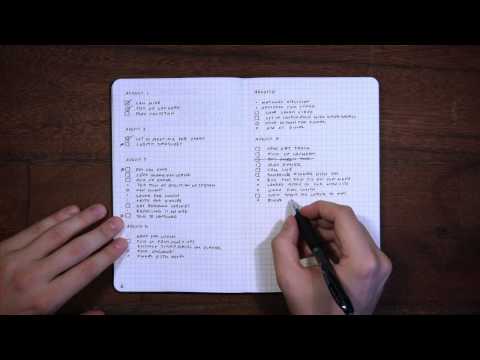
One of the most popular posts on my site is this one about how I use a Bullet Journal. The other, in case you are interested, is the one weighing up the pros and cons of using a Moleskine versus Field Notes, which also has a Bullet Journal influence to it.

Given I started using a Bullet Journal approach when it was a new thing and not the hugely popular and artistic thing it is now (check out the Instagram bujo hashtag if you want to feel inferior about your artistic skills), I thought it would be a good time to do a follow up. Specifically, how to use a Bullet Journal for creative projects.

Firstly, the thing to remember is that the bullet journal methodology is not set in stone. Right from the start, it was a system designed to be modified to meet individual needs. For me, this has resulted in two separate notebooks: one for planning and the other for creative writing projects.

A creative Bullet Journal, by definition, will have different requirements to a notebook containing everything. But why did I separate them? Quite simply, I wanted to have all my book outlines and ideas in one place. When it’s time to pick a project to move onto, this dramatically reduces the number of notebooks I have to work my way through. Because it is specifically for longer outlines, rather than aha! on-the-go snippets, I can stick to an A5 size that is just large enough.

What to remove

Because I’ve got a specific use case in mind, I can ignore any features that relate to the calendar. (Side note, because I’ve stripped out the creative writing projects, I can use an actual diary in a modified Bullet Journal approach that is just as effective. If you want to know more, I’m using a Moleskine Agenda as described here). This means the Future Log and the Monthly Log disappear for me.

What to keep

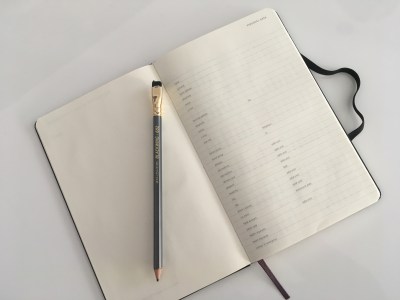
The Index is the core functionality of the Bullet Journal system that is so simple, yet life changing. This is particularly important in this instance because I want to be able to easily review the contents at a later date. I can’t help but call it Contents though, rather than Index. Sorry!

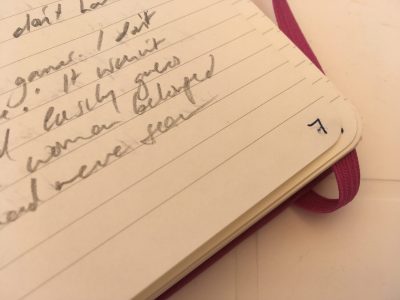
Underpinning the index is the use of page numbers. This is a feature that makes the Leuchtturm 1917 brand ideal for Bullet Journaling as they are pre-completed. I find manually numbering the pages at the start of a new notebook quite therapeutic, so don’t worry if your notebook of choice doesn’t have them.


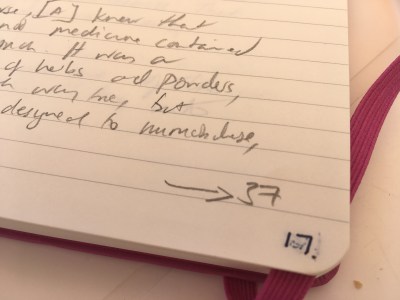
Because I might plan a story over the course of several weeks and have more than one in development at any given time, when it comes to review I don’t want to keep flicking back to the index to find the related project pieces. Instead I use a simple arrow system when linking larger blocks of related text. It is a simple thing to do before starting, but saves amazing amounts of time when reviewing:

This chapter continues on page 37

This continues from page 17

What about topics, bullets and tasks?

I still use these as a creative feature. There is much more to writing a book than plotting it out. There may be research tasks that need to be completed prior to writing and these can form topics in themselves.

Personal Opinions…

What is the best size for a Bullet Journal?

For creative projects, the A5 size works best. For ‘on the go’ notes and ideas capture, a pocket notebook is best (such as a Field Notes)

What is the best brand for a bullet journal?

Leuchtturm 1917 is the closest fit for the Bullet Journal system. Prebuilt Index and page numbers, as well as a paper quality that works for a wide range of pen types, including fountain pens

What is the best paper format for a bullet journal?

Plain paper allows for the most freedom, but I’m a huge fan of graph or dot grid. The key is that any ruling is subtle enough for it not to be limiting 

You can find the official Bullet Journal site and more information from Ryder here.

Not The 4-Hour Workweek: lessons in scheduling, time tracking and an abundance of hours

This is the first full work week completely under my own control. I set the tasks, the hours, the goals and overall strategy. Anyone who knows me will agree I love to have that kind of control. It has been a steep learning curve, but years of practicing in my free time outside of the 9-5, as well as the lessons in project management I’ve learned over the years working in companies, has made it much easier than it could have been.

Towards the end of 2016, I listened to The 4-Hour Workweek by Tim Ferris. For anyone who has ever considered location independent living or being a digital nomad, then this is often the springboard book. Besides, with a title like that, who wouldn’t want to work just four hours?

Of course, is that really what the book is saying? ‘Do nothing and get rich’ is the answer a lot of people hope to get from it. But at it’s heart, it’s about doing the things that matter in the most effective way possible. It is a bible for lifestyle design. People who can automate their business to the point that they only spend four hours on them are the kinds of people who don’t then retire. They start another business. The ‘be effective’ and commitment to living big is the message they take away, not do as little as you can.

Four hours sounds nice on the surface. But if you work doing the things you enjoy, which I suspect most of Ferris’ disciples do, then four hours is never the goal.

Time tracking

As you can guess from the title, this has not been a four hour work week. My life hasn’t been fully automated with a bunch of virtual assistants running businesses for me while I sip cocktails in Bali. How do I know this? For the first time in years, I did proper time tracking.

I didn’t spend hours looking at all the different options for doing this. Instead I picked toggl, as Mike and Grey were talking about it so much on the recent episodes of Cortex. Have I gone all in? Nope, I won’t be taking advantage of that extensive API to play with. I just want to know how much time I am spending on the key areas that now constitute my day.

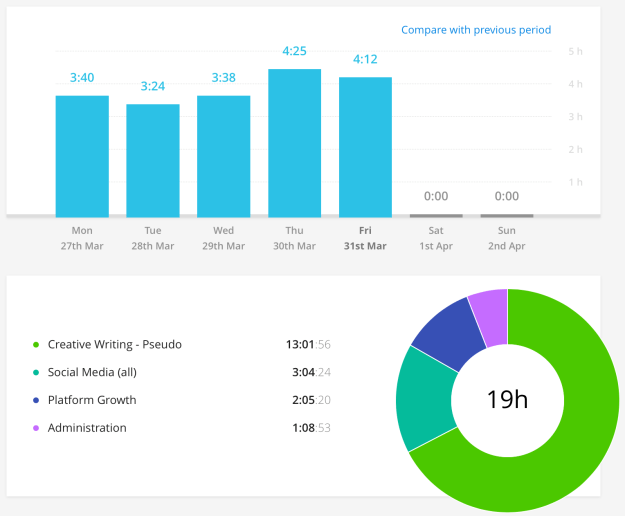
The results? I might not be working a four hour week, but I’m not doing a forty hour one either:

This is actual work. This is not ‘killing time’ work. This is not timesheet submission busy-work. When the tasks for the day are done, then I am done. I focus on them completely and make them as efficient as they can be. This is just the first week of data, but it is fascinating. I’ve always believed that quality of work is more important than hours spent and this is re-enforcing that in a big way.

Time scheduling – a combination of digital and analogue

In a less time efficient move, I have lost countless hours since January looking at digital project and time management tools. None of them seem to be just what I was looking for. Many were far too time intensive to set up projects and tasks for my small, single-person projects. Secondly, I’m still reliant on the GTD way of thinking, meaning that many have critical pieces missing. Thirdly, none would emphasise calendaring in a way that works for me. I’m a deadline driven person, so without a ‘real’ due date, my default action will be to happily defer.

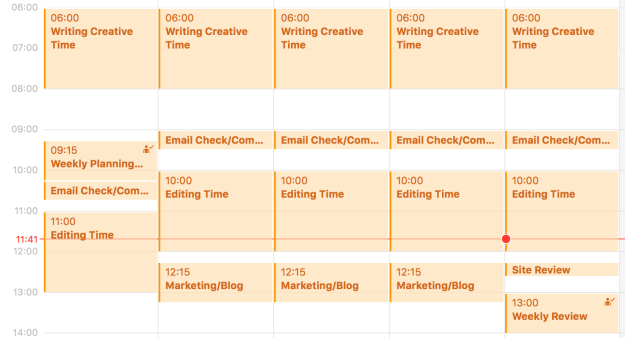
Rather than continuing this frustration, right now I am managing things in an analog and digital combo. The first is a paper planner (the Moleskine Weekly Planner that I reviewed here) and a separate ‘work’ calendar that chunks times of the day into very high level categories (for example, editing time vs ‘line edit of x book’).

Putting the two together has allowed me to focus on the bigger picture, whilst still getting into the detail of the day. Whether it will continue to work in the long term remains to be seen, but for this first focused week, just about everything went according to plan, with enough flexibility to allow for one or two unscheduled events.

Free time and the sensation of guilt (‘I should be doing…’)

I’ve been sticking to my usual routine of starting my workday at 6am. Doing around 4 hours means I have a lot of day left at the end of my day. Whilst this sounds like a dream – and it is – the thing that I have noticed at times is an overwhelming sense of guilt. Even on the day I used all my brainpower writing 7,500 words, it was an obvious nagging sensation at the back of my brain. The quest for something ‘productive’ to do. It has made me realise how much we are compelled to fill our hours with work, when sometimes the thing to do is just relax.

I hope this is something that disappears quickly. It feels like a hangover from the 9-5 life and it serves no purpose as far as I can tell.

Walking and thinking is a valid use of time

Conclusion – scary, at times overwhelming, but eye-opening and utterly rewarding

Would I class this first proper full time writing week as a success? Yes, I would. I’ve eaten well, I’ve rested well and I’ve spent time creating new products and learning new things.

Has it been difficult and crazy ass scary at times? Of course it has. Any big change always does (and anyone who tells you otherwise has got caught up in their own lies and bravado). But I’ve also loved the freedom and the self-reliance. I’ve loved a semi-traditional work week, with all of the benefits and very few downsides.

I already can’t wait to see what next week brings when reality sets in.

Death of a salesman: The (not so) sweet truth about hotel breakfasts

Hopefully today was my last hotel breakfast for a long time. For nearly three years, I have spent at least one night each week in a hotel. I’ve stayed in some good places and some bad places. I have tried a lot of hotel breakfasts and at some point I might look forward to one again, but right now that seems impossible.

This kind of temptation each week? Exhausting!

So how do you stay healthy while traveling? It’s not easy at all. In unfamiliar surroundings, the default setting is to take the easiest option. Sticking to a healthy lifestyle – food or exercise – is a challenge of monumental proportions.

Most UK hotels offer a simple choice: cooked or continental. Cooked is usually more expensive as you have to pay for the privilege of someone heating your bacon until it is at least tepid (or the other option, so black and crispy you’re waiting for a CSI unit to come in and identify it). However, if you’re keeping your unhealthy fats low during the rest of the week, it is a low sugar option if you forgo the beans and ketchup. The same cannot be said for the continental option, with it’s all-you-can-eat high sugar cereal options, pastries and jams in every variety.

So, if you are trying to be healthy and wholesome, why not forgo the temptation and get a healthy breakfast to go instead? It’s quick, it’s easy, it has limited portions and it is marketed as a great start to your busy work day.

Quick, easy and healthy marketing? Alarm bells are ringing…

So, what do these packs typically contain and how much sugar does that translate into? I’ve researched a couple and below is a pretty accurate representation:

Cereal and milk (19g) OR fruit yoghurt (15g)
Muffin (25g)
Breakfast bar (12g)
Juice (20g)

This equals between 70-75g of sugar before you even start your day (that’s more than double the NHS recommended daily intake of 30g!). When you’ve got an early meeting, this can seem like a sensible choice, but it isn’t. Not to mention that it virtually guarantees a mid-morning slump that will have you reaching for another quick pick me up.

This persistent set of poor options is one of the reasons why I’ve decided to transition into a lifestyle where I can have more control not only of my work, but also my health. Research shows that health is one of the consistently de-prioritised areas of modern life, despite us understanding more than ever about exercise and nutrition benefits.

The healthy ‘to go’ breakfast, whether at a hotel or your favourite coffee chain, is just another marketing trap, so heed the warning and don’t be fooled!

therealistsguidetosugarfree-2

The Realist’s Guide To Sugar Free is available at Amazon (UK) and Amazon (US) in both ebook and paperback.

Love the book? Then please leave a review on Amazon. Reviews help keep the book visible, which means I can help more people make the change to a happier and healthier life.

Moleskine Weekly Planner vs Hobonichi Techo – 2017 review

This year needs to be a very big year for me in terms of personal productivity. I will transition from full-time employment to being entirely self-employed within the next few weeks. I’ve always found it easy to be productive in the daily 9-5 job, but being entirely accountable for my own goals and planning is a new challenge. One that I knew my setup in 2016 simply wouldn’t be able to handle.

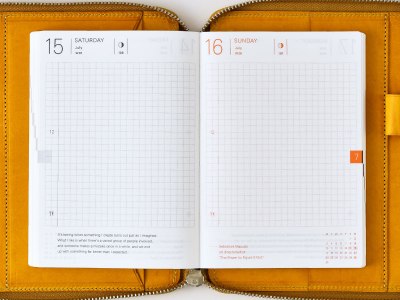
Last year, one of the problems I encountered with my productivity was a surfeit of notebooks. That’s really the best way to describe it. I used the Hobonichi Techo to record my daily events but not my daily tasks. They were instead recorded in a Field Notes book using a modified Bullet Journal method. I never actually adhered to the full Bullet Journal system because several features, such as calendared events, simply do not work for me.

hobonichi techo

Hobonichi Techo: great paper but no overview

In a larger A5 size notebook, such as a Moleskine or a Paperblanks, I wrote my daily gratitude journals and morning pages. On the road, this felt more like a burden than a productivity asset as it was always a minimum of three daily notebooks.

As much as  I loved using the Hobonichi, I realised this was less about the layout and much more about the paper. As a huge fountain pen fan it was great knowing it could take literally any pen and ink combo that was thrown at it. I enjoyed the variety that different form factors provide. But pleasure aside, it just wasn’t practical. I was doing less, not more, and friction in the system became a problem in itself.

As part of my 2016 yearly review, I decided to very consciously choose a planner that would suit my changing circumstances. After considering all the options, I settled on an A5 Moleskine 12 Month Weekly Planner.  I’ve been using it consistently for 8 weeks, so now I’ve got enough information to provide a fair review of how this is working.

Key Features

Of course, it starts with the obligatory information page. I have no idea why these are included anymore, as no one ever fills them out surely? In the age of widespread fraud, the Field Notes approach of email address and reward waiting checkbox is all you need.

Moleskine Weekly Planner

Passport and credit card numbers? No thanks!

The planner style is more than just a ‘space per day’ diary. On the left hand page there is a daily spread, but on the right hand side there is a lined page. This allows free space each week to make notes or, in my case, to plan out additional goals. If you need to record lots of meetings and appointments, then this might not work for you.

Moleskine 12 month weekly planner

Daily and Weekly planning combo – ideal for modified Bullet Journal

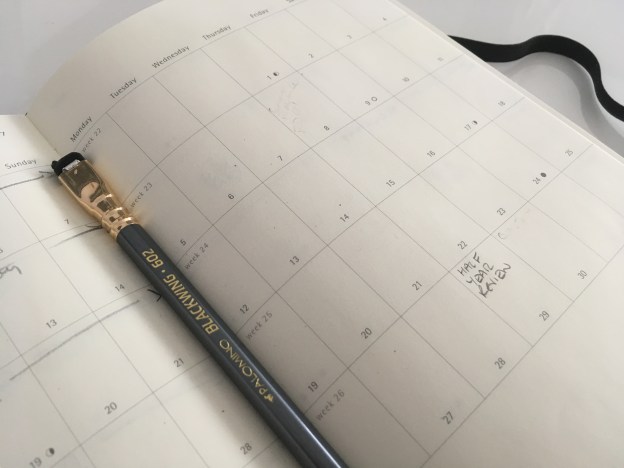
There is also a monthly spread at the beginning. This is quite similar in size to the one I used last year in the Hobonichi, so it allows for bigger picture planning. Unlike the Hobonichi, there is more space at the bottom of each page for additional notes, taking advantage of the larger A5 size.

Moleskine Weekly Planner

Monthly overview – ideal for larger project planning

By far the biggest downside is the number of lined pages for additional notes at the back. With just 4, I already only have 2 lined sides left. Given that this book is narrower than a standard Moleskine A5 ruled book, this is not due to a thickness issue. Cost saving? Quite possibly, given that the usual address book pullout section wasn’t included this year either. I’ve spoken to other people who have Moleskine diaries in other formats and they didn’t have one either. So it is slightly disappointing if they are doing that, given they don’t exactly sell these as inexpensive items and they’re certainly not reinvesting the saving into better quality paper.

Moleskine Notebook

Seriously, no more pages left and February isn’t even over!

So far, with the caveats mentioned above, I have found this system to be working absolutely perfectly for my needs. Though the paper is nowhere near as good quality as the Hobonichi (understatement of the year) I have found that by sticking to a fine nib and a relatively dry ink I can still use some fountain pens with this. But on reflection, I’m approaching this year with functionality over fun and beauty.

So, to recap, the pros and cons of the Moleskine Weekly Planner…

Pros

  • Good layout for weekly goal setting
  • Monthly view for high level planning
  • General sleek and professional form factor you would expect from Moleskine

Cons

  • Paper quality (I’ve heard Leuchtturm1917 do a similar style, so this may be a better choice if paper really matters – if anyone has tried this then please let me know in the comments as I’ll consider alternatives for 2018)
  • Not enough lined pages at the back for additional notes
  • No address book section

The layout has been the winner for me. Without masses of daily appointments and meetings to keep track of, I can use a modified Bullet Journal system within the planner itself and feel like I’m keeping all my work plans and goals on track. But I’m not blind to some fairly significant weaknesses in the product.