Tag Archives: fieldnotes

Leuchtturm 1917 Notebook Review

I mentioned in my last post that I had grown to love the Leuchtturm 1917 notebook for journaling. It’s also true for any kind of creative writing. I should apologise now, this post is probably going to have a lot of link love for those of you who are interested.

I don’t use the pocket size. For that, my love of Field Notes and the new NockCo Black DotDash notebook wins out every time. That’s my ‘shove in my pocket’ daily carry.

But using the A5 size Leuchturrm for plotting and planning has been an absolute joy. Anyone who like to write longhand or do their creative outlining by pen and paper should seriously check this brand out.

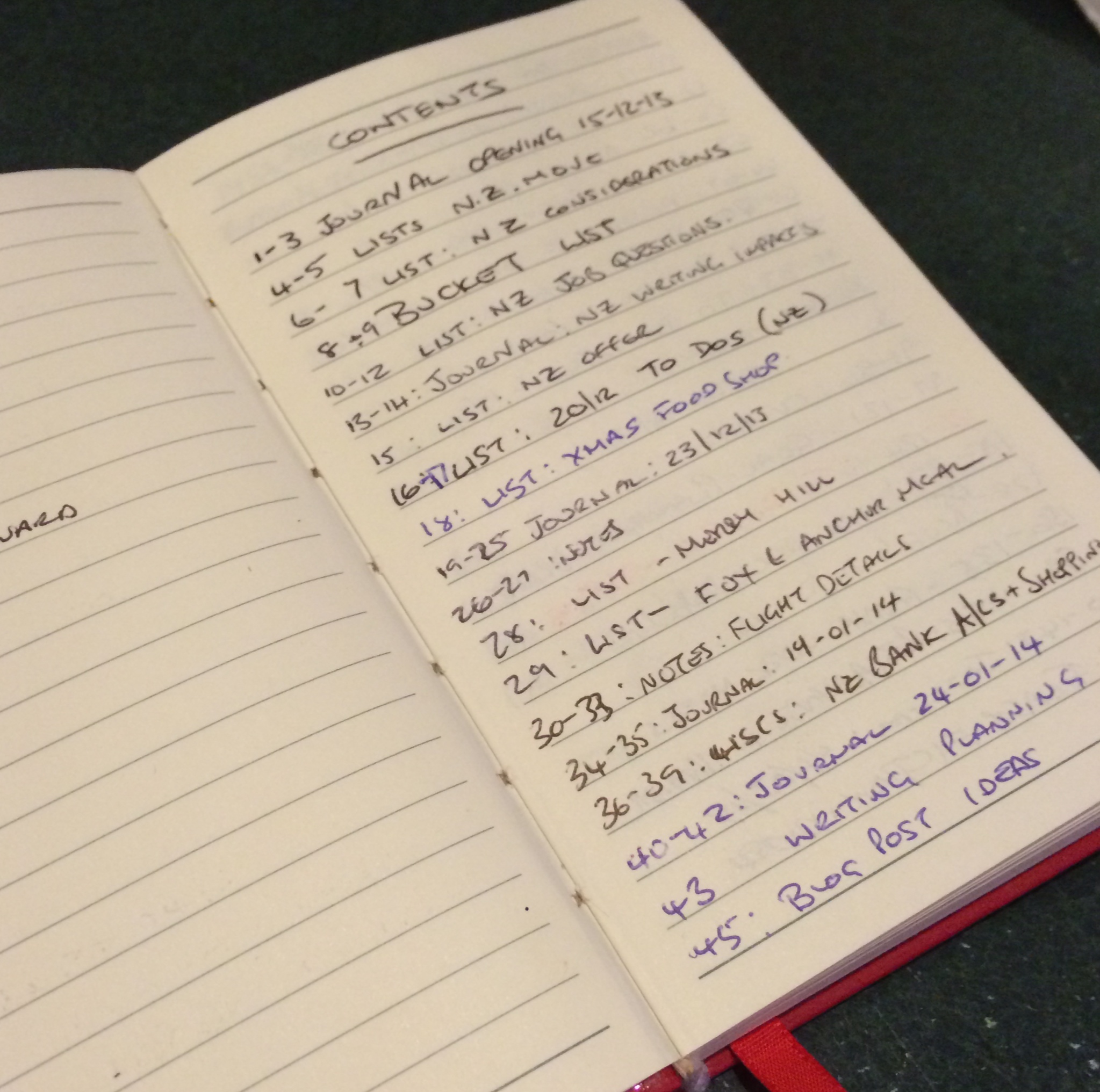
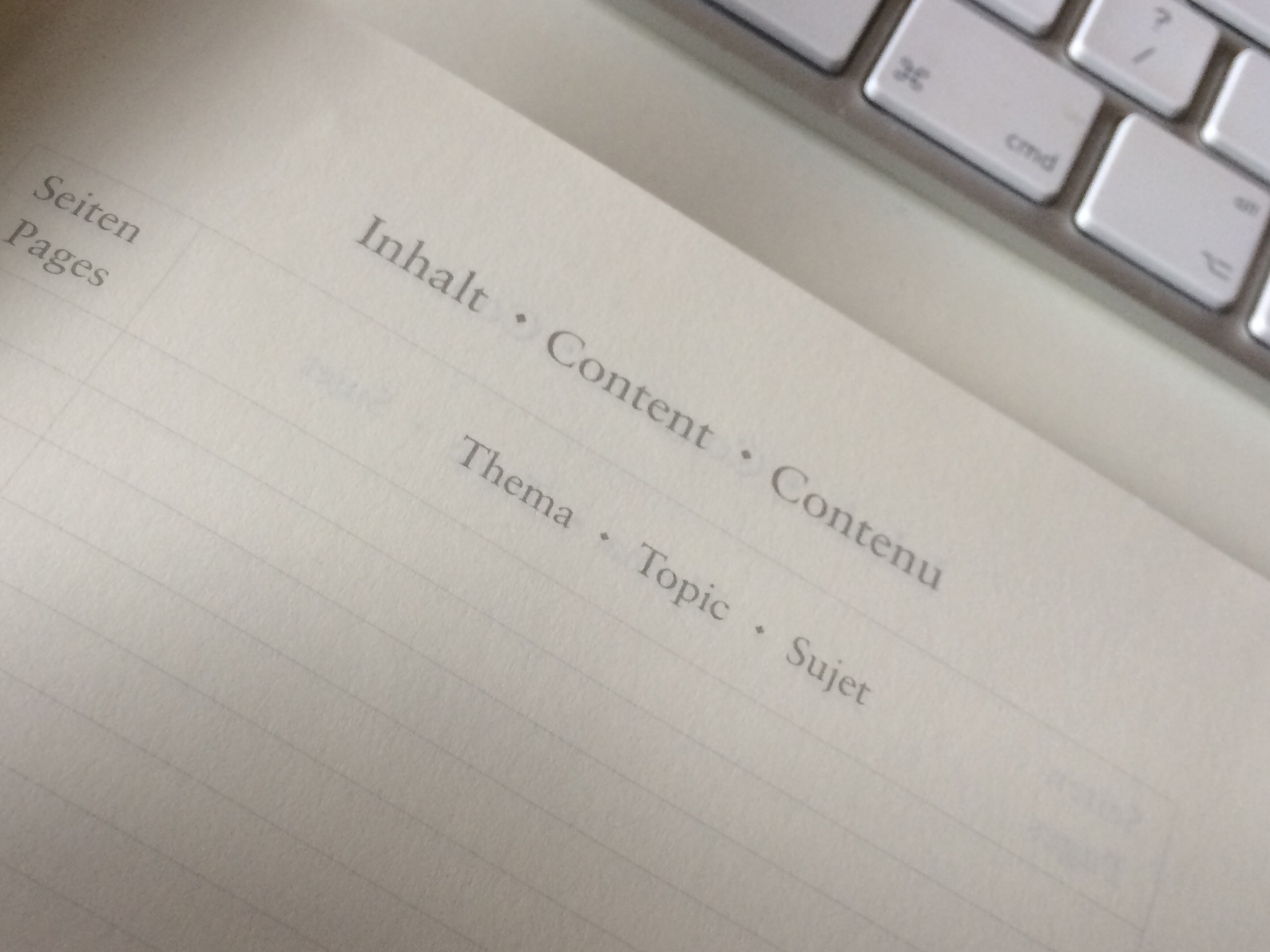
I’ve written before how I’m a fan of bullet journaling to keep track of things. The biggest pain in the backside about this method is having to number your pages in order to be able to create a table of contents for yourself. Voila! No longer a problem with the Leuchtturm, which is one of the reasons Ryder made it his notebook of choice for his kickstarter.

FullSizeRender-15 FullSizeRender-16

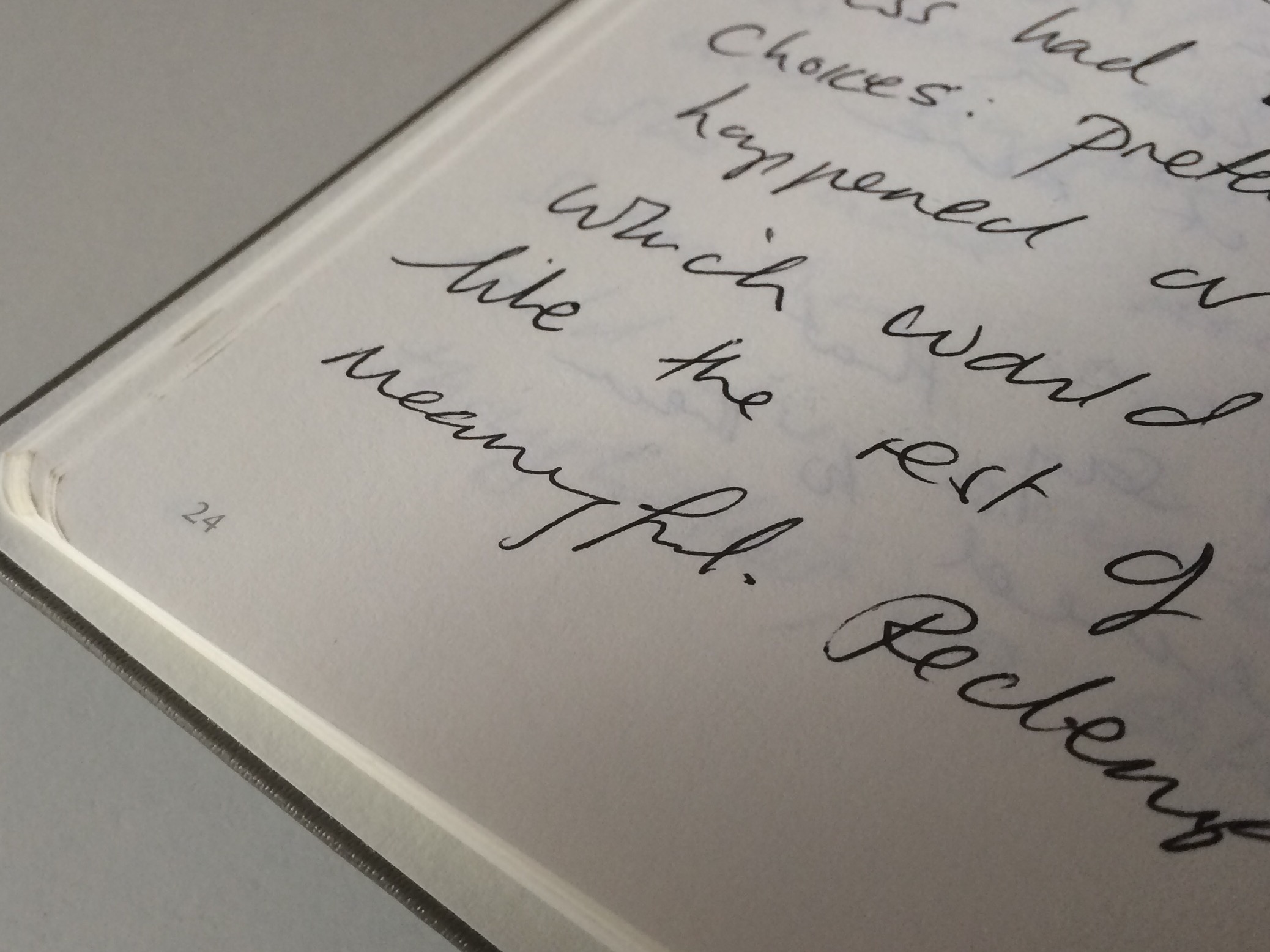
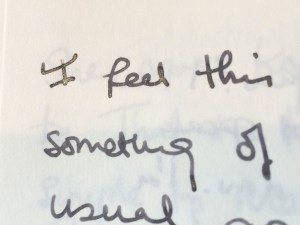
The second winning feature for me is simply the page quality. The slightly off-white, creamy colouring is really easy on the eyes. When using a gel ink pen it is like writing on glass it is that smooth. When writing with fountain pen, there is very little feedback, feathering or bleedthrough, even with a 1.1 stub nib:IMG_9258And despite the off-white colour, it still allows the colour to come out, like here with the gold flecking that comes with the J Herbin Stormy Grey ink. A lot of people love this ink concept, but were disappointed by how little it actually stood out on a lot of paper types. The Leuchturrm handled it beautifully, even if my photography is crappy and you can only see it here on the ‘I’. Forgive me, I’m only using an iPhone and the summer weather is once again verging on apocalyptic end of days when it comes to natural light.j herbin stormy grey

I should note that this isn’t a cheap notebook by any stretch of the imagination. It’s also quite hard to find in the UK in any retail stores, but you can always Amazon it. Or go to the airport. That’s where I found mine. If you’re prepared to pay for a Moleskine though, I would suggest trying this as an experiment. You also get a lot of pages for your money (248 in the A5), so it’s going to last you quite a while. They also do a range of sizes to suit your preferences, even if the huge master planner dimensions sound a little bit intimidating!

Writing should be a joy and good tools make this much more fun to do.

Field Notes – Two Rivers Edition Review

With the summer Field Notes release almost upon us, it seemed like a last chance for me to do a review on the Two Rivers edition. I have used 1 and 3/4 notebooks from this set, so I am torn between finishing up the existing one or holding out to see what the next release will be. My handwriting may become quite small over the next week or so as a result.

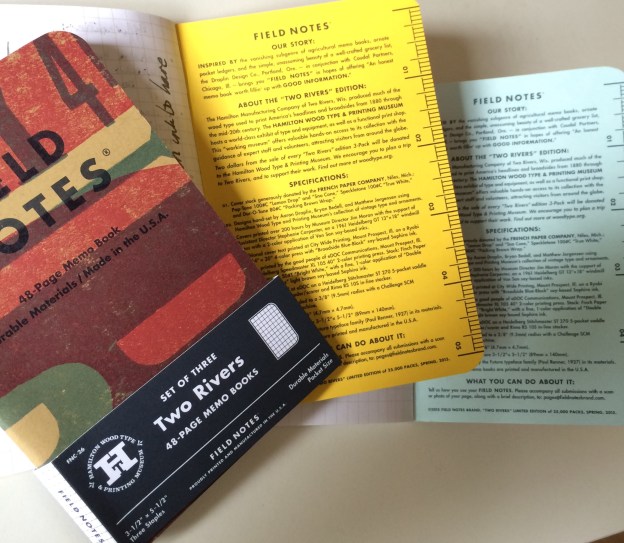
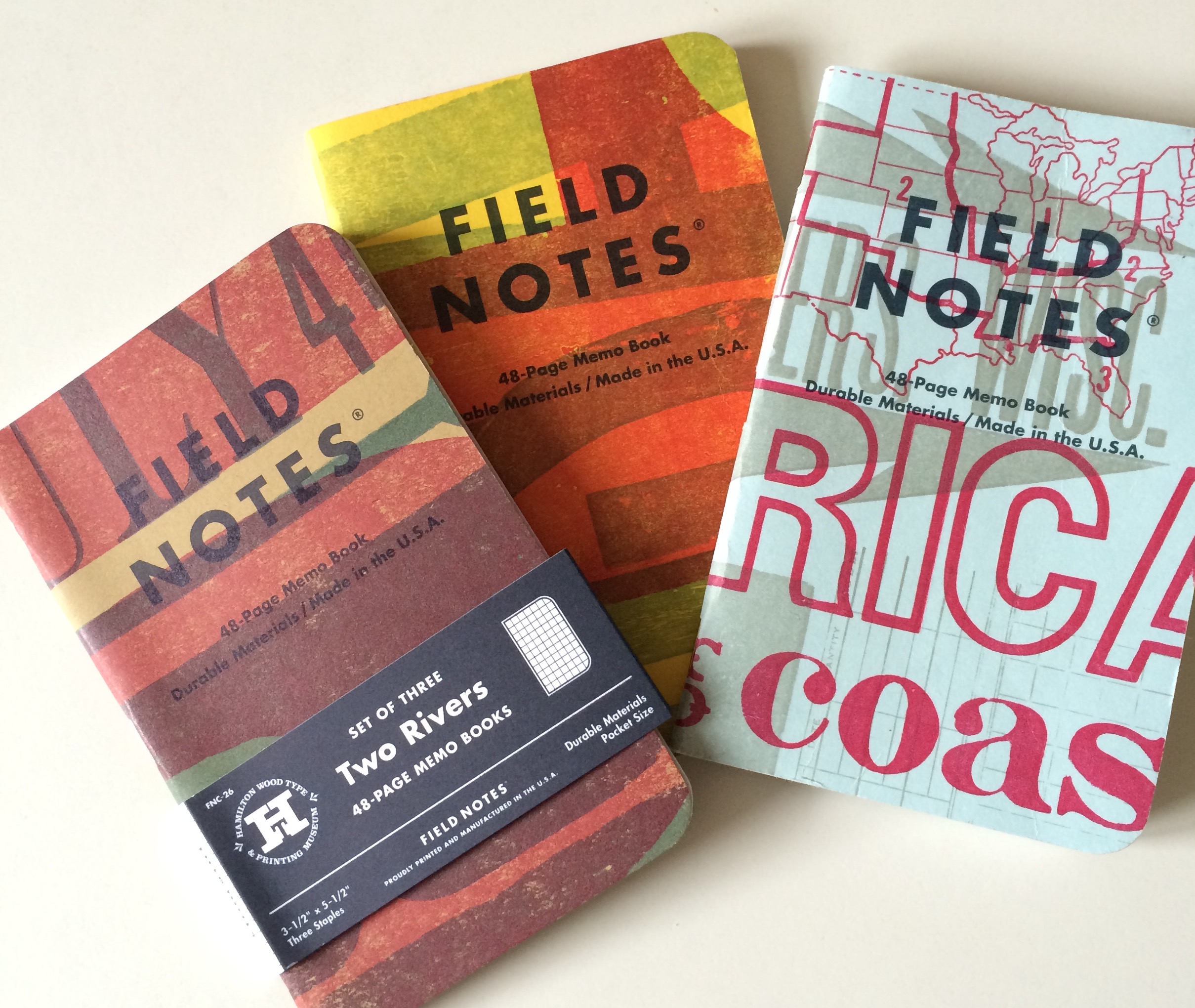
Field Notes Two RiversThis was the set I opened (not the only set I purchased *ahem*) and the light blue one was the one I started first. I love this edition for its multitude of designs, which means that no two packs are actually identical. Nothing like uniqueness to drive the hard core collectors absolutely nuts. Plus, it was another set with gridlines, which is currently my absolute favourite. Although, if they pull out a dot grid for the next edition you wouldn’t hear me complaining.

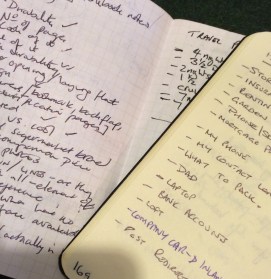
Everybody knows I love the size and handiness of Field Notes. They are perfect for ‘on the go’ capture as well as being fun. This set has already seen a bit of Europe, so I think it’s safe to say it works well as a traveler’s notebook. I’ve taken the bullet journal system and modified it for what I need, so I have the flexibility to get stuff done, as well as be inspired:

The dichotomy of modern life

The dichotomy of modern life

My only wish is that the paper was more fountain pen friendly, but that is not really the intention of an everyday carry notebook. At 48 pages, it might not carry the clout of a moleskine, but it does mean I get to start a new one every 6 weeks or so, which is way more interesting and engaging. Plus, the Two Rivers edition also comes with a charitable donation towards preserving a culture and heritage project, which you can find out more about here.

So how do I rate the Two Rivers edition? I think it is the most enjoyable one I’ve had so far, and certainly gives a nod towards the original purpose of the edc notebook style. I’ve enjoyed using it a lot, to the point the latest one has started to fall apart. I can’t wait to see what the summer edition is, but this is a pack I’ll be going back to often in the future. I love it.


Field Notes Datebook Review

I have to say, from the moment I first received the Field Notes Ambition edition, I loved it. Enough, in fact to become a colours subscriber there and then, which I’d been putting off doing for over a year already. I did have some concerns though. After all, this wasn’t the standard approach of all the interiors being the same. Alongside the regular notebook (graph paper, my favourite) there was also a ledger and a datebook. These are, obviously, notebooks with very specific uses.

Field Notes Date Book

The memo book was used up really quickly. That was a no brainer for me, especially with the slightly thicker paper that made it quite fountain pen friendly. The ledger? Well, I feel like I’m still working on getting the most out of that one, so I’m certainly not in a position to give it an objective review. However, the thing that has surprised me most is how consistently I’ve used the datebook. It’s actually worked out quite well for me. So, how do you use it and make the most of it? I think it’s by focus.

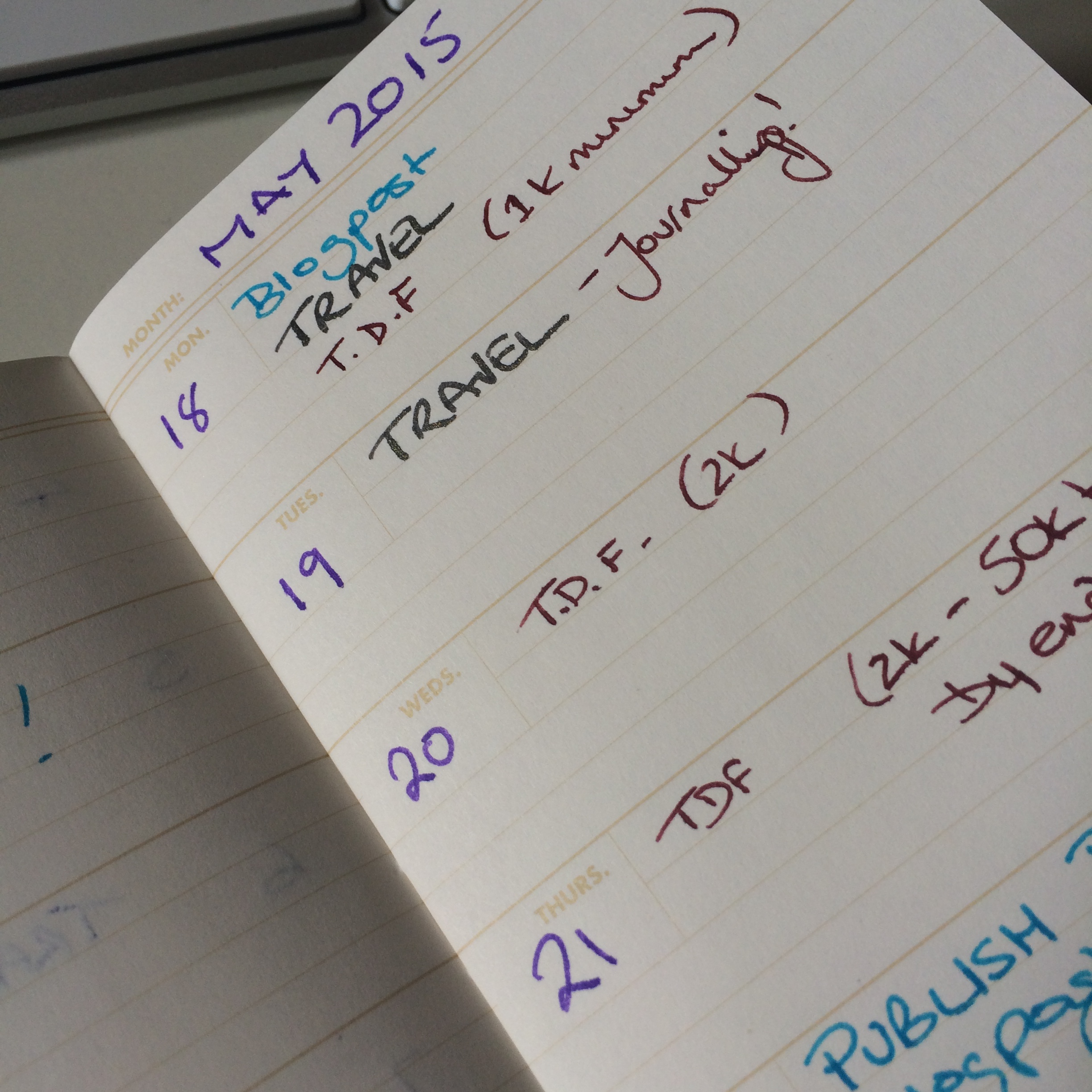
Calendars for both my personal and business life are shared digital entities. We live in a fluid and ever challenging world; my schedule never goes how I envisage it at the beginning of the week. So instead, I use the Field Notes datebook as a way of planning and tracking my writing schedule only. By having only one, very specific purpose for it, I am able to go back to using a paper planner despite living in a very digital world.

Field Notes Date Book Use

Ignore the terrible handwriting, please. The only ‘calendar’ style item that goes into the Field Note datebook is when I’m travelling. This has an impact on my 6am morning routine sometimes, so I need to make sure I do extra planning to negate that as much as possible. The rest is just a simple scheduling approach to writing projects that I need to get done, whether they are media (such as blogposts), creative endeavours (the actual writing itself and a goal word count) and then any other writing related activities that are more of a business nature.

I plan these every Sunday as part of my weekly review. This gives me a chance to not only schedule my writing, but see what is and isn’t working. So far this year, I have found this approach to be immensely useful. Even though there have been more exciting highs and sluggish lows this year than normal, without this book I don’t think I’d really have a handle on what’s going on. This gives me a degree of security that I guess this blog is all about when it comes to blending creativity with productivity.

I’m also hugely grateful that a friend bought me another pack of the Field Notes Ambition Edition back from her recent trip to the States, which means I have another date book I can use next year!

I’m sure most people have one area of their life they wish they could focus on more, whether it is health and fitness, reading, or study. If you’ve been looking at the Ambition edition and wondering how you could possibly use it, then I’d say this way is a definite contender. As you date it yourself, there’s not even any dependency on waiting for the start of a new year. Commitment and focus can start at any time you choose.

Sheaffer Prelude Fountain Pen Review

This was an amazing surprise as a Christmas gift from one of my best friends, but I’m not going to let that bias me in writing a review. That said, I have really enjoyed using this pen.

My first tentative step back towards using fountain pens was a Sheaffer, so I think I’ll always have a bit of a soft spot for the brand. I think they’re quite underrated in the pen world, when actually they are a good, reliable every day fountain pen.

Sheaffer Prelide

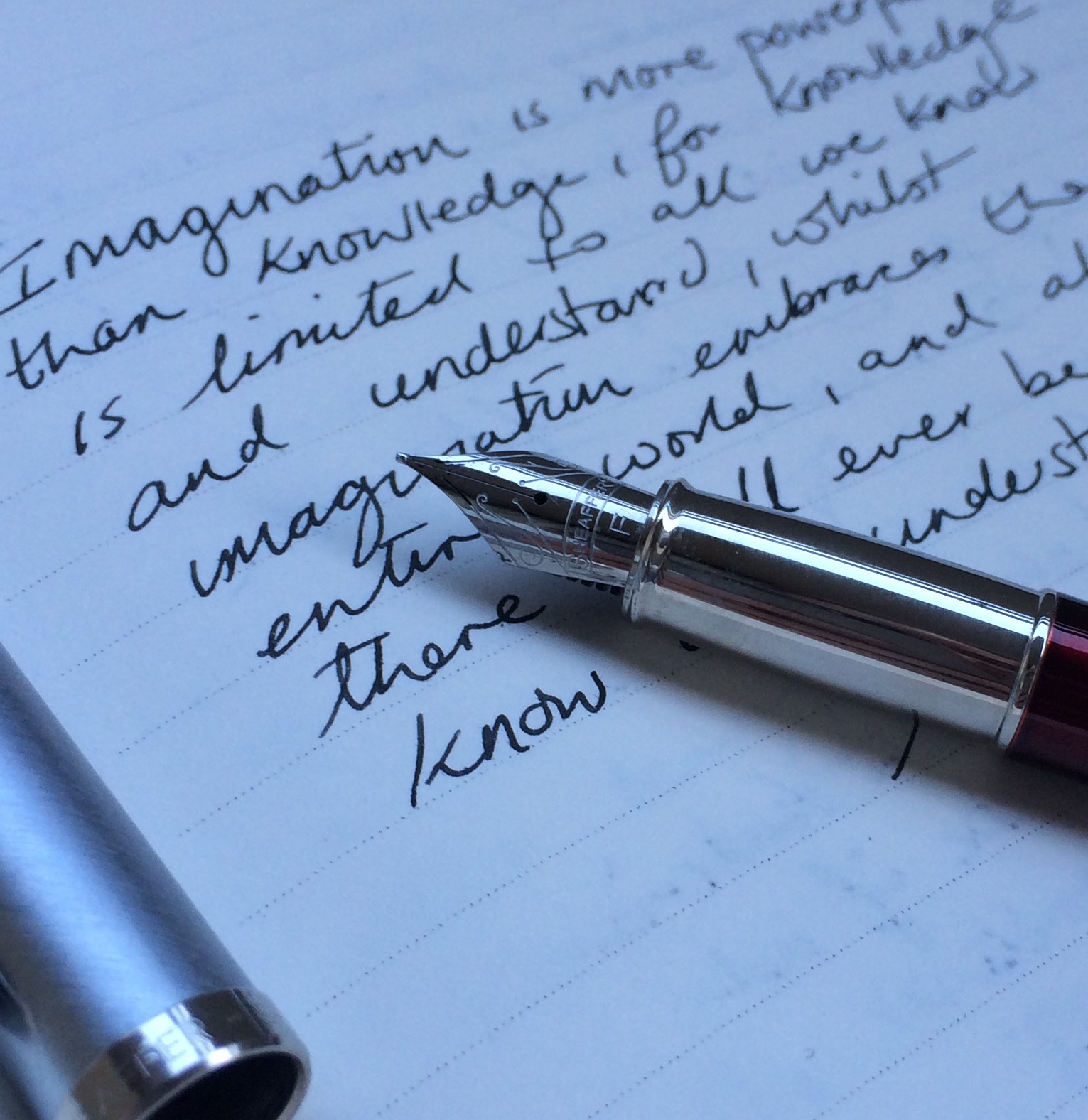
It is a beautiful looking pen, with a lovely two-tone nib. I particularly like the rubberised grip section – a key bugbear for people with the 100 or 300 models. They have a smooth metal grip, which tends to lead to holding the pen slightly higher in order to compensate for any sliding.

The Prelude also has a slightly weightier feel, which means it feels substantial in the hand. Solid. It creates the sensation of writing with something that is quite serious about its job.

The brushed steel housing does that quite well too, come to think about it.

The lay down of ink is quite wet, so I would suggest using it with a relatively good quality paper. I love using my field notes, but the bleed and feathering in these books is far too well documented for me to need to go into it here. I don’t mind it too much, so have happily used it to plan out my writing for next week in the Ambition Edition 56-Week Date Book:

sheaffer prelude field notes planning


I’ve got a medium nib which is a good compromise for me with this pen. My writing actually should require a fine nib as it is relatively small and jerky, but that always comes at the cost of smoothness. Fine nibs, regardless of material, always feel scratchy to me, so I tend to use them for simple, every day writing. Scribbling, for want of a better word. The medium nib in this pen is smooth and the size simply forces me to make more leisurely notes. Perfect for a Sunday afternoon planning or some idle story plotting.

At the moment I’m using the black ink cartridge it came with, because I think a traditional colour works with the traditional style of the pen. A blue or blue-black would be fine too, but I can’t see myself using turquoise or orange or similar in here. I may be pushed to purple, but that’s because I’d give that colour at least one go with just about everything.

So, if this pen wasn’t a gift, would I have bought it for myself? Hell yes.

Would I recommend it to others? Again, yes. Especially for people starting out. It’s not a ‘shove into your bag’ pen or anything like that. But the grip combined with the nib makes for a writing experience that is encouraging enough to keep people dipping their toes (and nibs) into the fountain pen  world further.


Notebooks of 2014

I have written a lot this year.

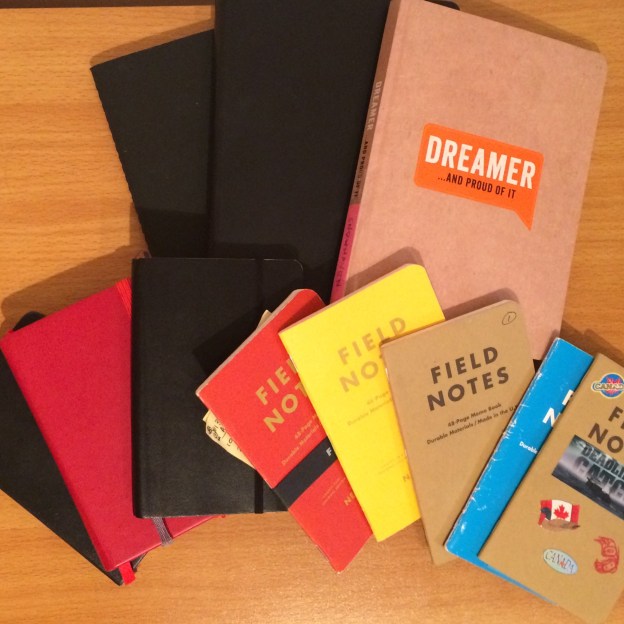
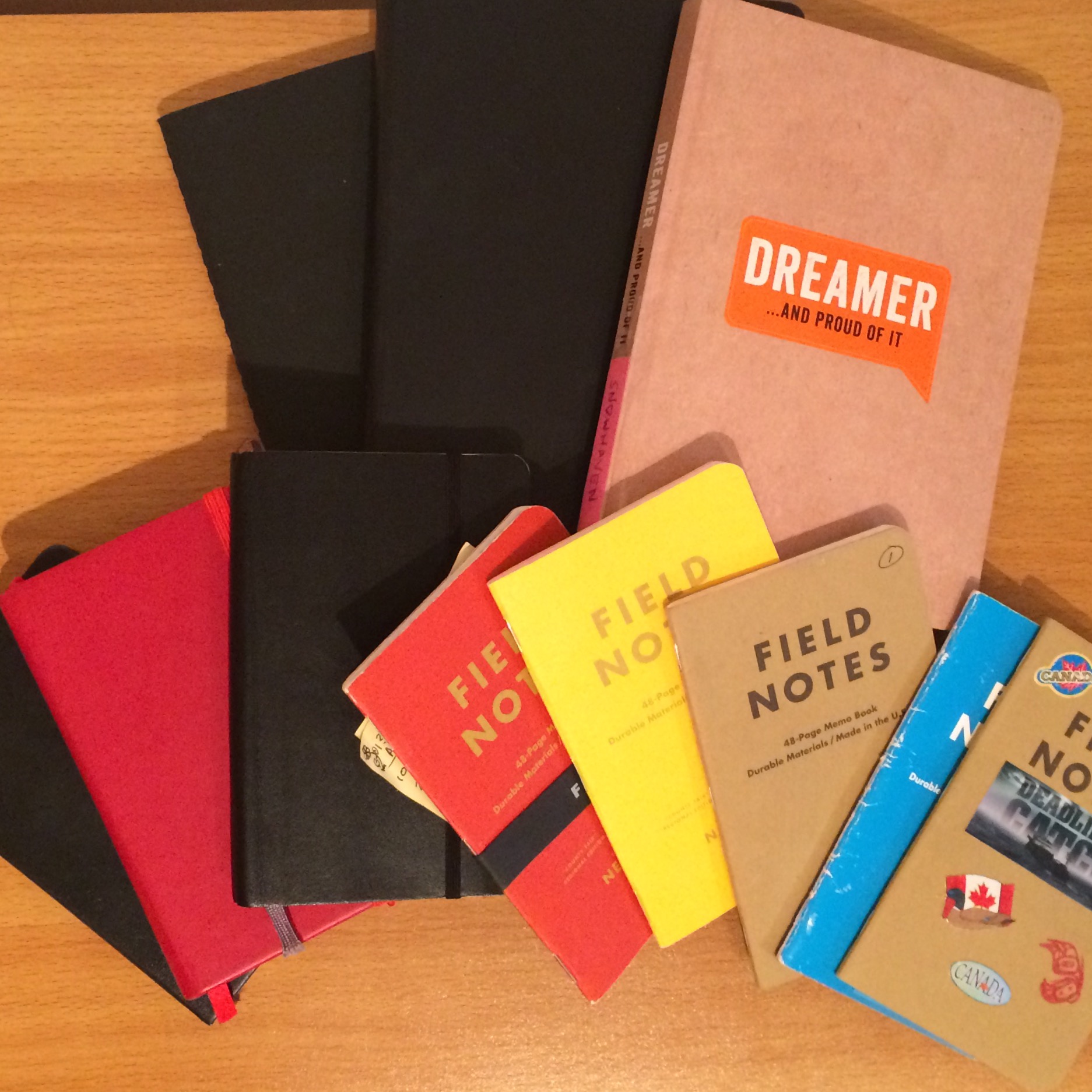
I reached that conclusion when I looked back over the notebooks I have completed over the past 12 months. Yes, all of these books are full (other than a few pages at the end sometimes). I clearly have a problem. One that I have zero intention of seeking treatment for.

2014 Notebooks

At about this time last year, I discovered the bullet journal system by Ryder Carroll. I’ve talked about implementing it before. I freely admit that I don’t use the system in its entirety, and I have changed the way I’ve used it over time, but the basics are fantastic. For anyone who wants to capture ideas in a notebook, then it is the best way to do it I’ve ever come across. Throw in my discovery of Field Notes and I’m one happy lady.

My plan for 2015? To keep going. One day I hope to look back on these and remember a life lived to the full. Isn’t that what we all want really? The places I’ve travelled, the people I’ve met. In those pages there are story ideas, snippets of conversations, journal entries and simple to do lists, all of which mark the passing of time and the movement of my own story. It may never mean anything to anyone else, but it does to me.

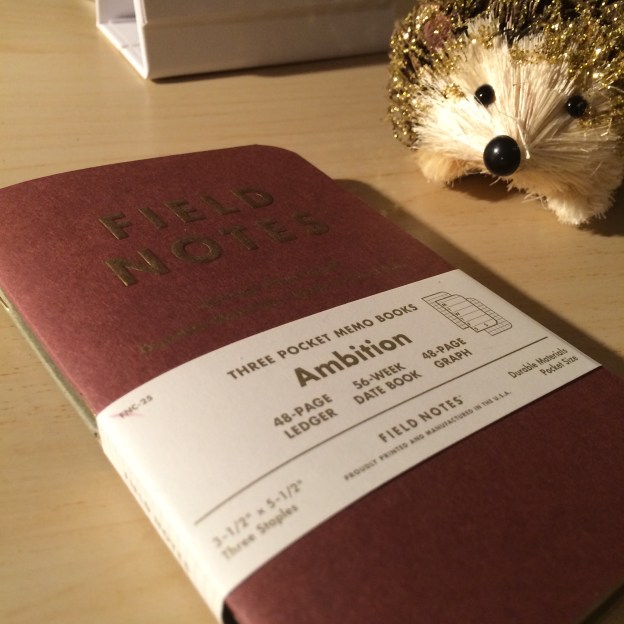
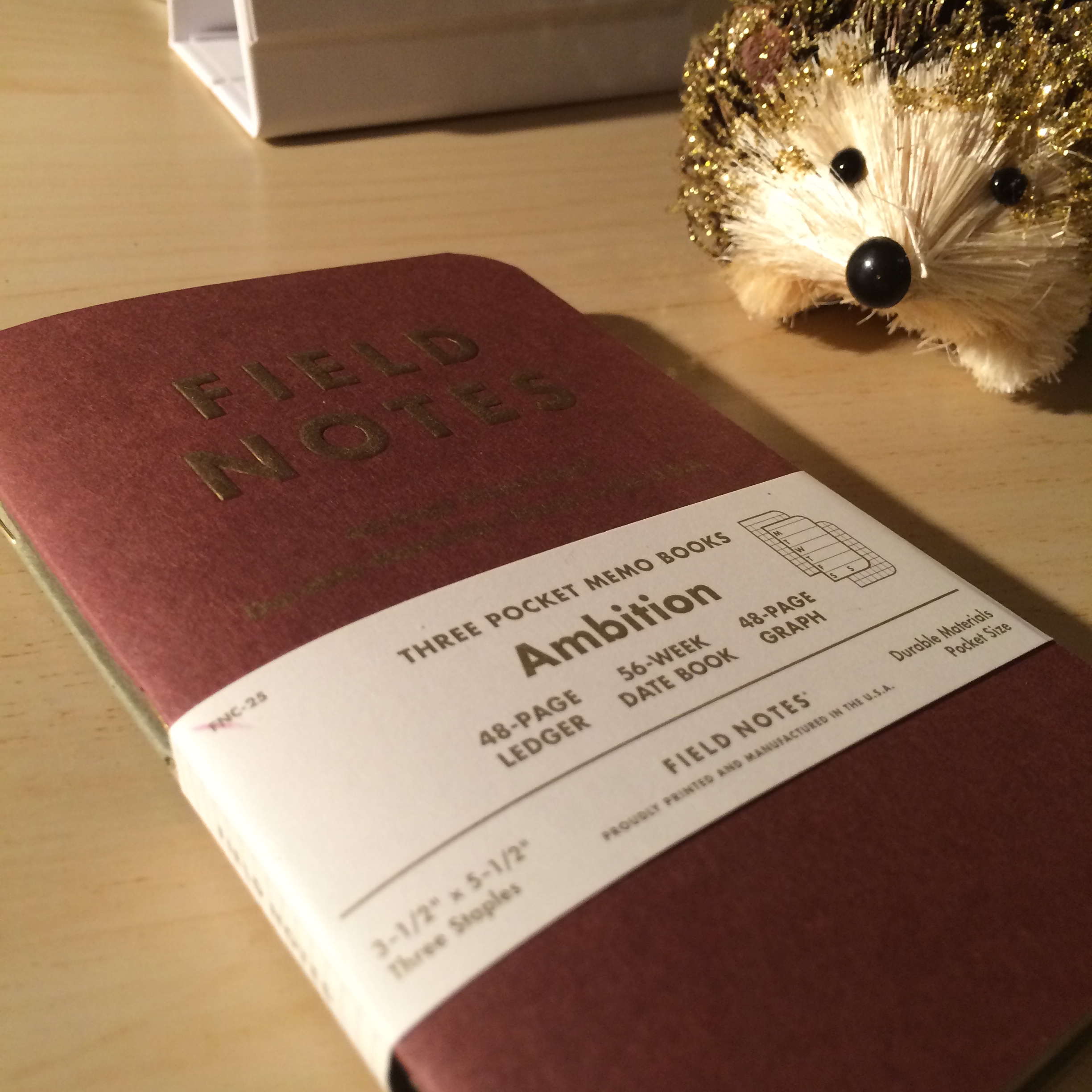
Review: Field Notes – Ambition Edition

I’m going to go out on a limb and say that the Field Notes Ambition Edition is one of my favourites. It was this edition that has finally made me a colors subscriber.

Presence of hedgehog makes it even better

Presence of hedgehog makes it even better

They have been pushing the boundaries of what they could do with Field Notes over the past few editions, so I was wondering just how far they would be able to go with the winter release. There is a fine line between genius and crazy and part of me has been dreading them crossing it. Instead, by going with the three different types of notebooks in one pack, I think they’ve managed to hit a sweet spot.

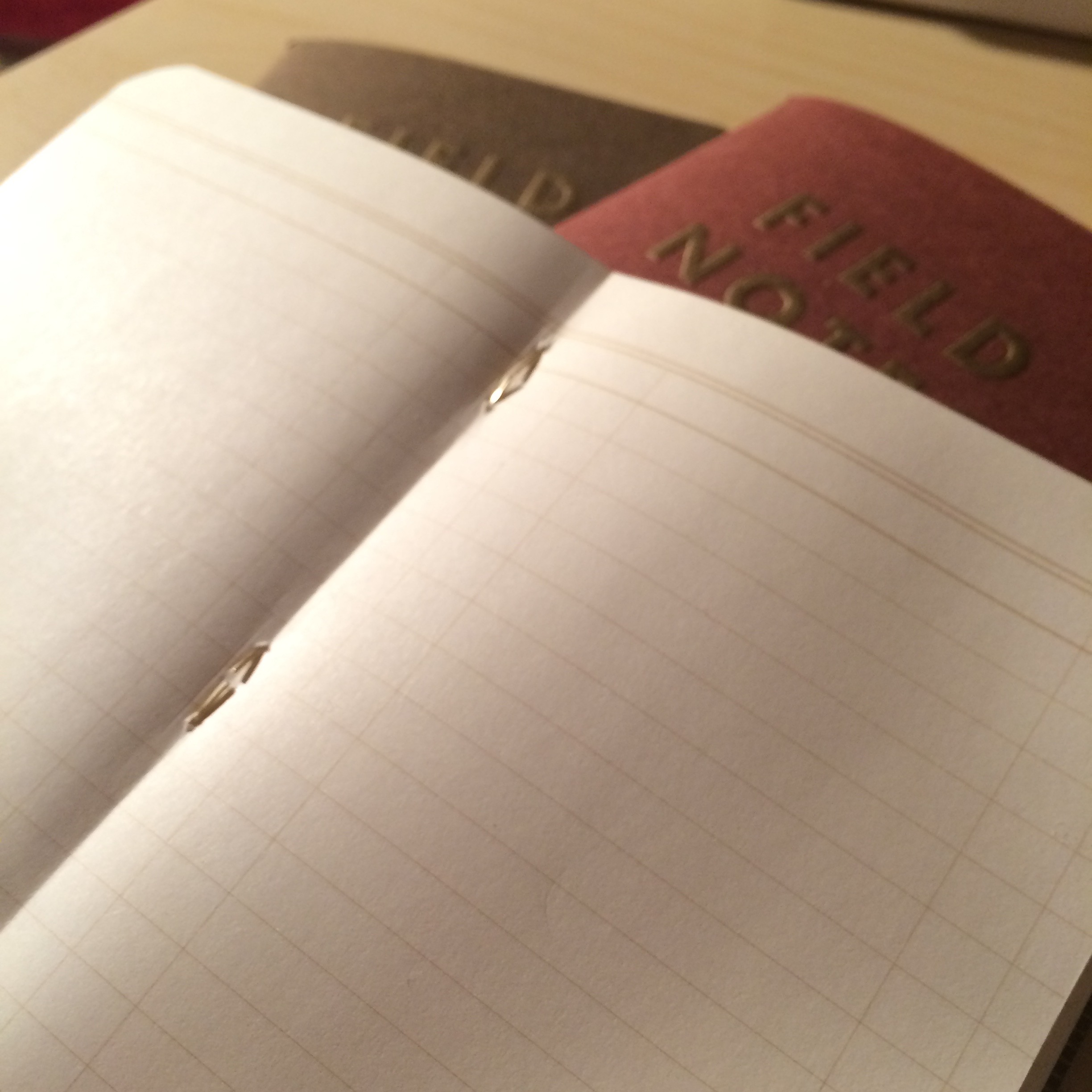
The memo book itself is a lovely colour (wine) and more importantly for me, uses grid paper. I love grid and the form factor and size makes it perfect for an everyday carry bullet journal:

Field Notes Memo Book

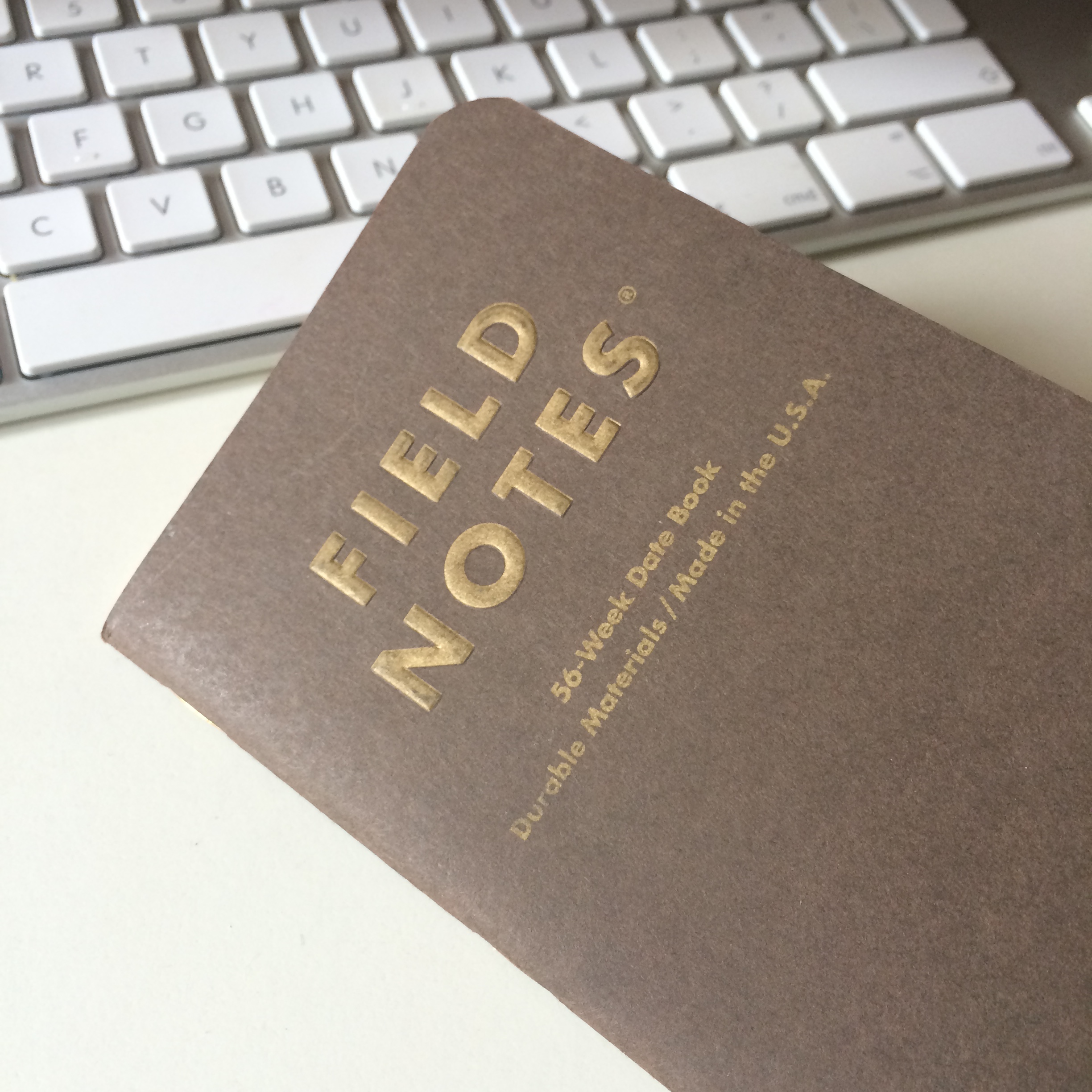
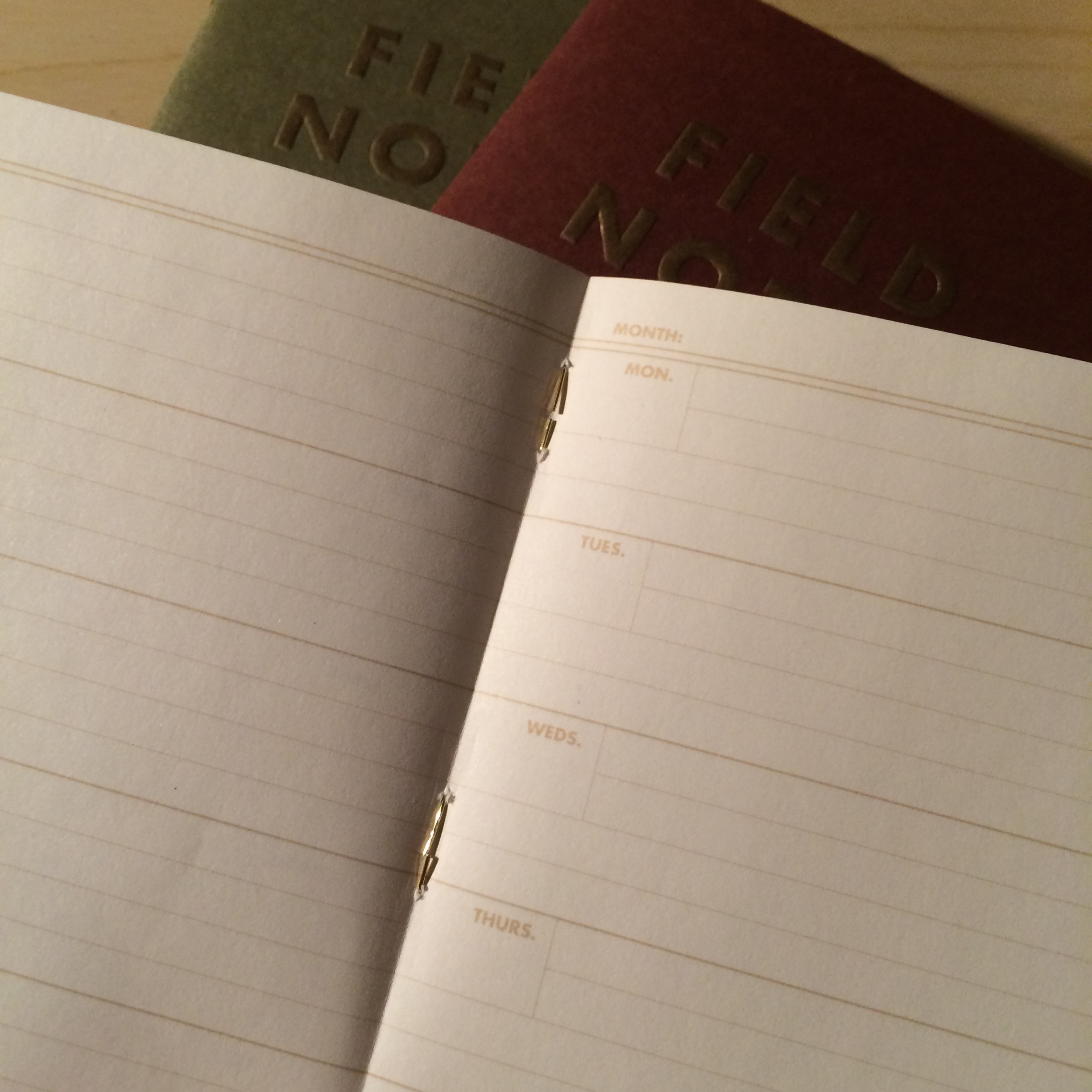
Secondly, and a sensible one for the time of year, I can certainly see the appeal of the 56 Week date book. They’ve also avoided actually dating the pages which, given the fact that anyone who regularly buys Field Notes is likely to work through their existing pack before opening the next one, means it is not rendered immediately useless if that doesn’t happen until March:

Field Notes Date Book

Finally, the ledger book. Now, this one causes me a bit of a dilemma. I really like it, but I’m not sure how to use it. Not in a way that is anything other than a regular notebook, which almost feels a bit of a waste. I’m not that into sport, and all my financials are done on a spreadsheet. If anyone has any suggestions then please let me know, as I’m struggling a bit to come up with something creative.

Field Notes Ledger

After the brightness of Unexposed, I love the muted colours of these books. They work with the gold trim to create a old school sense of style which I’m very comfortable with. Also the sound of that trim cracking as you open the pages for the first time is intensely satisfying in a way that only notebook addicts will understand. I can see them coming out at work without causing any raised eyebrows (Unexposed was about as far from corporate as you can get without spitting in the eye of your CEO).

Thanks of course go to Mr Brad Dowdy, the Pen Addict himself, for getting me interested in Field Notes in the first place. You should check out his website if you haven’t already. Without him, I would be emotionally poorer (but certainly financially richer…)

Waterman 512v Fountain Pen Review

It’s no secret that over the past year I have rediscovered my love of longhand writing. Slowly but surely, my fascination with fountain pens has grown, so when I spotted a chance to get my hands on a Waterman 512v I took it:

waterman quote

Forgive the terrible penmanship and focus on the inspiring quote instead.

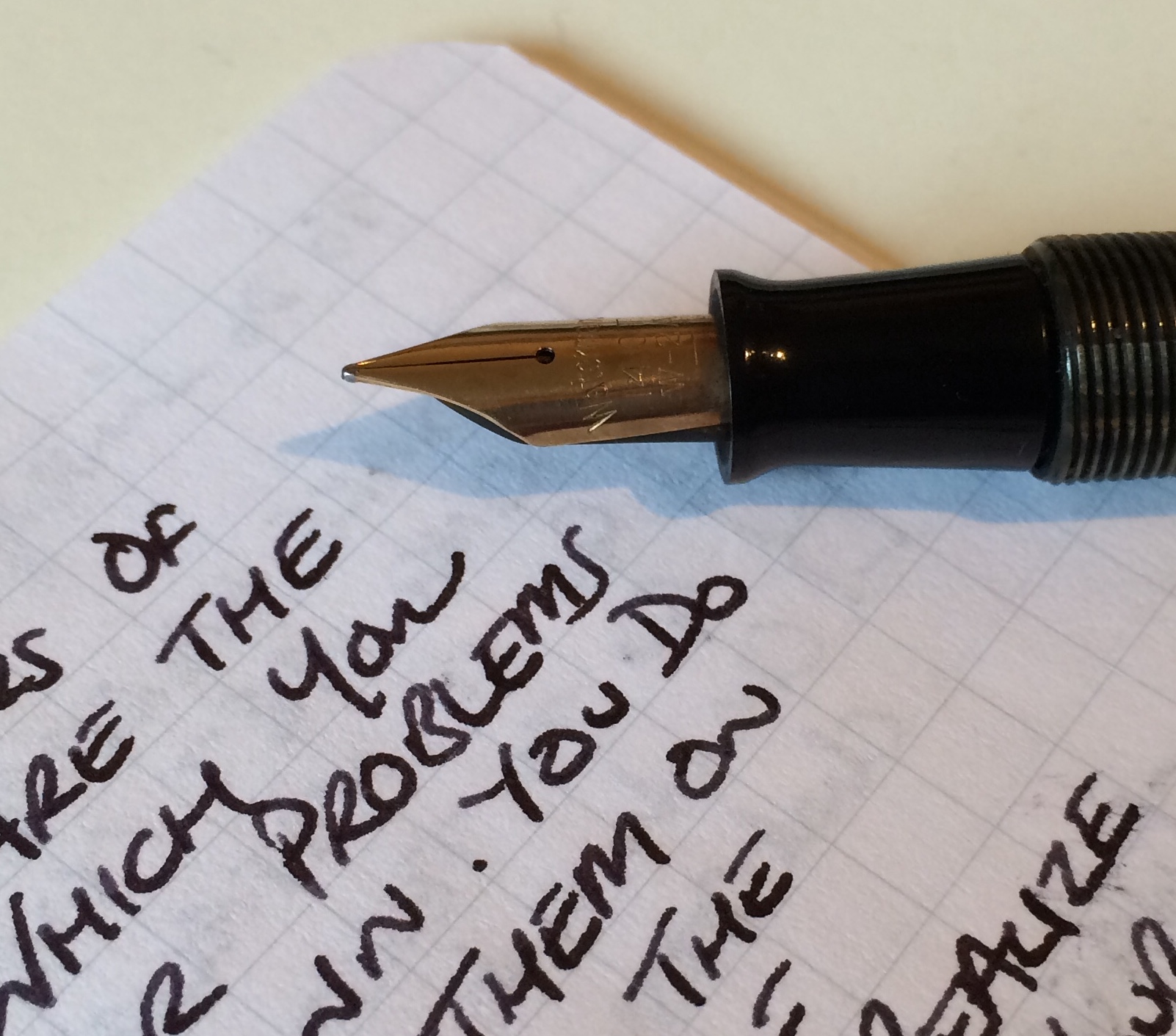
I was really surprised at how light and small this pen was. Uncapped it comes in at under 4 inches, so I’ve found that I really need to have it posted to make it comfortable. If you don’t like posting your pens, I’m not sure it would be for you. I love the nib though, even if it is second hand and not quite as smooth as it could be. It feels loved.

waterman nib


It’s an old fashioned lever system refill, which isn’t as simple as my Sheaffer convertor, but I’ve only had one accident (and that was with some purple ink all over my fingers, lovely). The flow of ink isn’t too wet and it was surprisingly good as an everyday pen. I tried it for a week with my Field Notes and there was virtually no feathering or bleed through, despite the fact Field Notes paper is not particularly designed to be fountain pen friendly. Even scribbling away in a fast, bullet journal style way of writing didn’t cause any misses or scratches.

waterman bullet

Sadly, I could find very little information out there on the interwebz about the Waterman 512v, so I thought I would do this little review just in case anyone else was considering purchasing one. If you don’t mind fiddling around with ink rather than cartridges, then I would say go for it. I’d happily shove it in my pocket and go.


Fixed Schedule Writing In An Unscheduled Life

I’m spending a lot of time on the road lately. Not in a glamorous, jet-setting kind of way. Mainly on roads that start with M, in fact.

Normally I love travel. It’s a way to recharge, to be inspired, to discover something new. Hopefully there will be a little bit more of that before the year ends. For now though, it’s more business hotels than spa resorts and swimming pools under blue skies.

Even though I love the unpredictable adventure of travel, I need routine in my writing. Combining the two is not that easy.

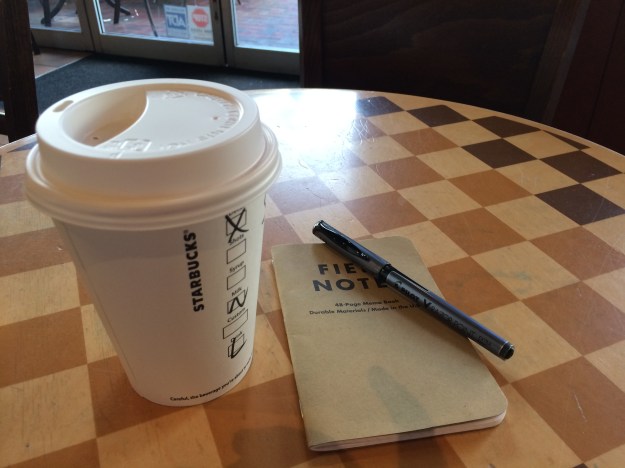
Writing from my home desk isn’t so bad, but writing from hotel rooms is a bit uninspiring. I’m starting to find coffee shops a bit more freeing, although I generally need to have headphones in to avoid being nosy distracted by the conversation. They also force me to write longhand, which makes me focus more on my words.

The net effect of all this is a serious downturn in production. Which sounds a bit businesslike, but writing keeps me sane. Actually completing stories and getting them out of my head is the most rewarding thing I do. I’d like to think that if I ever have kids then they would be more rewarding but quite frankly, I wouldn’t put money on it.

IMG_5578

Solutions

So, in an attempt to not be loopy by Christmas, I’ve started exploring some strategies to help me get back on track.

Acknowledging Energy Levels: Currently I’m covering hundreds of miles each week, so if I have a four hour drive home one evening and crawl into the house at nine, then I should take it easy on myself if I get up an hour later the next morning. I can’t seem to shake the guilt though – not to mention the fact my body insists I wake up anyway – so I have started to allow this to be non writing time. Instead, by focussing on more routine tasks, like website maintenance and reading articles, I get those tasks off my list that I would usually do at the end of the day or weekends.

Taking Better Notes: Ideas come to me at odd times when I’m busy.  I’m trying to make sure that random flashes of inspiration and ideas get captured in a notebook so I can dig them back out when the right time comes. Bullet Journaling is a great way of helping with this.

I Don’t Feel Like Writing (But I’m Doing It Anyway): If I focus on only writing in the morning because that’s when it comes easiest to me then words just won’t get written. Instead, I’m trying to make myself do it later in the day. Creativity doesn’t come as naturally to me in the evenings, so I’ve been spending more time in places that do add a spark of inspiration. This was how I rediscovered the enjoyment of writing with a pen and glorious notebook in coffee shops (decaf, naturally).

It’s not working 100%, so I’m totally open to new ideas and suggestions if there is something working for you?

Sheaffer 100 Fountain Pen Review

Searching the interwebz, it seems as though this pen hasn’t got a lot of love from the pen community at large. Which is a shame really, as it falls quite neatly into the entry level bracket with some success.

I wrote with a fountain pen for years growing up, but then when you enter the real world, the standard Bic seems to take over a lot of the time. I was looking to get back into fountain pens, but without any current experience, I wanted to make sure I wasn’t blowing hundreds of pounds on a Mont Blanc just because I wanted one (still do).

I’ve been using the Sheaffer 100 now for two months, ever since I purchased it on a trip to Canada. The lovely lady at The Vancouver Pen Shop talked me through a whole range of brands and styles before we settled on this one.

shaeffer 100


Forgive both the terrible photo and the equally bad handwriting. It’s a dreary day with bad lighting and only an iPhone for pictures. The handwriting I have no excuses for.

Firstly, the positives. From a cost perspective, this was only $30 + tax, which for a pen of this quality is great. The nib and feed, by all accounts, is exactly the same as what you get in the more expensive Sheaffer 300, which makes it a good way to try it out for size.

The ink flow to paper isn’t too wet, which is also a bonus as I used a variety of notepads from Moleskines to Field Notes to El Cheapo supermarket brands, not all of which are good for fountain pens. It still delivers enough ink to not be too scratchy. In the time I have been using it, it has only skipped a handful of times.

I got the fine nib because my handwriting isn’t conducive to anything thicker, and I found that to work perfectly. Not really any flex as you would expect, but still a smooth write.

The barrel has that more expensive look and feel to it too. I have to be the only person in the world who doesn’t find the aesthetics of Lamy of Kaweco pens pleasing. I definitely prefer the more classic look that comes with this kind of pen. Of course, I still intend to try both of those now I know that I am really enjoying using fountain pens again, so I may yet still be converted.

The only negative for me is the the grip area is super smooth and about an inch deep. That means I have to hold the barrel at a point slightly higher than I normally would, up where the ridge gives a bit of traction. It by no means makes the pen difficult to use though, so I wouldn’t call it a deciding factor.

The best bit about using it has nothing to do with the pen itself. I’ve found a joy in writing creatively in long hand that I hadn’t realised I missed in this day and age of digital devices. It feels subtly different in the care taken for each word choice, and the sense that I am actually crafting something, rather than just banging down on the keys. Especially when I’m travelling, it forces me to slow down and really be in the moment.

Analogue certainly isn’t dead and gone, that’s for sure. If you’ve read this far, you probably agree.

Moleskine vs Field Notes – Pocket Notebook Review

It seems that pocket notebooks are definitely back in fashion at the moment. The world, thanks to the internet and kickstarter, has become awash with them. As a writer, I’ve carried a notebook around with me for most of my life, so I decided that this is one area I definitely have an opinion on.

Despite the countless brands, the current two front runners are Moleskine and Field Notes. I’ve only recently succumbed to buying Field Notes as they are quite tricky to get hold of outside America without making a bit of an effort. However, I’d heard so much about them that I thought I would have to give them a try.

Both notebooks discussed below have gone through a complete lifecycle in my handbag (purse to any US readers, obviously). Despite all those hardy, manly, everyday carry instagram shots, I don’t think anything competes with the assortment of crap I carry around with me on a daily basis that these notepads have had to survive next to.

Don’t Judge A Book By Its Cover

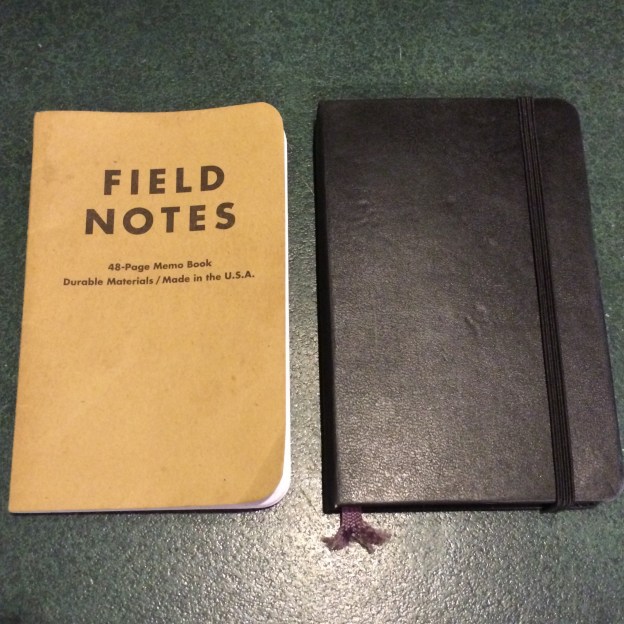
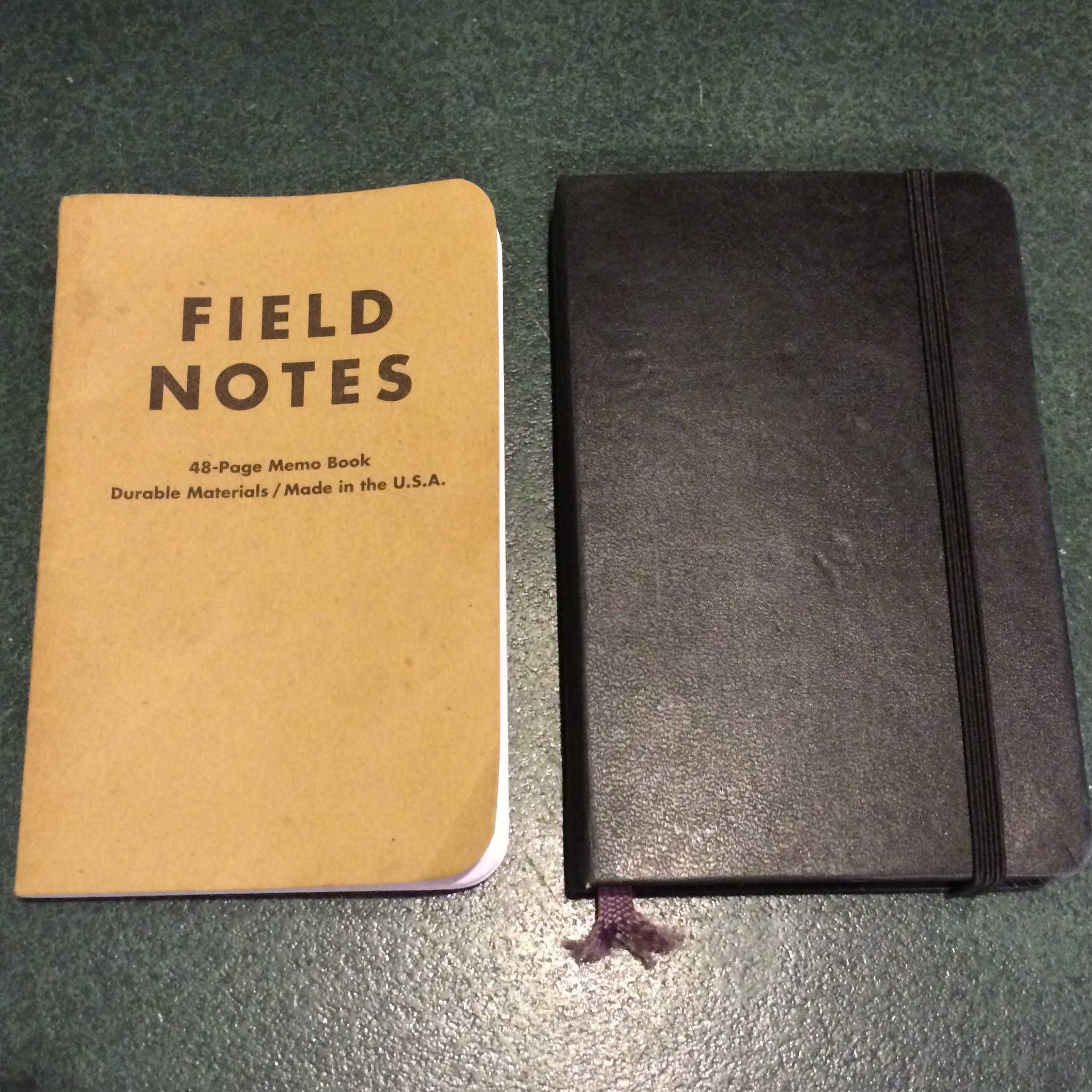
Except in this instance. The hardcover pocket size Moleskine stands up well to most environments. It’s still got a lot of trend factor, as well as standing up to approval in the boardroom meetings. Because I use a hardcover one, it makes it easier to grab and write if there isn’t a surface available. Oddly, out in the field, using Field Notes is actually more difficult in this sense. Field Notes as a brand has a definite cover cool factor right now, especially some of the limited addition colours ones. But by its very nature, it is more casual; while it might provoke a bit of interest in meetings, it’s not going to be taken as seriously in a corporate environment. Especially after a bit of use. Which leads me to…
Field Notes Moleskine Cover


Durability and Longevity

Field Notes have considerably fewer pages than Moleskine books, meaning that this one was only on rotation for about a month. The Moleskine, on the other hand, was in my bag for around six. One looks hardly touched, the other looks well loved. I don’t have to tell you which way round that is. Again, that beat up look has a bit of cool factor to it, but as I keep all my notebooks and constantly refer back to the content in them, it does make me question if they will stand the test of time like the original concept they were based upon.

Paper

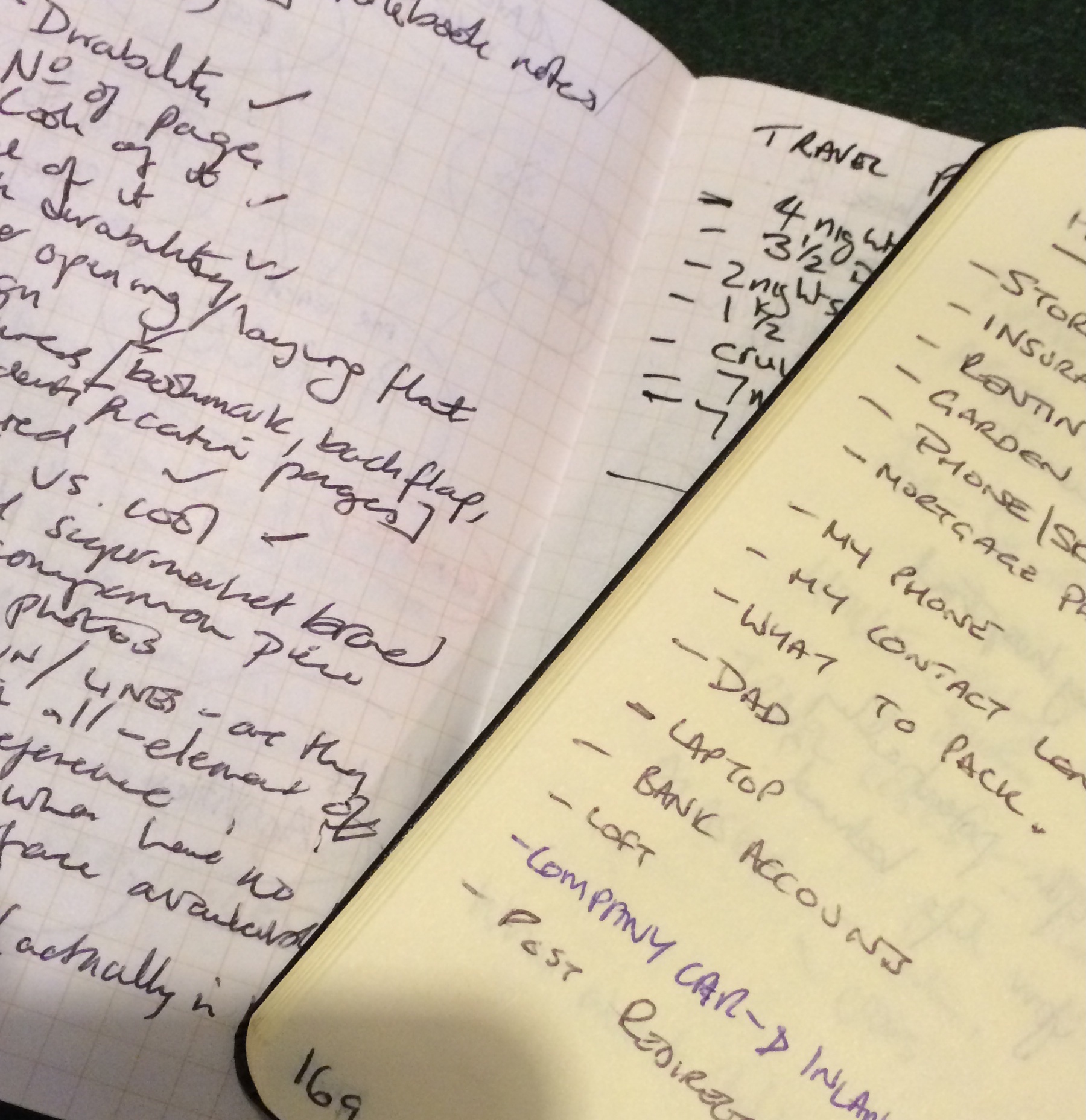
In the bid for market share, the quality of paper actually often seemed to take second place to design factor. A lot of brands have started to realise that as more and more people turn away from an entire dependence on smartphones and yearn for the analogue capture of yesteryear – often with a fountain pen to go alongside it – paper matters. On the whole I don’t use fountain pens, largely because I have a mythological perfect one I am still searching for, but I do use a variety of ballpoints and rollerballs. Despite a lot of people complaining about Moleskine paper quality, I would say that the two of them match up pretty well. If anything, the Field Notes have a little bit of show through (but not bleed through) on the back. I’ve yet to try out the Shelterwood edition, which has considerably thicker paper, but in the interests of fair comparison, I’m reporting here only on the standard book. Both brands have options of lined, plained and grid, so pick whatever works for you and knock yourself out.
Field Notes Moleskine Pages

Features

I love the Moleskine back flap for storing bits of paper and the bookmark is definitely a great feature. These are both missing from the Field Notes, but with considerably fewer pages, the bookmark becomes less of a necessity. I’d recommend using a modified to suit your needs Bullet Journal system with both. I recently went back and actually did this to all my notebooks that had a couple of blank pages at the beginning or the end and it makes a huge difference to usability. Field Notes has a built in ruler along the back sleeve and some  fun uses. Both have a user information page at the front, although both brands clearly approach it in different ways.

To Sum Up

Which side of the fence you come down on will always depend on how you use your notebook. For me, the pocket notebook isn’t for work – but when I am working I will use it to capture things so I don’t want it to look too out of place. I love the look of Field Notes especially when I am travelling; there is definitely something of the open road about them. The first real test will be on a road trip around the US and Canada next month, where I’m much more likely to be shoving them in my pocket for practical reasons, rather than just creative ones. After this first run through though, I am still slightly on the side of Moleskine for the way I can actually use them in any environment. If I had an idea last month, I don’t need to go and find the other book because I’ve already run out of pages and moved on.

Finally, I’ve used a cheap supermarket brand (£3/$4.50 US) and found that once you take the ‘street cred’ element away (the ‘look at me, I’m a writer/hipster/adventurer’ element) it works just as well on all fronts as the others, at a fraction of the cost:

Notebook