Tag Archives: creativity

So, what does it mean to Write Foxy?

On Sunday I was fortunate enough to attend Miranda Dickinson’s Write Foxy event, which was jam packed with some amazing guest speakers.

So what does it mean to Write Foxy? It does not mean you are limiting yourself to the topic of elusive woodland creatures. And although all of the speakers were female and Miranda is well known as a Romantic Comedy author, this was not a day exclusively for those who want to write ‘chicklit’. The whole day was genre unspecific and for those at any level of writing experience. To Write Foxy is to take back the passion of writing and do what you really love. A day legitimately and wholly devoted to the writing experience.
WriteFoxy


For me, there were several highlights and key moments in the day. The first was being completely vindicated by Hannah Beckerman (The Dead Wife’s Handbook) when it comes to planning. People always seem a bit suspicious of my level of planning, as though it somehow equates to a lack of creativity. Hannah was great at explaining how developing a strong structure in advance can actually create a sense of freedom when it comes to writing. There are no moments of panic when you feel like you are fumbling in a blind alley towards your ending. No sitting, staring at the blank screen waiting for the muse to appear. But nor is it so set in stone that there is no choice but to follow your original plan relentlessly. I couldn’t have completed NaNoWriMo in 3 days without a plan, that’s for sure.

Dead Wife

The aha! moment for the day came from Cally Taylor (Home For ChristmasThe Accident) who tackled the topic of editing. Or, as I like to call it, my nemesis. I realised that although I am meticulous in my planning, and my life in general, I have no such approach when it comes to editing. Instead, I get out a red pen and plod through the thankless task. No wonder I always get distracted by writing something new and shiny instead. Cally showed us a way of approaching editing that has given me a whole new perspective on getting from that first draft to a polished manuscript, without it feeling like pulling teeth. As my goal for 2015 is to actually do something with this fort of stories I’ve been building around myself, I feel like I now have a framework to help me learn to enjoy the task as a part of the writing process itself.
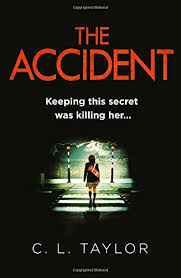
The Accident

The unexpected laugh out loud moments came courtesy of Tamsyn Murray (Stunt Bunny, My So-Called Afterlife), who explained the three act structure to us in a way that was better than any of my English teachers ever did. Or maybe her choice of a well known children’s book as an example was just aiming it at my mental level… Now I’m re-reading this and wondering if I’ve managed to do it with this post (the piece of training documentation I wrote for work the other day though is something Aristotle himself would be proud of. Isn’t that what people mean by work-life balance?)
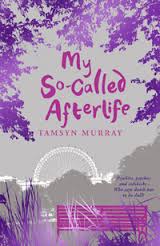
so called afterlife

To round off the day, Miranda Dickinson (Take A Look At Me Now, and the soon to be published I’ll Take New York) gave everyone a timely reminder that for everyone there, no matter what they wrote, where they wrote, or how much they wrote, the whole point was still to have fun. To really love what you write and, more importantly, to give yourself the freedom to do so without guilt. Writing is a solitary process to begin with and hard to explain to friends and family without sounding like, well, a bit of a nutter really. I’m lucky that everyone I know has just accepted that I’m a nutter anyway and the whole writing thing is now quite incidental to that fact. But, despite the fact I don’t have anything traditionally published yet, I do now call myself a writer and say it like I mean it. For that, I will be forever grateful to Miranda for being a champion of the generosity mindset and always extending a hand down to help those on the way up.

It is something I hope to be in a position to do myself one day.
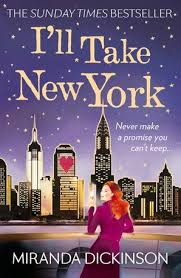
Take New York

There are still tickets available for the February Write Foxy day, so if you’re free and want to start taking your writing seriously (or if you already do and want access to a whole load of additional tips and tricks) then you should check it out here. Plus, if I haven’t sold it to you, there will also be free goodies and oodles of cake. Writing events should always be this well catered….
WriteFoxy

5 Reasons why I’ll be using Scrivener for NanoWrimo

Earlier this week, I read the bravely titled Why I Will Never Use Microsoft Word Again by the mighty Jeff Goins. People I know say that phrase all the time out loud, but few people in positions of influence in the writing world would commit it so defiantly to screen. Yet, as soon as I read the title I was nodding, partially because I already suspected what the solution would be.

The world at large has not yet moved on from Microsoft Word and I suspect it won’t for a while yet. Submissions, anything for the day job – Microsoft Word is the only accepted choice. Even with the huge increase in popularity of Apple products there has been very little give, with an emphasis instead on better conversion technology.

But when it comes to my writing, Scrivener is my tool of choice. For those of you doing NanoWrimo this year who have never tried it, there is a free trial on their website, available for both windows and mac.

But Scrivener is not just for fiction. I think that is a common misconception. Any piece of writing that requires more than a couple of sides of A4 plain text will benefit from it’s functionality. With that in mind, here’s why I’ll be using it for NanoWrimo.

Planning Tools

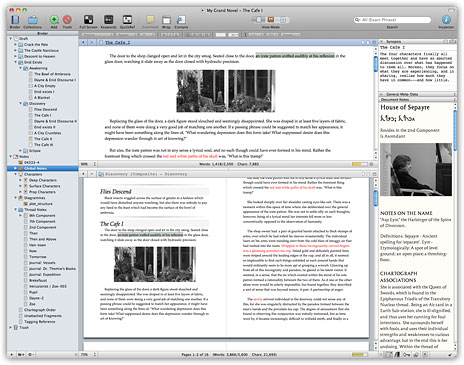
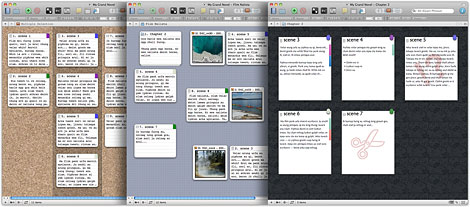
You can’t write a word of your novel itself before midnight, but there are no rules about pre-writing for Nano. In fact, I would positively encourage anyone trying it for the first time to do as much pre-writing as possible. Scrivener has the best outlining tool I’ve ever come across, and the cork board allows you to visually play with concepts, themes and characters in a way that is impossible on a  piece of simple word processing software.

feature-corkboard

Name Generator

This is almost an afterthought for some people, but it has saved my bacon at 6am more than once. It’s amazing for those times when an incidental character turns up. You know the sort, the ones where you need them for a plot point but they don’t come with a back story or enough of a personality in your brain to instinctively know they are called Bob. The name generator tool can do either first names or both, with cultural, gender and language options if you need to narrow it down to something more specific. Don’t let trying to work it out derail your writing flow any longer.

Templates

Again, another key pre-writing feature that it just awesome. Scrivener comes with pre-developed templates for characters and settings, so you can keep track of the key details (nothing like your protagonist changing eye colour halfway through the book is there?). You can attach images and web content in Scrivener too, so keeping it all in one place is easy. What’s more, you can customise it so you can create your own templates. I’m trying my hand at an epic fantasy for Nano this year, so I have a template for my magic systems to make sure they balance each other out and the complicated details don’t get lost. One click and I can easily reference back, rather than having to search through an entire document to find a tiny but suddenly important detail.

Formatting and Fonts

Let’s face it, Word has become more and more complex. Whilst powerful functionality is good, it gets lost in amongst the everyday, and for most people, they never use any of it anyway. When writing a long document (again, regardless of fact or fiction), the key is to get quality content in place, not to be able to provide fourteen different types of shadowing to your title. I like the fact that Scrivener places the basic, everyday options up front and centre, with much of the formatting and additional functionality happening in the background. Instead the screen is taken up with the elements you need to keep your eye on, such as the binder on the left so you can see where you are in the grand scheme of things, and the synopsis notes on the right so you can drill down into the specifics of your current chapter. I love that my screen isn’t mainly wasted space.

write_structure_revise

Project Targets

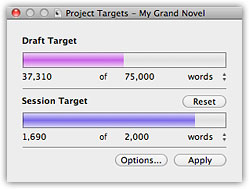
Again, a relatively small tool, but the one thing I love the most. The project target box sits happily in the corner of the screen, allowing me to see my daily word target, as well as the overall progress based on my estimates of the total length, and the countdown to deadline. The target can even dynamically change if the deadline is the key element, so if you have a day off, Scrivener reminds you that you have to put in the extra words over the life of the project. Simple, but oh so effective at 6am when you’re trying to do 1000 words before the rest of the world wakes up.

feature-statistics

Having started this whole thing by saying that everyone still uses Microsoft Word, it would be foolish of me to push something that then had no application in the real world. I’ve written 6 full length novels in Scrivener now and exported them all successfully to either Word, ePub or Kindle formats. Likewise, if you’ve already done some of your project in a different format, you can import into Scrivener if you want to give it a go.

So that’s why I always use – and will continue to use – Scrivener for all my writing projects, not just for NanoWrimo. Check it out and let me know what you think.

All images courtesy of literatureandlatte

Book Review: How To Be Happier by Paul Jenner

Another great library find, How To Be Happier by Paul Jenner was one of those rare self-help books that made me laugh out loud.

Disclaimer: I am not currently suffering from depression. I am not ungrateful for my lot in life. I have many things that so many other people do not. Nevertheless, I think there is a pervading sense of dissatisfaction that is sweeping its way through our culture.

It is strange, in the Western world where we have ridiculously large amounts of everything, that people seem consistently less happy. I listen to a podcast call The Productivity Book Group (you should check it out if you’re into that kind of thing) which introduced me to Shawn Acher’s amazing TED talk on happiness. So my mind got to thinking and this was the book it found.

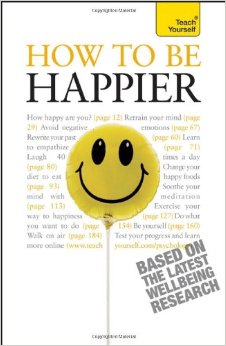
How To Be Happier

It could, in theory have a subtitle in keeping with the current trend, of get naked more often and touch each other. The author is keen to stress that this is probably best done with a consenting partner, but that is the one thing I seem to remember most about it.

On a serious note, this book was useful whilst being lighthearted, informative without being preachy. Each chapter had practical sections and exercises to implement and review. I naturally lean towards cynical and pessimistic, so for me it was a pleasant surprise to at least come out in the middle. Normally, whenever there is a personality-based multiple choice quiz, I come out looking like a sociopath or suicidal. Moderately happy was therefore something of an academic success, and shows how far I’ve come in the past few years.

The hardest part of the book is the bit that always sounds the most simple. In order to be happy, we must, at some level, choose to be happy. For anyone familiar with Tony Robbins and NLP, this will ring a bell. Of course, when you are chronically depressed or very, very unhappy, the concept of choosing to be happy doesn’t seem like one you can necessarily bring yourself to do. How To Be Happier gives you some small baby steps to work through to help you build up to the choice. This is something I have seen reflected countless times in my friends and family (and myself). The logic of knowing what to do is nothing like the ability to actually do it.

The book works through other key topics, such as the impact of food and exercise on our mental state (without any extreme diets or workout routines being forced on the reader), meditation and mindfulness. There was also a chapter which seemed fairly innocuous but I suspect is actually a key foundation: be yourself and learn to accept this. Today’s world, with blogs and twitter and the book of face, seems to funnel us into only showing the best of ourselves. The parts we think other people will want, or envy. In the worst case scenario, when we don’t feel we have these things, we over-embellish or outright make them up. We post pictures of ourselves from angles that make us look good but our best friends wouldn’t recognise. We talk about amazing nights out when really we’ve been sitting in front of the TV chomping through a family size bag of M&M’s to make ourselves feel better, washing it down with a bottle of wine. No wonder being ourselves is becoming harder and harder. And with that disconnect comes continued unhappiness.

So, eat well, exercise, think positive thoughts and learn to accept yourself for the unique individual you are, so-called flaws and all.

Then get naked and touch someone some more…

How to survive NanoWrimo

Have you signed yourself up for NanoWrimo? If you have, then well done. Pat yourself on the back and prepare for some hard work. But hopefully you’ll find it a lot of fun too.

I am something of a Nano veteran. I did my first one a very long time ago (2001 I think) and have only missed two years since, both of which were due to being out of the country for the entirety of the month. For me, I love the challenge. My daily writing habit already has me at a minimum of 1000 words before breakfast, so Nano doesn’t step it up that much of a notch for me.

Which is why I do NanoWrimo hardcore.

The first attempt, due to my super competitive nature, I completed in two weeks, rather than the whole month. Every year since then, I’ve tried to shave a day off. Sometimes I fail, sometimes I succeed. But my goal now is to do it in a week. I’ve achieved that twice; both times whilst holding down a full time (and fairly hour intensive) job.

This year I will have no choice. Due to other commitments, I only have the first seven days when I can write, so it is make or break. Two of those days will include commutes to other parts of the country. Fun times and the fast track to a mental breakdown. So how do you survive NanoWrimo?

nanowrimo-logo

Be honest with yourself

If you’re planning to do NanoWrimo over 30 days like a normal, sane person, then you need to be honest with yourself about your other commitments for the month. Know that you have a friend’s birthday one of the Fridays and that’s your best writing time? Take that day out and recalculate your overall word count. It might mean that on the days you are writing you have to do 3000 words instead, but at least you’ll know. Otherwise, you get to the last week and see that you have an almighty push to try to make it.

Don’t start on the back foot

NanoWrimo doesn’t always start on the most convenient day. Depending on what is going on in your life, then it may clash with a multitude of other commitments. Know this, and still set aside the time to write on day one. There is nothing more disheartening than going in on day three and seeing everyone’s word counts roaring off into the distance in a cloud of dust. Start. Like anything in life, that is the most important step.

Don’t edit

I know this is the whole point of NanoWrimo, but it is worth repeating. Don’t know if your clear blue sea is turquoise or aqua marine? Who cares? Don’t waste a few minutes googling colour palettes to see which one is the closest to the image in your mind’s eye. Add all those little distractions and your writing will slow way down. These things do not matter in a first draft.

Have a plan

Plotting prior to 1st November is completely within the rules. If this is your first time doing NanoWrimo, or sustained writing in general, it might seem enough to have a great character or idea. Trust me, when it’s after midnight and you still have 500 words before you hit your word count, then it won’t be. If you enjoy writing on the fly, then I’m not suggesting you pin down every chapter in excruciating detail. I would simply suggest having at least 5 key plot points written down and know where they fit in your overall story arc. That way, you’ll always have something to be working towards when the words start to dry up.

Be kind to your body

For many people, NanoWrimo is their first attempt at consistent writing. It is awesome for that. It also means sitting for a long time. Be sensible. Make sure your back and wrists are getting the support they need. It’s meant to be fun, not a quick route to a lifetime of pins and needles in your extremities.

Have fun

Yes, that’s my final point. Enjoy it. Even though I go crazy and it can be a special type of self-inflicted stress, I love every minute of it.

Good luck! More importantly, just keep going!

nanowrimo-logo

Book Review: Brilliant Freelancer

On a recent trip to my local library, I picked up Brilliant Freelancer by Leif Kendall. I wasn’t looking for anything in particular, but being British, things such as marketing myself have never sat that comfortably with me.

Nevertheless, it seemed like an interesting book to give me a bit of an overview and I have to say I was pleasantly surprised. Whilst there were the standard ‘of course you can do it’ messages – no one wants to push failure and inadequacy after all – it was refreshingly realistic. It posed the simple message that if you tried it and it didn’t work out then it wouldn’t be the end of the world. Even if you tried it, were hugely successful at it but didn’t enjoy it, then that was okay too.

Brilliant Freelancer

The book itself is divided up into sensible chapters and sub-grouped into key areas. It is all pretty high level stuff, but I think that is actually a strength. When you are first dipping your toes into the water with this kind of thing, having everything laid out before you in excruciating detail is more likely to simply induce fear and lead to trying absolutely nothing. Instead, chapters on how to find the most profitable and manageable work sat comfortably alongside how to motivate yourself and get stuff done. Being a self-employed writer is a road I am only just beginning to walk down, so I am happy with the baby steps for now.

Whilst this book wouldn’t serve as your only guide to freelancing ever, it was certainly a handy reference point to begin. If you are thinking about a strategy or just whether or not it is feasible to even do any self-employed work, this book will give you just enough information to hold the fear at bay so you can begin.


Waterman 512v Fountain Pen Review

It’s no secret that over the past year I have rediscovered my love of longhand writing. Slowly but surely, my fascination with fountain pens has grown, so when I spotted a chance to get my hands on a Waterman 512v I took it:

waterman quote

Forgive the terrible penmanship and focus on the inspiring quote instead.

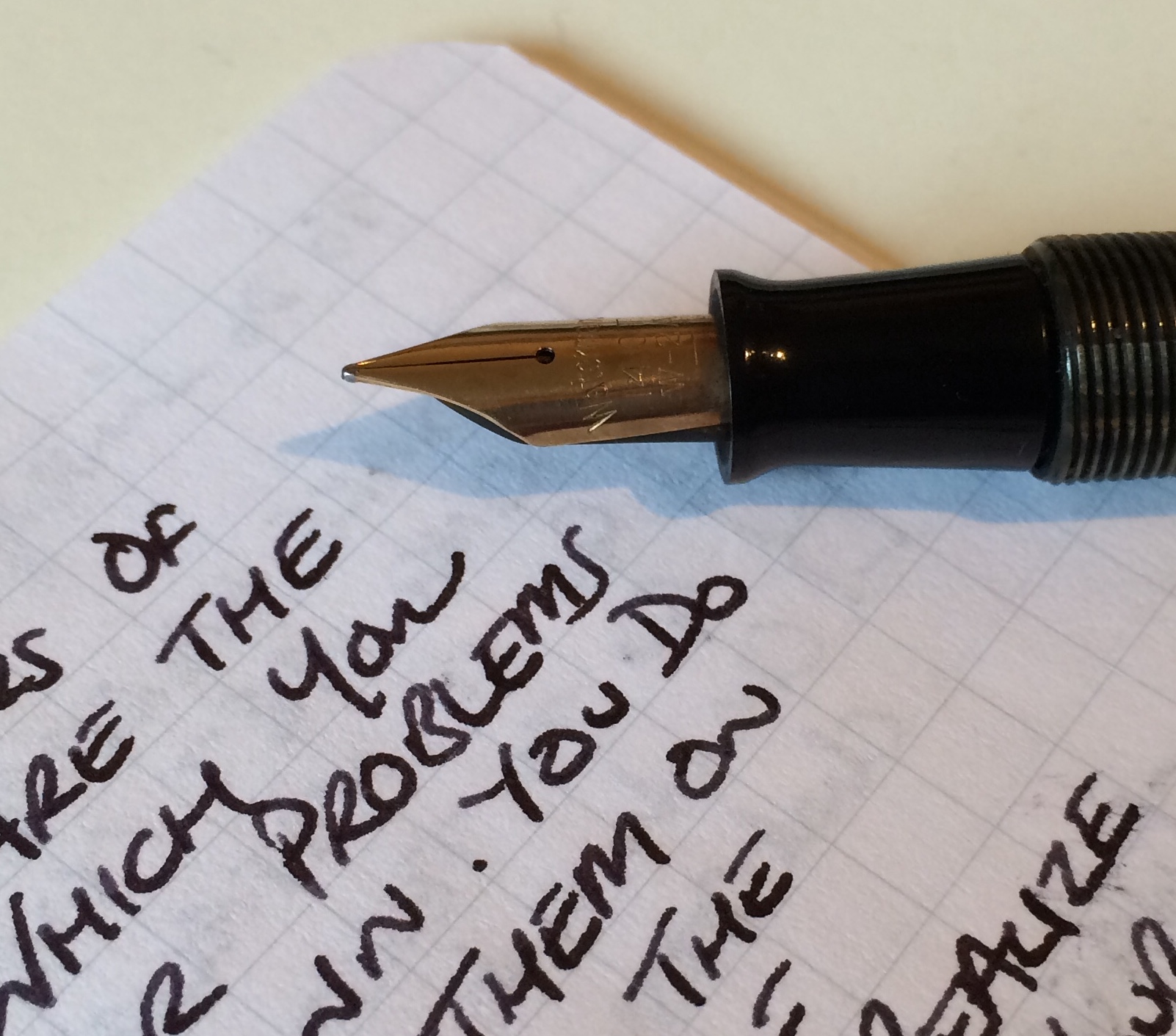
I was really surprised at how light and small this pen was. Uncapped it comes in at under 4 inches, so I’ve found that I really need to have it posted to make it comfortable. If you don’t like posting your pens, I’m not sure it would be for you. I love the nib though, even if it is second hand and not quite as smooth as it could be. It feels loved.

waterman nib


It’s an old fashioned lever system refill, which isn’t as simple as my Sheaffer convertor, but I’ve only had one accident (and that was with some purple ink all over my fingers, lovely). The flow of ink isn’t too wet and it was surprisingly good as an everyday pen. I tried it for a week with my Field Notes and there was virtually no feathering or bleed through, despite the fact Field Notes paper is not particularly designed to be fountain pen friendly. Even scribbling away in a fast, bullet journal style way of writing didn’t cause any misses or scratches.

waterman bullet

Sadly, I could find very little information out there on the interwebz about the Waterman 512v, so I thought I would do this little review just in case anyone else was considering purchasing one. If you don’t mind fiddling around with ink rather than cartridges, then I would say go for it. I’d happily shove it in my pocket and go.


Fixed Schedule Writing In An Unscheduled Life

I’m spending a lot of time on the road lately. Not in a glamorous, jet-setting kind of way. Mainly on roads that start with M, in fact.

Normally I love travel. It’s a way to recharge, to be inspired, to discover something new. Hopefully there will be a little bit more of that before the year ends. For now though, it’s more business hotels than spa resorts and swimming pools under blue skies.

Even though I love the unpredictable adventure of travel, I need routine in my writing. Combining the two is not that easy.

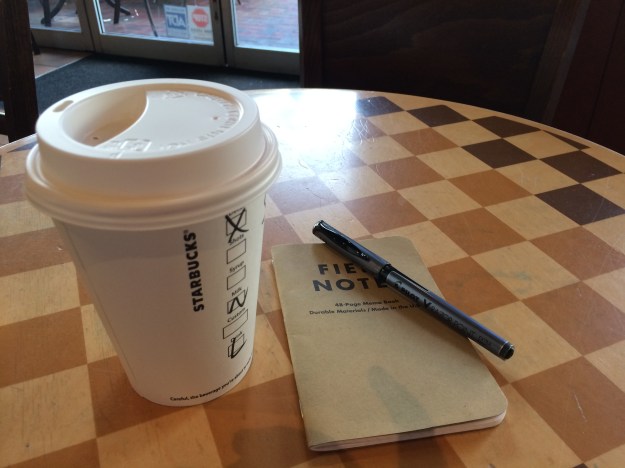
Writing from my home desk isn’t so bad, but writing from hotel rooms is a bit uninspiring. I’m starting to find coffee shops a bit more freeing, although I generally need to have headphones in to avoid being nosy distracted by the conversation. They also force me to write longhand, which makes me focus more on my words.

The net effect of all this is a serious downturn in production. Which sounds a bit businesslike, but writing keeps me sane. Actually completing stories and getting them out of my head is the most rewarding thing I do. I’d like to think that if I ever have kids then they would be more rewarding but quite frankly, I wouldn’t put money on it.

IMG_5578

Solutions

So, in an attempt to not be loopy by Christmas, I’ve started exploring some strategies to help me get back on track.

Acknowledging Energy Levels: Currently I’m covering hundreds of miles each week, so if I have a four hour drive home one evening and crawl into the house at nine, then I should take it easy on myself if I get up an hour later the next morning. I can’t seem to shake the guilt though – not to mention the fact my body insists I wake up anyway – so I have started to allow this to be non writing time. Instead, by focussing on more routine tasks, like website maintenance and reading articles, I get those tasks off my list that I would usually do at the end of the day or weekends.

Taking Better Notes: Ideas come to me at odd times when I’m busy.  I’m trying to make sure that random flashes of inspiration and ideas get captured in a notebook so I can dig them back out when the right time comes. Bullet Journaling is a great way of helping with this.

I Don’t Feel Like Writing (But I’m Doing It Anyway): If I focus on only writing in the morning because that’s when it comes easiest to me then words just won’t get written. Instead, I’m trying to make myself do it later in the day. Creativity doesn’t come as naturally to me in the evenings, so I’ve been spending more time in places that do add a spark of inspiration. This was how I rediscovered the enjoyment of writing with a pen and glorious notebook in coffee shops (decaf, naturally).

It’s not working 100%, so I’m totally open to new ideas and suggestions if there is something working for you?

The best place in New Zealand: Lake Tekapo

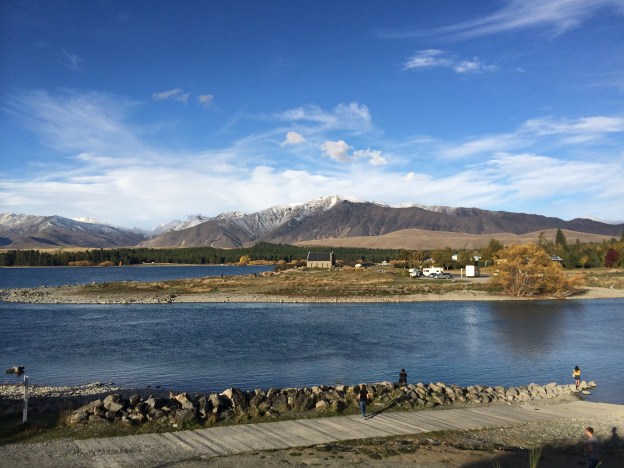
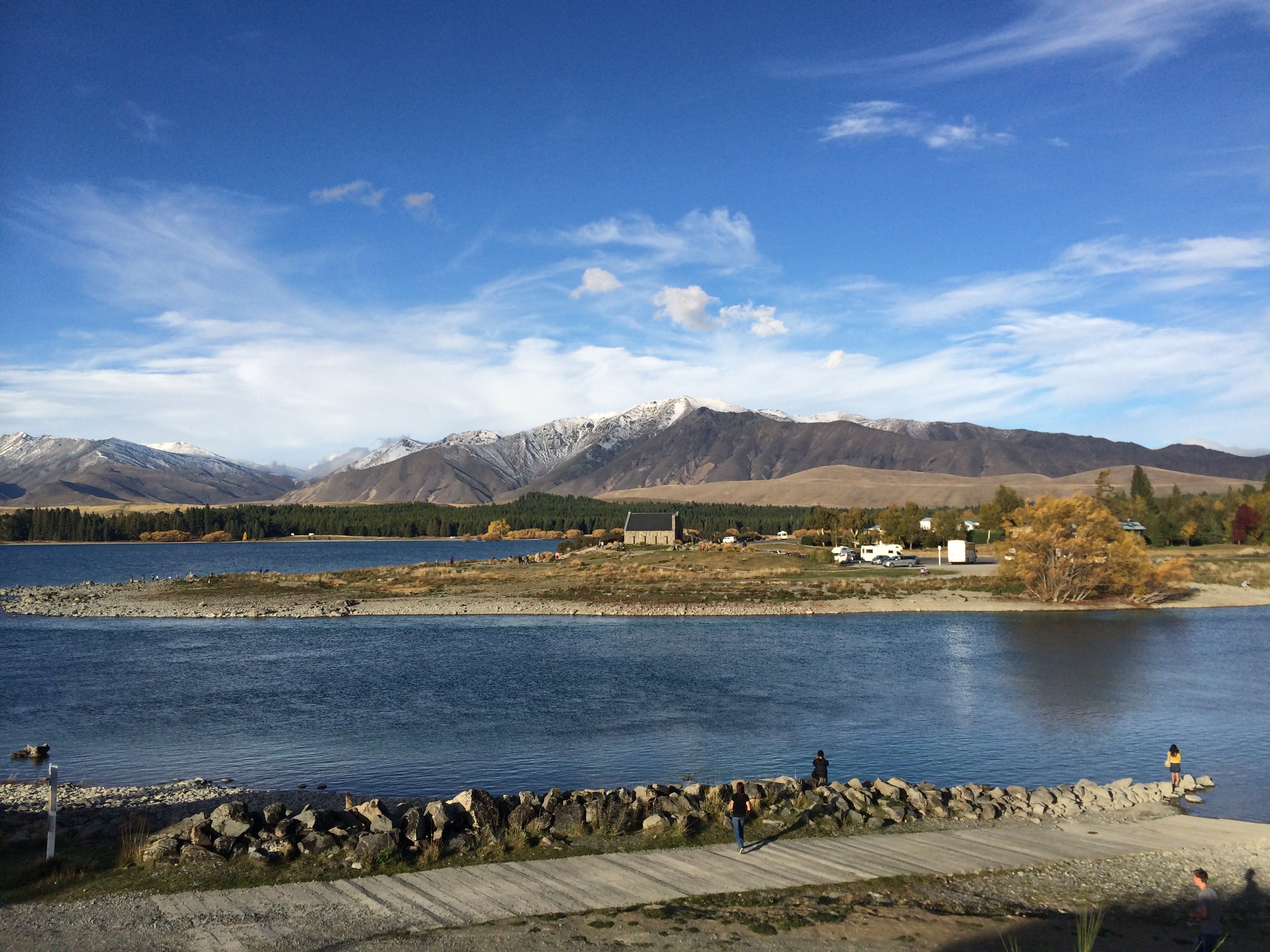
Thinking a little bit about Throwback Thursday made me realise that even in the space of less than a year, there have been so many twists and turns that it seems to be okay to do a throwback to only about three months ago. Specifically, to here:

IMG_5876


This is Lake Tekapo and is one of my favourite places ever. If you look closely, you can see the tiny chapel in the middle. Talk about views from the pews. It was one of my favourites from New Zealand when I was over there a decade ago, so going back this time was something special. Only a few hours outside Christchurch, but it felt like another world away from the construction and the temporariness of life there. It was a quite place, where I could get out a notepad and just mull over ideas and life in general.

Over time it had changed a little bit, but I was lucky enough to go there three separate times this year.

NZ wasn’t the place I needed to be any more, but I do miss the lakes and the mountains on a blue sky day…

Fortune Cookie

An Abundance Mindset

I really struggle with having an abundance mindset, but I’m trying. An abundance mindset is not believing that just because someone gets something it means you don’t. Even though my rational brain states that it’s not true, my emotional brain always tries to scream ‘mine’ and get me to run to the corner and hide.

I think I can firmly place how this all began. As a child, I played nicely and looked after my things. I’ve always been very careful with my ‘stuff’. I don’t consider myself to be materialistic in the sense that most people think; I don’t want fine art, the best things, or even things that are better than what everyone else. I’ve no desire at all to keep up with the Joneses. I just like my stuff to be my stuff. I’ve had been that way since I can remember. Then, when I was six, my baby sister was born and came into my life like a tornado (which, in fairness, she has pretty much remained ever since) and as a baby / toddler had no qualms about breaking my stuff or smearing it in melted chocolate that she had refused to relinquish from her grubby little fist for six hours.

Thus began the concept of ‘mine’. If I share, it will be taken from me and destroyed.

Of course, as an adult, take that attitude too far and you simply become cynical and bitter. So whilst I’ll probably never be great at sharing with the other kids, that doesn’t mean I can’t be happy for them when they have achievements and blessings in life. It might mean overcoming the worst parts of my nature, but I’m determined to give it a try.

Now give me my blog back. It’s mine…

Pre-Writing – The Playlist Creation

I don’t actually listen to music when I’m writing any more. I used to do it all the time, but when I made the transition to morning writing, it stopped almost instantly. I think it’s because I have a natural tendency towards good old fashioned rock, and at 6AM I don’t need a killer riff blasting into my pre-caffeinated brain.

Nevertheless, for each longer piece I’m writing (that is, anything from novella upwards), I always make myself a playlist. Every book I’ve ever written has a few songs that I strongly associate with it. I enjoy that. And just because I’m not listening to it while I’m actively writing, doesn’t mean it doesn’t have a purpose. I’ll copy the playlist onto my iPhone and burn a CD for the car. Then, during the day-to-day moments of life, it will be there, playing in the background. It’s a good way to keep the story ticking away in the back of my mind. When I’m stuck in traffic, especially, I find this useful. I’ve lost count of the number of scenes I’ve come up with, or plot holes I’ve daydreamed my way out of, whilst stuck behind a bus on the Wolverhampton ring road.

Writing is always about more than just putting a pen to paper (or fingers to keyboard). It is not solely words that go into making a story. People who have never tried it don’t realise what an immersive experience it is. There are connections in songs, yes, but also in that old record store from when you were a kid, a coffee shop where you met an old friend who’s laughter was so unusual it made it into your main character, or smell that was in the air the moment your life changed forever. All of these things make you who you are, and that comes through onto the page as you write.

So even if there’s no more air guitar before sunrise, I’ll still always want a playlist. Preferably with some great guitar solos in there somewhere…