Tag Archives: creativity

Why I achieve more by taking a proper break

I need a holiday. 

I know that is a phrase people use a lot. If you’re American, or some other nationality where vacations are your preferred terminology, then I apologise. I’ll be holidaying all the way through this post and beyond.

IMG_1032

I genuinely don’t understand people who don’t use all their annual leave. Especially in places where you get two weeks a year. I’d emigrate. Seriously. I was all set to move to a job in Canada until I realised I’d only get that much time off a year. A regular break allows you to rest. Recharge. Come back stronger and more creative than ever, in both your personal and business pursuits.

Anyway, I always want a holiday. Most people do. In a world where global travel is easier than ever, it’s a dream that is always tantalisingly in reach. But I’ve also reached that point where I know when I need one. The two things are very distinct. Needing one comes when the alternative is curling up into a ball each morning unable to face the prospect of another day of ‘stuff’.

When I need a holiday, anything that takes effort becomes ‘stuff’. Working out. Reading. Getting up. Brushing my teeth… Luckily, my requirements for a break are very simple:

No real connection with the outside world, other than emergency communication. Any tweets / blogposts to fill the gap are prescheduled. Wifi is a curse on holiday, not a blessing.

Some sun and sea is always nice.

I always gravitate to the ocean

I always gravitate to the ocean

Having someone cook for me. I love to cook, and I do all the cooking in this house, so having someone prepare meals for me always feels like a treat.

Time to read. Oh how I wish I had more time to read. I love being able to binge read on holiday.

Time to write. Specifically, time to come up with ideas. To brainstorm. To invent interesting characters and devious plots. To reconnect with the enjoyment of writing, rather than the business strategy that comes with it. Writing longhand in a cool notebook under a palm tree. Occasionally while channeling Hemingway with the alcohol to go with it…

Did I mention the sun?

Sleep, with no alarm. I tend to still wake before 7am on holiday, but I love being able to come round to a natural gentle alertness, rather than the bloody marimba ringtone on my iPhone.

European coffee. Let’s face it, it’s better than anything in any English-pretending-to-be-American-pretending-to-be-Italian coffee chain. You know who you are. Actual Italian coffee. Venice was particularly nice.

Venice

I think they are all perfectly good reasons. I also think we’re living in a world where stopping and taking time for yourself is increasingly put on the back burner, something you can get round to doing later. It’s one of the reasons why, in the western world, we’re raising a generation that is unlikely to outlive its parents, no matter what the miracles are in modern medicine. Don’t count on being able to get a bionic version by the time you need it. It might not be there. Don’t believe me? Where are those hover boards we were promised, huh?

If you value yourself, think about it. Give yourself a chance to do so much more, by occasionally doing so much less.

90 minute sleep cycles and writing routine

Anyone who knows me or who has been following this blog for a while knows that I am a huge fan of morning routine. This is the most important time of my day. It is my writing time. This time is GOLD.

Over the past few months, I’ve been trying to adjust to the fact I lose two mornings a week now to travel. My usual routine is to begin writing at six, but on those days I start travelling at six. I’m not going to tell you which I prefer. I think you already know the answer. If you’re my boss reading this, then you can choose to pretend it’s the travelling.

The thing that confused me most was that I seemed to struggle to recover so much on those days when I could do my routine as normal.

That was when I started to seriously look into the concept of the 90 minute sleep cycle. I haven’t mastered things just yet, but I’m starting to see some minor improvements.

You see, on the weeks I don’t have to travel, I have a regular bed time as well as wake up time. I’ve been doing my 6am morning routine for over four years now (maybe even longer) and my body found its evening bedtime naturally as a result.

The problem with adding the new travel to my schedule was that I was then so tired when I got back, I was going to bed an hour earlier to try and compensate, but somehow still felt terrible the next day. Having looked a bit more into the idea of 90 minute sleep cycles, I could start to see that I was probably actually making it worse without realising it.

This is still, of course, all theory for me. I’m tempted by the prospect of buying some kind of sleep tracker to see if what I believe and what is reality actually tie up. Perhaps the apple watch will ultimately track this. I don’t know, but I’m already looking for a reason to buy one. Not this year, obviously. I’ll let all those early adopters iron out all the bugs for me first. But anyway, I digress.

I’m going to continue to try to work my life around getting the most out of my sleep, so I can make the most out of my mornings. For anyone who wants to do more with their lives, then I strongly believe that making time for yourself before the rest of the world wakes up is the best way to do it. It takes commitment, and it takes using all the tips and tricks you can to make it work. Bed is, after all, a wonderful place to be. But I’ll be trying to make sure I stay in it for only n x 90 minutes at a time to make sure I wake up feeling ready to go, rather than just ready for coffee.*


*who am I kidding, I always wake up ready for coffee. That’s the real reason for waking up even if you’ve slept like a baby all night long… 

Awesome writing resource: Diversity Cross Check

I first heard about Diversity Cross Check on the Writing Excuses podcast (another amazing writing resource in itself).

So what is Diversity Cross Check? I’ll let them explain it for you….

Simple premise: You’re a writer interested in diversifying your characters, but you don’t share those experiences and you don’t want to offend anyone. A good resource is always those who understand firsthand what it’s like to live as such. So you visit the appropriate tag, find someone you’d like to work with, and contact them via whatever method they’ve provided.

How cool is that?

Often people lament about how little diversity there is in books. It seems an obvious thing to solve – write more diverse characters! Make them the protagonist! Avoid negative stereotypes!

It is easy, until you go to the next level down and start fleshing out said characters. Then you discover you have no idea what an Orthodox Jew would be doing at a certain point in their festive calendar – if you even know what that calendar is in the first place. Or the conflict a second generation immigrant from a specific nation in a certain city would be experiencing as they balance their new life against old world traditions and customs. Wikipedia can only go so far in answering these questions. It just provides more broad brush strokes for you to work with. The detail comes from those who live it.

The fear of accidental offence stops people from branching out from what they know. It’s limiting when it doesn’t need to be. Diversity Cross Check might be the best place to address an issue with a character you secretly want to write. Or it might ignite an interest in a minority waiting for someone brave enough to step forward and give them a main character voice.

Book review – Gone Girl

Gone Girl

Warning: mild spoilers ahead if you’ve got no idea at all about the book

There has been so much hype around Gone Girl that I was a bit hesitant about reading it. I’d managed to successfully avoid being spoilered, even though there was some pretty heavy marketing for the film. General rule of thumb for me though is that the more people like it, the less I do. Call me a rebel.

However, I actually really enjoyed the book. Without giving too much away, the only part that I didn’t massively like was the ending, but I think that is often the case with many books for plenty of readers. A completely satisfying ending is something which is exceptionally hard to pull off. For the last 50 pages or so, I could not see how the characters would be able to reach a resolution that maintained the tension that had been so expertly crafted through the rest of the book.

On saying that – I’m not sure I could imagine an alternative ending given what had happened up until that point, so I’m hardly in a position to criticise.

The most interesting bit about this book for me was the fact there wasn’t a single likeable character. Deliberately so. No good guy to root for. It takes some skill to keep the tension high when all of the characters are lacking in redeemable features and you don’t know which one you want to come out on top. This was compensated for by the use of a tightly plotted narrative instead, with plenty of twists and turns. There were a few parts where I didn’t want to read what happened next, because it made me feel anxious about how nasty things could get. Reading is about experiencing the whole range of human emotions, not just the good ones, and effectively creating this sensation is the mark of great writing in my opinion.

Would I recommend this book? Yes, I would, as long as you don’t mind unlikeable characters and edgy tension. If you like your books to be happily ever after with some redeeming romance, then it’s probably not going to be for you. It’s also quite long in comparison to a lot of thrillers, so you might want to make sure you’re prepared to be in it for the long haul.

I give it 4 out of 5 stars on my imaginary ratings system.


Helloooo March!

According to most people and popular media (so it must be true, right?) the most depressing day of the year is Blue Monday – the third Monday in January. Not for me. January isn’t a depressing month at all as far as I’m concerned – it’s February that’s the kicker. And today means it’s behind me for another year.

I’m a compulsive goal setter and personal development freak. Given the holiday downtime and resolution nature of the New Year, I’m generally fired up for January. I have plans. Ambitions. A reason to keep going even though my body is sluggish from too much Christmas food. And because I don’t make resolutions on the fly on 1st January, I have the power to keep going through Blue Monday.

Now, February is unique. It is the only month with 28 days and for me, each of those days feels like 2 regular month days. February drags. It’s a combination of factors.

Give me my sun

Living in England most of the time means that by February the dark nights are getting tiresome. The days are grey and dull. I’m starting to dream of sunshine but aware that lying out in the heat is still a long, long time away.

Goals and habits hit the tough spot

Even if you’re lucky enough to have stayed on track all the way through January, you’re probably about to hit the hard bit. It used to be that people believed it took 21 days to create a habit, but more recent research indicates it is closer to 66. That’s an average. For some habits it will be much, much longer. This is divided into three sections. The first third, when it is painful and horrible but you still have the motivational x-factor. The second third, where it’s still painful but you’re not seeing the benefits yet. The final third, where it stops being painful and some benefits also start to trickle through. February tends to embrace that middle third with open arms and strokes you with misery.

Collaborative projects start to wobble

These can be passion-driven projects or work related projects. When everyone comes back after the holidays in January, they’re refreshed. Projects seem doable. The plan is put in place. Of course, no project ever goes one hundred per cent according to plan, so February is when people start to become out of sync. They work at difference focus levels, and emotional commitment to the project starts to waver. By the time these have been worked through, there is no avoiding the negative impact on the other areas of life.

So, now I get to welcome March with open arms. In four weeks the clocks change and the extra sunlight will make it easier to escape the soft warm clutches of the duvet. Today, I have set a few hours aside to review my goals and plans as set out at the beginning of the year and allow myself to course correct.

I sit down with my fieldnotes book and journal for a little while, trying to get to the root of what I’m feeling and any obstacles I’m putting in the way of myself subconsciously. By using the bullet journal approach, it becomes clear which tasks I’ve been deferring just a little too frequently.

Just doing that can be scary, but it will allow me to draw a line under the past four weeks and move on once more with a new sense of purpose. The new habits are either engrained or are about to hit the payoff stage. If I’ve not really kept up with them, I can ask myself why and see if they are still aligned with the bigger picture I have for the year.

Remember: March = momentum, if you let it.

Fortune Cookie

Writing and labels

Yesterday, I was reading this article by Aminatta Forna entitled ‘don’t judge a book by its author’ and I found it absolutely captivating. It got me thinking about something which has been brewing at the back of my mind for a long time. It’s all caught up in that messy understanding of what I write.

When I get the opportunity to meet and mingle with other writers, the question often pops up. What do you write? I always hesitate and the word seems to get stuck at the back of my throat because it’s so obvious, surely: stories. The confusion and uncertainty comes from knowing the question that is really being asked is ‘which genre do you write?’

Which section of which bookshelf would you like to sit on?

But my honest answer is always in that one word. I generally waffle a bit about writing anything and everything, passing myself off as a Jack of all trades. Yet very few authors actually make it down that route. We all know that Neil Gaiman is the notable exception, even forgiven for that mild transgression regarding Duran Duran. All others must not pass without first declaring their pigeonhole.

I’ve never written science fiction. I don’t care enough about getting the science part right to make it an enjoyable experience for me or anyone else who might then get to read it. Fantasy, with much more leeway to veer around, I’ve tried. Horror. Romance. Short stories. YA. So called general fiction. I find a story rattling around in my brain and I write it down. It never crosses my mind to think in terms of genre first. A character whispers in my ear that they have something interesting to tell me and if they happen to be a teenager, a seventeenth century serving wench or a werehamster* then so be it.

I’m not a single characteristic. I’m a messy, complex human being. Likewise, I can’t see myself ever getting joy from being trapped in a single genre. But there is one thing I’m starting to realise:

I really don’t mind.

You can keep your labels to yourself.


*Never actually written a thing with a werehamster

Sheaffer Prelude Fountain Pen Review

This was an amazing surprise as a Christmas gift from one of my best friends, but I’m not going to let that bias me in writing a review. That said, I have really enjoyed using this pen.

My first tentative step back towards using fountain pens was a Sheaffer, so I think I’ll always have a bit of a soft spot for the brand. I think they’re quite underrated in the pen world, when actually they are a good, reliable every day fountain pen.

Sheaffer Prelide

It is a beautiful looking pen, with a lovely two-tone nib. I particularly like the rubberised grip section – a key bugbear for people with the 100 or 300 models. They have a smooth metal grip, which tends to lead to holding the pen slightly higher in order to compensate for any sliding.

The Prelude also has a slightly weightier feel, which means it feels substantial in the hand. Solid. It creates the sensation of writing with something that is quite serious about its job.

The brushed steel housing does that quite well too, come to think about it.

The lay down of ink is quite wet, so I would suggest using it with a relatively good quality paper. I love using my field notes, but the bleed and feathering in these books is far too well documented for me to need to go into it here. I don’t mind it too much, so have happily used it to plan out my writing for next week in the Ambition Edition 56-Week Date Book:

sheaffer prelude field notes planning


I’ve got a medium nib which is a good compromise for me with this pen. My writing actually should require a fine nib as it is relatively small and jerky, but that always comes at the cost of smoothness. Fine nibs, regardless of material, always feel scratchy to me, so I tend to use them for simple, every day writing. Scribbling, for want of a better word. The medium nib in this pen is smooth and the size simply forces me to make more leisurely notes. Perfect for a Sunday afternoon planning or some idle story plotting.

At the moment I’m using the black ink cartridge it came with, because I think a traditional colour works with the traditional style of the pen. A blue or blue-black would be fine too, but I can’t see myself using turquoise or orange or similar in here. I may be pushed to purple, but that’s because I’d give that colour at least one go with just about everything.

So, if this pen wasn’t a gift, would I have bought it for myself? Hell yes.

Would I recommend it to others? Again, yes. Especially for people starting out. It’s not a ‘shove into your bag’ pen or anything like that. But the grip combined with the nib makes for a writing experience that is encouraging enough to keep people dipping their toes (and nibs) into the fountain pen  world further.


Writing Excuses – Gender / Age Swap

I’ve mentioned before that I’m a massive fan of the Writing Excuses podcast. For Season 10 they’re doing things a little differently, with writing exercises at the end of most episodes, rather than simple writing prompts. I’ve found these much more engaging, and have actually found myself working with them more than I ever did with the prompts.

writingexcuses

As part of the exercise for Episode 2, we had to take a short synopsis we’d created in Episode 1 and do a gender / age swap on the characters. This led to a massive lightbulb moment.

I would say that I love to write strong female characters, largely because we still live in a world where we have to use terms like ‘strong female characters’. Anyhoo, I found myself merrily swapping until the third character when I thought ‘no, I’ll keep this as a man otherwise there’ll be too many women’.

Feel free to internet slap me. I did to myself.

Of course, in writing down my original little synopsis, at no point did I think to myself to hold on, there were far too many men going on here. In my defence, it was a piece of historical fiction, so I do have the weight of history behind me when making women secondary in the key moments. Yet in an entirely fictional realm, I had automatically restricted the characters, and the only female in the story was about as dynamic as a Disney princess. Not one of the newer ones either. One of the ones that do the cleaning until their prince comes and they can finally live out the rest of their mundane lives in a better frock. Whoop!

Completing the swap, the synopsis now actually seems much less mundane and prosaic; something I could actually consider building up into something bigger, rather than just a simple writing exercise done for fun. The question of why these characters weren’t the ones that presented to me intuitively is something I will have to dig deeper within myself to try and understand. I’m hoping the awareness at least will mean I pause for a moment next time and ask myself: am I just following the well-worn path that society and history has already conveniently laid out in front of me?

You can access the writing excuses podcast here. It’s well worth checking out.

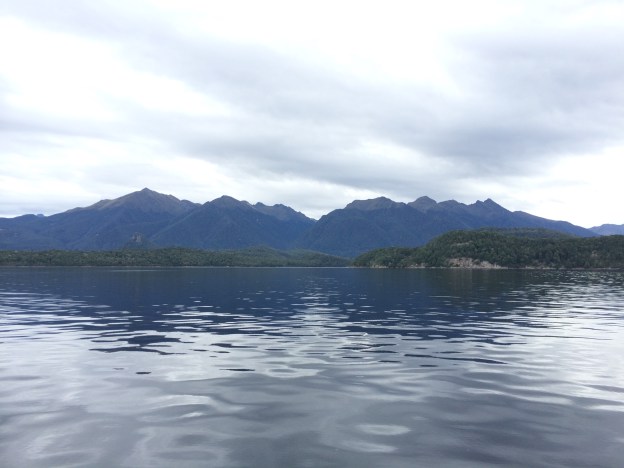
The majesty of Doubtful Sound, New Zealand

It’s been a while since I’ve done a tbt for the Antipodean part of the world, so I thought I’d take a quick trip down memory lane to Doubtful Sound.

As this time last year I was landing in Christchurch for my writing sabbatical, the one thing I wanted to do most was make sure I travelled down the southern island to visit this unique part of the world.

Doubtful Sound (and it’s neighbour, the better known Milford Sound) is pretty much as far south as you can get in the world without setting foot in Antarctica. Not always easy to get to, it was a place I couldn’t reach the last time I was in New Zealand because that would have required all kinds of snow chains and adventuring in a campervan that I wasn’t quite ready for. This time I managed to get there during late Spring which meant the destination itself was the focus, and not the hair raising attempts to get there. Which is good, because the place itself is so remote and peaceful, those were the feelings I wanted to take away with me.

Doubtful Sound


The weather wasn’t the greatest, but as it is one of the wettest places in the country, the fact it hadn’t rained for nearly three weeks was being considered a drought. Of course, given our gift of making rain happen, we soon brought the spell of good weather to an end as we set sail into the low hanging mist.

Doubtful Sound Boat


The thing about the Sounds in New Zealand is that they have very little top soil, with the hard bedrock of the mountain being just below the surface. This means that even a moderate amount of rainfall causes the steep mountainsides to erupt in an abundance of waterfalls. Despite the cold and wet, as night began to fall we took some kayaks and went off to see these up close and personal. The silence was astounding. There were only fifty or so of us within miles and no other manmade sound.

Waterfalls of Doubtful Sound

If there is any possibility left for peace and quiet on earth, I think this is where I would always like to find it.

For anyone thinking of travelling to this part of the world, I would definitely recommend it. Having spoken to a lot of people, Doubtful Sound jumped to the top of the list over Milford Sound, which is a bit more of a commercial operation. To fully experience the qualities this part of the world can bring, the fewer the numbers with you the better. You can get all the loud hijinks you want later as you travel back up to Queenstown.

A lot can happen in a year…

Apologies for the lack of posting, but I’m having part of downstairs remodelled into a kitchen/diner, and attempting to live and work on only one floor has so far proved to be more challenging than I had anticipated.

Today is the first time I’ve had to just sit, take a breath and look around. I realised then that this time last year I was equally as surrounded by boxes, about to pack a few final things and head off to New Zealand for six months. It was a good way to remind myself that no matter how manic things feel right now, they are nothing compared to how things were back then.

A lot has changed. I’ve had the chance to travel a lot more and it’s been a year since I’ve worked for my old company. I still find myself in old work mode, especially now I’m driving up and down motorways so much and stopping at services. I look at the posters and the screens and can see touches of things I was once involved in that have carried on without me. I’m a sucker for nostalgia.

But anyway, before I drift off down memory lane, I thought I’d share the one insight I’ve had whilst trying to continue my writing and 2015 health resolutions and all that other good stuff that seemed so shiny on January 1st: Be Kind To Yourself.

You can have a plan, you can have a plan B for that matter, but sometimes it will still be an absolute nightmare to keep going when life throws you a curveball. Or in this instance, the lack of a kettle. No kettle equals no coffee at 6am and quite frankly, that is never a good way for me to start my day. It’s not that great for anyone around me either. Having intermittent access to water means I’m not drinking my 8 pints a day. And eating meals that come from either restaurants or the microwave is already starting to show in all the wrong places. I look at my weekly tasks and there is a significant lack of ticks in the boxes.

All of which means I can either try to continue with some things and do them badly, give up completely, or option number 3: acknowledge the difficulties, do the things I can and then make a solid plan to move more on them later. For most things, this is the option I’ve accepted.

Because I’m not ready to quit, but I’m not going to get down on myself for the things I can’t control either. At the end of January, I’ll get up, dust myself off (quite literally, as there is plaster dust in every ***ing room) and start again.