Tag Archives: bullet journal

Notebooks of 2014

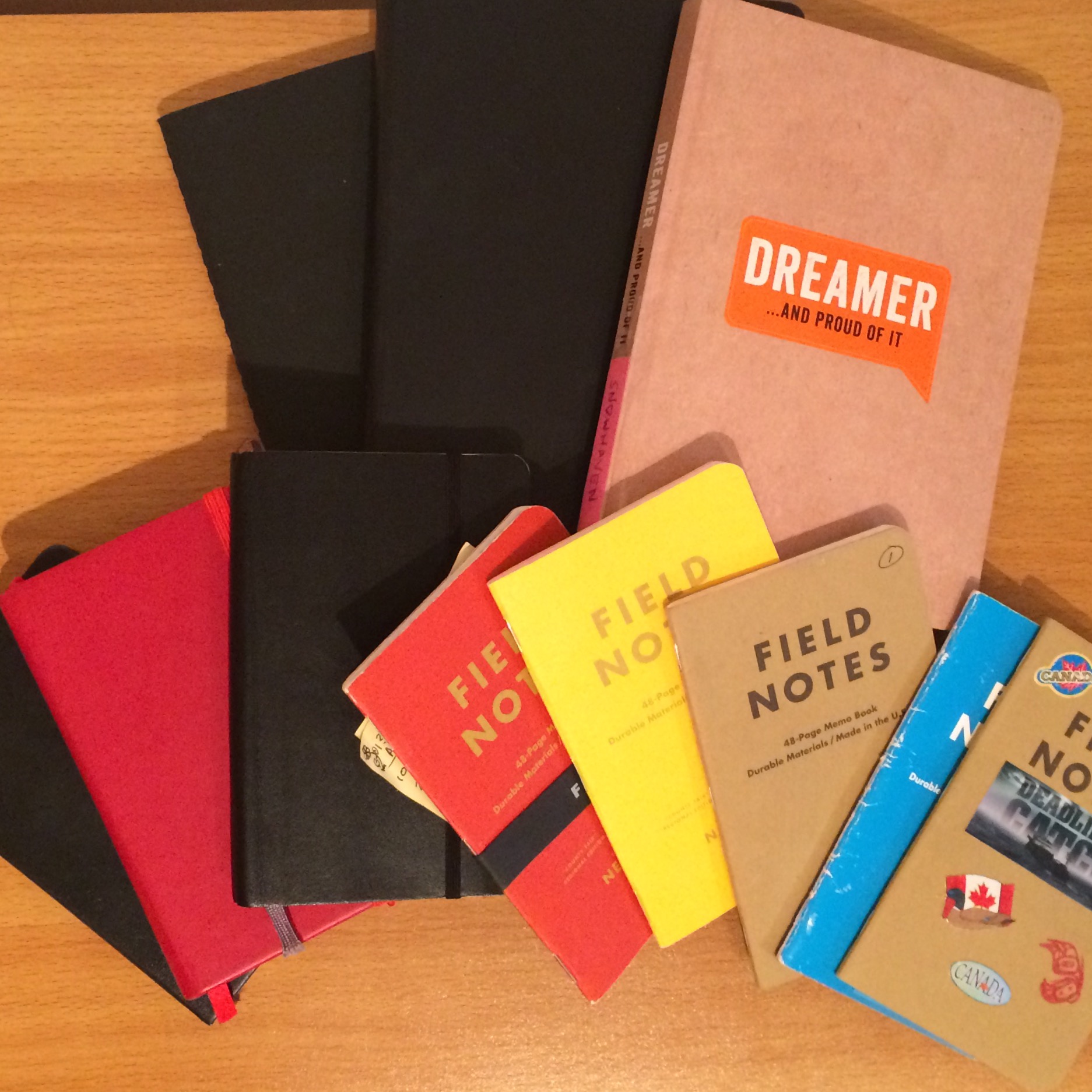
I have written a lot this year.

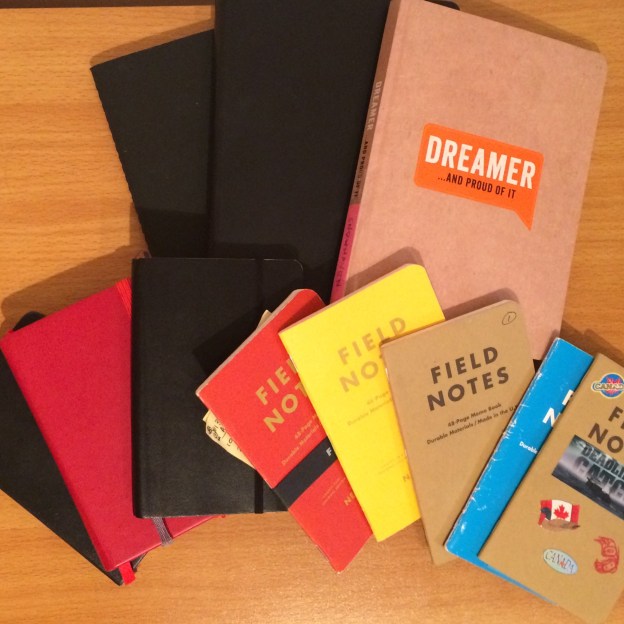
I reached that conclusion when I looked back over the notebooks I have completed over the past 12 months. Yes, all of these books are full (other than a few pages at the end sometimes). I clearly have a problem. One that I have zero intention of seeking treatment for.

2014 Notebooks

At about this time last year, I discovered the bullet journal system by Ryder Carroll. I’ve talked about implementing it before. I freely admit that I don’t use the system in its entirety, and I have changed the way I’ve used it over time, but the basics are fantastic. For anyone who wants to capture ideas in a notebook, then it is the best way to do it I’ve ever come across. Throw in my discovery of Field Notes and I’m one happy lady.

My plan for 2015? To keep going. One day I hope to look back on these and remember a life lived to the full. Isn’t that what we all want really? The places I’ve travelled, the people I’ve met. In those pages there are story ideas, snippets of conversations, journal entries and simple to do lists, all of which mark the passing of time and the movement of my own story. It may never mean anything to anyone else, but it does to me.

Review: Field Notes – Ambition Edition

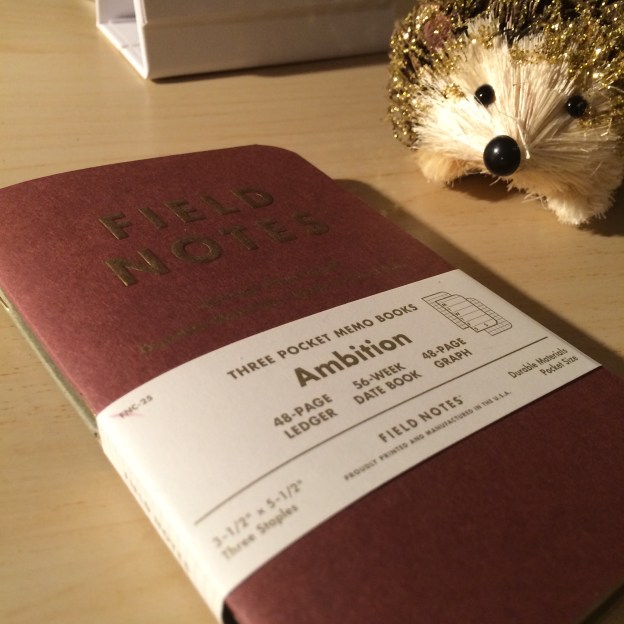
I’m going to go out on a limb and say that the Field Notes Ambition Edition is one of my favourites. It was this edition that has finally made me a colors subscriber.

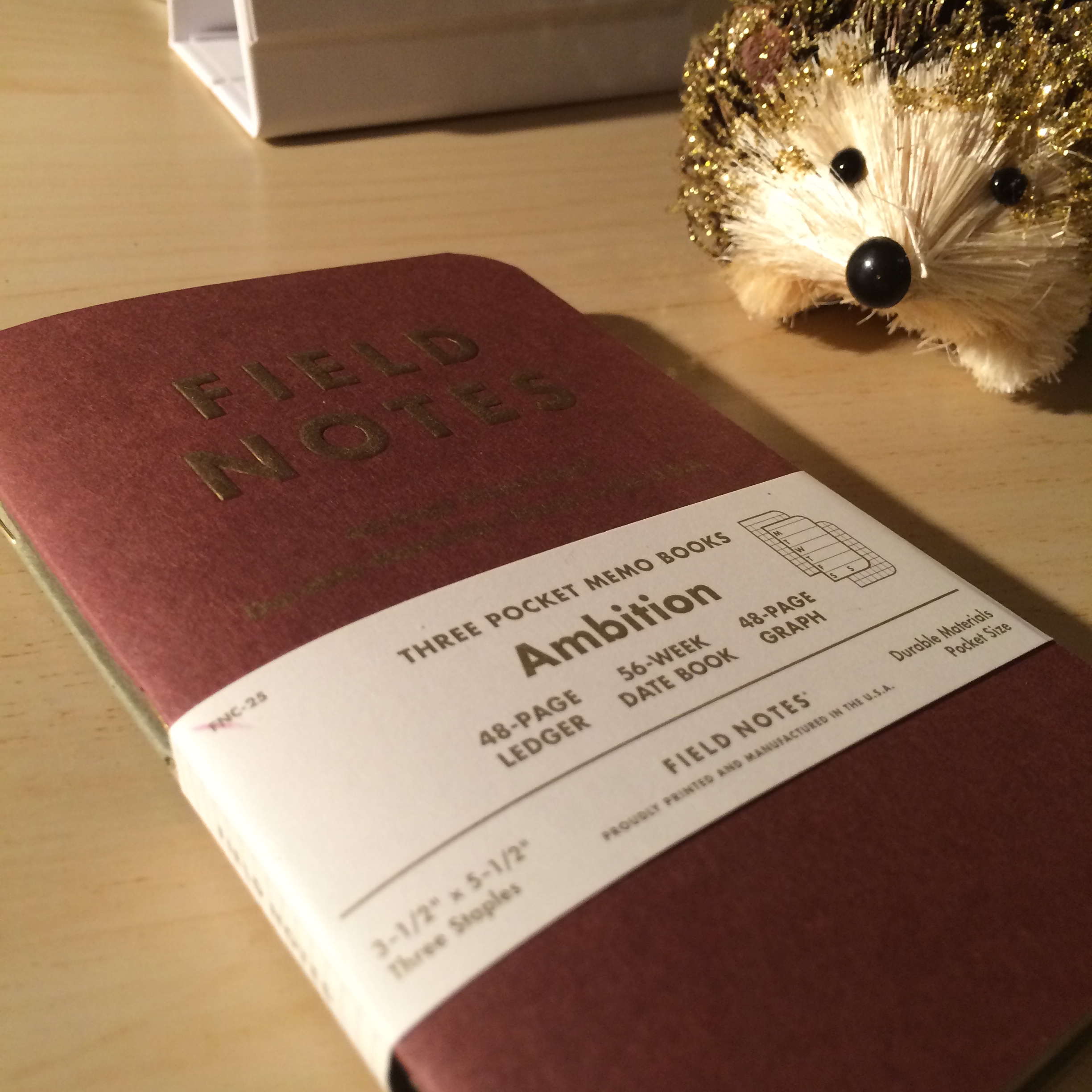
Presence of hedgehog makes it even better

Presence of hedgehog makes it even better

They have been pushing the boundaries of what they could do with Field Notes over the past few editions, so I was wondering just how far they would be able to go with the winter release. There is a fine line between genius and crazy and part of me has been dreading them crossing it. Instead, by going with the three different types of notebooks in one pack, I think they’ve managed to hit a sweet spot.

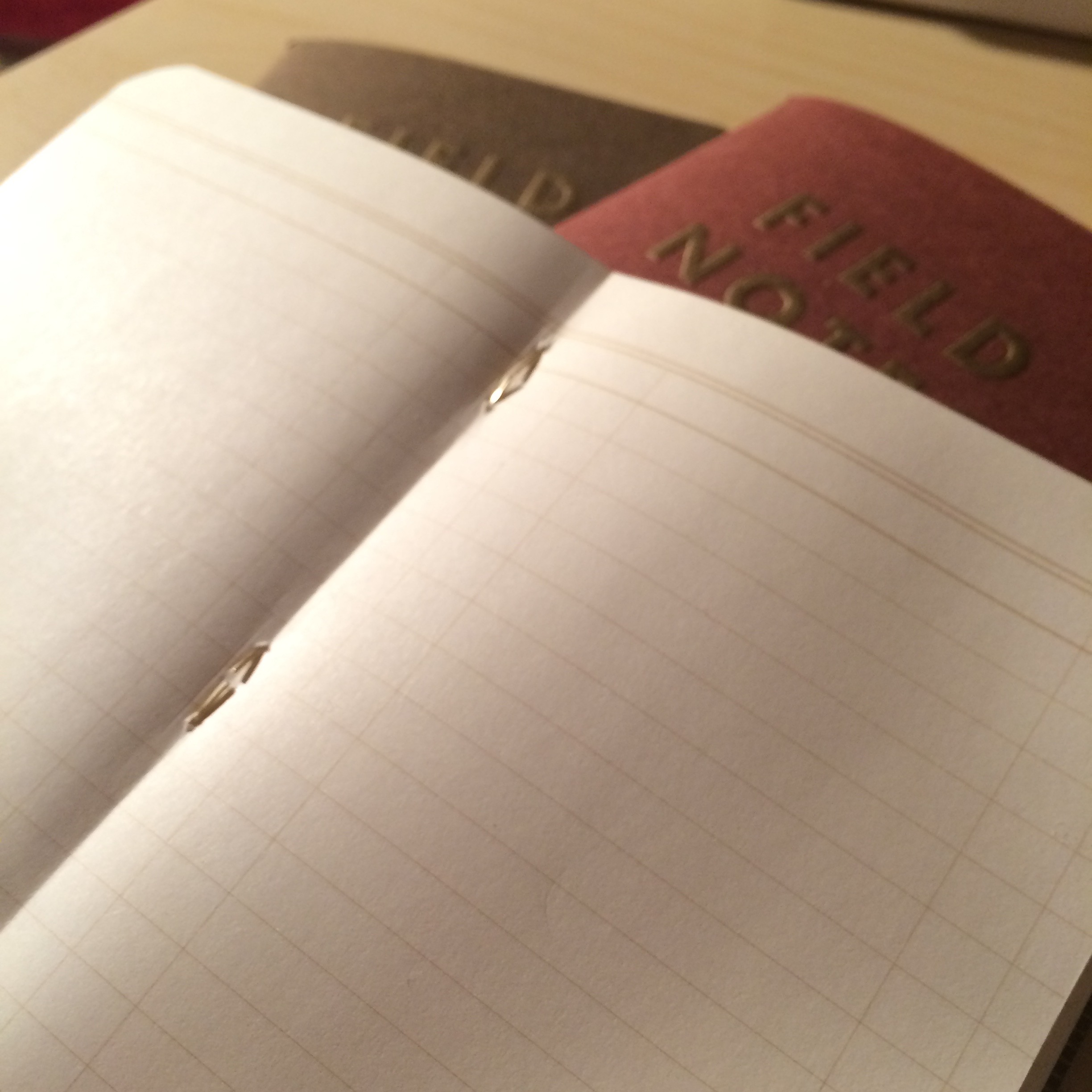
The memo book itself is a lovely colour (wine) and more importantly for me, uses grid paper. I love grid and the form factor and size makes it perfect for an everyday carry bullet journal:

Field Notes Memo Book

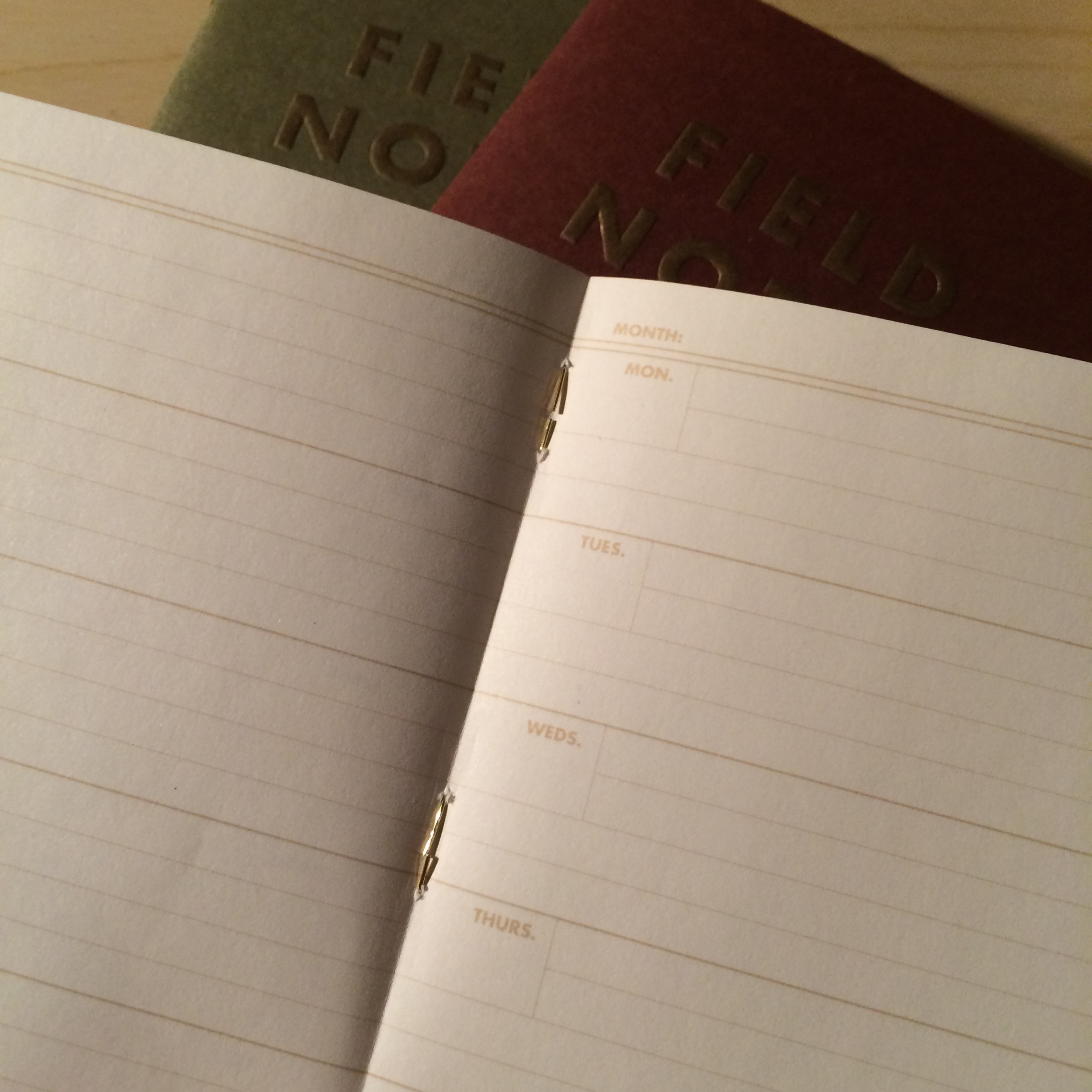
Secondly, and a sensible one for the time of year, I can certainly see the appeal of the 56 Week date book. They’ve also avoided actually dating the pages which, given the fact that anyone who regularly buys Field Notes is likely to work through their existing pack before opening the next one, means it is not rendered immediately useless if that doesn’t happen until March:

Field Notes Date Book

Finally, the ledger book. Now, this one causes me a bit of a dilemma. I really like it, but I’m not sure how to use it. Not in a way that is anything other than a regular notebook, which almost feels a bit of a waste. I’m not that into sport, and all my financials are done on a spreadsheet. If anyone has any suggestions then please let me know, as I’m struggling a bit to come up with something creative.

Field Notes Ledger

After the brightness of Unexposed, I love the muted colours of these books. They work with the gold trim to create a old school sense of style which I’m very comfortable with. Also the sound of that trim cracking as you open the pages for the first time is intensely satisfying in a way that only notebook addicts will understand. I can see them coming out at work without causing any raised eyebrows (Unexposed was about as far from corporate as you can get without spitting in the eye of your CEO).

Thanks of course go to Mr Brad Dowdy, the Pen Addict himself, for getting me interested in Field Notes in the first place. You should check out his website if you haven’t already. Without him, I would be emotionally poorer (but certainly financially richer…)

How to survive NanoWrimo

Have you signed yourself up for NanoWrimo? If you have, then well done. Pat yourself on the back and prepare for some hard work. But hopefully you’ll find it a lot of fun too.

I am something of a Nano veteran. I did my first one a very long time ago (2001 I think) and have only missed two years since, both of which were due to being out of the country for the entirety of the month. For me, I love the challenge. My daily writing habit already has me at a minimum of 1000 words before breakfast, so Nano doesn’t step it up that much of a notch for me.

Which is why I do NanoWrimo hardcore.

The first attempt, due to my super competitive nature, I completed in two weeks, rather than the whole month. Every year since then, I’ve tried to shave a day off. Sometimes I fail, sometimes I succeed. But my goal now is to do it in a week. I’ve achieved that twice; both times whilst holding down a full time (and fairly hour intensive) job.

This year I will have no choice. Due to other commitments, I only have the first seven days when I can write, so it is make or break. Two of those days will include commutes to other parts of the country. Fun times and the fast track to a mental breakdown. So how do you survive NanoWrimo?

nanowrimo-logo

Be honest with yourself

If you’re planning to do NanoWrimo over 30 days like a normal, sane person, then you need to be honest with yourself about your other commitments for the month. Know that you have a friend’s birthday one of the Fridays and that’s your best writing time? Take that day out and recalculate your overall word count. It might mean that on the days you are writing you have to do 3000 words instead, but at least you’ll know. Otherwise, you get to the last week and see that you have an almighty push to try to make it.

Don’t start on the back foot

NanoWrimo doesn’t always start on the most convenient day. Depending on what is going on in your life, then it may clash with a multitude of other commitments. Know this, and still set aside the time to write on day one. There is nothing more disheartening than going in on day three and seeing everyone’s word counts roaring off into the distance in a cloud of dust. Start. Like anything in life, that is the most important step.

Don’t edit

I know this is the whole point of NanoWrimo, but it is worth repeating. Don’t know if your clear blue sea is turquoise or aqua marine? Who cares? Don’t waste a few minutes googling colour palettes to see which one is the closest to the image in your mind’s eye. Add all those little distractions and your writing will slow way down. These things do not matter in a first draft.

Have a plan

Plotting prior to 1st November is completely within the rules. If this is your first time doing NanoWrimo, or sustained writing in general, it might seem enough to have a great character or idea. Trust me, when it’s after midnight and you still have 500 words before you hit your word count, then it won’t be. If you enjoy writing on the fly, then I’m not suggesting you pin down every chapter in excruciating detail. I would simply suggest having at least 5 key plot points written down and know where they fit in your overall story arc. That way, you’ll always have something to be working towards when the words start to dry up.

Be kind to your body

For many people, NanoWrimo is their first attempt at consistent writing. It is awesome for that. It also means sitting for a long time. Be sensible. Make sure your back and wrists are getting the support they need. It’s meant to be fun, not a quick route to a lifetime of pins and needles in your extremities.

Have fun

Yes, that’s my final point. Enjoy it. Even though I go crazy and it can be a special type of self-inflicted stress, I love every minute of it.

Good luck! More importantly, just keep going!

nanowrimo-logo

Waterman 512v Fountain Pen Review

It’s no secret that over the past year I have rediscovered my love of longhand writing. Slowly but surely, my fascination with fountain pens has grown, so when I spotted a chance to get my hands on a Waterman 512v I took it:

waterman quote

Forgive the terrible penmanship and focus on the inspiring quote instead.

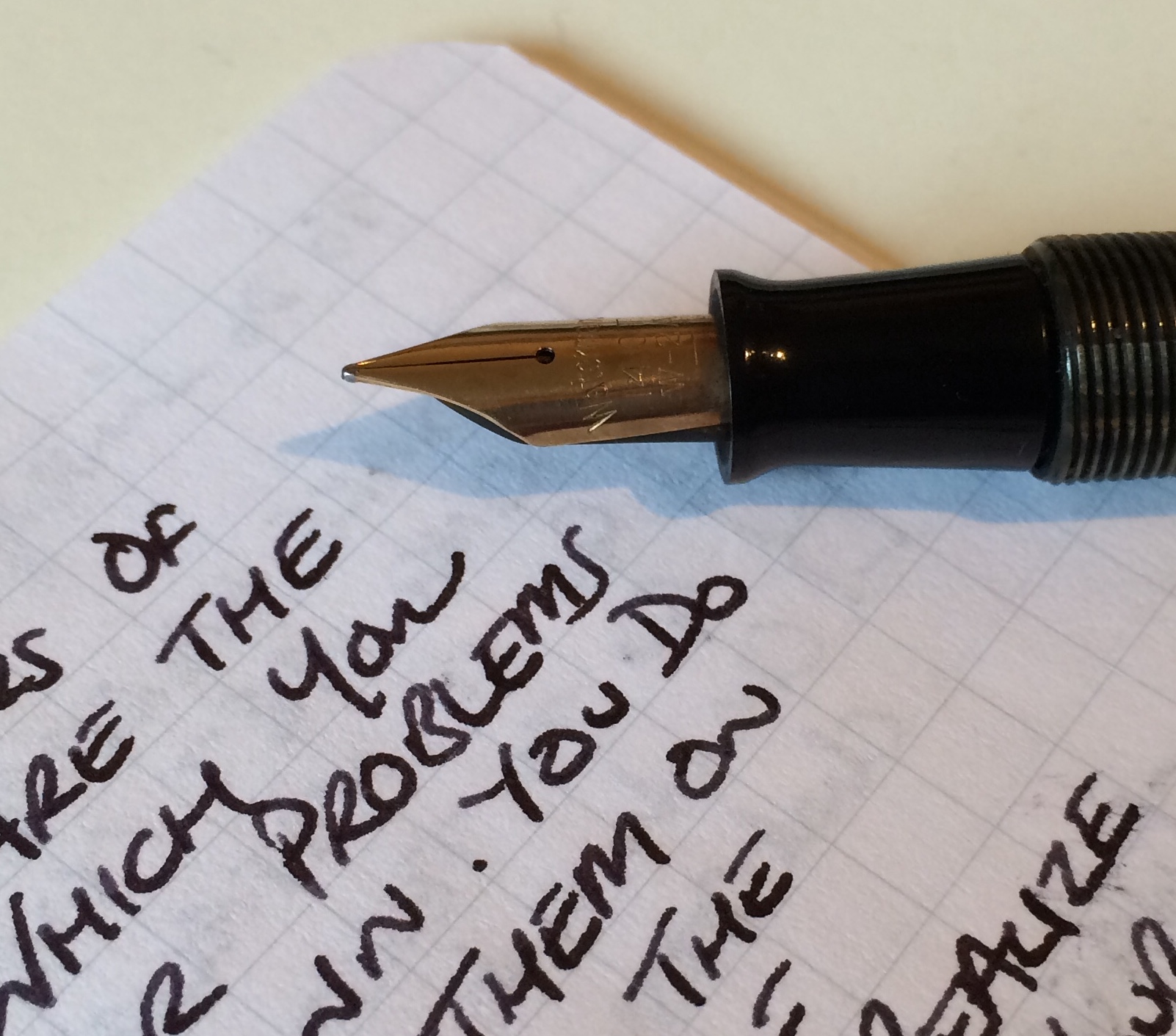
I was really surprised at how light and small this pen was. Uncapped it comes in at under 4 inches, so I’ve found that I really need to have it posted to make it comfortable. If you don’t like posting your pens, I’m not sure it would be for you. I love the nib though, even if it is second hand and not quite as smooth as it could be. It feels loved.

waterman nib


It’s an old fashioned lever system refill, which isn’t as simple as my Sheaffer convertor, but I’ve only had one accident (and that was with some purple ink all over my fingers, lovely). The flow of ink isn’t too wet and it was surprisingly good as an everyday pen. I tried it for a week with my Field Notes and there was virtually no feathering or bleed through, despite the fact Field Notes paper is not particularly designed to be fountain pen friendly. Even scribbling away in a fast, bullet journal style way of writing didn’t cause any misses or scratches.

waterman bullet

Sadly, I could find very little information out there on the interwebz about the Waterman 512v, so I thought I would do this little review just in case anyone else was considering purchasing one. If you don’t mind fiddling around with ink rather than cartridges, then I would say go for it. I’d happily shove it in my pocket and go.


Fixed Schedule Writing In An Unscheduled Life

I’m spending a lot of time on the road lately. Not in a glamorous, jet-setting kind of way. Mainly on roads that start with M, in fact.

Normally I love travel. It’s a way to recharge, to be inspired, to discover something new. Hopefully there will be a little bit more of that before the year ends. For now though, it’s more business hotels than spa resorts and swimming pools under blue skies.

Even though I love the unpredictable adventure of travel, I need routine in my writing. Combining the two is not that easy.

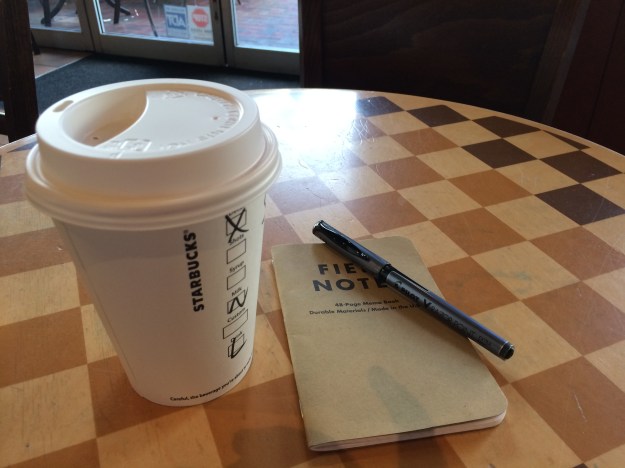
Writing from my home desk isn’t so bad, but writing from hotel rooms is a bit uninspiring. I’m starting to find coffee shops a bit more freeing, although I generally need to have headphones in to avoid being nosy distracted by the conversation. They also force me to write longhand, which makes me focus more on my words.

The net effect of all this is a serious downturn in production. Which sounds a bit businesslike, but writing keeps me sane. Actually completing stories and getting them out of my head is the most rewarding thing I do. I’d like to think that if I ever have kids then they would be more rewarding but quite frankly, I wouldn’t put money on it.

IMG_5578

Solutions

So, in an attempt to not be loopy by Christmas, I’ve started exploring some strategies to help me get back on track.

Acknowledging Energy Levels: Currently I’m covering hundreds of miles each week, so if I have a four hour drive home one evening and crawl into the house at nine, then I should take it easy on myself if I get up an hour later the next morning. I can’t seem to shake the guilt though – not to mention the fact my body insists I wake up anyway – so I have started to allow this to be non writing time. Instead, by focussing on more routine tasks, like website maintenance and reading articles, I get those tasks off my list that I would usually do at the end of the day or weekends.

Taking Better Notes: Ideas come to me at odd times when I’m busy.  I’m trying to make sure that random flashes of inspiration and ideas get captured in a notebook so I can dig them back out when the right time comes. Bullet Journaling is a great way of helping with this.

I Don’t Feel Like Writing (But I’m Doing It Anyway): If I focus on only writing in the morning because that’s when it comes easiest to me then words just won’t get written. Instead, I’m trying to make myself do it later in the day. Creativity doesn’t come as naturally to me in the evenings, so I’ve been spending more time in places that do add a spark of inspiration. This was how I rediscovered the enjoyment of writing with a pen and glorious notebook in coffee shops (decaf, naturally).

It’s not working 100%, so I’m totally open to new ideas and suggestions if there is something working for you?

Letters From The Past, Thanks To FutureMe.org

About 9 months ago, I was on a nice beach holiday, reading Quitter and Start by Jon Acuff. It was there that I first read about the FutureMe.org website. I made a note of it to investigate when I got back. Essentially, it allows you to type an email to your future self, sending it to arrive on a date of your choice. This can have all kinds of purposes. For me, I wanted to keep my future self going in the direction I want to be heading.

You see, the previous six months had been a roller coaster of life spinning out of control. The highs had been high but the lows had also been super low. Life does that to you sometimes. You have to learn to roll with the punches. But because of that, a creeping sense of dissatisfaction had begun to pervade my life. I knew I was heading towards a point where I might be able to make some changes. I wasn’t sure yet what they were going to be, but as I sat there, toes in the sand, honestly assessing my life and scribbling everything in my notepad to make me accountable, I was determined to do something.

Sadly, I’d done (to a lesser extent) the same thing on previous holidays. One of the things I had confessed to in my notepad was not having the courage to do some things, nor the motivation to do others. Therefore, when I penned my email to my future self, I wanted to be kind, but also realistic.

It arrived this morning:

Dear FutureMe,

So you’ve just come back from two sunny weeks in Spain, where you did a lot of talking and thinking and list making for the future. You often do that on holiday. But this time, you wanted it to be different. This time you really wanted to mean it.

I strongly suspect that when you get this, you won’t have made the wild progress that you want. Your dreams won’t have all magically come true via a lottery win. But over the next few months after writing this, you will have been making some of the biggest decisions ever. The ones that will shape your life. The ones that will start you on the road to being something and someone you want to be. Remember that.

Remember it, because I suspect when you’re reading this, then the reality you are living in won’t be massively different from the one I am writing this in. That doesn’t mean it’s time to quit. Just look yourself in the eye and ask if you’re really doing everything you can to make the life you want happen. If you can, then great. If you can’t, then pick yourself up and get going again. Keep taking the steps. Keep hustling. Keep going.

If, by some chance you are everything that you were thinking about during this last holiday, then congratulations. Keep being the best you can be. Don’t get lazy, arrogant or sloppy. Be the person you need to be for the people who love you most. Keep living your life so you can look yourself in the eye.

I hope, regardless of anything else, you’ve done those things you needed to do to get some self-belief.

Keep going kiddo.

That is it, completely unedited or censored.

Have I made some changes? Yes, I’ve got to spend six months in New Zealand really working on what matters most to me. Am I a published author yet? No, but I’m trying and I continue to try. I’m exploring self-publishing too, so that I can continue to grow and learn about the industry as it rapidly changes alongside me.

The reality is also that I’m heading back to the UK soon, at least for the immediate future. So perhaps if I had chosen to not have the mail arrive now, but instead a month from now, the geographical context might have made me feel differently. I don’t know. But that’s not really the point. It arrived now, and gave me a little bit of faith for the next steps.Today I will write another one. I’d recommend that you do too.

More info here:

Moleskine vs Field Notes – Pocket Notebook Review

It seems that pocket notebooks are definitely back in fashion at the moment. The world, thanks to the internet and kickstarter, has become awash with them. As a writer, I’ve carried a notebook around with me for most of my life, so I decided that this is one area I definitely have an opinion on.

Despite the countless brands, the current two front runners are Moleskine and Field Notes. I’ve only recently succumbed to buying Field Notes as they are quite tricky to get hold of outside America without making a bit of an effort. However, I’d heard so much about them that I thought I would have to give them a try.

Both notebooks discussed below have gone through a complete lifecycle in my handbag (purse to any US readers, obviously). Despite all those hardy, manly, everyday carry instagram shots, I don’t think anything competes with the assortment of crap I carry around with me on a daily basis that these notepads have had to survive next to.

Don’t Judge A Book By Its Cover

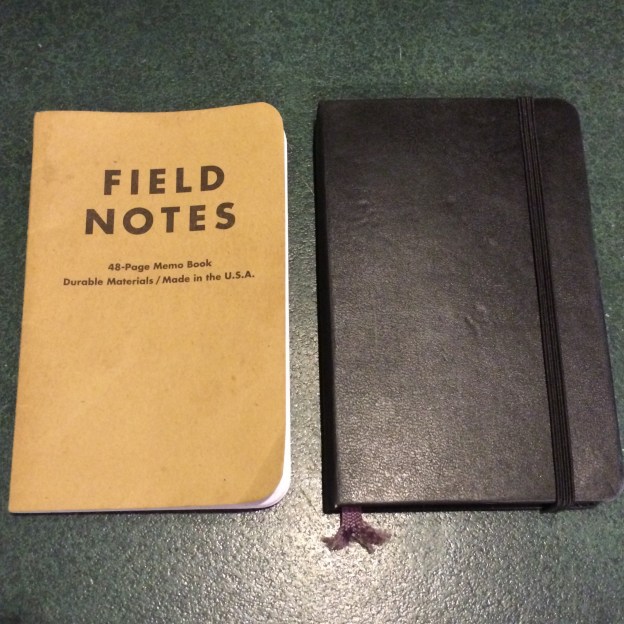
Except in this instance. The hardcover pocket size Moleskine stands up well to most environments. It’s still got a lot of trend factor, as well as standing up to approval in the boardroom meetings. Because I use a hardcover one, it makes it easier to grab and write if there isn’t a surface available. Oddly, out in the field, using Field Notes is actually more difficult in this sense. Field Notes as a brand has a definite cover cool factor right now, especially some of the limited addition colours ones. But by its very nature, it is more casual; while it might provoke a bit of interest in meetings, it’s not going to be taken as seriously in a corporate environment. Especially after a bit of use. Which leads me to…
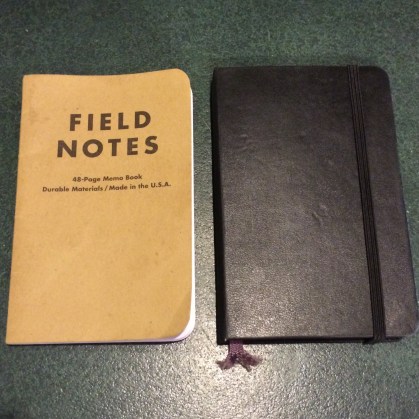
Field Notes Moleskine Cover


Durability and Longevity

Field Notes have considerably fewer pages than Moleskine books, meaning that this one was only on rotation for about a month. The Moleskine, on the other hand, was in my bag for around six. One looks hardly touched, the other looks well loved. I don’t have to tell you which way round that is. Again, that beat up look has a bit of cool factor to it, but as I keep all my notebooks and constantly refer back to the content in them, it does make me question if they will stand the test of time like the original concept they were based upon.

Paper

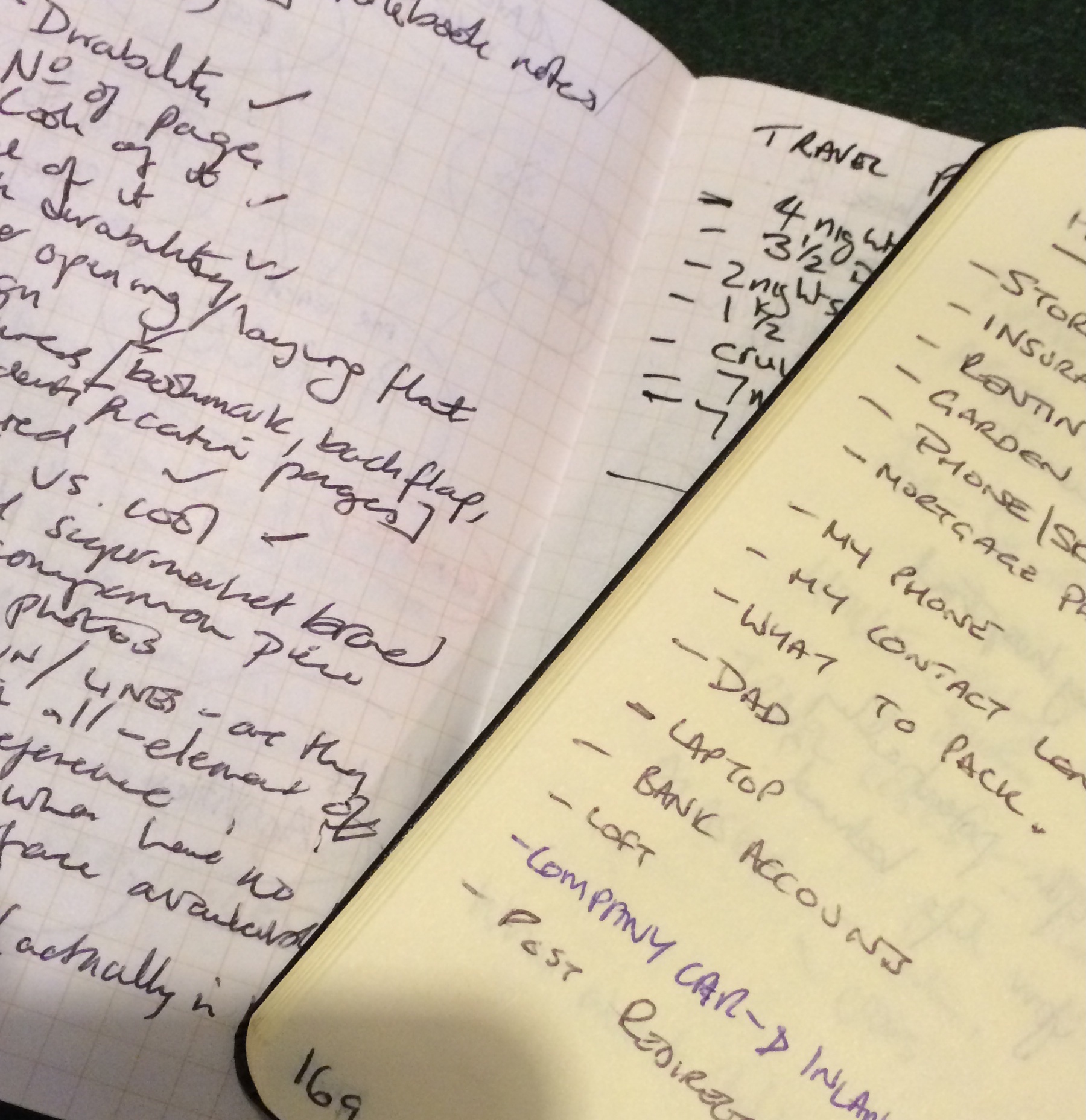
In the bid for market share, the quality of paper actually often seemed to take second place to design factor. A lot of brands have started to realise that as more and more people turn away from an entire dependence on smartphones and yearn for the analogue capture of yesteryear – often with a fountain pen to go alongside it – paper matters. On the whole I don’t use fountain pens, largely because I have a mythological perfect one I am still searching for, but I do use a variety of ballpoints and rollerballs. Despite a lot of people complaining about Moleskine paper quality, I would say that the two of them match up pretty well. If anything, the Field Notes have a little bit of show through (but not bleed through) on the back. I’ve yet to try out the Shelterwood edition, which has considerably thicker paper, but in the interests of fair comparison, I’m reporting here only on the standard book. Both brands have options of lined, plained and grid, so pick whatever works for you and knock yourself out.
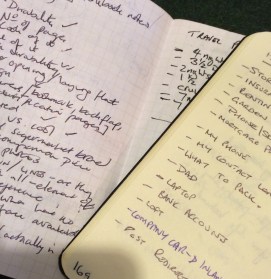
Field Notes Moleskine Pages

Features

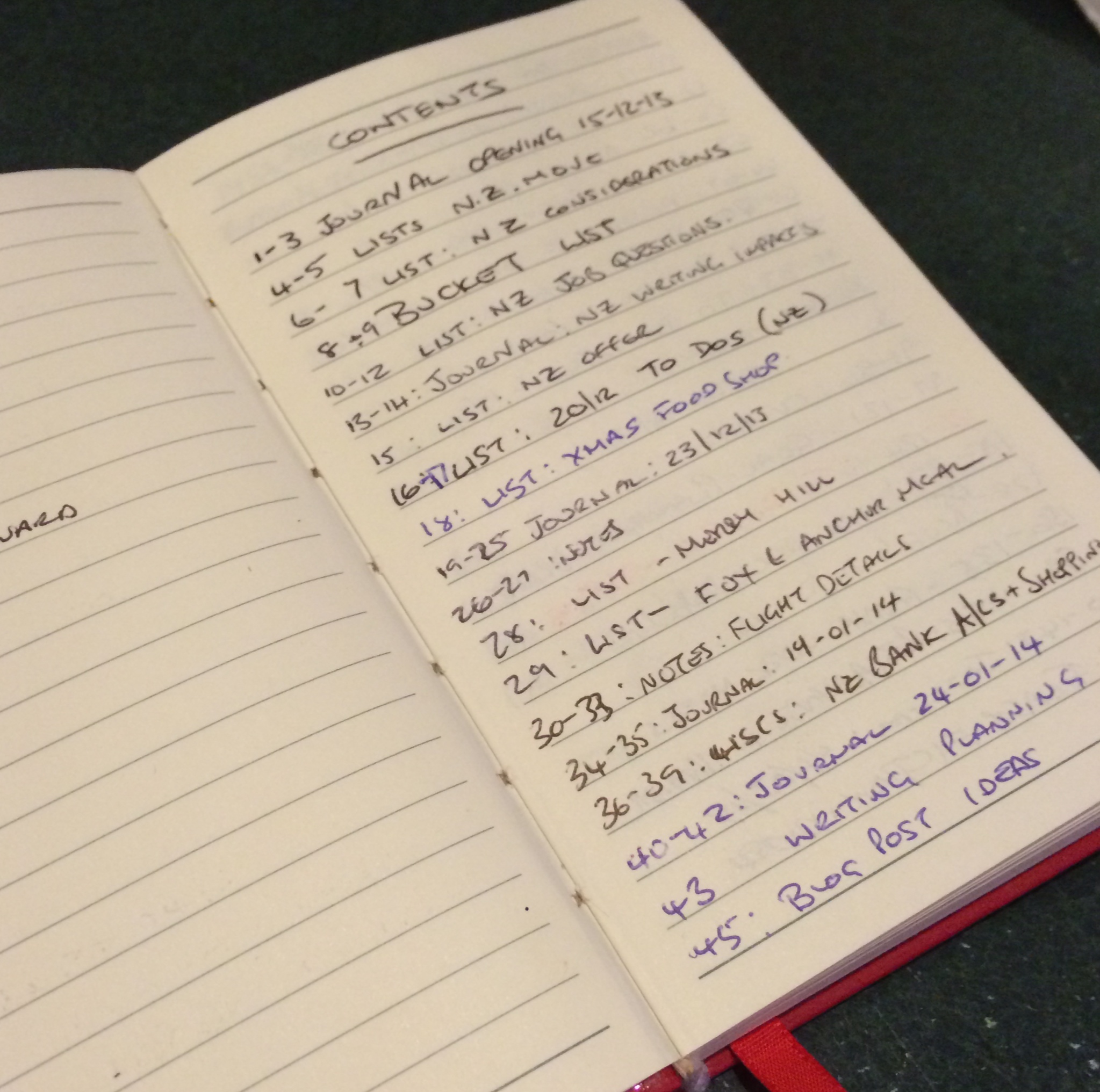
I love the Moleskine back flap for storing bits of paper and the bookmark is definitely a great feature. These are both missing from the Field Notes, but with considerably fewer pages, the bookmark becomes less of a necessity. I’d recommend using a modified to suit your needs Bullet Journal system with both. I recently went back and actually did this to all my notebooks that had a couple of blank pages at the beginning or the end and it makes a huge difference to usability. Field Notes has a built in ruler along the back sleeve and some  fun uses. Both have a user information page at the front, although both brands clearly approach it in different ways.

To Sum Up

Which side of the fence you come down on will always depend on how you use your notebook. For me, the pocket notebook isn’t for work – but when I am working I will use it to capture things so I don’t want it to look too out of place. I love the look of Field Notes especially when I am travelling; there is definitely something of the open road about them. The first real test will be on a road trip around the US and Canada next month, where I’m much more likely to be shoving them in my pocket for practical reasons, rather than just creative ones. After this first run through though, I am still slightly on the side of Moleskine for the way I can actually use them in any environment. If I had an idea last month, I don’t need to go and find the other book because I’ve already run out of pages and moved on.

Finally, I’ve used a cheap supermarket brand (£3/$4.50 US) and found that once you take the ‘street cred’ element away (the ‘look at me, I’m a writer/hipster/adventurer’ element) it works just as well on all fronts as the others, at a fraction of the cost:

Notebook

Writing…

Whilst I was over in the States, I finally managed to pick up my intro pen back into the world of fountain pens. The idea being to see how much the act of physical writing changes my creative process. Hopefully my modified bullet journal approach will help me keep track of these bits and pieces.

My general practice is to get up every morning at 6am and keep typing until I hit at least 1000 words. Some days it is still a struggle, but I have essentially turned it into a habit. In some ways, the hands and some part of my brain do the work, while the remainder of brain and body just wait for the third cup of coffee before coming alive. I have no idea how it works, don’t ask.

The act of writing is automatically slowed by the return to pen and paper. A fountain pen, so the theory goes, will slow down the process even further, if I want it to be legible and not a series of scratches across the paper.

Today I found myself a nice little coffee shop and hand-wrote a 26 page short story. So I’m happy.

I couldn’t imagine writing a full length novel this way, because typing it all up would seem agonising. I don’t see the payoff for me at that volume. For short stories though, I could see this becoming my new process.

Definitely a good way to finish off the week.

Going Un-Paperless – 5 Steps For When You Find You Can’t Go Paperless

We live in the future, where all our files and folders live on our smartphones and laptops, right? Even our books are digital. So why is it that so many people fear going paperless, and what can you do when you find yourself in an environment that is either unwilling or unable to change?

Like most aspiring authors, I tend to enjoy food and shelter, so supplement my income with a day job. My previous role was inherently paperless. The only time I really made paper lists was when I was in a situation of overload and the act of writing it down gave me focus. This was easy to implement because I worked in a small but geographically varied team that communicated largely by email.

I didn’t realise how lucky I was, until I started my new short term role and my desk started slowly drowning in paper. I wouldn’t call myself an environmental activist by any means, but some days I positively weep for lost trees. Now, it would be wonderful to ‘be the change I wanted to see in the world’, but that requires buy in from all parties. This company is one of the largest employers in the Southern Hemisphere. That is a lot of people to convince. My particular division also arose out of an emergency situation, where the comfort and reliability of paper in an ever changing team/building/environment was paramount. For a lot of people, disaster management is best done on paper.

I’ve been using GTD for many years and my system has been through several modifications. For a long time I used an excel spreadsheet, then moved to Outlook Tasks to accommodate the system my boss was using (I was so happy to be working with someone who actually had a system that I was prepared to give a little). My separate personal system was in Toodledo. Notebooks were a joy because they were primarily for creating or capturing ideas, not tracking the mundane (although even that has become a bit more productive / geeky due to Ryder Carroll’s bullet journal system).

For going paperless in a Mac environment, check out MacSparky.

paperwork

So, 5 Simple Steps:

1. Change what you can. Where there is no process, or the existing process has room for improvements, make them. Most people are actually willing to hear what you have to say when presenting a change to their system in a thoughtful, respectful manner. As part of that change, convert anything you can to a paperless approach.

2. Manage paper efficiently. If you have no choice but to deal with paper, then at least use it wisely. Don’t make unnecessary copies. Don’t just shove everything in one inbox and lose hours of your day looking for files. Essentially, have a system. If you do everything by email, then follow up flags and categories make tracking ‘waiting for’ items a piece of cake. Make sure that still applies if you’re stuck with paper.

3. Upload capture documents frequently. If you have an option to upload the paper documents that are floating around in ubiquitous amounts, then do so. More importantly, do it as often as possible. People are much less likely to make additional copies of a hard copy file for their own use if they can just view it on the screen in front of them. Most people are inherently lazy; use that to save the environment and your sanity.

4. Reduce the number of electronic systems. Another fatal error that is actually the case in most companies is the use of twenty four gajillion electronic systems. When one is not quite perfect, they find another one. Most of the time, it is not the tool, but the user is at fault. But that is far too difficult to address when you can just splurge a couple of hundred thousand pounds on a new shiny! Then half the users upgrade while half show reluctance. Great. Now the documents are in one of two places and the easy search is gone. Lather, rinse, repeat over the years and no-one trusts a damn thing. People go back to trusting the paper they can see and feel. Cull the tools and use common sense.

5. Spread the word. When people see that you are being more productive with a clean desk, then they will want some of what you’re having. Only, they won’t ever want to confess to it. We all know people like this; the ones who drown in chaos and claim it is because they are far too busy. Most of the time, they are simply inefficient and confuse busy with job security. Sometimes, it’s best just to give a little. Again, in a polite and respectful manner, point out small gains they can make at first. Even when looking at a productive person’s desk, a fresh pair of eyes can usually spot a few quick wins. Give generously to those who will accept help and enjoy watching them becoming less stressed over time. You’ll feel better and the trees will thank you for it.

Can you go backwards and still stay sane? I’d like to think so.

Field Notes: Cold Horizon and the infamous Shelterwood

Shelterwood tipped me over the edge and into ordering Field Notes for delivery halfway across the world. I have an addictive personality and notepads is the lesser of many, many evils for me.

I didn’t go for the colours subscription though – that feels like too big a commitment just yet. Instead I figured, as the postage would remain the same and they had some left, I would also throw in a couple of Cold Horizons. Don’t they make a pretty pair?

 shelterwood cold horizon


Cold Horizon Review:

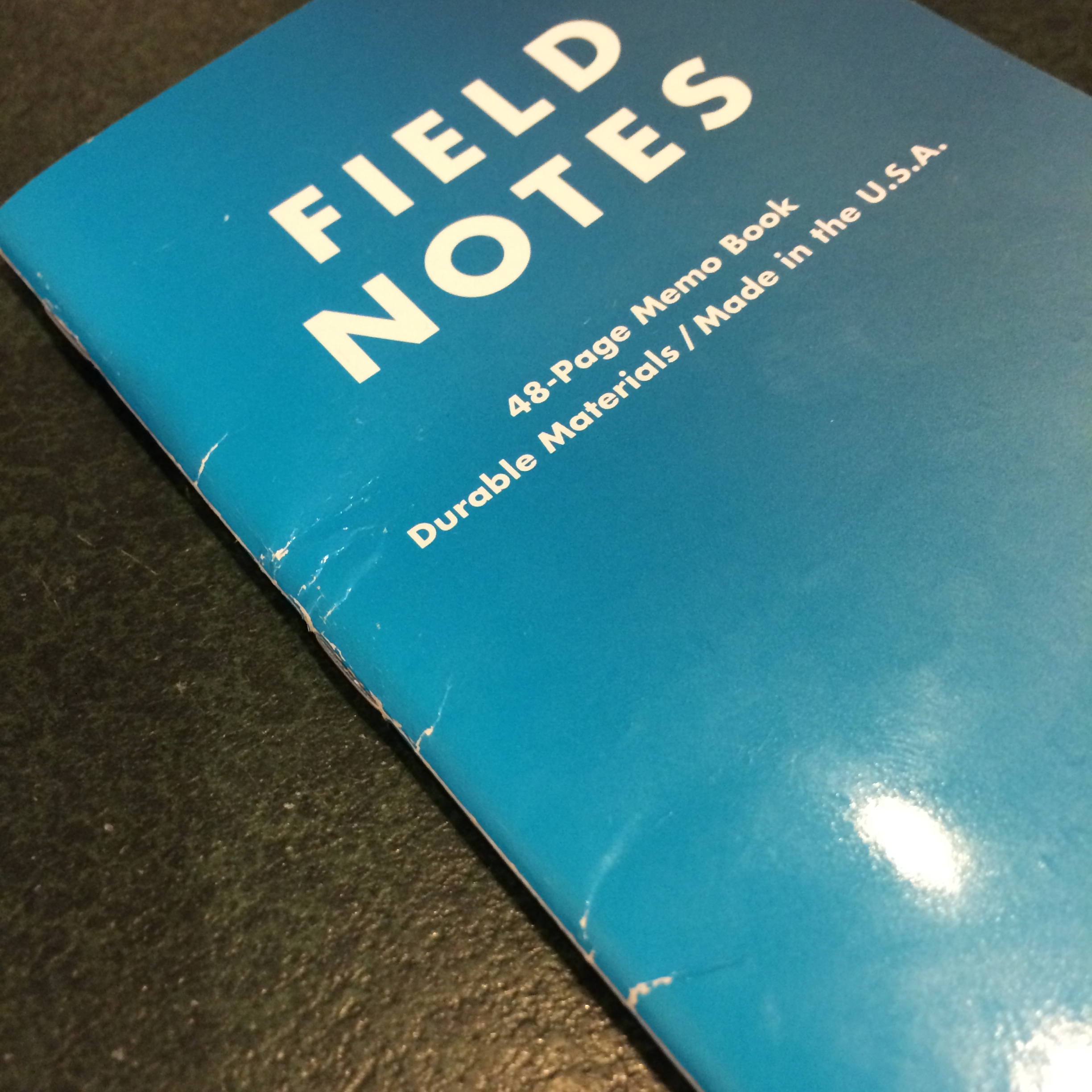
I love the colour gradient of these across three books. The covers themselves are very nice to look at, although as people who have had them for a while already have noted, they crack and fade very quickly. Which is actually a positive if you want to look like you use them a lot. This is mine after less than a week:

Cold Horizon Field Notes

From a personal preferences point of view, the graph paper in this is nice to use, especially for making lists. I also find the fainter lines unobtrusive when jotting down any creative ideas. My pocket notebook is my capture system when I’m out and about (for those of you using GTD), so it needs to be able to accommodate all manner of scribbles. The pages are also off-white, with different hints of blue across the three books, which is a nice touch and the kind of attention to detail that people have come to love from Field Notes.

Shelterwood Review:

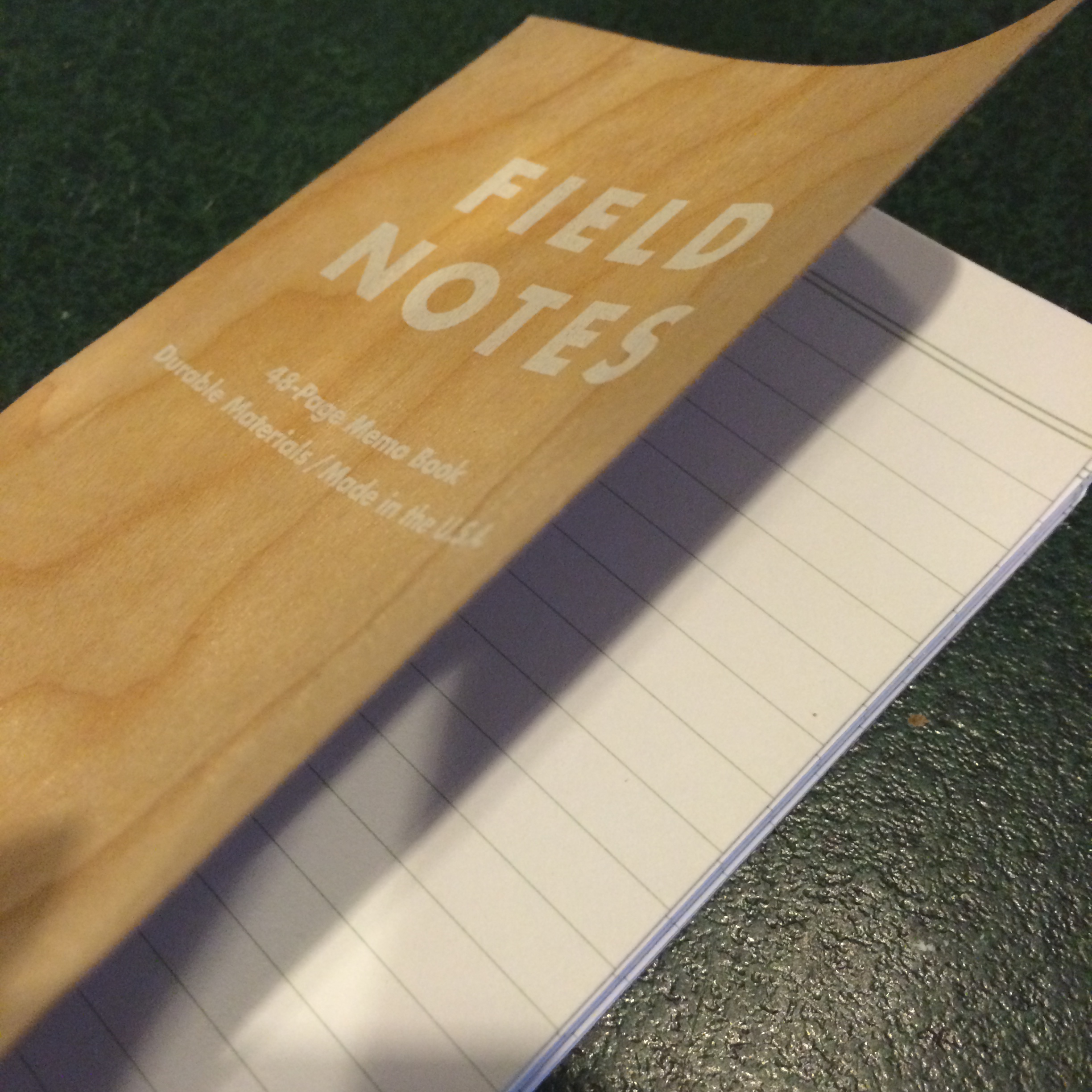
One of the reasons not to get a colours subscription is if you prefer a particular paper layout. I have found myself with a fondness for graph paper, with plain as a second choice. Lined paper is becoming my least favourite and with the limited edition Field Notes, you get whichever one they decide. Shelterwood comes only with lined paper, and even the amazingly luxurious feel due to its thickness can’t make up for the fact it diminishes (for me) its usability. Having read other reviews, many people who also have this preference feel the same way.

Shelterwood Field Notes


Let’s talk about those covers though. They are without a doubt the most hyped Field Notes ever and I can see why. The design process that has gone into them has made them a thing of beauty to touch and look at. It will be interesting when the next season’s come out and people start doing comparison photographs to see how well the covers have actually stood up to usage. As you can see from the above photograph, there is a definite issue with the covers curling. Most Field Notes editions don’t stay completely flat, but the actual turn up on these is very noticeable. I suspect – and I’m not sure if anyone else can confirm this – that atmospheric humidity can play a significant factor.

The accompanying video is also an amazing piece of marketing. It hooked me in straight away. Sucker.

As for whether or not I will be lured into field notes forever, or if it is just a crush I’m going through, I intend to put together a full review of them vs the moleskine that I have been using for years as a pocket book to see  how they compare.

Maybe it will turn from lust into a more longterm romance. Only time will tell. Will it just be another step towards Field Notes world dominance?