Tag Archives: book review

Book review – Gone Girl

Gone Girl

Warning: mild spoilers ahead if you’ve got no idea at all about the book

There has been so much hype around Gone Girl that I was a bit hesitant about reading it. I’d managed to successfully avoid being spoilered, even though there was some pretty heavy marketing for the film. General rule of thumb for me though is that the more people like it, the less I do. Call me a rebel.

However, I actually really enjoyed the book. Without giving too much away, the only part that I didn’t massively like was the ending, but I think that is often the case with many books for plenty of readers. A completely satisfying ending is something which is exceptionally hard to pull off. For the last 50 pages or so, I could not see how the characters would be able to reach a resolution that maintained the tension that had been so expertly crafted through the rest of the book.

On saying that – I’m not sure I could imagine an alternative ending given what had happened up until that point, so I’m hardly in a position to criticise.

The most interesting bit about this book for me was the fact there wasn’t a single likeable character. Deliberately so. No good guy to root for. It takes some skill to keep the tension high when all of the characters are lacking in redeemable features and you don’t know which one you want to come out on top. This was compensated for by the use of a tightly plotted narrative instead, with plenty of twists and turns. There were a few parts where I didn’t want to read what happened next, because it made me feel anxious about how nasty things could get. Reading is about experiencing the whole range of human emotions, not just the good ones, and effectively creating this sensation is the mark of great writing in my opinion.

Would I recommend this book? Yes, I would, as long as you don’t mind unlikeable characters and edgy tension. If you like your books to be happily ever after with some redeeming romance, then it’s probably not going to be for you. It’s also quite long in comparison to a lot of thrillers, so you might want to make sure you’re prepared to be in it for the long haul.

I give it 4 out of 5 stars on my imaginary ratings system.
 

My Top 5 Books of 2014

These are my top 5 books that I have read in 2014, not necessarily that were published in 2014. Sometimes I’m late to the game, but just because something isn’t brand new, doesn’t mean it isn’t worth mentioning. Every year I intend to read more than I actually do, but this is the first time since I was at University that I have taken advantage of the library on a regular basis. It’s the perfect way to try something you’re not sure about, which has led me to some complete gems over the past twelve months.

So, without further ado…

General Fiction

The Girl Who Saved The King of Sweden by Jonas Jonasson

The Girl

This book was immensely enjoyable, but hard to describe. Larger than life characters and even bigger plot, this book was so carefully crafted that the suspension of disbelief – even in the face of insurmountable odds – never wavered. I dare anyone not to root for the main character from beginning to end. From Soweto to Sweden, the comedy is punctured by some dark moments, but a reminder to never, ever underestimate someone because of who you believe they are.

Fantasy

Mistborn by Brandon Sanderson

final-empire-2

My sister is a huge fan of Brandon Sanderson and she’s been trying to get me to read his books for years. I finally got round to doing so earlier in the year, and I’m glad I did. I think Mistborn is a perfect entry point into his writing, and you can read my original review here. For any would-be writers of fantasy, it is also a great tool for understanding the importance of world-building and how to get the balance right between background and plot.

Self Help / Personal Development

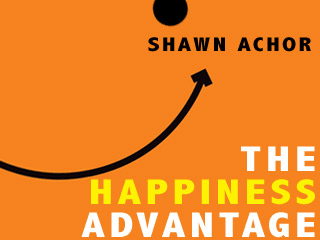
The Happiness Advantage by Shawn Achor


I found this book by way of his Ted Talk, via the Productivity Book Group podcast. As a person not naturally given to positivity (I tend to think of myself as a hardened realist), I’ve been trying very seriously over this past year to work on my mindset as much as anything else. Insightful without being patronising, this book has delightful anecdotes, interesting research and some basic, simple tips to help people take the steps towards the benefits of being more mindful.

Biography

My Spiritual Journey by Dalai Lama

Spiritual Journey

This falls into the category of random library find. I gave a brief review of it earlier this year. It was humorous, insightful and gave a picture of the man I had heard of (who hasn’t?), but didn’t really understand. Spiritual without being preachy, there was no attempt to hard convert to Buddhism here, as there so often is with books containing religious figures. It was simply a fascinating window into the life of a man who has travelled a very different road to most of us.

Business

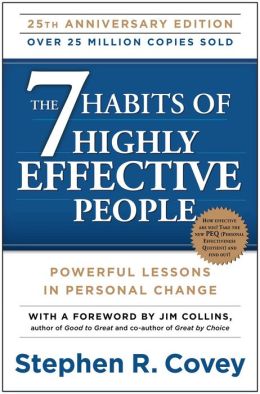
The Seven Habits of Highly Effective People by Stephen Covey

7 habits

In the interests of honesty, this was not the first time I had read this book. It was probably one of the first books I had read on business/personal development, probably a decade or so ago. Back then, I just didn’t get it. I found it too dense, too remote, too hard to plough through. The only thing I remember taking away was the concept of mission statements. I opened it again this year and it was a completely different experience. I was finally ready for it, I think. I’m a big fan of organisation and productivity – both personal and business – and I try to follow the principles of Getting Things Done by David Allen. Now that is engrained in my life (six years and counting), I think the maturity of my own process allowed me to understand the bigger picture approach that Covey prescribes. Proof that sometimes, you have to go back to something twice to get a true understanding of the content.

Now I’m starting to plan my reading for 2015 – if anyone has any contenders then feel free to pop them in the comments below. I’m always up for a challenge!

Review: Field Notes – Ambition Edition

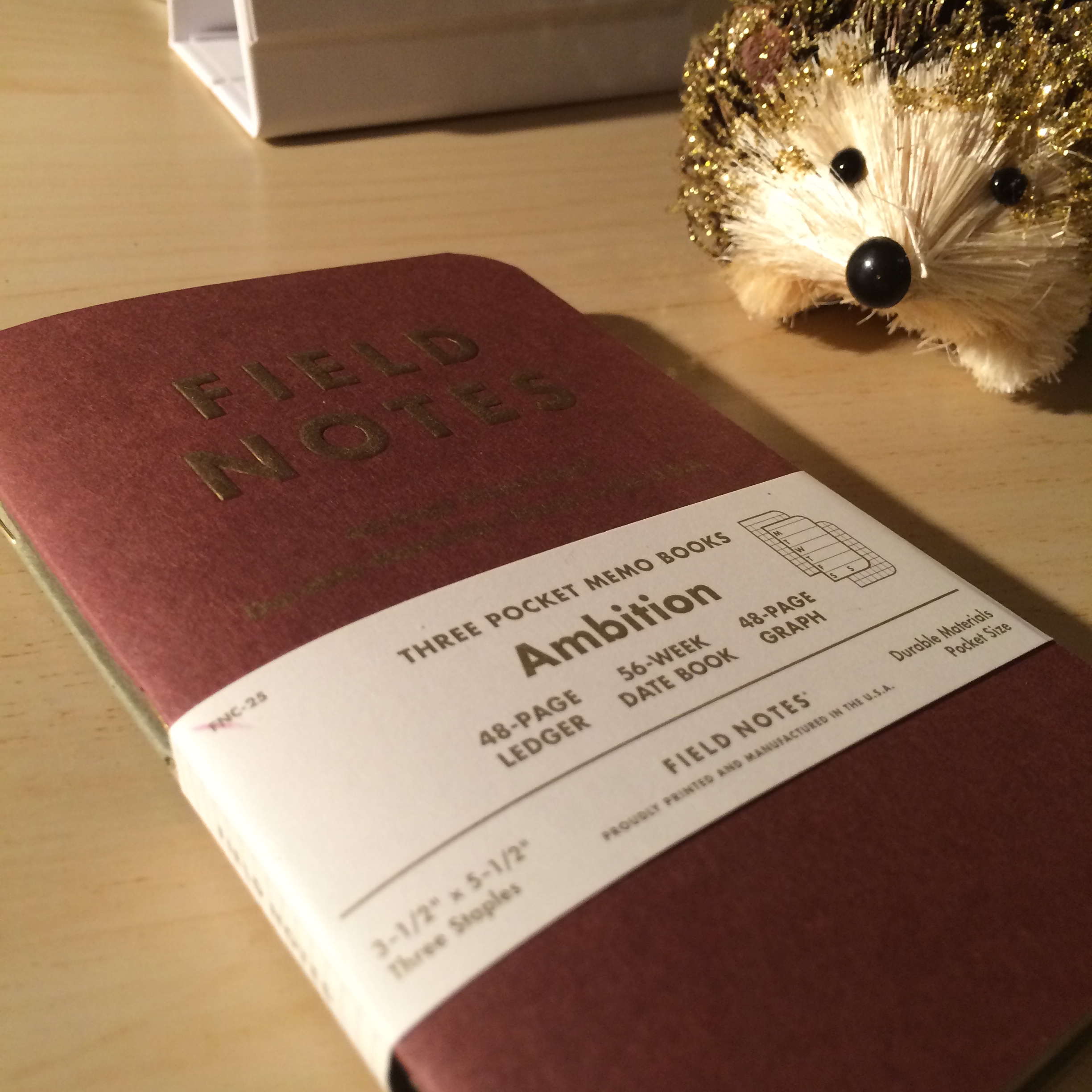
I’m going to go out on a limb and say that the Field Notes Ambition Edition is one of my favourites. It was this edition that has finally made me a colors subscriber.

Presence of hedgehog makes it even better

Presence of hedgehog makes it even better

They have been pushing the boundaries of what they could do with Field Notes over the past few editions, so I was wondering just how far they would be able to go with the winter release. There is a fine line between genius and crazy and part of me has been dreading them crossing it. Instead, by going with the three different types of notebooks in one pack, I think they’ve managed to hit a sweet spot.

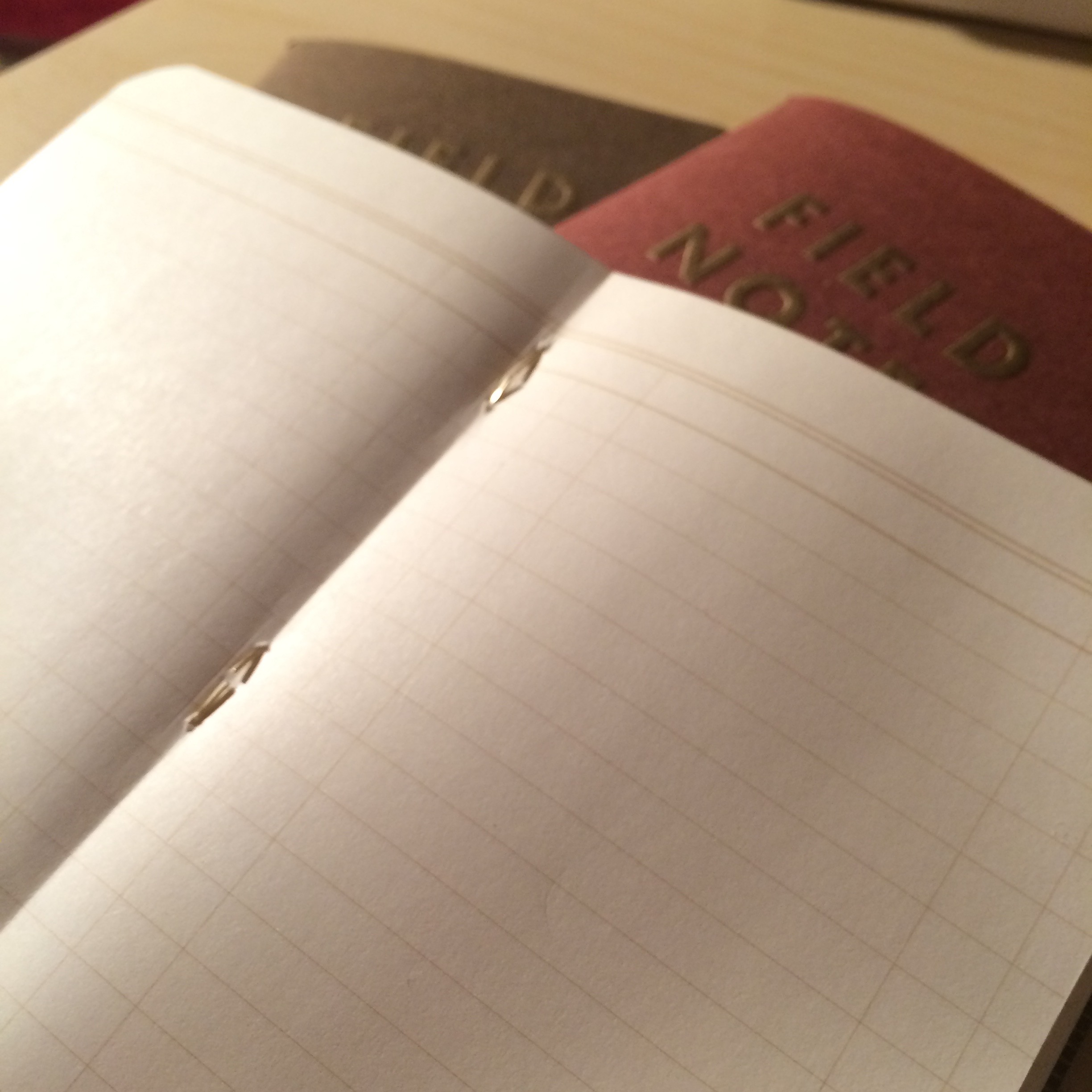
The memo book itself is a lovely colour (wine) and more importantly for me, uses grid paper. I love grid and the form factor and size makes it perfect for an everyday carry bullet journal:

Field Notes Memo Book

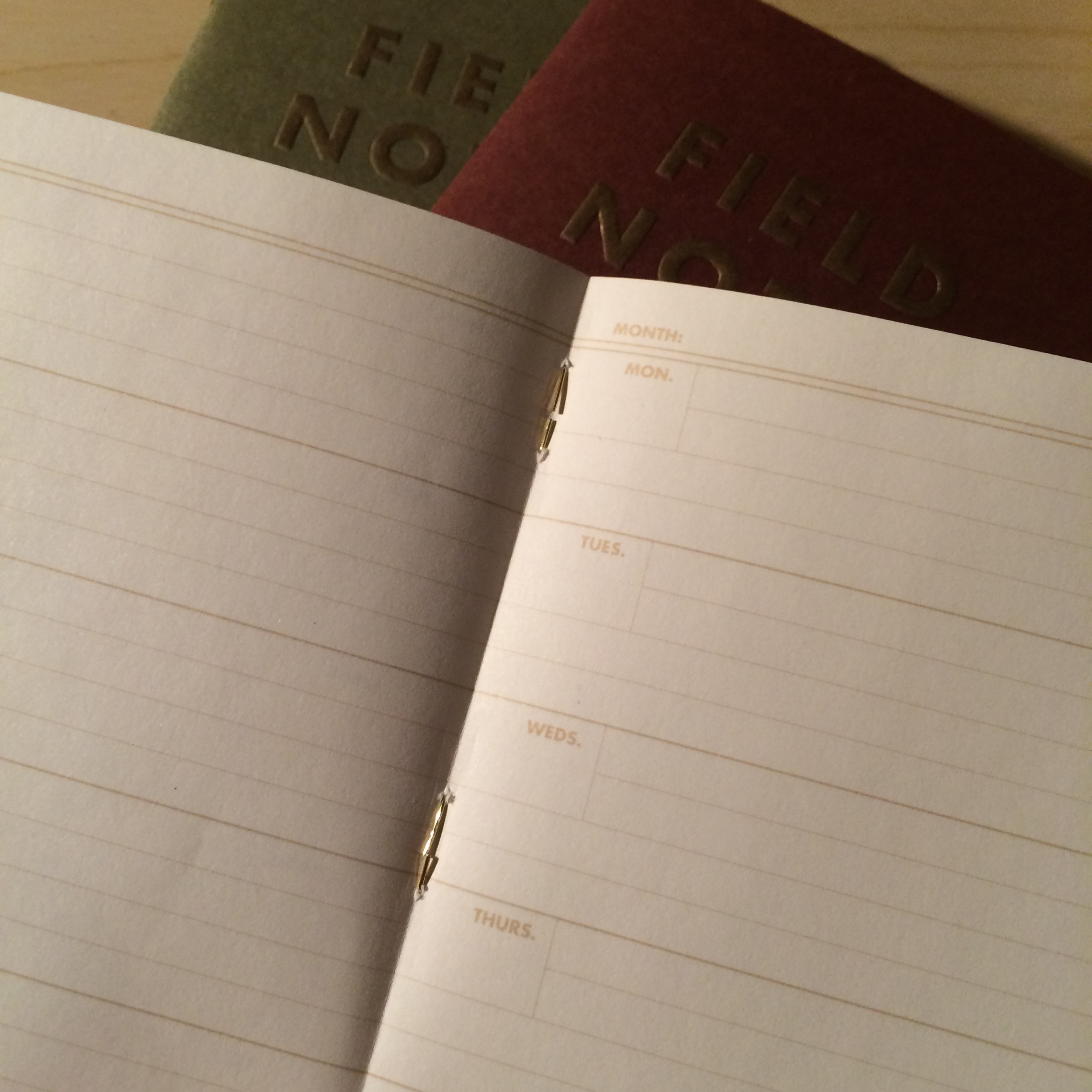
Secondly, and a sensible one for the time of year, I can certainly see the appeal of the 56 Week date book. They’ve also avoided actually dating the pages which, given the fact that anyone who regularly buys Field Notes is likely to work through their existing pack before opening the next one, means it is not rendered immediately useless if that doesn’t happen until March:

Field Notes Date Book

Finally, the ledger book. Now, this one causes me a bit of a dilemma. I really like it, but I’m not sure how to use it. Not in a way that is anything other than a regular notebook, which almost feels a bit of a waste. I’m not that into sport, and all my financials are done on a spreadsheet. If anyone has any suggestions then please let me know, as I’m struggling a bit to come up with something creative.

Field Notes Ledger

After the brightness of Unexposed, I love the muted colours of these books. They work with the gold trim to create a old school sense of style which I’m very comfortable with. Also the sound of that trim cracking as you open the pages for the first time is intensely satisfying in a way that only notebook addicts will understand. I can see them coming out at work without causing any raised eyebrows (Unexposed was about as far from corporate as you can get without spitting in the eye of your CEO).

Thanks of course go to Mr Brad Dowdy, the Pen Addict himself, for getting me interested in Field Notes in the first place. You should check out his website if you haven’t already. Without him, I would be emotionally poorer (but certainly financially richer…)

Boys Books or Girls Books – Who Cares?

Having read yesterday about the young girl who asked a publisher to change a book because it was ‘for boys’, it made me think about my own Christmas shopping experience at the weekend. Specifically, Toys R Us *shudder*.

Now, I’m not going to find fault with them particularly, as they merely stock the toys that are made by various companies. But it was the first time I’d been in a toy shop in years, especially for such an extended period. The one thing that struck me was the amount of toys that were still ‘for girls’ – invariably in a garish pink – and others that were for boys (emphasis on farts and gore). I did, happily, see one science set with a cartoon girl on the front, but it should be noted, it was one in a very large number.

I get it, I really do. It sells. We live in a material world and that no longer just applies to Madonna. But it was somehow just really disheartening. I was looking at the really cool stuff and then getting a disappointing sense that it wasn’t for me. If I feel like that in my thirties, when quite frankly I don’t actually want to play Transformers*, then what message are we sending to young brains?

Luckily, my parents had the good sense to buy what I wanted and not force dolls and pink on me. Besides, I can remember it like it was yesterday. *ahem*

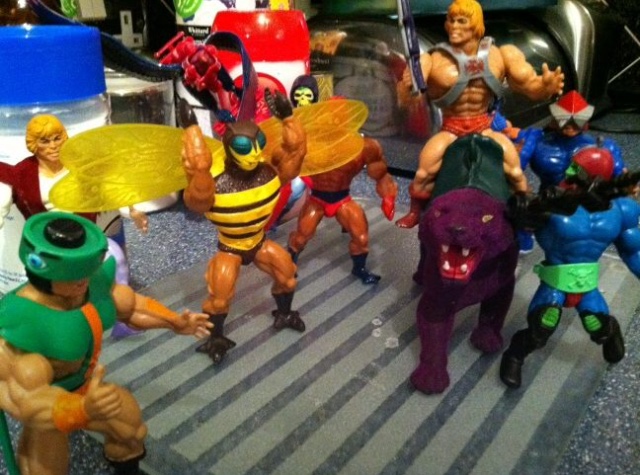
By the power of Grayskuuuuuuuull

By the power of Grayskuuuuuuuull

More importantly, they certainly didn’t make that mistake when it came to books. My sister, happily a my-little-pony-style-girly-girl who definitely went super pink when it came to toys, also got the gender neutral treatment when books were given. A good story is a good story. Books of facts and games are informative and fun, regardless of how you happened to be born. Books of adventure could be for us just as much as fluff and nurturing. And I get the distinct impression, looking back with my adult hindsight, that neither parent wanted us to grow up to be damsels in distress. They wanted us to be independent and successful; secure in ourselves.

So I guess I wanted to say a big well done to all those parents who are trying to bring up their kids to consider all the options because, sadly, you’re still fighting against the same tide my mom and dad were thirty years ago.

*This may or may not be the truth

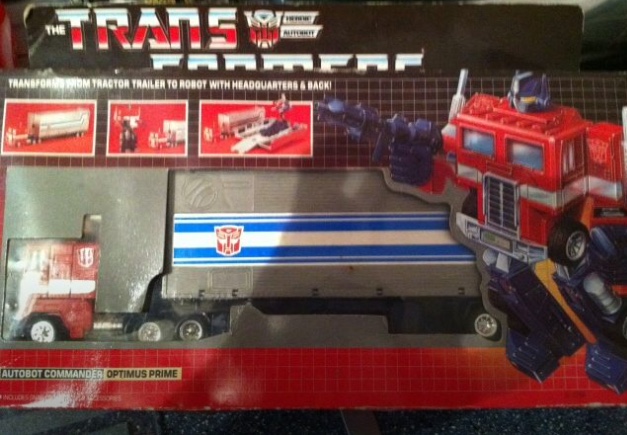
My original 1980s Optimus Prime

My original 1980s Optimus Prime

Book Review: How To Be Happier by Paul Jenner

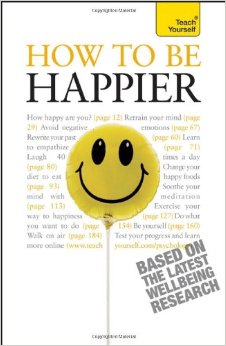
Another great library find, How To Be Happier by Paul Jenner was one of those rare self-help books that made me laugh out loud.

Disclaimer: I am not currently suffering from depression. I am not ungrateful for my lot in life. I have many things that so many other people do not. Nevertheless, I think there is a pervading sense of dissatisfaction that is sweeping its way through our culture.

It is strange, in the Western world where we have ridiculously large amounts of everything, that people seem consistently less happy. I listen to a podcast call The Productivity Book Group (you should check it out if you’re into that kind of thing) which introduced me to Shawn Acher’s amazing TED talk on happiness. So my mind got to thinking and this was the book it found.

How To Be Happier

It could, in theory have a subtitle in keeping with the current trend, of get naked more often and touch each other. The author is keen to stress that this is probably best done with a consenting partner, but that is the one thing I seem to remember most about it.

On a serious note, this book was useful whilst being lighthearted, informative without being preachy. Each chapter had practical sections and exercises to implement and review. I naturally lean towards cynical and pessimistic, so for me it was a pleasant surprise to at least come out in the middle. Normally, whenever there is a personality-based multiple choice quiz, I come out looking like a sociopath or suicidal. Moderately happy was therefore something of an academic success, and shows how far I’ve come in the past few years.

The hardest part of the book is the bit that always sounds the most simple. In order to be happy, we must, at some level, choose to be happy. For anyone familiar with Tony Robbins and NLP, this will ring a bell. Of course, when you are chronically depressed or very, very unhappy, the concept of choosing to be happy doesn’t seem like one you can necessarily bring yourself to do. How To Be Happier gives you some small baby steps to work through to help you build up to the choice. This is something I have seen reflected countless times in my friends and family (and myself). The logic of knowing what to do is nothing like the ability to actually do it.

The book works through other key topics, such as the impact of food and exercise on our mental state (without any extreme diets or workout routines being forced on the reader), meditation and mindfulness. There was also a chapter which seemed fairly innocuous but I suspect is actually a key foundation: be yourself and learn to accept this. Today’s world, with blogs and twitter and the book of face, seems to funnel us into only showing the best of ourselves. The parts we think other people will want, or envy. In the worst case scenario, when we don’t feel we have these things, we over-embellish or outright make them up. We post pictures of ourselves from angles that make us look good but our best friends wouldn’t recognise. We talk about amazing nights out when really we’ve been sitting in front of the TV chomping through a family size bag of M&M’s to make ourselves feel better, washing it down with a bottle of wine. No wonder being ourselves is becoming harder and harder. And with that disconnect comes continued unhappiness.

So, eat well, exercise, think positive thoughts and learn to accept yourself for the unique individual you are, so-called flaws and all.

Then get naked and touch someone some more…

Book Review: Brilliant Freelancer

On a recent trip to my local library, I picked up Brilliant Freelancer by Leif Kendall. I wasn’t looking for anything in particular, but being British, things such as marketing myself have never sat that comfortably with me.

Nevertheless, it seemed like an interesting book to give me a bit of an overview and I have to say I was pleasantly surprised. Whilst there were the standard ‘of course you can do it’ messages – no one wants to push failure and inadequacy after all – it was refreshingly realistic. It posed the simple message that if you tried it and it didn’t work out then it wouldn’t be the end of the world. Even if you tried it, were hugely successful at it but didn’t enjoy it, then that was okay too.

Brilliant Freelancer

The book itself is divided up into sensible chapters and sub-grouped into key areas. It is all pretty high level stuff, but I think that is actually a strength. When you are first dipping your toes into the water with this kind of thing, having everything laid out before you in excruciating detail is more likely to simply induce fear and lead to trying absolutely nothing. Instead, chapters on how to find the most profitable and manageable work sat comfortably alongside how to motivate yourself and get stuff done. Being a self-employed writer is a road I am only just beginning to walk down, so I am happy with the baby steps for now.

Whilst this book wouldn’t serve as your only guide to freelancing ever, it was certainly a handy reference point to begin. If you are thinking about a strategy or just whether or not it is feasible to even do any self-employed work, this book will give you just enough information to hold the fear at bay so you can begin.


Mistborn: The Final Empire Review

So, I am a bit late to the game with Brandon Sanderson. I admit that much. I’ve known of him for years, largely because of the Writing Excuses podcast (which is supremely awesome – you should check it out). But when it came to reading his books, I’d never picked one up, despite my sister’s constant proddings to do so.

Confession time: I’ve always loved the concept of epic fantasy, but The Lord Of The Rings put me off. Not The Hobbit – I read and loved that as a kid. But I’ve lost count of the times I’ve started and failed to finish LoTR. As far as I was concerned, the best thing about it was that my Dad had bought an amazingly bound set that looked perfect on the bookcase. Don’t judge me.

It is therefore a pleasure to be able to say I enjoyed being eased back into the genre by Sanderson. I mean, who wouldn’t be tempted by this cover?


final-empire

The one thing I knew about Sanderson was his strength when it came to creating magic systems (use that google thing to find all of Sanderson’s Laws – much of it can also be applied to other areas). In this book it is Allomancy, which is one of the most engaging magic systems I have ever come across. It is handled with elegance and balance, not once causing the reader’s suspension of disbelief to waver. Even the action scenes are handled with a deft touch, rather than I have magic, I can beat you, BAM! VICTORY!!!!! which means the main characters never become so competent that they also become boring in the process.

For me, having a female main character rather than just dudes in cloaks walking with elves made it more relatable too. Not that I can’t enjoy books with elves in, in fact I read one very recently (When Elves Attack), but I think there is still an element of masculinity to the genre that is only just beginning to loosen its hold. Which is a good thing, I think.

I’m not going to spoiler it, but the storytelling and pace, along with the characterisation, makes it worth the time investment to get through the hundreds of pages. Sanderson is not exactly known for his brevity, but I was happy to see that it wasn’t just words for the sake of it. To complete something as grand in scope as the vision he has for his worlds, well, it’s going to take a bit longer than your average novel.

If you haven’t already read it, you can buy Mistborn: The Final Empire here.

Field Notes: Cold Horizon and the infamous Shelterwood

Shelterwood tipped me over the edge and into ordering Field Notes for delivery halfway across the world. I have an addictive personality and notepads is the lesser of many, many evils for me.

I didn’t go for the colours subscription though – that feels like too big a commitment just yet. Instead I figured, as the postage would remain the same and they had some left, I would also throw in a couple of Cold Horizons. Don’t they make a pretty pair?

 shelterwood cold horizon


Cold Horizon Review:

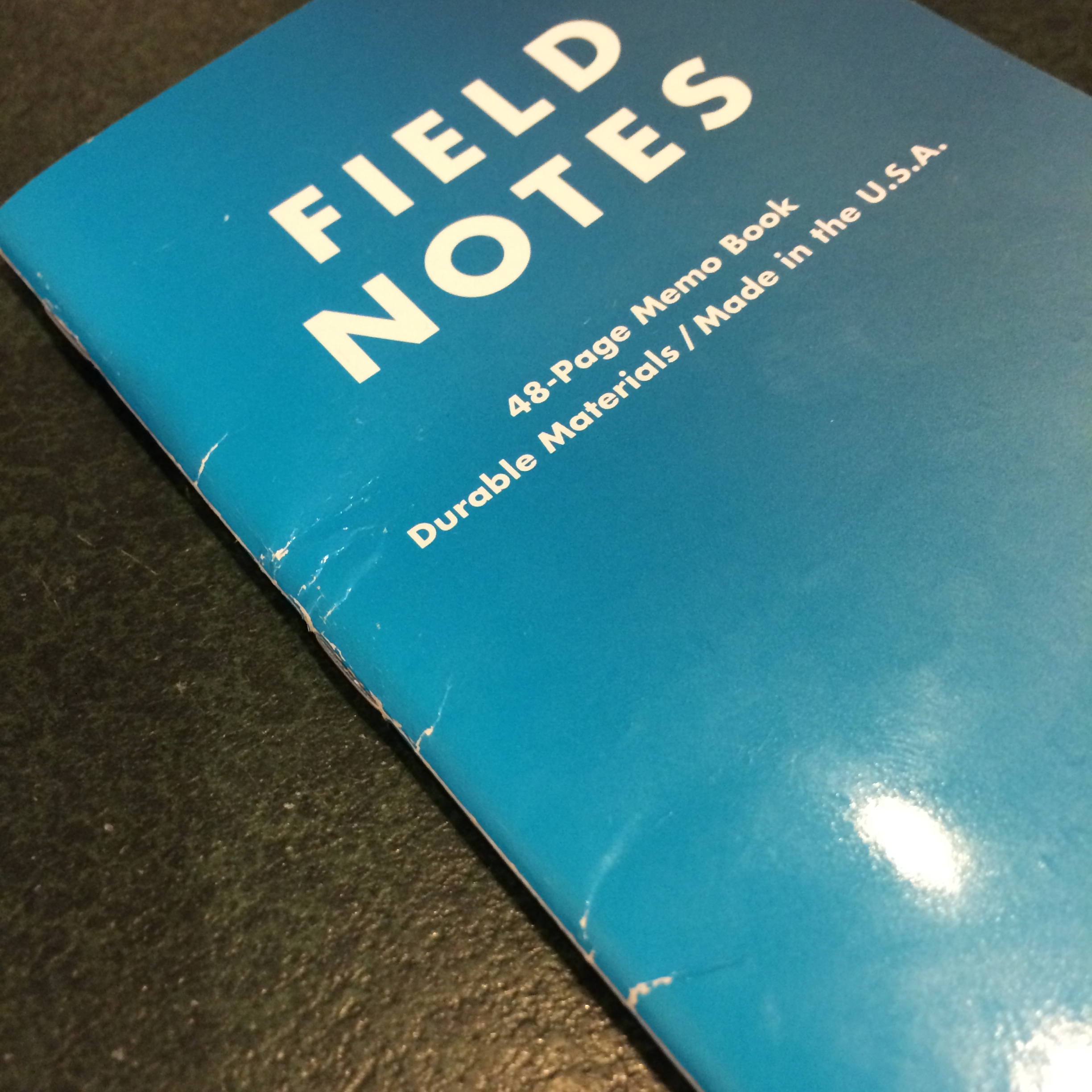
I love the colour gradient of these across three books. The covers themselves are very nice to look at, although as people who have had them for a while already have noted, they crack and fade very quickly. Which is actually a positive if you want to look like you use them a lot. This is mine after less than a week:

Cold Horizon Field Notes

From a personal preferences point of view, the graph paper in this is nice to use, especially for making lists. I also find the fainter lines unobtrusive when jotting down any creative ideas. My pocket notebook is my capture system when I’m out and about (for those of you using GTD), so it needs to be able to accommodate all manner of scribbles. The pages are also off-white, with different hints of blue across the three books, which is a nice touch and the kind of attention to detail that people have come to love from Field Notes.

Shelterwood Review:

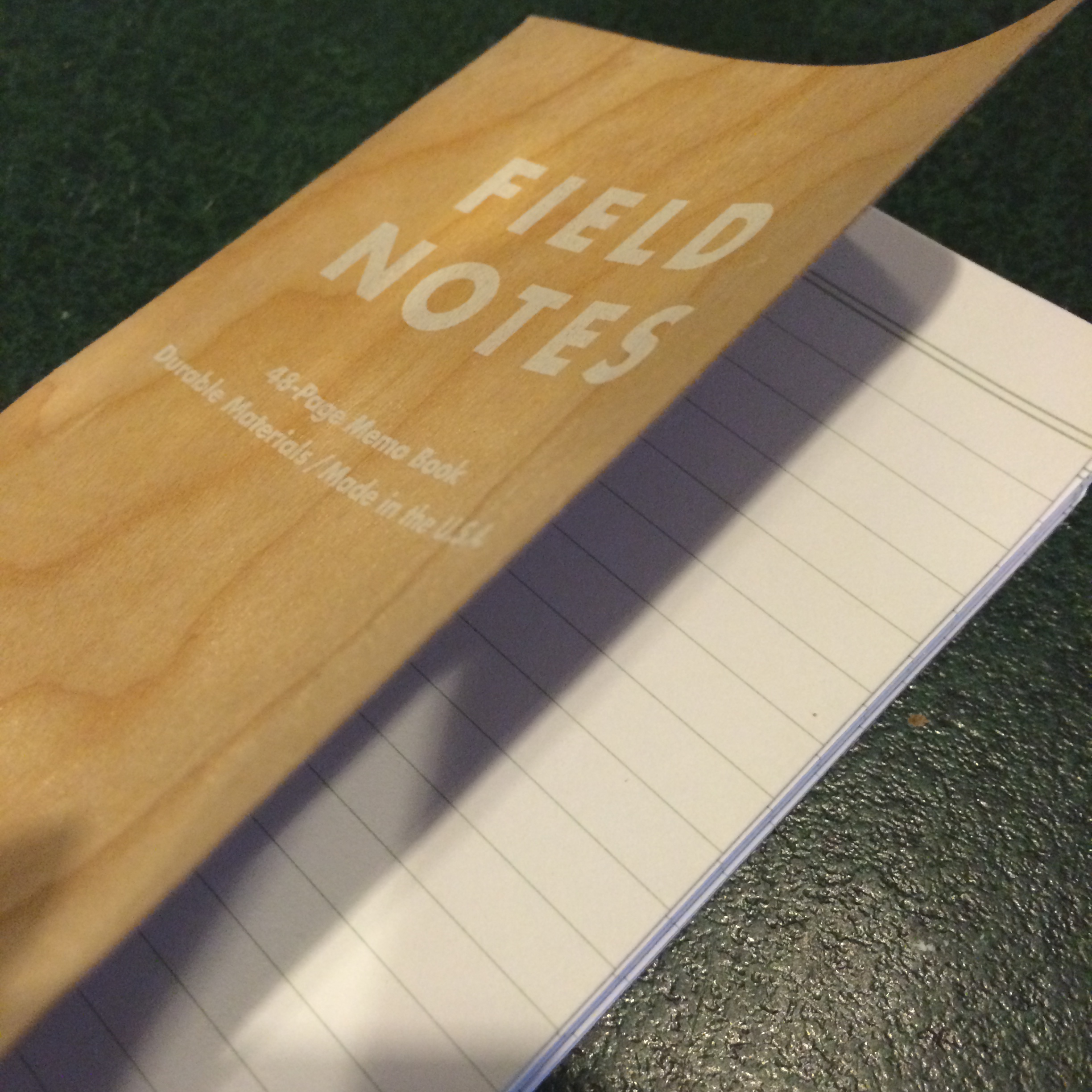
One of the reasons not to get a colours subscription is if you prefer a particular paper layout. I have found myself with a fondness for graph paper, with plain as a second choice. Lined paper is becoming my least favourite and with the limited edition Field Notes, you get whichever one they decide. Shelterwood comes only with lined paper, and even the amazingly luxurious feel due to its thickness can’t make up for the fact it diminishes (for me) its usability. Having read other reviews, many people who also have this preference feel the same way.

Shelterwood Field Notes


Let’s talk about those covers though. They are without a doubt the most hyped Field Notes ever and I can see why. The design process that has gone into them has made them a thing of beauty to touch and look at. It will be interesting when the next season’s come out and people start doing comparison photographs to see how well the covers have actually stood up to usage. As you can see from the above photograph, there is a definite issue with the covers curling. Most Field Notes editions don’t stay completely flat, but the actual turn up on these is very noticeable. I suspect – and I’m not sure if anyone else can confirm this – that atmospheric humidity can play a significant factor.

The accompanying video is also an amazing piece of marketing. It hooked me in straight away. Sucker.

As for whether or not I will be lured into field notes forever, or if it is just a crush I’m going through, I intend to put together a full review of them vs the moleskine that I have been using for years as a pocket book to see  how they compare.

Maybe it will turn from lust into a more longterm romance. Only time will tell. Will it just be another step towards Field Notes world dominance?

Book Review: Down Under by Bill Bryson

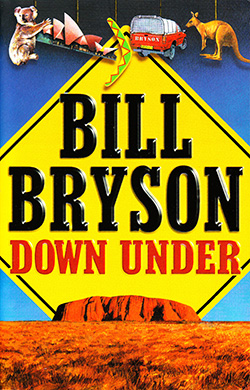
Confession: this is not the first time I have read Down UnderThe first time was just before I visiting Australia a decade ago. I didn’t actually buy the book for me. It was a Christmas present for my mom after I somehow got confused about her request for the latest book by Bernard Cornwell. Don’t ask.

The book itself gave me so much help in planning my trip. I had twelve months to travel and the guidebooks were all so uniform. Catering to either the backpacker (party!!!) or the high end tourist (out of my budget), they were great for the overview. There was something different about Down Under though. It made Australia seem alive to me before I even got there. It certainly made me want to visit places I would never have normally considered.

Now I find myself tantalisingly close to Aussie again, but yet still so far away. Despite the fact it is closer now than it has been in a good many years, my next planned trip out of New Zealand is going to be to the States and Canada. That’s been planned long before my sudden move and not going to change now. So, in an attempt to remind myself of what I had been holding onto for so long, when I saw Down Under in the library I couldn’t resist getting it.

Even for those that have never been, Bryson’s storytelling is instantly accessible. He is evocative without ever being grandiose and at times brutally honest in a way that anyone aiming for a commercial tourism book would never be.

downunder


From his terrifying assessment of the wildlife (why is it so likely to kill you anyway?) to exploring the cities (I personally think Canberra gets an unfair rap), Bryson covers it all. Plus he’s right; unless you live there, you never remember the name of the Prime Minister. Sometimes, I suspect, you don’t remember even if you’re Aussie born and bred.

So, this wasn’t the first time I read it and it won’t be the last. Hopefully, at some point in the next twelve months, I’ll be in a position to see it all for myself again too…

Book Review: My Spiritual Journey by The Dalai Lama

Having joined the library as a ‘must do’ after my move, I decided to use the opportunity to get hold of books that I might not have taken the time to purchase when I was living back in England. As with the rest of this move, it is all about embracing the new.

Which led me to picking up My Spiritual Journey by The Dalai Lama. Disclosure: I am not a religious person. I was not brought up in a religious family, but was always told to go out and see for myself what was out there.

That said, the most interesting bit of the book that I found was not actually to do with religion or the spiritual journey of The Dalai Lama (although it was informative and excellently translated into English). No, for me the most interesting was his role as the spiritual leader of Tibet. I have always been fascinated by the intersection between religion and politics and this was an excellent example. Although obviously biased, this was well enough written to make me feel moved on behalf of the Tibetan people.

Likewise, the destruction described of the natural environment of Tibet – which I am assuming to be true given what we know about Chinese industrialisation and deforestation as a whole – left me feeling extremely sad that this would be the case.

Overall, I would give this 7/10 – the loss of marks mainly due to the repetition of several of the key themes. Not one to be dismissed if you are a person of a different faith, as the tone of this book throughout is entirely inclusive.