Category Archives: Tools

Pens, paper, book reviews and other useful information for creative entrepreneurs

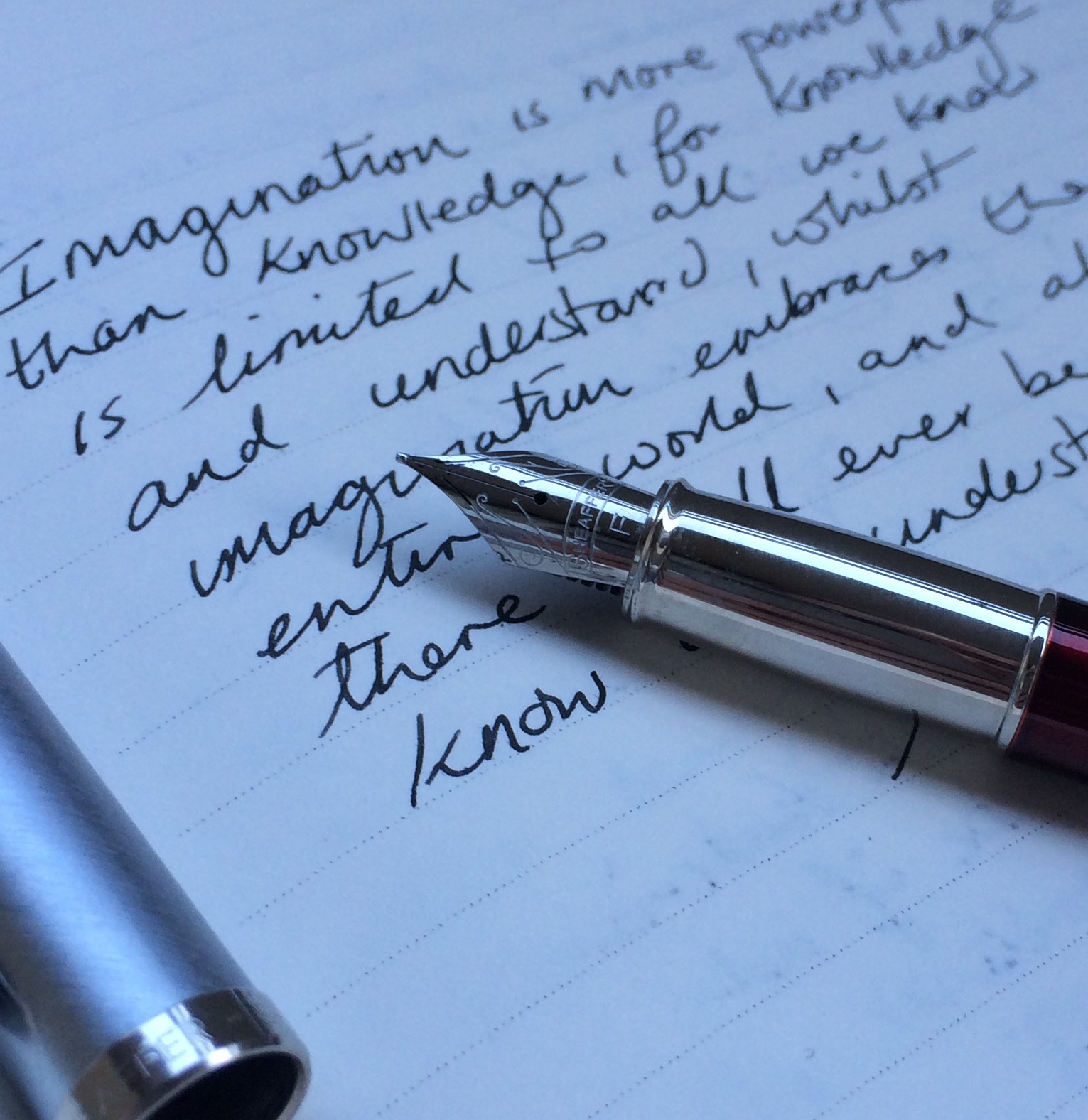
Sheaffer Prelude Fountain Pen Review

This was an amazing surprise as a Christmas gift from one of my best friends, but I’m not going to let that bias me in writing a review. That said, I have really enjoyed using this pen.

My first tentative step back towards using fountain pens was a Sheaffer, so I think I’ll always have a bit of a soft spot for the brand. I think they’re quite underrated in the pen world, when actually they are a good, reliable every day fountain pen.

Sheaffer Prelide

It is a beautiful looking pen, with a lovely two-tone nib. I particularly like the rubberised grip section – a key bugbear for people with the 100 or 300 models. They have a smooth metal grip, which tends to lead to holding the pen slightly higher in order to compensate for any sliding.

The Prelude also has a slightly weightier feel, which means it feels substantial in the hand. Solid. It creates the sensation of writing with something that is quite serious about its job.

The brushed steel housing does that quite well too, come to think about it.

The lay down of ink is quite wet, so I would suggest using it with a relatively good quality paper. I love using my field notes, but the bleed and feathering in these books is far too well documented for me to need to go into it here. I don’t mind it too much, so have happily used it to plan out my writing for next week in the Ambition Edition 56-Week Date Book:

sheaffer prelude field notes planning


I’ve got a medium nib which is a good compromise for me with this pen. My writing actually should require a fine nib as it is relatively small and jerky, but that always comes at the cost of smoothness. Fine nibs, regardless of material, always feel scratchy to me, so I tend to use them for simple, every day writing. Scribbling, for want of a better word. The medium nib in this pen is smooth and the size simply forces me to make more leisurely notes. Perfect for a Sunday afternoon planning or some idle story plotting.

At the moment I’m using the black ink cartridge it came with, because I think a traditional colour works with the traditional style of the pen. A blue or blue-black would be fine too, but I can’t see myself using turquoise or orange or similar in here. I may be pushed to purple, but that’s because I’d give that colour at least one go with just about everything.

So, if this pen wasn’t a gift, would I have bought it for myself? Hell yes.

Would I recommend it to others? Again, yes. Especially for people starting out. It’s not a ‘shove into your bag’ pen or anything like that. But the grip combined with the nib makes for a writing experience that is encouraging enough to keep people dipping their toes (and nibs) into the fountain pen  world further.


My Top 5 Podcasts of 2014

They say you become an approximation of the five people you hang out with most. Given that I’m a writer who works from home three days a week, that would be two actual other people, followed by me, myself and I. Luckily, I listen to a lot of podcasts. Yet I know a lot of people don’t, so here’s a few reasons why you should.

Firstly, there is a whole heap of them out there, so you’ll be able to find something to suit your mood. Secondly, because there are so many, if you have a niche interest, with a bit of hunting around, you will find one about your odd subject of choice. If you don’t, you can always start one yourself. There’s even podcasts on how to make podcasts. See what I mean? Plethora of information. Finally, in order to get you to listen, people essentially give away a condensed version of their content for free. This is a great way to try before you buy, especially in the world of business, where conferences and books can cost a fortune. Go on. Give it a try.

So, without further ado, here they are (with twitter links to their creators/presenters):

Top podcast of 2014

The Pen Addict with Myke Hurley & Brad Dowdy

See what I mean about a niche interest? My long-held secret crush for pens and notebooks finally blossomed into true love due to these men. Which sounds much nicer than calling them the pen-pushing enablers they really are. The shows are always fun and informative, and for anyone who does a lot of longhand writing (or drawing), just knowing some of the best pens out there can make your life so much easier. They do the hard work so you don’t have to. Plus, they are a super nice pair of guys following their dreams, which I always admire (you can check out Brad’s Nock Co pen cases here. They are awesome – my Hightower goes everywhere with me).

Top Businesses Podcast

This is Your Life by Michael Hyatt

I’ve put this under business, but it is so much more than that. Michael’s tagline is that it is a podcast about intentional leadership, but I think it goes much deeper. It certainly deals with brand and platform, alongside how to be a better leader, but it is not actually all career specific. A lot of what Michael focuses on is the principles and ethics which lie beneath these decisions, and in a cut-throat world where a lot of people will do anything to get one foot further up the ladder, it is a refreshing reminder that honesty and integrity on the things that really matter. It is about achieving your goals and ambitions in the right way, not ‘at any cost’.

Top Writing Podcast

Writing Excuses with Brandon Sanderson, Dan Wells, Howard Taylor and Mary Robinette Kowal

In my humble opinion, anyone who is – or wants to be – a writer should be listening to this podcast. I’ve actually been listening to it for years, but during my little writing sabbatical at the beginning of the year I was able to go back and re-listen to many of them to get the really good stuff out. For a podcast which is only 15 minutes long, it is amazing that they manage to get so much useful information into an episode with four people talking. Each of them brings a different perspective to the topic, meaning that even if one person’s tips and tricks don’t work for you, there is a good chance that someone else’s will. Also great if you like reading in general, comics and occasional buffoonery.

Top Getting Up Podcast

5AM Miracle with Jeff Sanders

Now, you might not think that ‘Getting Up’ is a category, but let me assure you it is. It might never have been called that before, but early rising has been a hot topic in 2014. I’ve been getting up at 6am to write for years now. I’ve not made it to 5am yet, but I think 6 is a pretty reasonable compromise. It’s not easy, even when you’re getting up to do something you love. Jeff’s podcast is a good way of not only finding that motivation, but also tips and tricks to make it easier once you’ve dragged your sorry backside from under the duvet on a cold, dark Monday morning. Covering productivity and healthier living, this podcast has matured greatly over the past twelve months and it has been great to follow Jeff’s journey through this.

Best Health & Wellness Podcast

Jillian Michaels with Jillian Michaels and Janice Ungaro

Another misleading header, as although this podcast started out as health and fitness, it has now grown into having a nice catchup with friends talking about whatever the topic of the day is. And that is just fine with me. Janice gets a mention here because although she’s technically the producer, she has become the other half of this comedy act. The thing that I love the most about this is that Jillian talks with complete honesty – there is no hiding behind the PR company here. It’s like sitting round in a coffee shop with a bunch of friends that you know are slightly crazy but you love them anyway. The serious stuff gets slipped in there somewhere along the way without ever sounding too preachy.

So that’s my roundup. It’s been a good year for consuming audio material and seriously, if you haven’t tried podcasts before, then go find one. Free and easy, just like libraries. What do you have to lose?

Notebooks of 2014

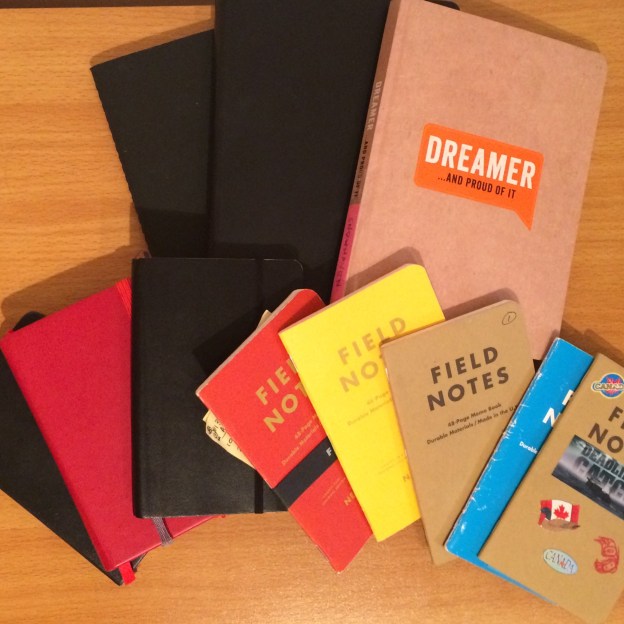
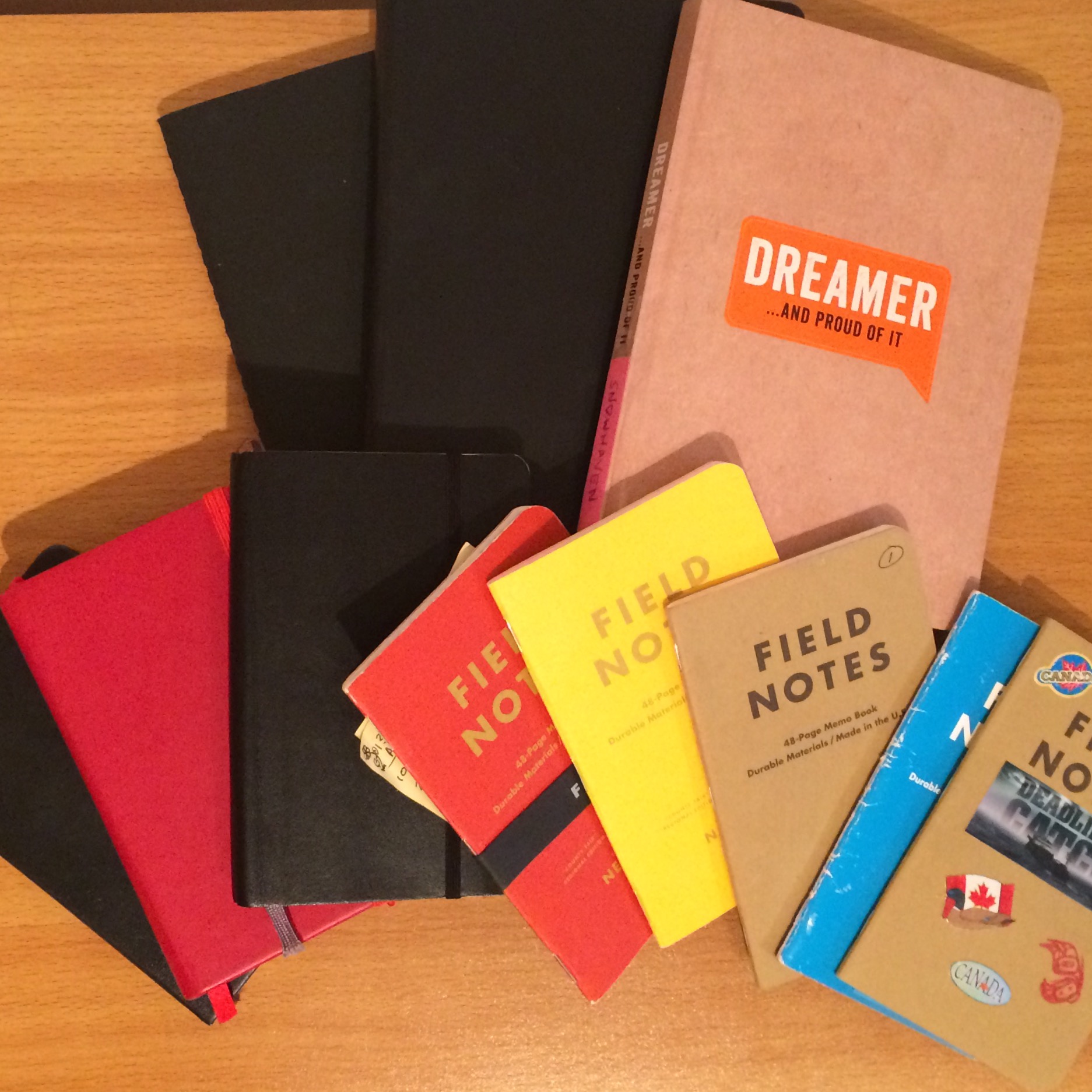
I have written a lot this year.

I reached that conclusion when I looked back over the notebooks I have completed over the past 12 months. Yes, all of these books are full (other than a few pages at the end sometimes). I clearly have a problem. One that I have zero intention of seeking treatment for.

2014 Notebooks

At about this time last year, I discovered the bullet journal system by Ryder Carroll. I’ve talked about implementing it before. I freely admit that I don’t use the system in its entirety, and I have changed the way I’ve used it over time, but the basics are fantastic. For anyone who wants to capture ideas in a notebook, then it is the best way to do it I’ve ever come across. Throw in my discovery of Field Notes and I’m one happy lady.

My plan for 2015? To keep going. One day I hope to look back on these and remember a life lived to the full. Isn’t that what we all want really? The places I’ve travelled, the people I’ve met. In those pages there are story ideas, snippets of conversations, journal entries and simple to do lists, all of which mark the passing of time and the movement of my own story. It may never mean anything to anyone else, but it does to me.

My Top 5 Books of 2014

These are my top 5 books that I have read in 2014, not necessarily that were published in 2014. Sometimes I’m late to the game, but just because something isn’t brand new, doesn’t mean it isn’t worth mentioning. Every year I intend to read more than I actually do, but this is the first time since I was at University that I have taken advantage of the library on a regular basis. It’s the perfect way to try something you’re not sure about, which has led me to some complete gems over the past twelve months.

So, without further ado…

General Fiction

The Girl Who Saved The King of Sweden by Jonas Jonasson

The Girl

This book was immensely enjoyable, but hard to describe. Larger than life characters and even bigger plot, this book was so carefully crafted that the suspension of disbelief – even in the face of insurmountable odds – never wavered. I dare anyone not to root for the main character from beginning to end. From Soweto to Sweden, the comedy is punctured by some dark moments, but a reminder to never, ever underestimate someone because of who you believe they are.

Fantasy

Mistborn by Brandon Sanderson

final-empire-2

My sister is a huge fan of Brandon Sanderson and she’s been trying to get me to read his books for years. I finally got round to doing so earlier in the year, and I’m glad I did. I think Mistborn is a perfect entry point into his writing, and you can read my original review here. For any would-be writers of fantasy, it is also a great tool for understanding the importance of world-building and how to get the balance right between background and plot.

Self Help / Personal Development

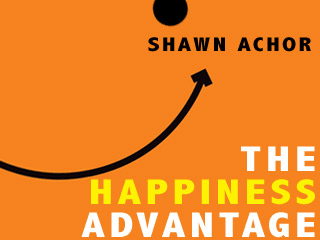
The Happiness Advantage by Shawn Achor


I found this book by way of his Ted Talk, via the Productivity Book Group podcast. As a person not naturally given to positivity (I tend to think of myself as a hardened realist), I’ve been trying very seriously over this past year to work on my mindset as much as anything else. Insightful without being patronising, this book has delightful anecdotes, interesting research and some basic, simple tips to help people take the steps towards the benefits of being more mindful.

Biography

My Spiritual Journey by Dalai Lama

Spiritual Journey

This falls into the category of random library find. I gave a brief review of it earlier this year. It was humorous, insightful and gave a picture of the man I had heard of (who hasn’t?), but didn’t really understand. Spiritual without being preachy, there was no attempt to hard convert to Buddhism here, as there so often is with books containing religious figures. It was simply a fascinating window into the life of a man who has travelled a very different road to most of us.

Business

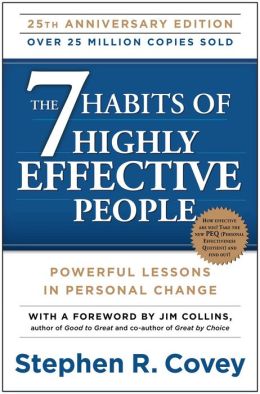
The Seven Habits of Highly Effective People by Stephen Covey

7 habits

In the interests of honesty, this was not the first time I had read this book. It was probably one of the first books I had read on business/personal development, probably a decade or so ago. Back then, I just didn’t get it. I found it too dense, too remote, too hard to plough through. The only thing I remember taking away was the concept of mission statements. I opened it again this year and it was a completely different experience. I was finally ready for it, I think. I’m a big fan of organisation and productivity – both personal and business – and I try to follow the principles of Getting Things Done by David Allen. Now that is engrained in my life (six years and counting), I think the maturity of my own process allowed me to understand the bigger picture approach that Covey prescribes. Proof that sometimes, you have to go back to something twice to get a true understanding of the content.

Now I’m starting to plan my reading for 2015 – if anyone has any contenders then feel free to pop them in the comments below. I’m always up for a challenge!

Review: Field Notes – Ambition Edition

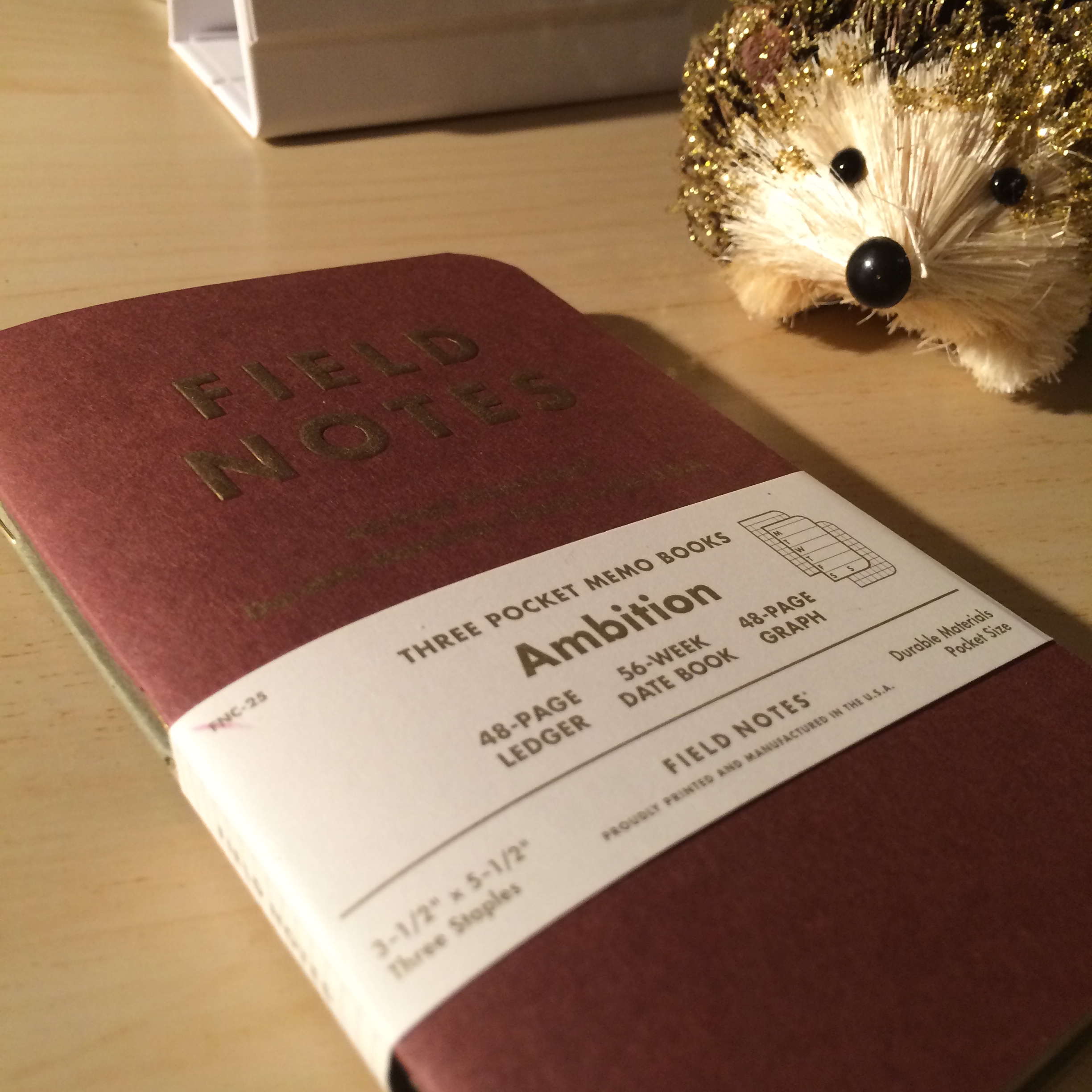
I’m going to go out on a limb and say that the Field Notes Ambition Edition is one of my favourites. It was this edition that has finally made me a colors subscriber.

Presence of hedgehog makes it even better

Presence of hedgehog makes it even better

They have been pushing the boundaries of what they could do with Field Notes over the past few editions, so I was wondering just how far they would be able to go with the winter release. There is a fine line between genius and crazy and part of me has been dreading them crossing it. Instead, by going with the three different types of notebooks in one pack, I think they’ve managed to hit a sweet spot.

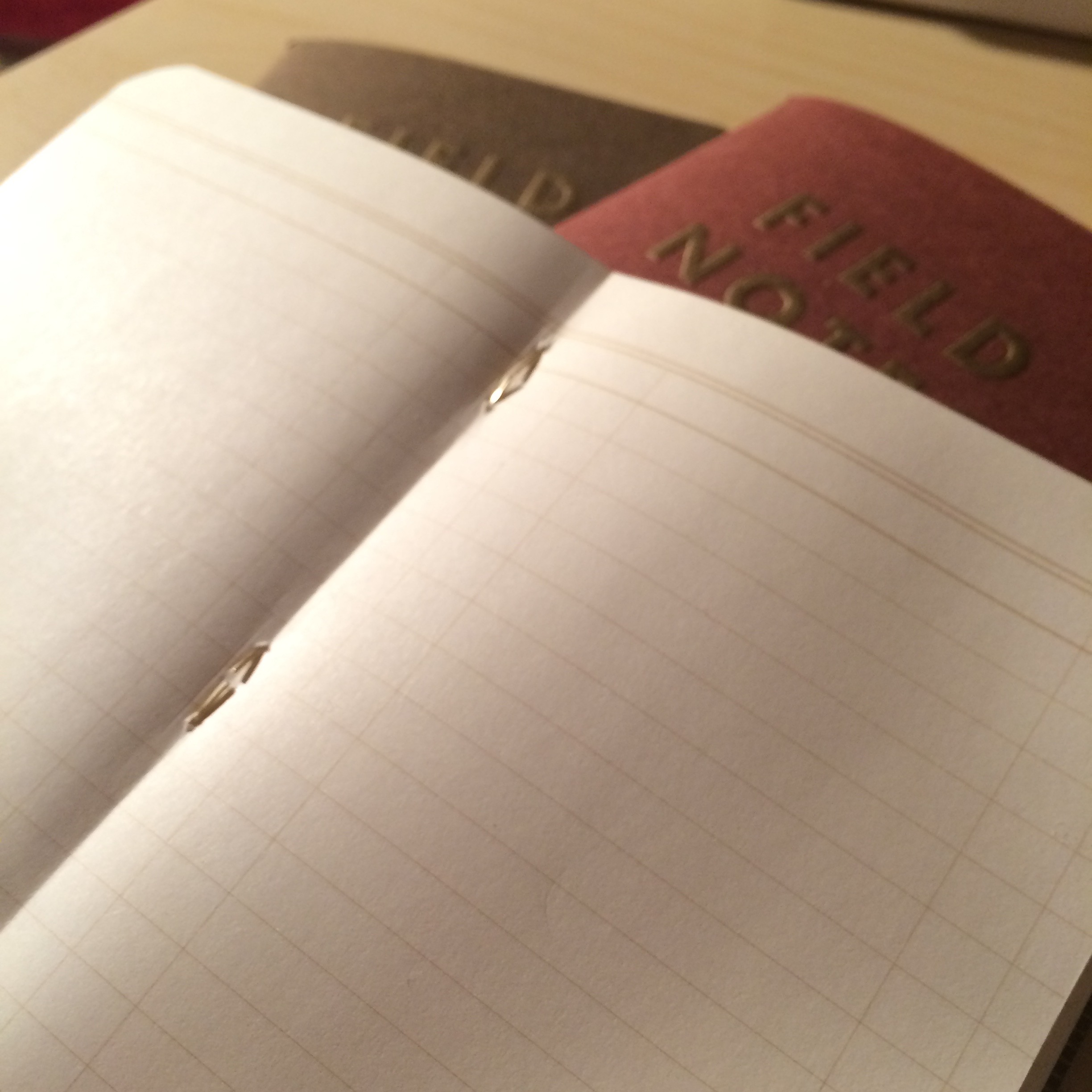
The memo book itself is a lovely colour (wine) and more importantly for me, uses grid paper. I love grid and the form factor and size makes it perfect for an everyday carry bullet journal:

Field Notes Memo Book

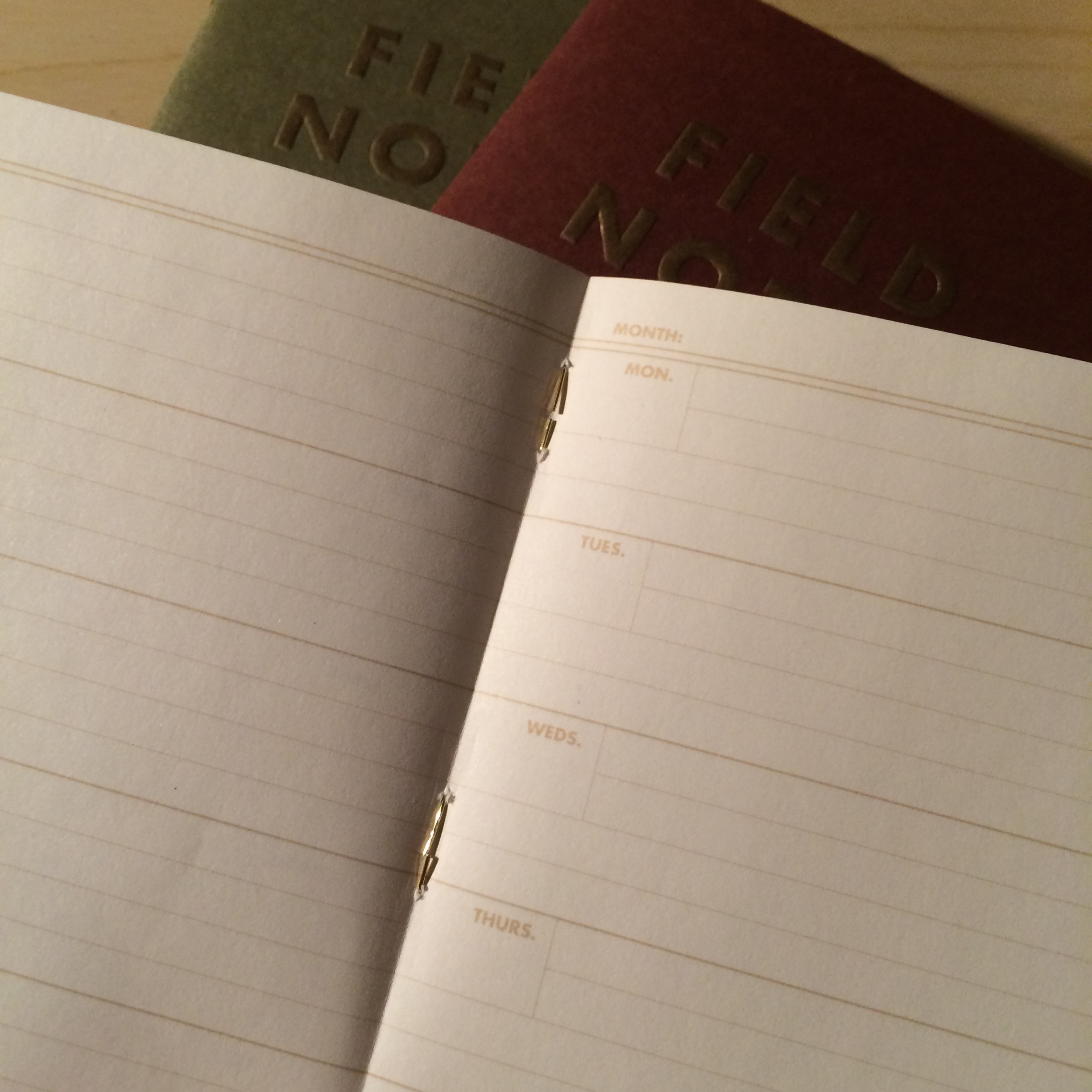
Secondly, and a sensible one for the time of year, I can certainly see the appeal of the 56 Week date book. They’ve also avoided actually dating the pages which, given the fact that anyone who regularly buys Field Notes is likely to work through their existing pack before opening the next one, means it is not rendered immediately useless if that doesn’t happen until March:

Field Notes Date Book

Finally, the ledger book. Now, this one causes me a bit of a dilemma. I really like it, but I’m not sure how to use it. Not in a way that is anything other than a regular notebook, which almost feels a bit of a waste. I’m not that into sport, and all my financials are done on a spreadsheet. If anyone has any suggestions then please let me know, as I’m struggling a bit to come up with something creative.

Field Notes Ledger

After the brightness of Unexposed, I love the muted colours of these books. They work with the gold trim to create a old school sense of style which I’m very comfortable with. Also the sound of that trim cracking as you open the pages for the first time is intensely satisfying in a way that only notebook addicts will understand. I can see them coming out at work without causing any raised eyebrows (Unexposed was about as far from corporate as you can get without spitting in the eye of your CEO).

Thanks of course go to Mr Brad Dowdy, the Pen Addict himself, for getting me interested in Field Notes in the first place. You should check out his website if you haven’t already. Without him, I would be emotionally poorer (but certainly financially richer…)

5 Reasons why I’ll be using Scrivener for NanoWrimo

Earlier this week, I read the bravely titled Why I Will Never Use Microsoft Word Again by the mighty Jeff Goins. People I know say that phrase all the time out loud, but few people in positions of influence in the writing world would commit it so defiantly to screen. Yet, as soon as I read the title I was nodding, partially because I already suspected what the solution would be.

The world at large has not yet moved on from Microsoft Word and I suspect it won’t for a while yet. Submissions, anything for the day job – Microsoft Word is the only accepted choice. Even with the huge increase in popularity of Apple products there has been very little give, with an emphasis instead on better conversion technology.

But when it comes to my writing, Scrivener is my tool of choice. For those of you doing NanoWrimo this year who have never tried it, there is a free trial on their website, available for both windows and mac.

But Scrivener is not just for fiction. I think that is a common misconception. Any piece of writing that requires more than a couple of sides of A4 plain text will benefit from it’s functionality. With that in mind, here’s why I’ll be using it for NanoWrimo.

Planning Tools

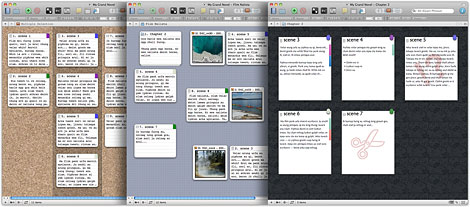
You can’t write a word of your novel itself before midnight, but there are no rules about pre-writing for Nano. In fact, I would positively encourage anyone trying it for the first time to do as much pre-writing as possible. Scrivener has the best outlining tool I’ve ever come across, and the cork board allows you to visually play with concepts, themes and characters in a way that is impossible on a  piece of simple word processing software.

feature-corkboard

Name Generator

This is almost an afterthought for some people, but it has saved my bacon at 6am more than once. It’s amazing for those times when an incidental character turns up. You know the sort, the ones where you need them for a plot point but they don’t come with a back story or enough of a personality in your brain to instinctively know they are called Bob. The name generator tool can do either first names or both, with cultural, gender and language options if you need to narrow it down to something more specific. Don’t let trying to work it out derail your writing flow any longer.

Templates

Again, another key pre-writing feature that it just awesome. Scrivener comes with pre-developed templates for characters and settings, so you can keep track of the key details (nothing like your protagonist changing eye colour halfway through the book is there?). You can attach images and web content in Scrivener too, so keeping it all in one place is easy. What’s more, you can customise it so you can create your own templates. I’m trying my hand at an epic fantasy for Nano this year, so I have a template for my magic systems to make sure they balance each other out and the complicated details don’t get lost. One click and I can easily reference back, rather than having to search through an entire document to find a tiny but suddenly important detail.

Formatting and Fonts

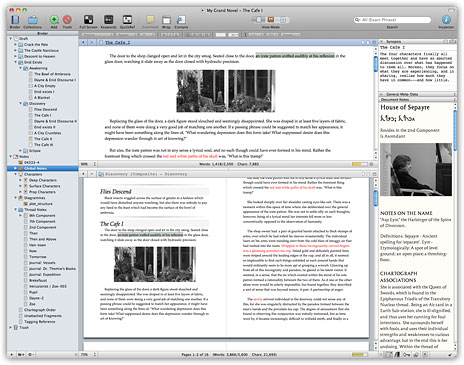
Let’s face it, Word has become more and more complex. Whilst powerful functionality is good, it gets lost in amongst the everyday, and for most people, they never use any of it anyway. When writing a long document (again, regardless of fact or fiction), the key is to get quality content in place, not to be able to provide fourteen different types of shadowing to your title. I like the fact that Scrivener places the basic, everyday options up front and centre, with much of the formatting and additional functionality happening in the background. Instead the screen is taken up with the elements you need to keep your eye on, such as the binder on the left so you can see where you are in the grand scheme of things, and the synopsis notes on the right so you can drill down into the specifics of your current chapter. I love that my screen isn’t mainly wasted space.

write_structure_revise

Project Targets

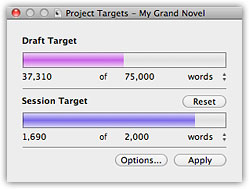
Again, a relatively small tool, but the one thing I love the most. The project target box sits happily in the corner of the screen, allowing me to see my daily word target, as well as the overall progress based on my estimates of the total length, and the countdown to deadline. The target can even dynamically change if the deadline is the key element, so if you have a day off, Scrivener reminds you that you have to put in the extra words over the life of the project. Simple, but oh so effective at 6am when you’re trying to do 1000 words before the rest of the world wakes up.

feature-statistics

Having started this whole thing by saying that everyone still uses Microsoft Word, it would be foolish of me to push something that then had no application in the real world. I’ve written 6 full length novels in Scrivener now and exported them all successfully to either Word, ePub or Kindle formats. Likewise, if you’ve already done some of your project in a different format, you can import into Scrivener if you want to give it a go.

So that’s why I always use – and will continue to use – Scrivener for all my writing projects, not just for NanoWrimo. Check it out and let me know what you think.

All images courtesy of literatureandlatte

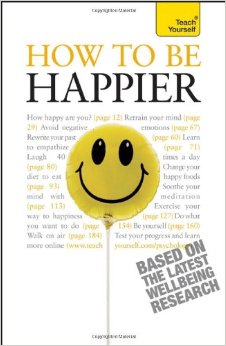
Book Review: How To Be Happier by Paul Jenner

Another great library find, How To Be Happier by Paul Jenner was one of those rare self-help books that made me laugh out loud.

Disclaimer: I am not currently suffering from depression. I am not ungrateful for my lot in life. I have many things that so many other people do not. Nevertheless, I think there is a pervading sense of dissatisfaction that is sweeping its way through our culture.

It is strange, in the Western world where we have ridiculously large amounts of everything, that people seem consistently less happy. I listen to a podcast call The Productivity Book Group (you should check it out if you’re into that kind of thing) which introduced me to Shawn Acher’s amazing TED talk on happiness. So my mind got to thinking and this was the book it found.

How To Be Happier

It could, in theory have a subtitle in keeping with the current trend, of get naked more often and touch each other. The author is keen to stress that this is probably best done with a consenting partner, but that is the one thing I seem to remember most about it.

On a serious note, this book was useful whilst being lighthearted, informative without being preachy. Each chapter had practical sections and exercises to implement and review. I naturally lean towards cynical and pessimistic, so for me it was a pleasant surprise to at least come out in the middle. Normally, whenever there is a personality-based multiple choice quiz, I come out looking like a sociopath or suicidal. Moderately happy was therefore something of an academic success, and shows how far I’ve come in the past few years.

The hardest part of the book is the bit that always sounds the most simple. In order to be happy, we must, at some level, choose to be happy. For anyone familiar with Tony Robbins and NLP, this will ring a bell. Of course, when you are chronically depressed or very, very unhappy, the concept of choosing to be happy doesn’t seem like one you can necessarily bring yourself to do. How To Be Happier gives you some small baby steps to work through to help you build up to the choice. This is something I have seen reflected countless times in my friends and family (and myself). The logic of knowing what to do is nothing like the ability to actually do it.

The book works through other key topics, such as the impact of food and exercise on our mental state (without any extreme diets or workout routines being forced on the reader), meditation and mindfulness. There was also a chapter which seemed fairly innocuous but I suspect is actually a key foundation: be yourself and learn to accept this. Today’s world, with blogs and twitter and the book of face, seems to funnel us into only showing the best of ourselves. The parts we think other people will want, or envy. In the worst case scenario, when we don’t feel we have these things, we over-embellish or outright make them up. We post pictures of ourselves from angles that make us look good but our best friends wouldn’t recognise. We talk about amazing nights out when really we’ve been sitting in front of the TV chomping through a family size bag of M&M’s to make ourselves feel better, washing it down with a bottle of wine. No wonder being ourselves is becoming harder and harder. And with that disconnect comes continued unhappiness.

So, eat well, exercise, think positive thoughts and learn to accept yourself for the unique individual you are, so-called flaws and all.

Then get naked and touch someone some more…

Book Review: Brilliant Freelancer

On a recent trip to my local library, I picked up Brilliant Freelancer by Leif Kendall. I wasn’t looking for anything in particular, but being British, things such as marketing myself have never sat that comfortably with me.

Nevertheless, it seemed like an interesting book to give me a bit of an overview and I have to say I was pleasantly surprised. Whilst there were the standard ‘of course you can do it’ messages – no one wants to push failure and inadequacy after all – it was refreshingly realistic. It posed the simple message that if you tried it and it didn’t work out then it wouldn’t be the end of the world. Even if you tried it, were hugely successful at it but didn’t enjoy it, then that was okay too.

Brilliant Freelancer

The book itself is divided up into sensible chapters and sub-grouped into key areas. It is all pretty high level stuff, but I think that is actually a strength. When you are first dipping your toes into the water with this kind of thing, having everything laid out before you in excruciating detail is more likely to simply induce fear and lead to trying absolutely nothing. Instead, chapters on how to find the most profitable and manageable work sat comfortably alongside how to motivate yourself and get stuff done. Being a self-employed writer is a road I am only just beginning to walk down, so I am happy with the baby steps for now.

Whilst this book wouldn’t serve as your only guide to freelancing ever, it was certainly a handy reference point to begin. If you are thinking about a strategy or just whether or not it is feasible to even do any self-employed work, this book will give you just enough information to hold the fear at bay so you can begin.


Waterman 512v Fountain Pen Review

It’s no secret that over the past year I have rediscovered my love of longhand writing. Slowly but surely, my fascination with fountain pens has grown, so when I spotted a chance to get my hands on a Waterman 512v I took it:

waterman quote

Forgive the terrible penmanship and focus on the inspiring quote instead.

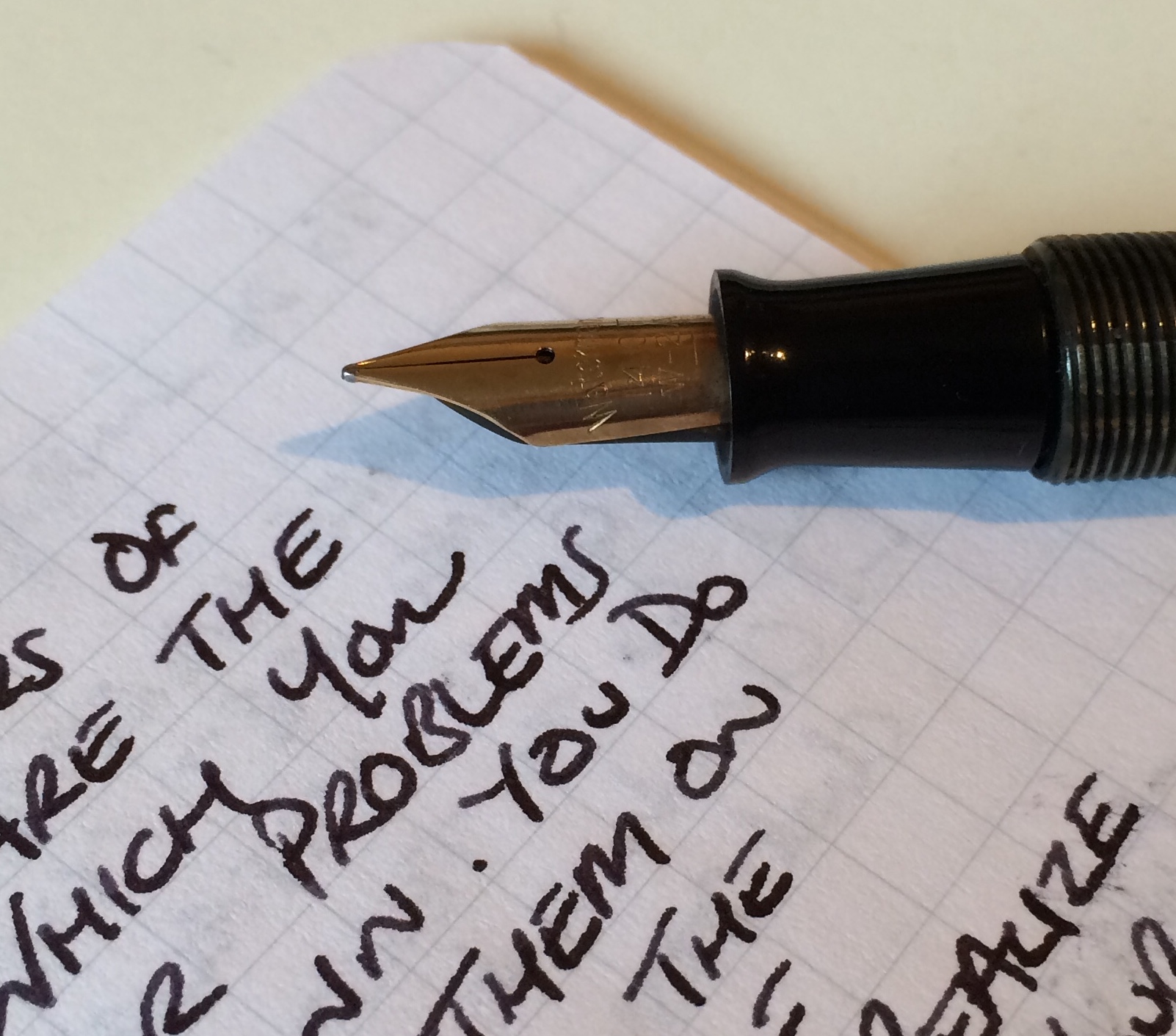
I was really surprised at how light and small this pen was. Uncapped it comes in at under 4 inches, so I’ve found that I really need to have it posted to make it comfortable. If you don’t like posting your pens, I’m not sure it would be for you. I love the nib though, even if it is second hand and not quite as smooth as it could be. It feels loved.

waterman nib


It’s an old fashioned lever system refill, which isn’t as simple as my Sheaffer convertor, but I’ve only had one accident (and that was with some purple ink all over my fingers, lovely). The flow of ink isn’t too wet and it was surprisingly good as an everyday pen. I tried it for a week with my Field Notes and there was virtually no feathering or bleed through, despite the fact Field Notes paper is not particularly designed to be fountain pen friendly. Even scribbling away in a fast, bullet journal style way of writing didn’t cause any misses or scratches.

waterman bullet

Sadly, I could find very little information out there on the interwebz about the Waterman 512v, so I thought I would do this little review just in case anyone else was considering purchasing one. If you don’t mind fiddling around with ink rather than cartridges, then I would say go for it. I’d happily shove it in my pocket and go.


Sheaffer 100 Fountain Pen Review

Searching the interwebz, it seems as though this pen hasn’t got a lot of love from the pen community at large. Which is a shame really, as it falls quite neatly into the entry level bracket with some success.

I wrote with a fountain pen for years growing up, but then when you enter the real world, the standard Bic seems to take over a lot of the time. I was looking to get back into fountain pens, but without any current experience, I wanted to make sure I wasn’t blowing hundreds of pounds on a Mont Blanc just because I wanted one (still do).

I’ve been using the Sheaffer 100 now for two months, ever since I purchased it on a trip to Canada. The lovely lady at The Vancouver Pen Shop talked me through a whole range of brands and styles before we settled on this one.

shaeffer 100


Forgive both the terrible photo and the equally bad handwriting. It’s a dreary day with bad lighting and only an iPhone for pictures. The handwriting I have no excuses for.

Firstly, the positives. From a cost perspective, this was only $30 + tax, which for a pen of this quality is great. The nib and feed, by all accounts, is exactly the same as what you get in the more expensive Sheaffer 300, which makes it a good way to try it out for size.

The ink flow to paper isn’t too wet, which is also a bonus as I used a variety of notepads from Moleskines to Field Notes to El Cheapo supermarket brands, not all of which are good for fountain pens. It still delivers enough ink to not be too scratchy. In the time I have been using it, it has only skipped a handful of times.

I got the fine nib because my handwriting isn’t conducive to anything thicker, and I found that to work perfectly. Not really any flex as you would expect, but still a smooth write.

The barrel has that more expensive look and feel to it too. I have to be the only person in the world who doesn’t find the aesthetics of Lamy of Kaweco pens pleasing. I definitely prefer the more classic look that comes with this kind of pen. Of course, I still intend to try both of those now I know that I am really enjoying using fountain pens again, so I may yet still be converted.

The only negative for me is the the grip area is super smooth and about an inch deep. That means I have to hold the barrel at a point slightly higher than I normally would, up where the ridge gives a bit of traction. It by no means makes the pen difficult to use though, so I wouldn’t call it a deciding factor.

The best bit about using it has nothing to do with the pen itself. I’ve found a joy in writing creatively in long hand that I hadn’t realised I missed in this day and age of digital devices. It feels subtly different in the care taken for each word choice, and the sense that I am actually crafting something, rather than just banging down on the keys. Especially when I’m travelling, it forces me to slow down and really be in the moment.

Analogue certainly isn’t dead and gone, that’s for sure. If you’ve read this far, you probably agree.