Category Archives: Tools

Pens, paper, book reviews and other useful information for creative entrepreneurs

Top 5 podcasts of 2016

Looking back through the archives, I apparently didn’t do a ‘best of’ post for anything last year. In 2016, audio has finally become my favourite way to learn. I still spend a portion of each day listening to podcasts and love them just as much as I always have done. Back in 2014 I selected a podcast that was the best in one of five genres I listen to. This year, I’ve just gone for a flat out top 5 instead.

So, in order of ranking, we have a new winner:broadcast_artwork_cortex_artwork

“CGP Grey and Myke Hurley are both independent content creators. Each episode, they discuss the methods and tools they employ to be productive and creative.”

I found Cortex via a reference on one of Myke’s other podcasts earlier this year and hopped over to see what it was all about. I was instantly hooked. Being a full-time independent creator is something I aspire to, so listening to Myke and Grey talk the the trials and joys of doing so was eye opening. Not only that, it was great to hear someone who thinks a lot like me (Grey, not Myke) when it comes to decision fatigue, organisation and mild disdain of how most other humans think sometimes. I found a kindred soul through the digital airwaves and that is a very rare thing.

My second favourite podcast of the year couldn’t be more different. Lighthearted, laugh out loud funny, The Librarian Is In has kept me up to speed in the world of books and culture during a year when I couldn’t spend as much time in bookstores as I would like:

thelibrarianisin1_final_2

“The Librarian Is In is the New York Public Library’s podcast about books, culture, and what to read next.”

It’s campy, informative and yet not ashamed to dive into dark topics when the books demand it. It is possibly the most inclusive podcast that I listen to, where any book is good for someone and no matter who you are, you are welcome.

At number three, we have the 2014 winner making its way back onto the list:
broadcast_artwork_penaddict_artwork

The Pen Addict is a weekly fix for all things stationery. Pens, pencils, paper, ink – you name it, and Brad Dowdy and Myke Hurley are into it. Join as they geek out over the analog tools they love so dearly.”

Big changes have happened for both Myke and Brad since the 2014 list, but they still have something new to say about pens and other stationery items each week. It’s been great to watch them grow and evolve over time and pull the pen community with them to lift us all up. Yes, there is a pen community. Yes, it is very niche as markets go. But I’m not sure there’s a nicer fandom out there, and the ratio of normal to crazies (there are always some crazies, just a fact of life) makes it the best of any community I’ve been part of.

Anyone reading this will probably know that writing is my passion. Anyone aspiring to be a full time writer will also know that the only way to get there is to keep learning and become more skilled at your craft. So at number four, Writing Excuses is the best podcast I’ve come across for that.

wx-wordpressbanner-wdtrophy2016

“Fifteen minutes long, because you’re in a hurry, and we’re not that smart.”

Most podcasts about writing are actually about marketing and publishing. Although this podcast touches on that occasionally, it is more like a masterclass on craft. Understanding how the construction of your writing controls the mind of your readers is so important. You can self-publish in ten minutes these days, but writing something great takes as much thought and effort as it always has done.

Finally, This Is Your Life by Michael Hyatt is still one of the best business podcasts around.

thisisyourlife

“This Is Your Life™ is my weekly podcast dedicated to intentional leadership. My goal is to help you live with more passion, work with greater focus, and lead with extraordinary influence.”

It’s about to undergo a change in 2017, which won’t be the first time since I started listening in early 2014. Although the focus is on leadership and business skills, there has been a definite shift towards the ‘why’ of work and life. Yes, it still is all about achievement, but instead of merely productivity tips, it now gets under the hood of what you are working towards. One of the few business podcasts that promotes the value of sleep and doing nothing sometimes, it then gives you the tips and tools to move forward with whatever it is you feel truly called to do.

So that’s my best of podcasts list for 2016. Three of them (The Pen Addict, Writing Excuses, This Is Your Life) remain from the original 2014 list. I’ve sampled about fifty different podcasts since then, so I see this longevity as a testament to the quality of content they produce. If you have a commute, a day job where you can put on some headphones and ignore the world, or if you just want an accompaniment to your daily walk, I think podcasts are a perfect way to get positive input for your brain.

As for our winner, Cortex has changed the way I will live my life in 2017, I am sure of that.

Game Changer: Scrivener for iOS

I am actually drafting this blogpost in the waiting room of a mechanic shop while they fit two new tyres. Why? Well, because they needed changing. And because I now have Scrivener for iOS. Yes, finally, there is a Scrivener app. I’m not going to lie; I did a little squee when it was released.

ios-feature-get_writing

I have done all my outlining and drafting in Scrivener for years now. I only use MS Word for final formatting to submit to the rest of the world, who seem to enjoy the sweet misery that it brings.  What writer doesn’t die a little inside when they see that (not responding) banner?

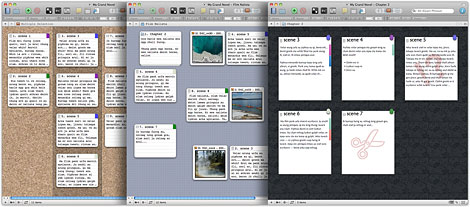
Anyway, my main problem with Scrivener – in fact, my only problem with it – was portability. I am often travelling for work and do not want the additional hassle of taking my MacBook with me. One laptop is enough for anyone. I have, at times, come up with an almost alternative workflow whereby I email myself the next part of the story. Clunky at best. It is also reliant on having written down the details of the next writing point, rather than just flicking to the handy outliner view. feature-corkboard

It also doesn’t take into account that some of the things I write really should not be jotted down onto a work laptop. Ever.

EVER.

So whilst the difficulty was never enough to make me stop using Scrivener, it did hamper my ability to get work done consistently each week. I am a creature of routine. I like to be able to write each weekday morning and if I lose two of those mornings because of a massive commute, my writing productivity gets slashed almost in half.

For the sake of complete transparency, I will confess that I have really struggled with this for two years now, since moving to my current employer. I have questioned many times whether this inability to bring balance to the one area of my life that I love so much could actually be a deal breaker. Perhaps that is a level of honesty that some would label career-limiting, but it is the truth.

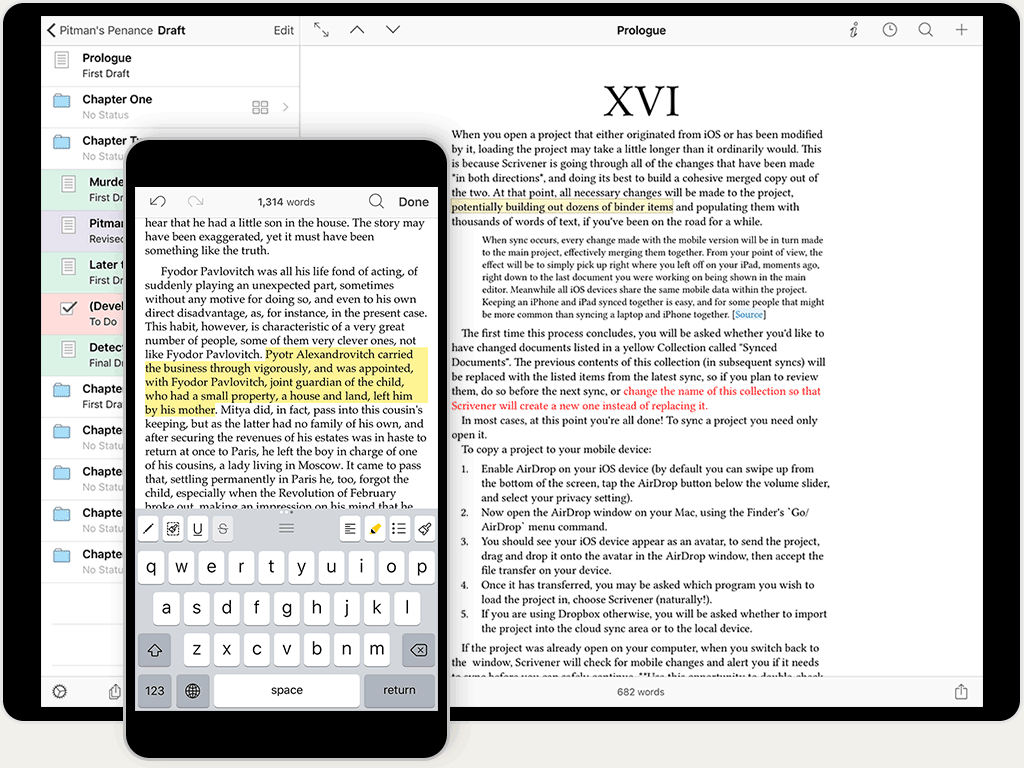
Enter Scrivener for iOS. In my daily life, that means I can now write away from home using only the iPad. This is considerably more convenient than having a MacBook with me. It also means at times like this, when I have unexpected time on my hands, I can pick up my phone and do short bursts of bonus work.

It is a game changer. I don’t say that lightly.

So far, I managed to write every day last week, despite being away from home at 6am two out of the five mornings. This week is turning out much the same. After some really simple setup, I tested the sync option with caution. I’ve tested software that syncs across devices before and if it is not implemented correctly, it is nothing short of a nightmare.

Not a single issue. Mind blown.

The functionality was my next test. Apps seldom have the full functionality of a desktop product. Yet everything I need is here. Despite bemoaning the fact it hasn’t existed for years, I am really happy that Literature and Latte apparently took the time because they were getting it right. I’ve yet to encounter a single feature where I’ve been frustrated because my mobile experience does not reflect the desktop one. That is a fantastic place to be in.

A very unusual place to be in.

16200851-scrivener_ios-main_shot

I frequently mix with other writers, both aspiring and best-selling. It doesn’t matter who they are or what level of experience, I’ve never hesitated in recommending Scrivener as my writing tool of choice. Especially if they are a planner rather than a pantser, there is nothing better for collating all your research material into a single place.

So, now my tyres are changed and I am going to wrap this up. I’m sure I’ll do some minor edits on my main machine before posting, but the bulk of it has been completed on my phone with ease.

So thank you Scrivener, for changing the way I can integrate the dream of writing into the much more harsh reality of a daily life, with its travel and to do lists and not enough hours.


images courtesy of Literature & Latte

Everyday carry for a writer

Over the past year, I’ve become endlessly fascinated by people photographing and describing their everyday carry. Of course, because I don’t live in America, I still find it odd to see so many knives and guns as part of that. The knives I can understand from a practical sense, but the prospect of having a gun as an integral part of your everyday life still baffles me.

Anywho, I am a person who has a few items with them 99% of the time. I might not have them with me when I go out for a special occasion requiring a little black handbag, but that’s about it. So below is my everyday carry:

IMG_0054

I adore my nockco holder. Whenever I have an idea I just pull the whole thing out, rather than having to ferret around in the bottom of my bag to find a fluffy pen and an old receipt to scribble on. I have three notebooks with me most of the time: my current notebook, the Shelterwood Field Notes which contain details of a series I’ve been working on for a decade and the black nockco dot dash contains all the notes for the manuscript I’m currently submitting. For the writing utensils, a mechanical pencil, a retro 51, my sheaffer, pilot metropolitan and a lamy safari. I love to have a reliable selection of varying nib sizes and colours.

I also carry a set of worry dolls down around that were made for me by my sister a looooooooong time ago. They’ve travelled quite literally around the world with me and have huge sentimental value. No matter where I am or what is going on, I always have my family with me that way, all tied up in a little bag. Wait, that sounds sinister. Never mind…

The other things are purely practical: Swiss army card (has got me out of a few scrapes over the years for sure), a wallet ninja, lip balm, ear plugs (a sign I travel so much) and a USB stick, because you never know when you might have to grab documents on the go.

So, no guns or knives, but still the tools of my trade!

Capturing ideas wherever, whenever

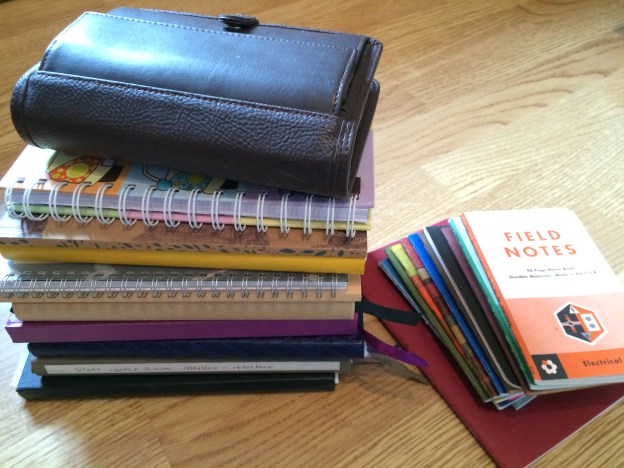
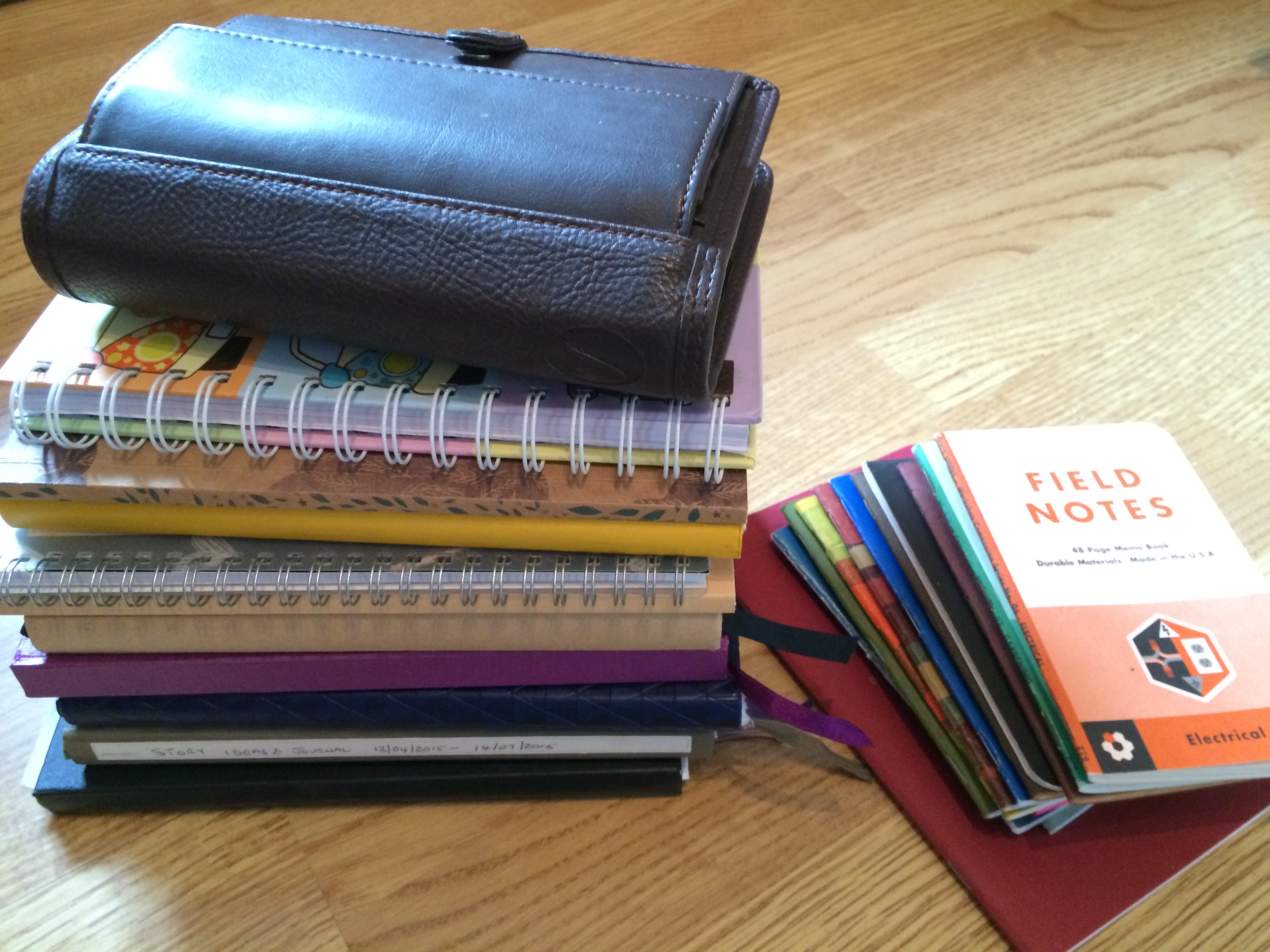
Intuitively I felt like I was capturing so many more thoughts and ideas as I moved through 2015. So at the end of the year I collected together all the notebooks I had completed into one place to confirm the theory. Yep, I had indeed had a lot of thoughts:

2015 notebook stack

Because I’m a bit of a GTD fan, I was in the habit of capturing things to do the moment I thought of them, but story ideas and general everyday thoughts and feelings, not so much. I made much more of an effort to do that and it shows. I have a whole treasure chest of ideas for stories I can now return to, as well as all the highs and lows of the year that I’ve recorded for posterity.

Broken down into three notebook types:

  1. The filofax was my daily log book for 2015. For 2016 I’ll be moving over to a Hobonichi which is already proving to be an amazing experience.
  2. The large, hardback notebooks were for novel plotting and extended meditative journalling, including daily gratitudes to set my days up right.
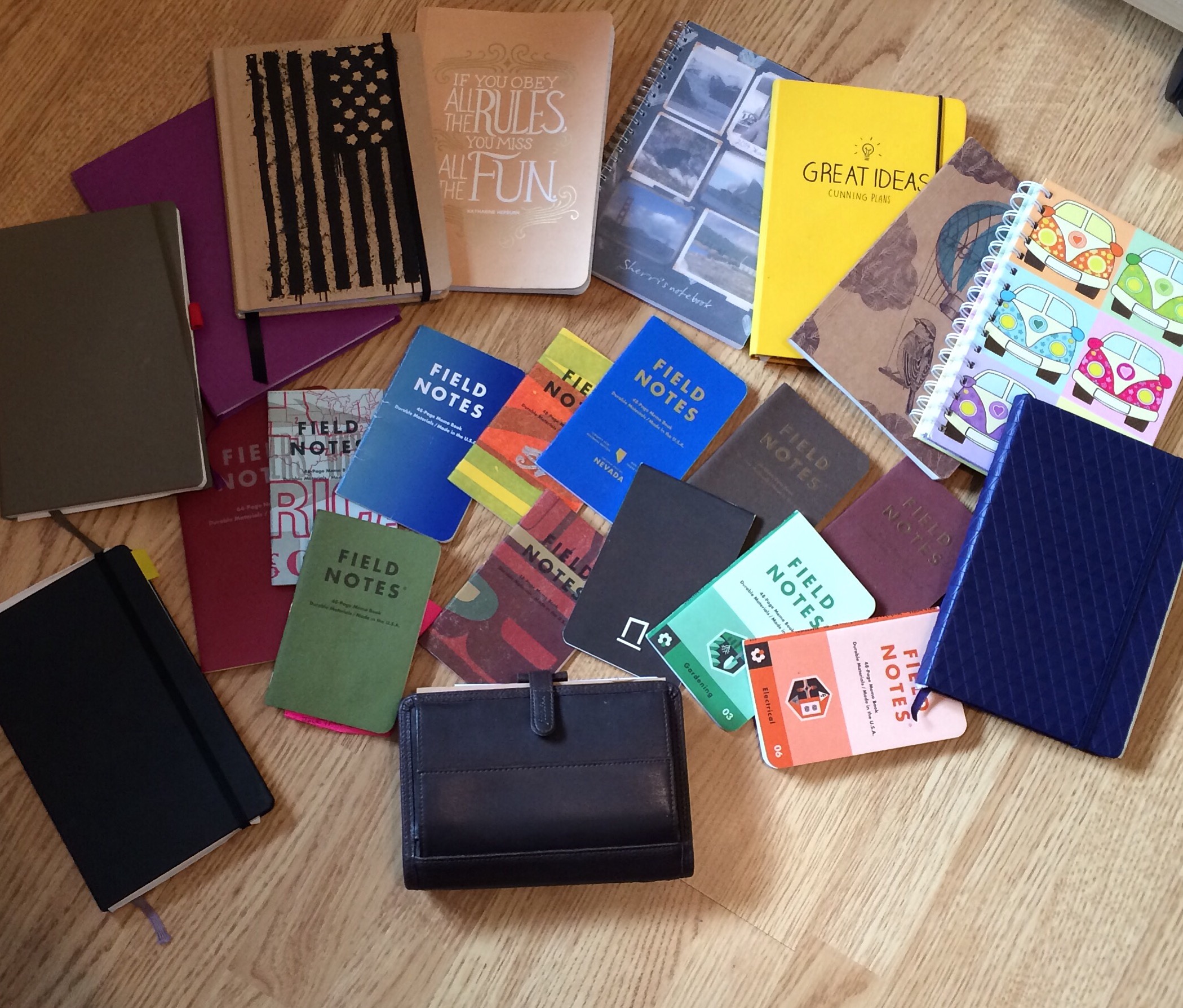
  3. Pocket notebooks (especially Field Notes) were always in my jeans or handbag for keeping track of what I had to do each day, but also for those random confluences of inspiration that happen when I’m out and about. Now I can capture them immediately (I’m guaranteed to forget them if I put it off until I get home).

2015 Notebook collection

I made leaps forward in my writing processes and achievements in 2015 and I fully intend to keep building on the momentum in 2016. More than ever I believe the best way to succeed at anything is to just write it down!

Making Notes: Emerald of Chivor

It’s no secret that I find any creative project starts out best when I put good old fashioned pen to paper. The majority of my first drafts are then created in Scrivener, but I’ve never found that plotting and discovering characters really comes alive if they’re not discovered on paper first.

Most people have creative slumps. I know authors, actual real life get paid to write books for a living people, who have found themselves with writer’s block. There are so many ways of getting out of it, but one of the things that works best for me is to find a really engaging tool that makes me want to write something – anything – down. That can be pen, paper or ink. As long as it’s decidedly analogue, I’ll give in to the temptation to try it.

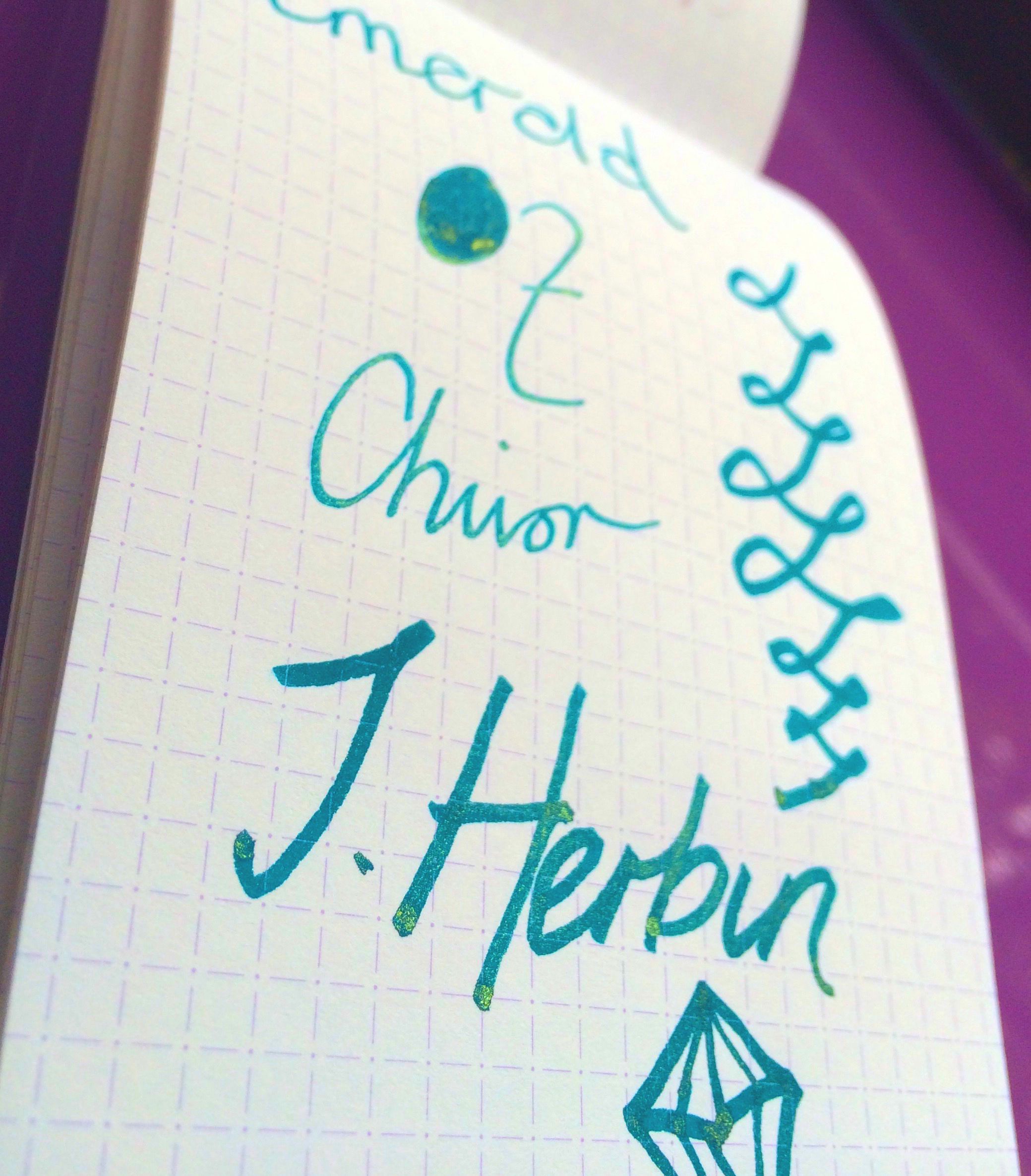
So without further ado, my latest inspirational find: J Herbin Emerald of Chivor:

IMG_9368


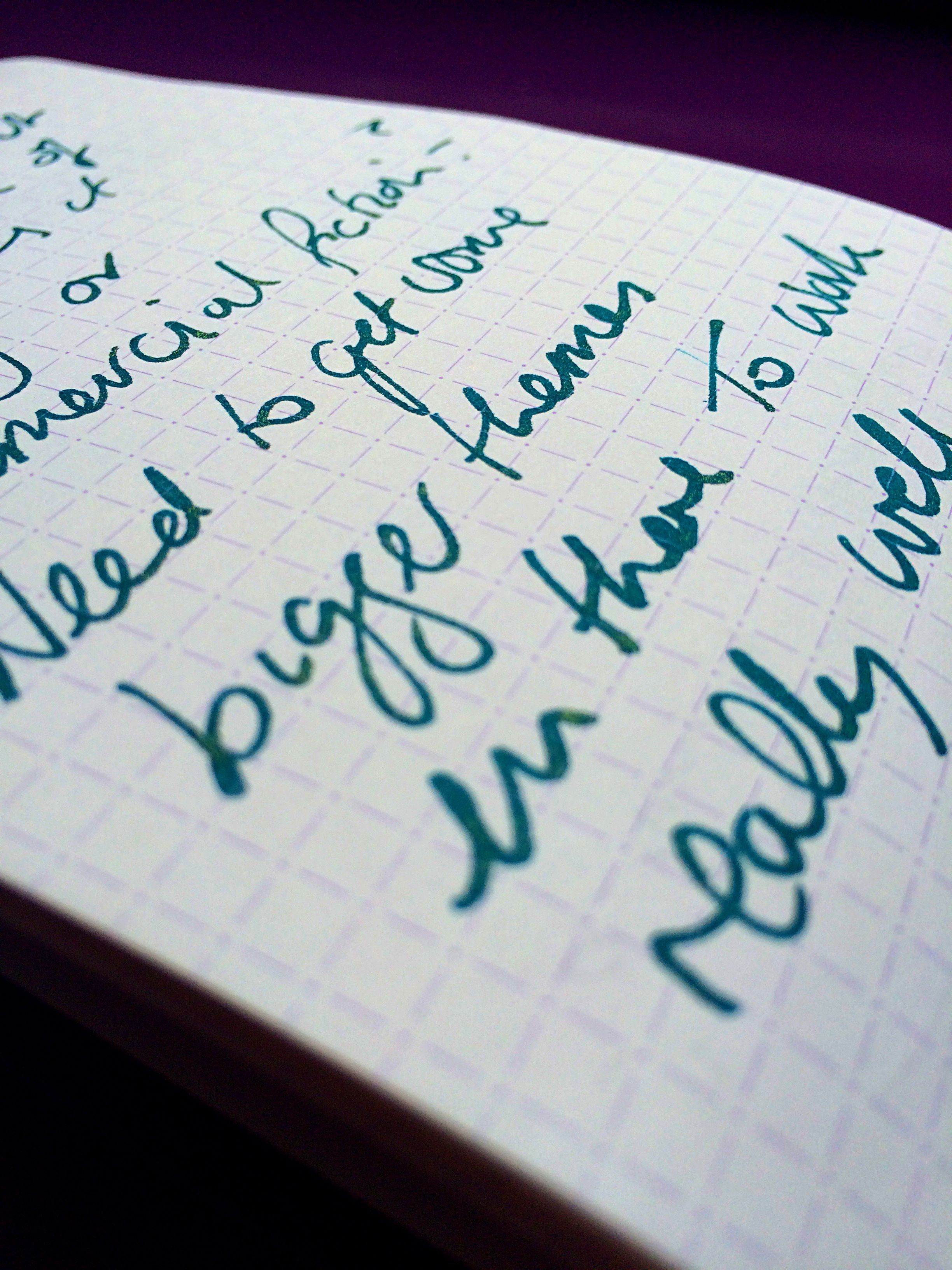
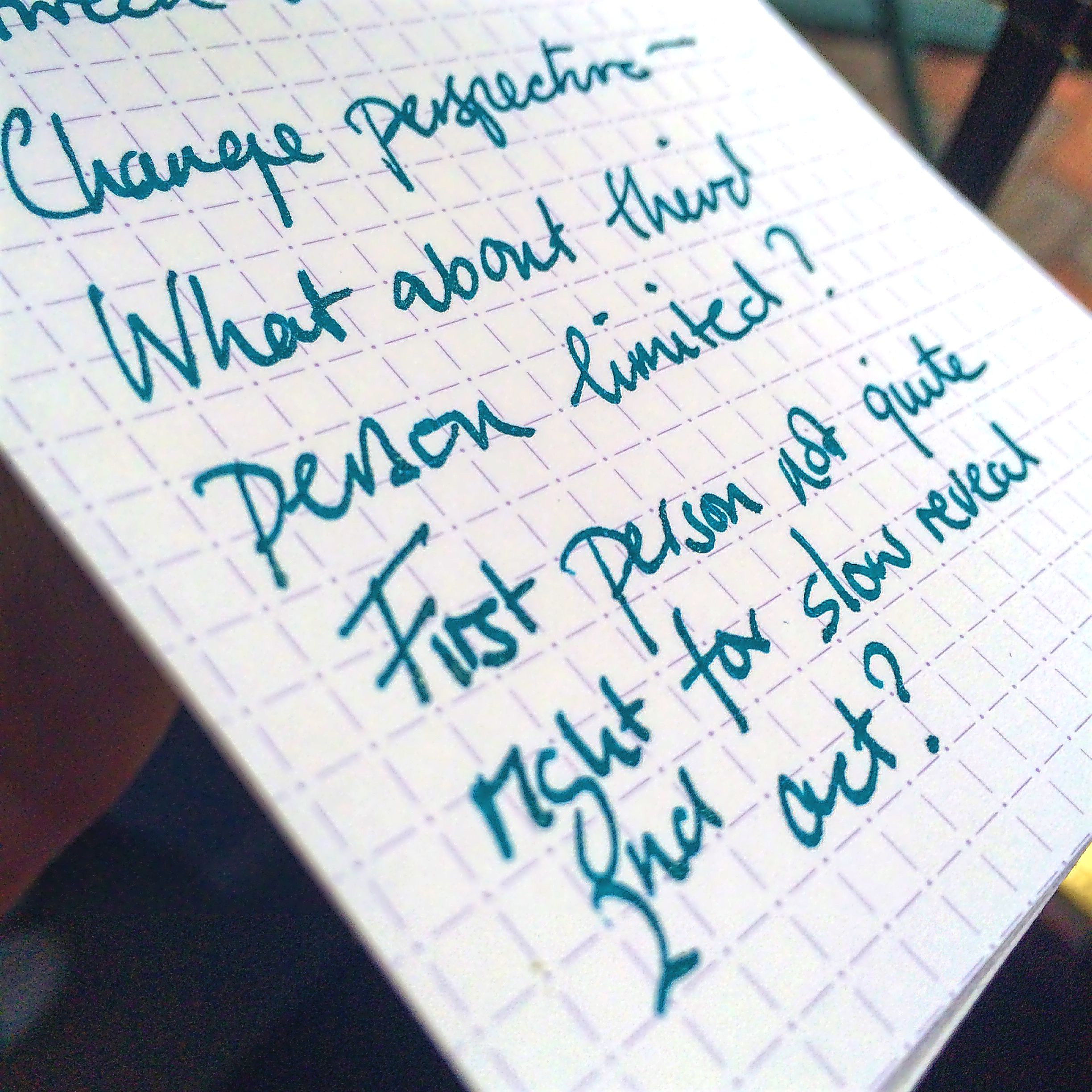
This ink has taken the pen world by storm and from the moment I saw the samples coming out, I could see why. That sheen! That colour! The hints of red were more intriguing than the flecks of gold. All better than I can capture on an iPhone, but I refuse to buy a better camera for the sake of doing blogposts. Anywho, I needed to go back to an old project and work out some knots that were bogging the whole thing down. So, with a trusty NockCo DotDash black pocket book (I’ll definitely be telling you more about those at some point in the future) and a TWSBI Eco 1.1 Stub (again, a pen worth knowing about), I started to tease apart the strands of my story to work out where it was going so spectacularly wrong:

IMG_9372

This is where having such a fascinating tool to play with comes into play. I was so distracted by wanting to put words down, to try and create the different flow using the stub nib, that I worked out what was annoying me the most without even thinking about it. I was too busy thinking about how there were differences when you shook the pen up a little first, how the red wasn’t as strong in my sample as I’d seen in some others and not about the fact that it was a point of view issue I was having.

IMG_9376


So, for me, it’s a big thumbs up for Emerald of Chivor. I want to use this so much, I’ve already decided that tomorrow it will be part of my morning pages routine. I think that J Herbin have got this one right (being the fourth in the series of inks using this gold flecking), and so far I haven’t had any issues with it clogging my pens. That being said, I think it definitely needs to be used with at least a broad nib if you want to get full enjoyment out of it.

Feel like kicking your creativity old school? Then this might not be the cheapest place to start, but it gets a huge thumbs up from me.

Emeraldofchivor

Leuchtturm 1917 Notebook Review

I mentioned in my last post that I had grown to love the Leuchtturm 1917 notebook for journaling. It’s also true for any kind of creative writing. I should apologise now, this post is probably going to have a lot of link love for those of you who are interested.

I don’t use the pocket size. For that, my love of Field Notes and the new NockCo Black DotDash notebook wins out every time. That’s my ‘shove in my pocket’ daily carry.

But using the A5 size Leuchturrm for plotting and planning has been an absolute joy. Anyone who like to write longhand or do their creative outlining by pen and paper should seriously check this brand out.

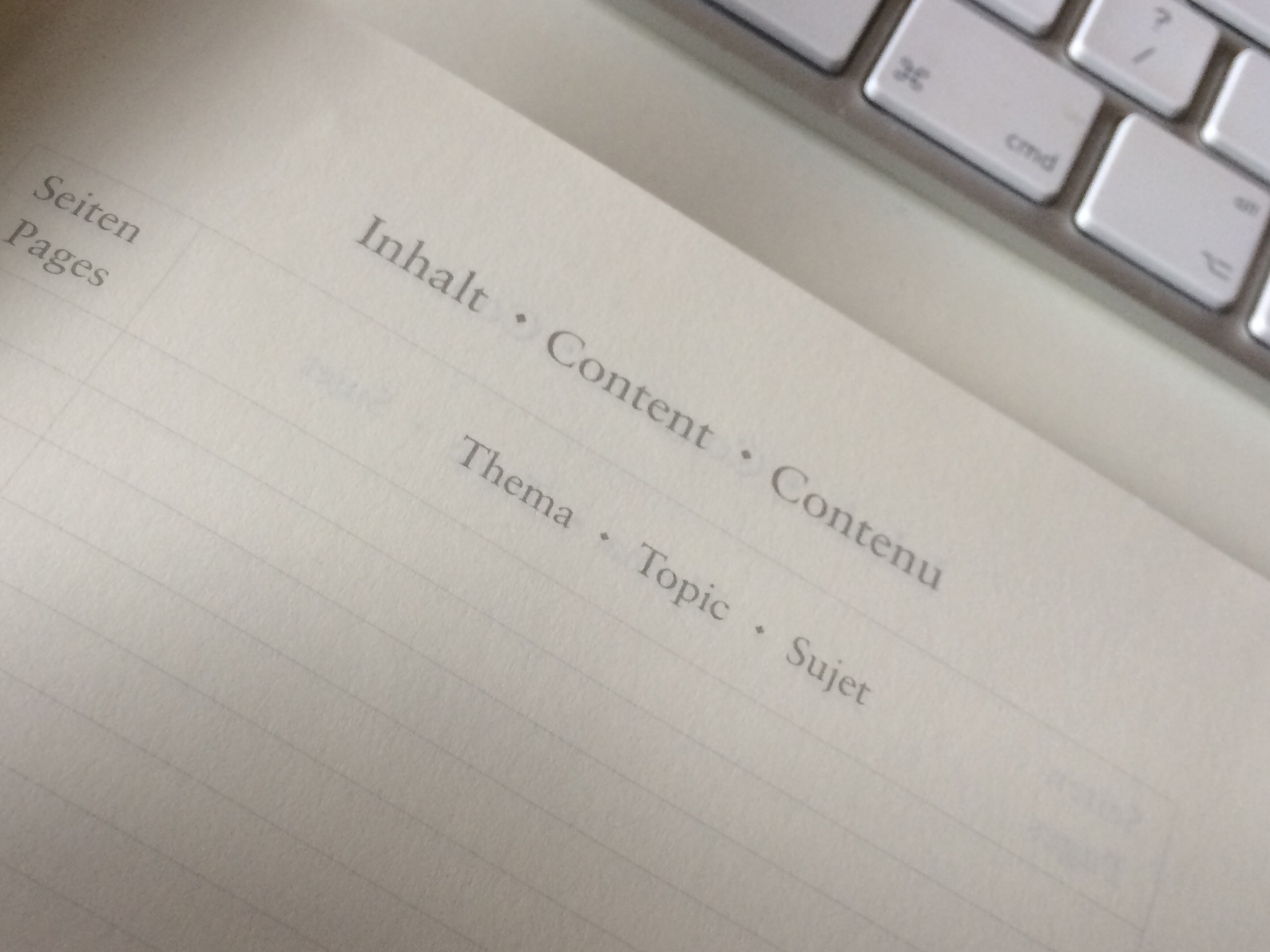
I’ve written before how I’m a fan of bullet journaling to keep track of things. The biggest pain in the backside about this method is having to number your pages in order to be able to create a table of contents for yourself. Voila! No longer a problem with the Leuchtturm, which is one of the reasons Ryder made it his notebook of choice for his kickstarter.

FullSizeRender-15 FullSizeRender-16

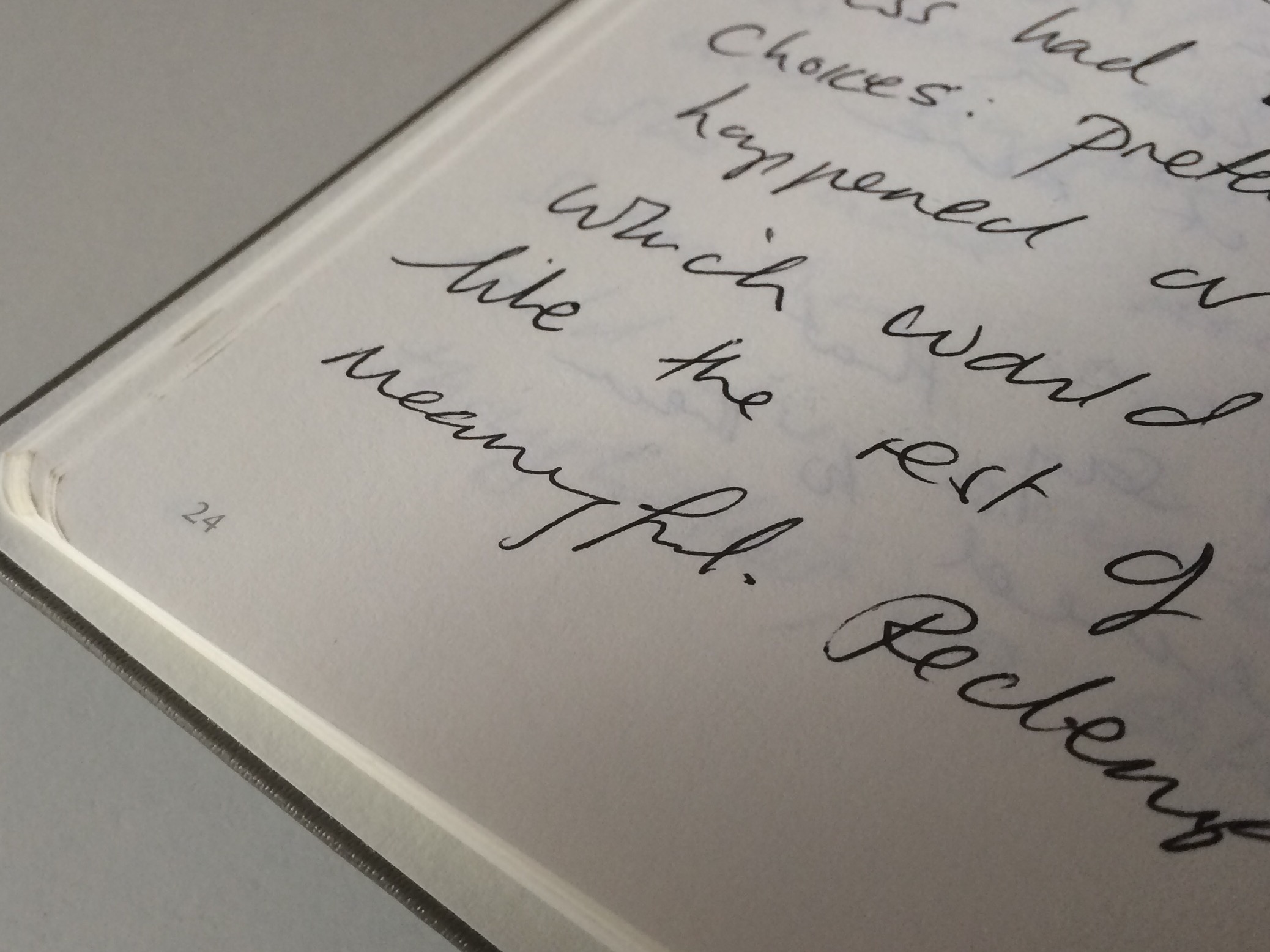
The second winning feature for me is simply the page quality. The slightly off-white, creamy colouring is really easy on the eyes. When using a gel ink pen it is like writing on glass it is that smooth. When writing with fountain pen, there is very little feedback, feathering or bleedthrough, even with a 1.1 stub nib:IMG_9258And despite the off-white colour, it still allows the colour to come out, like here with the gold flecking that comes with the J Herbin Stormy Grey ink. A lot of people love this ink concept, but were disappointed by how little it actually stood out on a lot of paper types. The Leuchturrm handled it beautifully, even if my photography is crappy and you can only see it here on the ‘I’. Forgive me, I’m only using an iPhone and the summer weather is once again verging on apocalyptic end of days when it comes to natural light.j herbin stormy grey

I should note that this isn’t a cheap notebook by any stretch of the imagination. It’s also quite hard to find in the UK in any retail stores, but you can always Amazon it. Or go to the airport. That’s where I found mine. If you’re prepared to pay for a Moleskine though, I would suggest trying this as an experiment. You also get a lot of pages for your money (248 in the A5), so it’s going to last you quite a while. They also do a range of sizes to suit your preferences, even if the huge master planner dimensions sound a little bit intimidating!

Writing should be a joy and good tools make this much more fun to do.

7 books that changed my life

I’ve been thinking a lot lately about how I just haven’t been reading enough. It is one of my goals for the year, but in amongst everything else it just seems to keep slipping. I find myself really struggling to get into anything new.

Which led me to pondering the question of which books have really touched my life. Perhaps if I can understand the things I’ve loved in the past, it will help me better choose what I want to read now. Once I started thinking about, it was tougher than I thought it was going to be. After all, how do you define such an impact? In the end, everything I selected met the following criteria: I have read them multiple times; they led to me doing something new or different and when I think about them, I instinctively feel they are comforting and familiar.

Only one on the list is non-fiction, so I’ll start with that.

David Allen, Getting Things Done

Perhaps this is the book that has had a direct impact on my daily life more than any other. I read it at least twice a year. I fall off the waggon about as often. But since I first read it, I have been able to organise my life and achieve way more than I would have otherwise. It allows my brain to feel less frantic in the work world, which is a gift in itself. Mind like water is still the goal.

Aiden Chambers, Dance On My Grave

I remember getting this book from the library when I was about thirteen or fourteen, venturing into the teen section. I didn’t really spend much time in the teen section as I moved straight to adult fiction fairly quickly. Yet this book about crazy, unpredictable, teenage love and the lengths it will make you go to when you lose it, opened my eyes. It also gave me the defining moment of what I wanted to have done after my own death, because I thought how useful:

“popped into the burning fiery furnace and reduced to manageable proportions, to whit: five ozs of fine grey ash, suitable for the making of egg timers”

Sir Arthur Conan Doyle, The Complete Adventures of Sherlock Holmes

Perfect writing, and memories of eating mint matchmakers at Christmas while reading story after story. I still do it most years. I’ve always been a little bit in love with the Holmes of the books, rather than the caricature of TV and film (Jeremy Brett excluded, obviously).

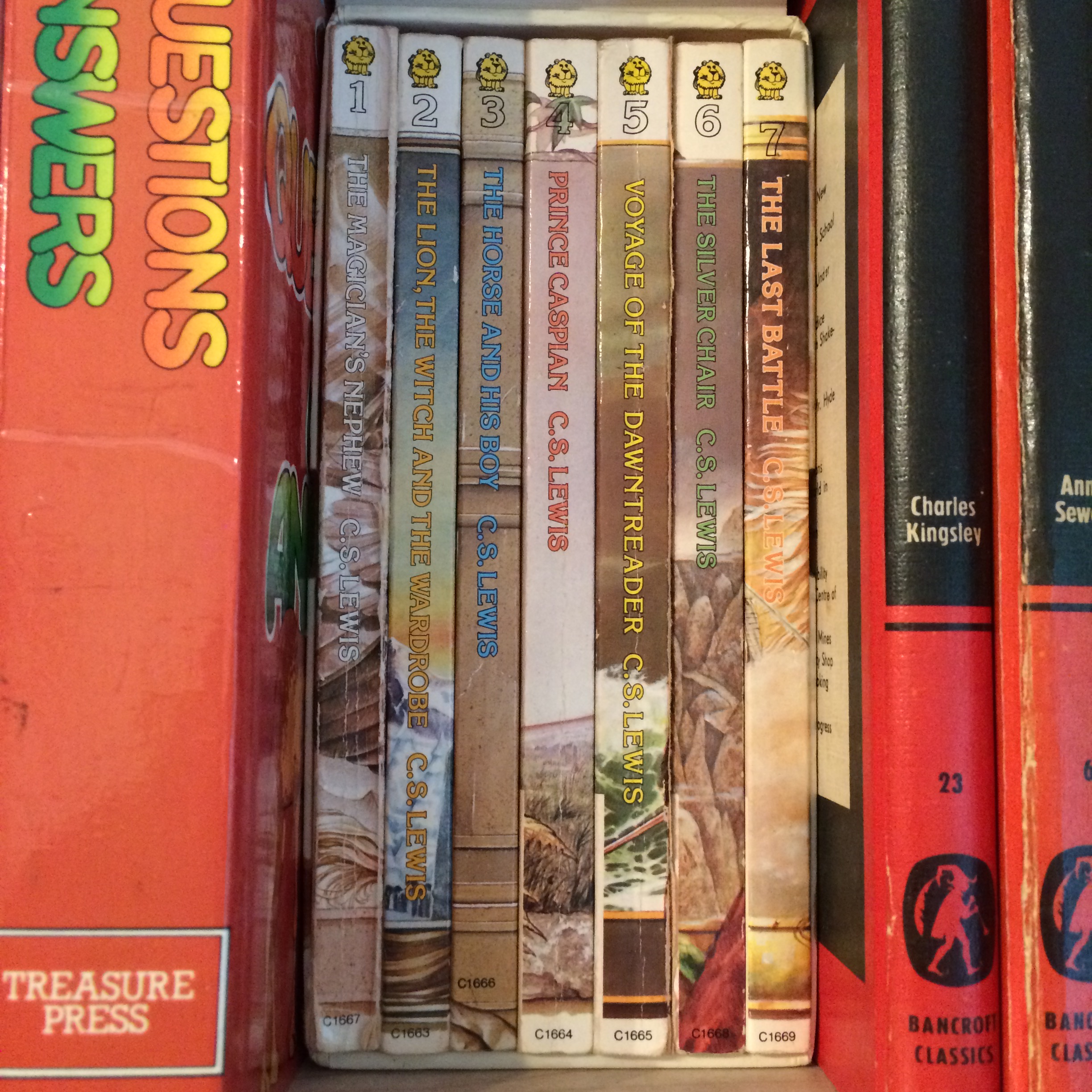
C.S Lewis, The Chronicles of Narnia

I am forever grateful to my parents for buying me the complete Chronicles of Narnia as a box set.

Still right here on my bookshelf

Still right here on my bookshelf

Mainly I’m grateful because I read The Magician’s Nephew first rather than The Lion, The Witch and The Wardrobe, so the magical wardrobe made entire sense to me. I’ve been getting annoyed with people who haven’t ever since. It was probably this that gave me my first love of fantasy and the concept that reading could make you escape into another world. Probably still couldn’t read the scene where Aslan is killed without crying, either.

Anne Rice, Interview With A Vampire

A quick jump into much darker elements of fantasy. My Dad had a copy of this on the bookcase and it was probably the first of many things I read when I was too young. There were pretty strict controls over age appropriate TV in my house growing up, but books were (mostly) fair game. If anything, this book taught me the importance of voice; the narration throughout this book feels so authentic, you feel like you are there.

Barbara Vine, A Fatal Inversion

Interestingly, I think I watched the TV series of this before the book. Certainly whenever I read it, I picture the actors, even though they don’t really resemble the descriptions in the book. That being said, I have honestly lost count of the times I have read this. There is no doubt it influenced my dreams for impossibly long, hot summers and aspirations of freedom. Not murder though.

Mostly.

Michael Connelly, The Poet

Finally, this book was a gift for my 21st birthday. By then I was neck deep in an English degree and books had been sucked of all joy. I really didn’t enjoy reading at all. I couldn’t just read any more, I had to analyse. It was a bloody awful time. Then my Mom & Dad got me this book (have you got the sense yet of how big a thing reading was in my house growing up?) and it had nothing at all to do with anything that could be related to a course. It was a modern thriller and a way back into enjoying crime. I read it in more or less one sitting. It made me remember why I loved reading for reading’s sake, not just to pass an exam. It also got me back into enjoying crime fiction and mystery after a time away.

So, I’ve just taken that trip down memory lane and I’m not sure if it helps or not. It certainly doesn’t narrow things down to author or genre. I suppose I’m just looking for characters I can engage with, voices that are authentic and plots that I can’t predict. I’ve also realised I’m in much the same slump as I was back at university. I spend so much time editing these days (both work and personal) that I feel like I’m just seeing the words, never the story itself. It’s probably going to take a really good book to shock my brain out of that state again.

I just hope I find it soon.

Anyway, I can obviously recommend all of the books above if you haven’t read them already. If you have anything that you think can break through the ice in my brain, then leave a rec in the comments and I’ll gratefully take a look.


Field Notes – Two Rivers Edition Review

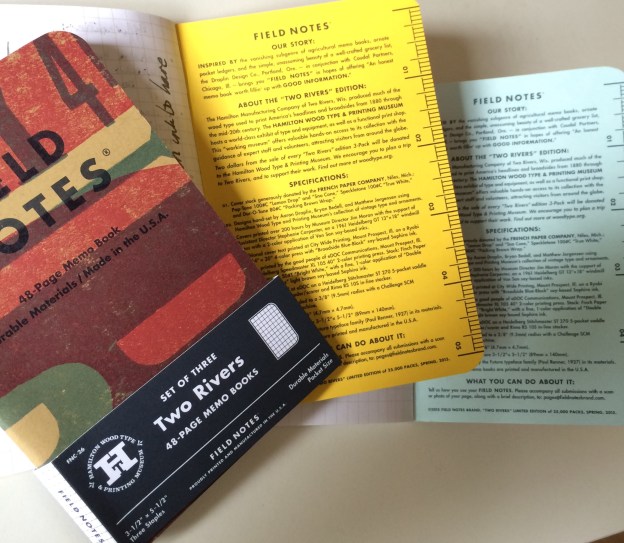
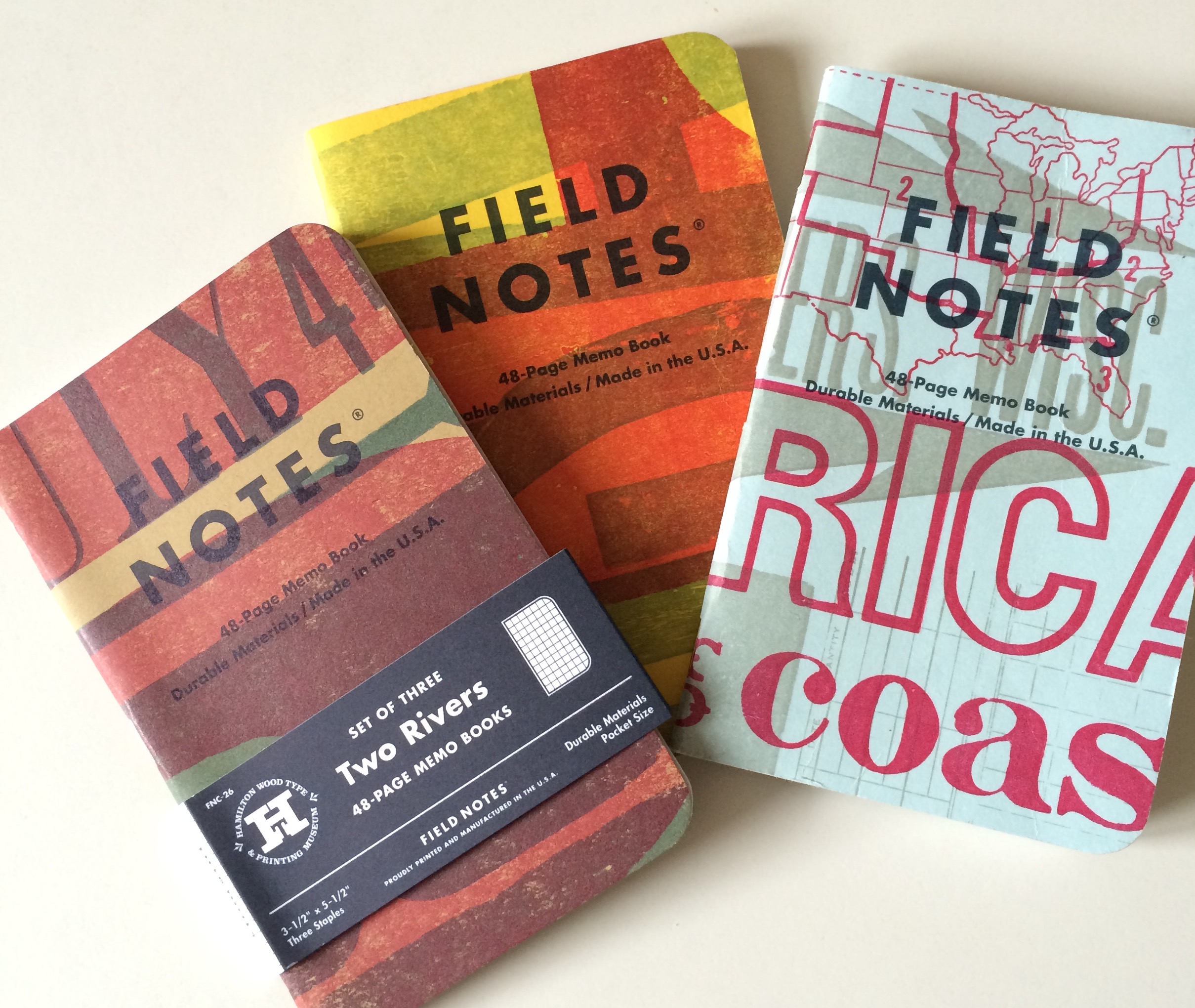
With the summer Field Notes release almost upon us, it seemed like a last chance for me to do a review on the Two Rivers edition. I have used 1 and 3/4 notebooks from this set, so I am torn between finishing up the existing one or holding out to see what the next release will be. My handwriting may become quite small over the next week or so as a result.

Field Notes Two RiversThis was the set I opened (not the only set I purchased *ahem*) and the light blue one was the one I started first. I love this edition for its multitude of designs, which means that no two packs are actually identical. Nothing like uniqueness to drive the hard core collectors absolutely nuts. Plus, it was another set with gridlines, which is currently my absolute favourite. Although, if they pull out a dot grid for the next edition you wouldn’t hear me complaining.

Everybody knows I love the size and handiness of Field Notes. They are perfect for ‘on the go’ capture as well as being fun. This set has already seen a bit of Europe, so I think it’s safe to say it works well as a traveler’s notebook. I’ve taken the bullet journal system and modified it for what I need, so I have the flexibility to get stuff done, as well as be inspired:

The dichotomy of modern life

The dichotomy of modern life

My only wish is that the paper was more fountain pen friendly, but that is not really the intention of an everyday carry notebook. At 48 pages, it might not carry the clout of a moleskine, but it does mean I get to start a new one every 6 weeks or so, which is way more interesting and engaging. Plus, the Two Rivers edition also comes with a charitable donation towards preserving a culture and heritage project, which you can find out more about here.

So how do I rate the Two Rivers edition? I think it is the most enjoyable one I’ve had so far, and certainly gives a nod towards the original purpose of the edc notebook style. I’ve enjoyed using it a lot, to the point the latest one has started to fall apart. I can’t wait to see what the summer edition is, but this is a pack I’ll be going back to often in the future. I love it.


Field Notes Datebook Review

I have to say, from the moment I first received the Field Notes Ambition edition, I loved it. Enough, in fact to become a colours subscriber there and then, which I’d been putting off doing for over a year already. I did have some concerns though. After all, this wasn’t the standard approach of all the interiors being the same. Alongside the regular notebook (graph paper, my favourite) there was also a ledger and a datebook. These are, obviously, notebooks with very specific uses.

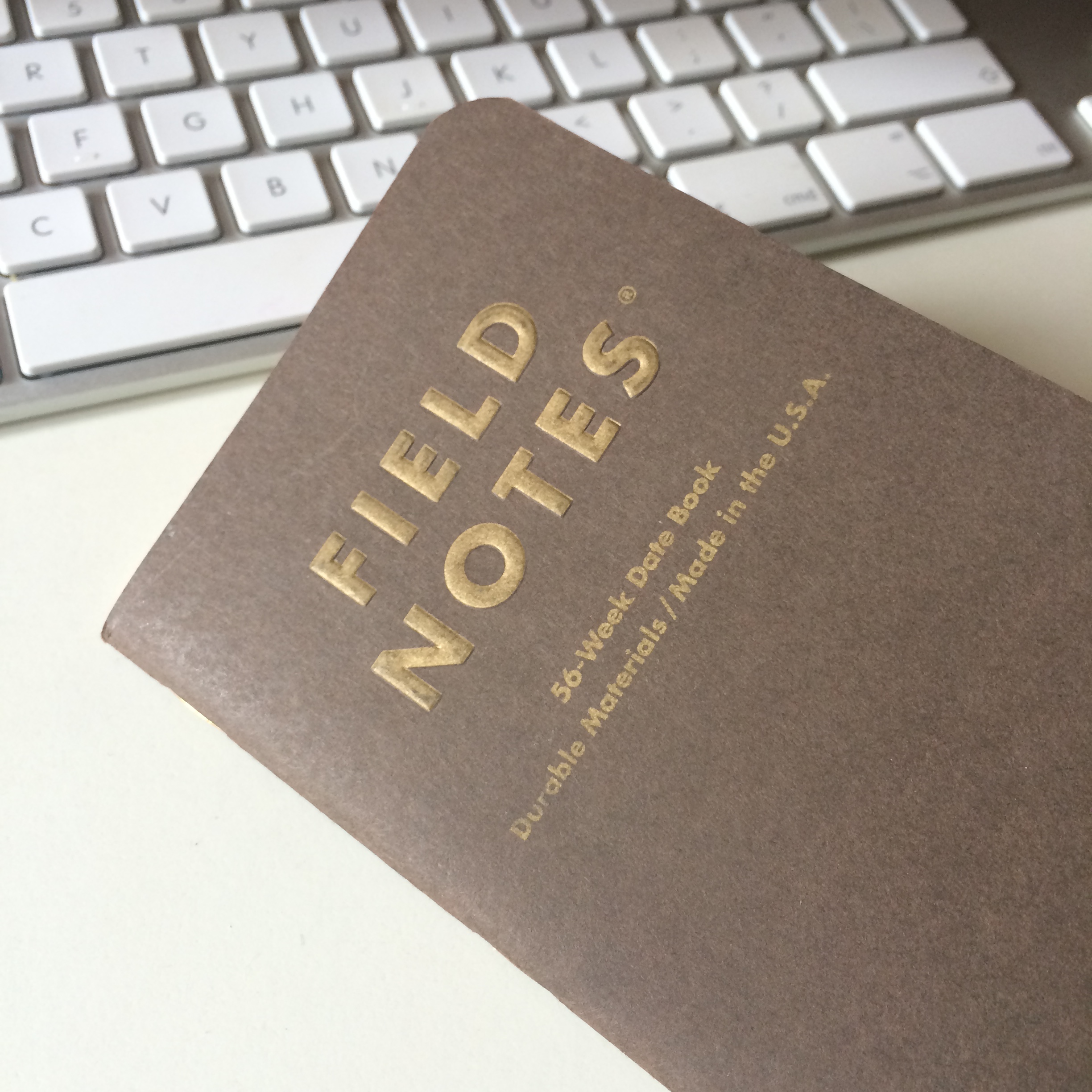
Field Notes Date Book

The memo book was used up really quickly. That was a no brainer for me, especially with the slightly thicker paper that made it quite fountain pen friendly. The ledger? Well, I feel like I’m still working on getting the most out of that one, so I’m certainly not in a position to give it an objective review. However, the thing that has surprised me most is how consistently I’ve used the datebook. It’s actually worked out quite well for me. So, how do you use it and make the most of it? I think it’s by focus.

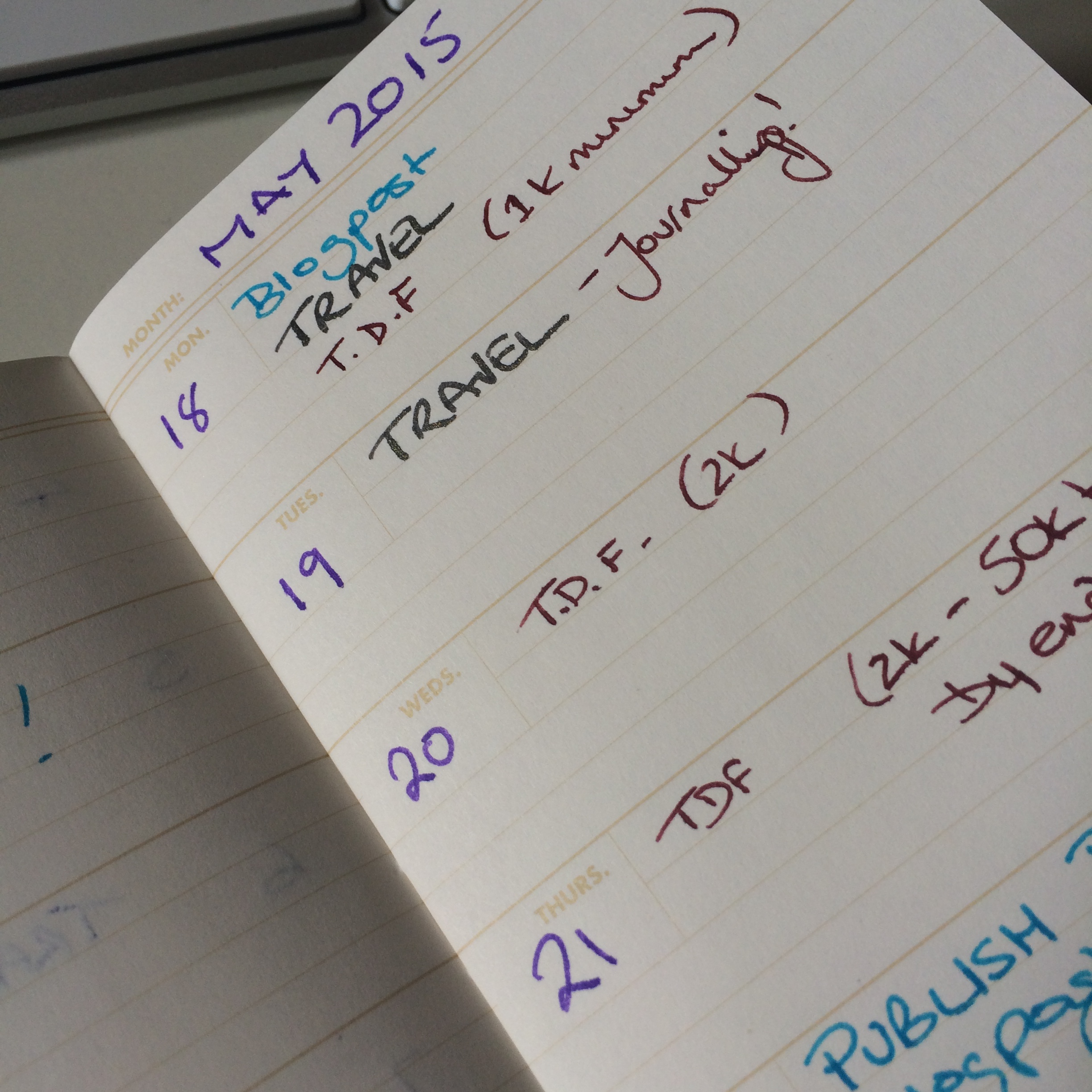
Calendars for both my personal and business life are shared digital entities. We live in a fluid and ever challenging world; my schedule never goes how I envisage it at the beginning of the week. So instead, I use the Field Notes datebook as a way of planning and tracking my writing schedule only. By having only one, very specific purpose for it, I am able to go back to using a paper planner despite living in a very digital world.

Field Notes Date Book Use

Ignore the terrible handwriting, please. The only ‘calendar’ style item that goes into the Field Note datebook is when I’m travelling. This has an impact on my 6am morning routine sometimes, so I need to make sure I do extra planning to negate that as much as possible. The rest is just a simple scheduling approach to writing projects that I need to get done, whether they are media (such as blogposts), creative endeavours (the actual writing itself and a goal word count) and then any other writing related activities that are more of a business nature.

I plan these every Sunday as part of my weekly review. This gives me a chance to not only schedule my writing, but see what is and isn’t working. So far this year, I have found this approach to be immensely useful. Even though there have been more exciting highs and sluggish lows this year than normal, without this book I don’t think I’d really have a handle on what’s going on. This gives me a degree of security that I guess this blog is all about when it comes to blending creativity with productivity.

I’m also hugely grateful that a friend bought me another pack of the Field Notes Ambition Edition back from her recent trip to the States, which means I have another date book I can use next year!

I’m sure most people have one area of their life they wish they could focus on more, whether it is health and fitness, reading, or study. If you’ve been looking at the Ambition edition and wondering how you could possibly use it, then I’d say this way is a definite contender. As you date it yourself, there’s not even any dependency on waiting for the start of a new year. Commitment and focus can start at any time you choose.

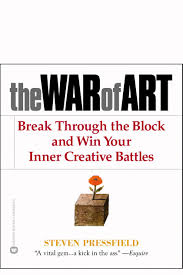
Book Review: The War of Art

I had heard much talk of Pressfield’s The War of Art, but it always remained tucked on the back of my to read list. Then, as serrendipitous conversation with a colleague led to her lending me the book. Suddenly, all those reviews about it being a game changer made complete sense.

 Most of use have two lives. The life we live and the unlived life within us. Between the two stands Resistance.

The concept is simple: resistance. We all feel it, we all succumb to it. This book is for anyone who has dreams – hopefully big dreams – that never seem to get closer to being tangible. I’m not talking pie in the sky, wishy washy vague aspirations. I’m talking about those people who know there is something more important they should be doing, perhaps something they were put on this earth to do, yet never actually moving forwards. Because resistance gets to us all.

The Book is itself divided into three ‘books’ and the first one ‘Resistance – defining the enemy’ is perhaps one of the easiest things I’ve ever read. I positively devoured each page, recognising myself staring back in among the words. Pressfield has mastered the art of the bite size chunk. It is both brutal and inspiring at the same time.

Book Two ‘Combating Resistance’ was a bit slower, less immediate, with more to digest in each section. I found myself naturally pausing more and thinking about what was being said, rather than having an instantaneous response.

Book Three ‘Beyond Resistance’ is more spiritual in some ways, but also more empowering. Whilst it explores the concept that we might have a reason for being, a talent for want of a better word, breaking past our own fear and being that true self is not automatic. It is still up to us to do the work. To take those first steps, to follow through and finally to complete. It doesn’t sugar-coat anything; just completing once is unlikely to be enough, it is in persistence and continued moving past resistance that the the higher ground can be found.

This book is an easy read in the grand scheme of things. More importantly, for those teetering on the edge, it has a knack for providing a mind shift towards getting off your backside and achieving the best you can be.

war of art

I can’t wait to read Turning Pro.