Category Archives: Better Living

Health, personal development and productivity tips

5 lessons learned since The Realist’s Guide to Sugar Free

It has been one year since I published The Realist’s Guide to Sugar Free. So much has happened since it’s almost hard to believe.
My goal in writing the book was to help people understand the dangers and extent of processed sugars being added to our lifestyle. So what have I learned in the year since?

As I’m a compulsive reviewer and improver, I sat down and came up with 5 key things.

1. Falling off the wagon is inevitable

Sugar free living is hard. Really hard. If it wasn’t, then I wouldn’t have written the book. Even with the knowledge and experience I have, in the time since I have fallen off the wagon more than once. So what do you do when this happens? You forgive yourself and learn from the experience.

There are two ways sugar creeps back in. External circumstances beyond your control make things difficult. Then there is personal choice/poor impulse control. The first often leads to a prolonged period of the second.

Unless you have total control over your food, then it is likely that you will encounter a processed meal or two. On its own, it can be fine. A few days of extended travel and it’s back to square one. Your body wants to continue eating the delicious food and the pull is irresistible. Sugar addiction is back in full swing and it takes dedicated effort to get back to healthy eating and stick with it.

So, you will slip up and you need to forgive yourself. Don’t beat yourself up, but put a plan in place to start again. Don’t keep listening to the voice that justifies one more cupcake.

2. Discipline begets discipline

The times when I have been most rigorous about being sugar free are the times when I have been on top of things in plenty of other areas too. Sloppy behaviour has a way of spilling over and the opposite is true.

I’m not saying that going sugar free is the key to solving life’s problems. However, if you want to begin a cycle of self-improvement, pick one cornerstone habit and allow yourself to build from there. For me, that is the physical health that I have always found easier to put on the back burner.

3. ‘Big Food’ is already taking advantage of us

Several well known personalities, especially in the UK, have begun to promote the benefits of a reduced sugar lifestyle. Governments are discussing sugar taxes and health providers are finally coming round to the dangers of sugar, rather than a blanket ban on fats. With increased awareness, you might think that we’re getting closer to an easier shopping experience.

You’d be wrong.

Processed, cheap food is about making profit, and marketing is about making more profit for the same experience and calling it a lifestyle. Big Food marketing to undermine consumer’s attempts at sugar free that I’ve already seen includes:

  • X% less sugar than before! Yes, you’ve made it X% smaller and are still charging me the same price (or more, blaming Brexit). Nice try.
  • Only natural sugars! Yes, you’ve started using fruit sugars instead, but your sugar content is just the same. A particular favourite when it comes to children’s snacks.
  • Sugar free/zero sugar! This takes advantage of the increased desire for sugar-free food, whilst still containing a tonne of the worst kinds of artificial sweeteners. 

4. I want to help people, even though I’m an antisocial introvert

More of a personal one, but worth mentioning. A huge surprise has been the enjoyment I’ve had from people reaching out to me for help. I don’t always have the answers, but I love to point people in the right direction. So if you want to help people, don’t think the only way is to become a keynote speaker or ‘in person’ counsellor. The world always needs more positivity and compassion and this can be done in a million tiny ways.

5. Education is key

I’ve been contacted by people all over the world and it is clear that understanding the ingredients of your food is hard. Food labelling still has a long way to go. Manufacturers will not make it easy.

‘Serving size’ is frequently misleading and makes it hard to calculate % sugar (a particular problem in America, although much easier in Europe). ‘Added sugars’ can refer only to the white stuff, rather than fruit sugar syrups. The phrases ‘healthy’ and ‘low sugar’ are poorly defined and frequently unregulated, making it easy to mislead the consumer.

I’m not going to lie, constant vigilance is exhausting. It’s a long road ahead, but we’ll get there.

Several people have asked for the book to be updated to include recipes. The reasons there aren’t any there already are quite simple. Firstly, I’m no chef. Secondly, people want recipes in cookbooks to be interesting and beautiful. Going sugar free is mainly about mastering the mundane, everyday foods. However, if there is an updated revision, then I will consider including some.

Until then, you can of course sign up to get the first week meal plan I’ve followed to get back on the wagon when I’ve fallen off. It’s basic, but it works for me.


Seasons – Planning Life Alongside Nature

For us in the northern hemisphere, there is no denying the change in the air. Summer is giving way to autumn (or fall, if you want to be all American about it). The kids are back at school. All the upcoming holidays now have an ‘end of year’ feel to them. For those in the southern hemisphere, the reverse is true. Spring is coming and summer will be here before you know it. Time to hit the beach and get outdoors.

It was whilst living in New Zealand that I realised for the first time how productivity and personal development have seasons of their own, often very much inline with nature. Perhaps it was because all my online inputs were largely presenting an experience that was the reverse of the one I was living through. What I did realise was that as the rains came (I was living in Christchurch, there was lots of rain), it became harder to stay motivated and geared up for new projects all the time.

Any productivity guru worth their salt will tell you that you don’t need to wait for the New Year to make a change. Or that every day is a fresh start. It’s all very true. I just think it becomes harder if you try to do it out of sync with the world around you.

Many people live online so much that it makes it easier, in a strange sort of way. When you never leave the house, it’s easy to forget what is going on outside. I know the temptation of the laptop as much as anyone else. Nevertheless, it can contribute to a feeling of burnout when there is no variation, just the non-stop hustle and grind of daily life.

Right now, I am taking a mini-break to plan the remainder of the year. I wanted to be somewhere different, somewhere much closer to nature, to remind myself of this idea. As the days get shorter, it will become harder to get out of bed each morning. The evenings will seem made for curling up under blankets with a good book, not hitting the gym or high intensity projects. I need to remember this so that I don’t fill my days with things I won’t achieve. I don’t like breaking promises to anyone, least of all myself.

So, over the next few weeks when you begin to see articles and blogs reminding you that ‘It’s not too late to win the year!’ and ‘make that final quarter count!’, remember that life is meant to have periods of recovery and renewal. If you’ve left it until nature begins to shut down, then it might be time to consider a different approach next year.

Of course, for those of you in the southern hemisphere, it’s time to get up and at ‘em.

Books for entrepreneurs: Tools of Titans review

Tim Ferriss does not know how to write short books. Don’t let the fact his paperback versions could be used to bludgeon someone to death put you off. He’s a master of the soundbite.

He’s just collected more of them than anyone else.

Tools of Titans is a fantastic book for anyone who wants to try life-hacking. It works because it doesn’t expound a single point of view. Instead, Tim has interviewed hundreds of top performers and asked them what they do. As he says, it’s all in asking the right questions:

“What do these people do in the first sixty minutes of each morning? What do their workout routines look like, and why? What books have they gifted most to other people? What are the biggest wastes of time for novices in their field? What supplements do they take on a daily basis?”

Of course, this results in some contradictory approaches. But it never seems like he is doing this to cover all bases and therefore always be right. Instead, it’s clear how certain techniques suit different personality types, or specific sets of circumstances. This allows you to cherry pick the ones that work for you. And if they don’t work, a quick flick through the book and you’re sure to come up with a Plan B.

The book itself is divided into three broad sections: healthy, wealthy and wise. There is fluidity between them all, as certain tips and tricks can be applied effectively in all three life areas. It gives the book a sense of structure though that allows you to start where you need the most help. Tim’s writing voice is quite distinctive, so if you don’t gel with his podcast style, you might struggle with reading. I find him to be a highly engaging speaker, so I went through all 674 pages in a week. Most sections contain direct quotes from his interviewees, so there is plenty of variety to keep your brain engaged.

This is one of those books I would recommend without hesitation to anyone who wanted to level up their life. If you’re looking for productivity tips, diet and exercise hacks, habits and routines, meditation and yes, even raw and candid advice for those who are depressed to the point of suicidal, then this is the book for you.

You might even find the thing you didn’t know you really needed along the way.

You can buy Tools of Titans on Amazon and all other good retailers. For more information about Tim and his work, check out toolsoftitans.com

Why the 45,000 pound sugar mountain wasn’t what it seemed

In today’s post-fact society, always read the label

Last week, a huge mound of sugar appeared in Times Square. This piece of educational art was installed to drive home the point that in America, every five minutes children consume 45,485 pounds of added sugar.

That’s a lot of sugar.

I’m all for promoting the dangers of sugars added to and hidden in food. But it did raise the question: who exactly were they trying to educate? What was really the message here?

I’ve been to Times Square. I love it. It’s hustle and bustle and, dare I say it, prime marketing real estate. This installation highlighting the dangers of added sugar comes not from any educational or government body. Nope, it comes from a food manufacturer.

KIND have a message that’s hard not to get behind. From their website:

“We believe if you can’t pronounce an ingredient, it shouldn’t go into your body. Actually, it shouldn’t even go into your pantry. KIND® products are made from nutritionally-dense ingredients like whole nuts, fruits and whole grains – no secret ingredients and no artificial flavors, preservatives or sweeteners.”

However, this is where I get really frustrated with food companies being disingenuous when it comes to promoting healthy food. It’s true that the added sugar consumed by children is way above where it should be and where most parents probably believe it to be. But for many people, it is precisely the types of snacks made by KIND that cause the confusion. They’ve just launched a new range of snacking products, Fruit Bites. Let’s look at the description for the Mango Pineapple Apple version:

Our Mango Pineapple Apple Fruit Bites are made from only 3 simple ingredients and give you a delicious tropical fruit snack in every bite. We don’t use fruit juices, purees, concentrates or preservatives – so you can enjoy a fruit snack that’s actually made from real fruit. And with no sugar added and 1 full serving of fruit per pouch, it’s the perfect lunchbox snack.

Real fruit! That elusive serving! Perfect for the lunchbox! What parent trying to do the right thing wouldn’t go for that? However, let’s look at the nutrition label. Again, from their website:

Whilst it contains no added sugars, it still contains 11g per pouch of natural sugars. Which are, make no mistake about it, still sugar. At an 18g serving, that’s around 60% sugar.

Always be suspicious of marketing, especially when the message is wholesome and healthy. Even more so when that message is aimed at your kids.

How to create a successful morning routine

Why set up a morning routine?

These are a few benefits I’ve found from my own routine over the years.

For many years, a corporate job took most of my time and energy. I would come home from work and have nothing left to give for things that were important to me. I wanted to be a writer, but I never actually wrote anything. This all changed when I dedicated just an hour every morning to my writing. Having a morning routine allows you to dedicate time to the things that matter to you most.

Precious alone time. In today’s world, we are constantly bombarded with interruptions, whether in real life, social media or any other online input. A successful morning routine, one that was clearly defined, gave me a definite course of action, so I always knew what to do next. That removed ‘check twitter’ from my list of options. That space gave me time to think about what was important and also sheltered me from negative bombardment from the moment I woke up.

There are many other benefits, but those two give the biggest returns for a happier and more fulfilling life.

So how do you set up a morning routine?

It’s easier than you think.

Firstly, ask yourself what you hope to achieve from doing this. Everyone will have different objectives. Is it to make time for your creative projects? Is it to make sure you get in a good workout each day? Or perhaps it is to read or work on personal development. What matters most to you will make up the core of the routine.

Secondly, decide how much time you want to devote to this activity. Be realistic. If you want to do a thirty minute workout but have to go to the gym, then include the travel time and showering afterwards. No one will thank you if you run out of time for that. The amount of time required will impact on how early you need to get up in order to complete the routine before beginning your existing obligations.

Thirdly, don’t start too big. Habits take time to become routines and the more you add in, the more likely you are to become overwhelmed and give up. My morning routine started out with a simple, single task: write 1000 words before breakfast. Over time, that has developed into a multi-step routine, but I needed to get used to doing that single but significant task first.

Be in it for the long haul

So what does my routine look like now? It combines several elements that I have seen successful authors, businesspeople and entrepreneurs confirm as being instrumental for them.

1) Begin with a pint of water. I used to go straight to coffee, but never underestimate the power of rehydrating after 7 hours of sleeping.

2) Write 1000 words. That’s still my big goal after 6 years of doing this.

3) Morning Pages – adapted from Julia Cameron’s The Artist’s Way. You’re really supposed to do them before anything else, but for me they have actually always been more effective after my half-asleep writing session. The last page always contains three things I am grateful for that morning.

4) 20 Pushups. Really not many, but it makes me feel like I’ve at least done something physical and makes me more likely to do other activity throughout the day.

5) Affirmations and visualisations. Yes, I still feel like an idiot sometimes saying these things out loud, but they do work. I’m shy and introverted by nature, so this gives me the confidence to step outside my comfort zone when I need to.

6) Goals review. Don’t work hard to climb that ladder just to discover it’s up against the wrong tree. Work out what you want and remind yourself every day to stay focused on what matters, rather than what simply feels urgent.

7) Calendar review. It doesn’t matter what grand goals you have for that day if your calendar says you have back-to-back meetings. Again, be realistic.

8) Task list review. By the time I’ve reviewed what matters (goals) and what’s immovable (calendar), it makes it much easier to delete, delegate or defer tasks on my list. What remains still needs to get done, but this way I don’t waste my energy on unnecessary tasks before I get to them.

The power of a morning routine means that these tasks take less time as you repeat them. The whole process above now takes somewhere between 90 minutes and 2 hours. That’s from 6-8am at the latest. That gives me a whole hour to have breakfast, get showered and be at my desk by 9am.

I’ve already achieved things that matter to me and mentally prepared for my day by the point most people are just thinking about booting up the laptop.

None of this will work unless…

A meticulously planned morning routine with all the best intentions and activities will still fail unless you actively set yourself up for success the night before. Unless you have the luxury of being beholden to no-one, you’re going to have to sacrifice some morning sleep to get this done.

A successful morning routine means ensuring you go to bed early enough to get the quality sleep you need. If there are any objects/spaces that are essential to your routine, then these should be found or made clear the night before to remove as much friction as possible and ensure you can make every minute of your morning routine count.

Hopefully this has given you some ideas about how to set up a morning routine and how to grow it into something that makes a huge difference in the level of success and satisfaction you get from your day. If you have any questions or thoughts then drop them in the comments section below, or you can get in touch with me by email at realist@sherrinicholds.com.

Healthy Motivation: FitBit Alta

I am not one of life’s natural movers. I’d always prefer to be curled up with a good book than down at the gym or pounding the pavements. It takes a lot to get me motivated but I finally found something, so I thought I would do a quick Fitbit Alta review.

The original Fitbit Alta came out nearly a year ago and I’ve been using it since then. The updated FitBit Alta HR is the new model, for those who want the additional heart rate tracking functionality, but I’ve stayed with the basic one. After continuous use, I’m happy to give it a big thumbs up.

Pros

The Fitbit Alta and the app are both really easy to use. Honestly, this is the main one for me.

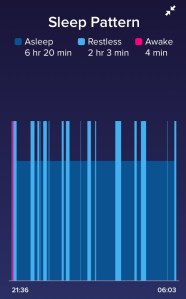
Sleep tracking. Oh boy, this was eye-opening (no pun intended). I finally saw why I was still tired after going to bed at a reasonable time. Restless nights equal tired days:

Challenges and social sharing – given the lower cost of entry to the Fitbit market compared to the Apple Watch or hardcore Garmin products, I’ve got many more friends and acquaintances using a Fitbit. This makes social interaction much easier and the group challenges really hone into the competitive spirit.

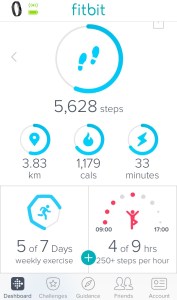
Step per hour reminders – another winning feature. 250 steps an hour? We all do that anyway, right? Nope. It’s so easy for an hour to go by and I’ve sat at my desk for the entire time. The subtle buzz on my wrist tells me to get up and get moving for ten minutes, but is subtle enough not to be intrusive if I’m in a meeting and can’t get away.

All of these key features are easy to interact with on the intuitive user interface:

Cons

Only splash resistant, not waterproof. Not good for pool bunnies.

The official bands aren’t the most durable or corporate friendly (turquoise and purple are my favourite). However, the customer service was great when my band broke and the delivery of a replacement was fast and efficient. Plus you can easily get unofficial alternatives on Amazon (I chose these replacement bands for a bit of variety – around $1 per band).

I’m under no illusions that walking 10,000 steps a day will turn me into a lean, mean, fighting machine. Diet plays a significant role in health and 10,000 steps does not by default mean cardio, strength or calorie goals get met. But for someone like me, it’s a daily gentle push towards better health. Overall, I’d recommend Fitbit Alta as a great starter wearable for anyone of any age who wants to be more conscious of their daily activity levels. You can always upgrade to something more hardcore at a later point.

No juice for babies – the significance behind the shift

The American Academy of Pediatrics made the news recently when it updated its guidelines to advise that babies under 12 months should not be given juice. Previously, it had made this suggestion only for babies under 6 months.

Unfortunately, it is easy to assume that this means fruit juice is absolutely fine and should be encouraged for babies over 12 months old. In fact, the underlying reasoning for the change contains some findings that can apply to us all.

Fruit juice is promoted as a healthy and diet-conscious option. Yet research continues to show that it can actually be detrimental to controlling weight. From the article behind the headlines comes this snippet:

“High sugar content in juice contributes to increased calorie consumption and the risk of dental caries. In addition, the lack of protein and fiber in juice can predispose to inappropriate weight gain (too much or too little)”

One of the reasons I have become so vocal about the benefits of a sugar-free lifestyle is that it runs counter to food marketing, with its billions of dollars of advertising to blind and confuse the masses. For parents trying to do the right thing, when juice is promoted as an equivalent of whole fruit (which it really isn’t), it seems an easy way to get some nutrients into your kid. Yet, once they start loving and drinking it, the reverse becomes true:

“Malnutrition and short stature in children have been associated with excessive consumption of juice”

And of course, we’re encouraged to keep our children hydrated. Getting them to drink enough can be a problem, so we make it easy for them. But unless the fluid in that sippy cup is water or milk, you’d better hope that your kid enjoys going to the dentist:

“The practice of allowing children to carry a bottle, easily transportable covered cup, open cup, or box of juice around throughout the day leads to excessive exposure of the teeth to carbohydrate, which promotes the development of dental caries”

Although these issues are accentuated in children, it is easy to see that they can translate to adults as well. Fruit is amazing. It has fibre, nutrients and energy. Juice is sugar and water. I wonder how many parents would be horrified at their babies drinking a can of cola, but wouldn’t think twice about a nice healthy juice? This article is a great first step in educating ourselves away from ways of eating that simply aren’t beneficial, just easy.

For the actual article rather than the headline grabbing summaries, you can find it on the American Academy of Pediatrics Publications page. If you don’t want to read all of it, skip to the conclusions section to see the specific dangers and concerns.


If you’re interested in cutting down or completely removing sugar from your life, then check out The Realist’s Guide To Sugar Free. It’s full of tips, tricks and information to help you live a healthier lifestyle.

Beyond the bikini body – be healthy for life, not just for summer

It’s been coming for a month or so. The magazines aimed at women (and a handful aimed at men, too) have been screaming that we need to slim down for summer. The bikini body. The ‘lose ten pounds in two weeks’ diet. The juice cleanse. And goodness knows what else.

Many countries have a long weekend right about now. It holds the promise of summer. The evenings are longer. The temperatures are warm enough that the long sleeves and baggy jumpers that hide the sins of winter have to go.

For many people, panic sets in. Hence the crash diet and the crazy food choices. Most of them do work, but only in the short term. Some of the more extreme ones actually do more harm than good.

“In reality, the healthy approach is simple. Not easy, but simple”

In reality, the healthy approach is simple. Not easy, but simple. You don’t need cabbage soup. You don’t need a low fat, low flavour, low calorie diet. Just cut out processed sugars. Simple as that. Go cold turkey for thirty days and by the time the summer really kicks in, you’ll discover it’s not about looking thin, it’s about being truly healthy.

And your health? Worth more than dropping ten pounds in two weeks, no matter what the media tries to sell you.

Don’t know where to start? My realistic guide to navigating the sugar free lifestyle is available in ebook for only 0.99 until June.

Deeply addictive, sugar is everywhere. Even added to the most unlikely foods, the majority of us exceed the recommended daily intake without even realising it. Instead of teaching you how to cook fake cake, or pretending that quinoa really is an exciting grain that will revolutionise your view on salads, this book guides you through the myths about sugar in our food and through the realities of addiction. The 9 step action plan then helps you make the change and really stick to it.
Even if you’re not quite ready to eliminate all sugar from your life, this book contains practical tips to help you shop wisely, create good habits and sustain better lifestyle choices.

The paperback edition includes blank pages and examples to help you analyse your behaviours and face up to your bad habits, allowing you to document your journey to a sugar-free lifestyle.

Available on amazon.com and amazon.co.uk

Kelly Clarkson, Nutella and calling people out on the internet

I’ve been avoiding distractions for the past few weeks, but someone sent me the following story of Kelly Clarkson giving her daughter Nutella for the first time.

Now you may think that as someone who has written a book about living sugar-free, I’d be firmly on the side of the commenters who are chastising the singer for giving a young child such a thing.

Well, I am and I’m not. Why? Primarily because I don’t think it’s the right thing to do to shame individuals about the food choices they make. Educating is good, shaming is not. The vast majority of critics were hitting out mainly because they wanted to blast a celeb. Welcome to the internet.

Nutella is essentially chocolate. It’s had some clever branding, but at 13% hazelnuts, let’s not pretend it’s a healthy nut-based spread. Interestingly, due to its sugar and fat combination, it actually has a lower glycemic index than most breakfast cereals. For that reason, I’ve seen it touted as a better alternative, as it doesn’t cause the sugar spike and mid-morning slump. I’m not saying I believe that it is, but you can frame most things in a positive spin if you try hard enough.

I don’t think feeding children a diet that is high in processed foods, especially processed sugars, is a good thing to do. In fact, it is a terrible thing to do and causes long-term damage. But to pretend that a child is never going to consume chocolate and that for Clarkson to do what 99.9% of all mothers do is ‘child abuse’ is just ridiculous and inflammatory for the sake of it.

So of course I think it’s a bad thing to give your child Nutella every day. But there’s very little difference between that or a fruit chew bar and a glass of juice as a mid-morning snack. Live healthy and clean the rest of the time and educate on the difference of treats. Make treats occasional, not daily. Don’t make unhealthy foods exciting and taboo.

And sure as hell don’t try to shame someone like you’ve never eaten a sweet treat in your life.

Follow Up: Using A Bullet Journal For Creative Projects

One of the most popular posts on my site is this one about how I use a Bullet Journal. The other, in case you are interested, is the one weighing up the pros and cons of using a Moleskine versus Field Notes, which also has a Bullet Journal influence to it.

Given I started using a Bullet Journal approach when it was a new thing and not the hugely popular and artistic thing it is now (check out the Instagram bujo hashtag if you want to feel inferior about your artistic skills), I thought it would be a good time to do a follow up. Specifically, how to use a Bullet Journal for creative projects.

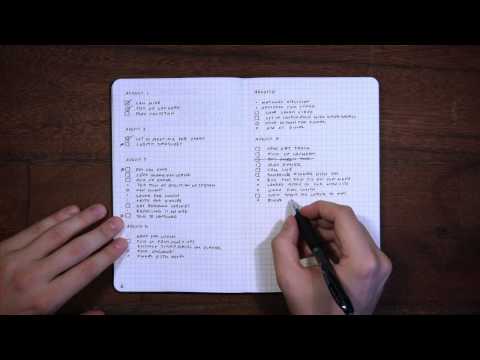
Firstly, the thing to remember is that the bullet journal methodology is not set in stone. Right from the start, it was a system designed to be modified to meet individual needs. For me, this has resulted in two separate notebooks: one for planning and the other for creative writing projects.

A creative Bullet Journal, by definition, will have different requirements to a notebook containing everything. But why did I separate them? Quite simply, I wanted to have all my book outlines and ideas in one place. When it’s time to pick a project to move onto, this dramatically reduces the number of notebooks I have to work my way through. Because it is specifically for longer outlines, rather than aha! on-the-go snippets, I can stick to an A5 size that is just large enough.

What to remove

Because I’ve got a specific use case in mind, I can ignore any features that relate to the calendar. (Side note, because I’ve stripped out the creative writing projects, I can use an actual diary in a modified Bullet Journal approach that is just as effective. If you want to know more, I’m using a Moleskine Agenda as described here). This means the Future Log and the Monthly Log disappear for me.

What to keep

The Index is the core functionality of the Bullet Journal system that is so simple, yet life changing. This is particularly important in this instance because I want to be able to easily review the contents at a later date. I can’t help but call it Contents though, rather than Index. Sorry!

Underpinning the index is the use of page numbers. This is a feature that makes the Leuchtturm 1917 brand ideal for Bullet Journaling as they are pre-completed. I find manually numbering the pages at the start of a new notebook quite therapeutic, so don’t worry if your notebook of choice doesn’t have them.


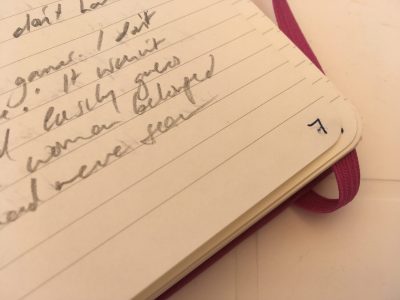
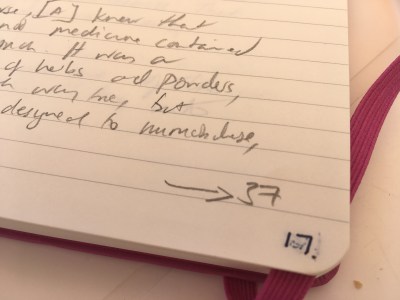
Because I might plan a story over the course of several weeks and have more than one in development at any given time, when it comes to review I don’t want to keep flicking back to the index to find the related project pieces. Instead I use a simple arrow system when linking larger blocks of related text. It is a simple thing to do before starting, but saves amazing amounts of time when reviewing:

This chapter continues on page 37

This continues from page 17

What about topics, bullets and tasks?

I still use these as a creative feature. There is much more to writing a book than plotting it out. There may be research tasks that need to be completed prior to writing and these can form topics in themselves.

Personal Opinions…

What is the best size for a Bullet Journal?

For creative projects, the A5 size works best. For ‘on the go’ notes and ideas capture, a pocket notebook is best (such as a Field Notes)

What is the best brand for a bullet journal?

Leuchtturm 1917 is the closest fit for the Bullet Journal system. Prebuilt Index and page numbers, as well as a paper quality that works for a wide range of pen types, including fountain pens

What is the best paper format for a bullet journal?

Plain paper allows for the most freedom, but I’m a huge fan of graph or dot grid. The key is that any ruling is subtle enough for it not to be limiting 

You can find the official Bullet Journal site and more information from Ryder here.